-
David Biello, Momentum Magazine
Coping with Change: Climate Adaptation Today
›May 2, 2011 // By Wilson Center StaffThe original version of this article, by David Biello, appeared in the University of Minnesota’s Momentum Magazine.
The view from space offers a clarity about our changing planet less visible from the ground: spring thaw coming sooner year after year, the iconic snows of Kilimanjaro and glaciers across the globe dwindling – and a great green wall of vegetation spreading across the region just south of Africa’s Sahara Desert.
This arid expanse, known as the Sahel, stretches from the Atlantic Ocean to the Red Sea. It has undergone a remarkable transformation since farmers in nations across the region began to allow trees to grow amidst their crops.
In some places it was by accident, as seeds sprouted from manure spread as fertilizer in Niger. In others it was by design, such as the “green dam” against the desert started in Algeria in 1971. But the result has been the same: improved harvests of millet, sorghum, and other staple crops in a region gripped by perennial drought.
Such “agroforestry” boosts yields by returning vital nutrients to the soil in the form of decaying leaves, shading crops from the harshest sun, and recharging underground water reserves. The trees also provide an additional source of income: wood for fires and construction. And they have another even more important benefit: They may help some of the poorest farmers in the world adapt to climate change – while potentially removing as much as 50 billion metric tons of carbon dioxide from the atmosphere, according to agronomist Dennis Garrity, head of the Nairobi-based World Agroforestry Centre.
“The transformation of agriculture into agroforestry is well underway,” Garrity says. “Agricultural systems incorporating trees increase overall productivity and incomes in the face of more frequent droughts, and agroforestry systems provide much greater carbon offset opportunities than any other climate mitigation practice in agriculture.”
Climate change is already worse than anticipated by the UN Intergovernmental Panel on Climate Change. Extreme precipitation events, such as last spring’s flooding in Nashville, Tenn., or last winter’s drought in China, have become more frequent. Sea ice extents have reached record lows in the Arctic. And 2010 marked the end of the hottest decade in recorded history.
Not only that, but the 0.7-degree-Celsius uptick in global average temperatures we’ve seen so far is only half the warming that can be expected from the concentrations of greenhouse gases already in the atmosphere, according to a 2010 report from the U.S. National Research Council. And as warming continues, according to the NRC report, the world can expect (among other things) a drop in the yield of cereal crops due to higher temperatures, an increase in heavy rainfall, and a rise in ocean levels.
In other words, whatever measures might be adopted to reduce emissions of greenhouse gases, the world will still need to adapt to a changing climate. Indeed, that process has already begun.
Continue reading on the University of Minnesota’s Momentum Magazine site.
Photo Credit: Deep in the Sahel, the dwindling Lake Chad borders Niger, Chad, and Nigeria. Courtesy of flickr user NASA Goddard Photo and Video. -
Shannon Beebe, Los Angeles Times
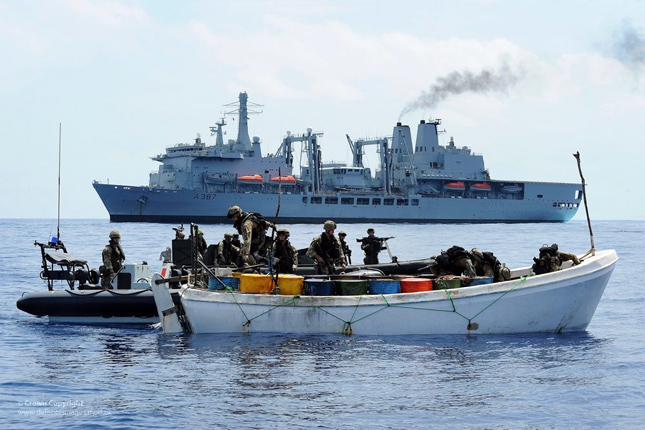
Somali Piracy Shows How an Environmental Issue Can Evolve Into a Security Crisis
›March 14, 2011 // By Wilson Center Staff
It has become apparent that real piracy is far different from the lighthearted subject sometimes portrayed in popular culture, and the problem is growing much worse. Besides the tragic cost in lives, the United States, many other nations, and NATO spent roughly $2 billion combined last year to safeguard the busy international sea lanes off the Horn of Africa from Somali pirates. According to the International Maritime Bureau, “hijackings off the coast of Somalia accounted for 92 percent of all ship seizures last year,” and the price tag does not include the costs of reallocating critical military resources.
-
Joan Castro on Integrated Population and Coastal Resource Management in the Southern Philippines
›In the southern Philippines, the innovative IPOPCORM program “worked in areas where there is high…marine biodiversity, high population, and high population momentum, which means…about 40 percent of the population are 15 years and below,” Joan Castro told ECSP in this interview. Castro, the executive vice president of PATH Foundation Philippines, Inc., recently spoke at the Wilson Center on the state of integrated development efforts in her country and elsewhere.
From 2000-2006, IPOPCORM (which stands for “integrated population and coastal resource management”) sought to integrate population, health, and environment (PHE) development efforts in Philippine communities. They had four primary objectives, said Castro: 1) improve the reproductive health of the community members; 2) improve management of the coastal resources; 3) increase knowledge of the linkages between population, health, and the environment; and 4) increase the capacity of community leaders to advocate for these links.
“The aspect of livelihoods was very essential,” said Castro, especially for empowering women in the communities. Through family planning services and micro-credit finance initiatives, women were able to better space their pregnancies and contribute to household incomes, she said. In addition, by establishing locally managed, marine protected areas, IPOPCORM increased the protection of high biodiversity zones and improved the likelihood that there will be enough fish to feed future generations.
The “Pop Audio” series is also available as podcasts on iTunes. -
Watch: Joan Castro on Resource Management and Family Planning in the Philippines
›January 27, 2011 // By Wilson Center Staff“Sixty-percent of Filipinos live in the coastal areas,” said Joan Castro, executive vice president of PATH Foundation Philippines, Inc., in an interview with ECSP, and dwindling fish stocks are an issue across the archipelago. “With increasing population, the food that goes on the table for a lot of families in these coastal communities was an issue, so food security was the theme of the IPOPCORM project.”
IPOPCORM (standing for “integrated population and coastal resource management”) was started in 2000 and ran for six years. It sought to address population, health, and the environment (PHE) issues together in rural, coastal areas of the Philippines.
“When we started IPOPCORM, there was really nothing about integrating population, health, and environment,” Castro said. IPOPCORM provided some of the first evidenced-based results showing there is value added to implementing coastal resource management and family planning in tandem rather than separately.
The PATH Foundation worked with local governments and NGOs to establish a community-based family planning system while also strengthening local resource management. The results showed a decrease in unmet need for family planning and also improved income among youth in the remote areas they worked in.
Today, Castro also serves as the PHE technical assistance lead of the Building Actors and Leaders for Advancing Community Excellence in Development (BALANCED) project – a USAID initiative transferring PHE know-how to regions of East Africa and Asia. -
Greater Than the Sum of Its Parts: Quantifying the Integration of Population, Health, and Environment in Development
›It makes intrinsic sense that integrated approaches working across development sectors are a good thing – especially when it comes to the complex issues facing people in developing countries and the environment in which they live. After all, integration avoids overlap and redundancies, and adds value to results on the ground. Yet, quantifying the benefit of integration has been difficult and to date, little on this topic has been published in the peer-reviewed literature.
Not anymore. Our article, “Integrated management of coastal resources and human health yields added value: a comparative study in Palawan (Philippines),” recently published in the journal Environmental Conservation, breaks new ground. Rigorous time-series data and regression analysis document evidence of different disciplines working together to produce synergies not obtainable by any one of the disciplines alone.
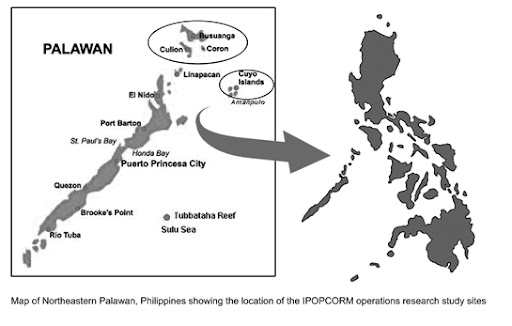
The article presents quasi-experimental research recently conducted in the Philippines that tested the hypothesis that a specific model of integration – one in which family planning information, advocacy, and service delivery were integrated with coastal resources management – yields better results than single-sector models that provide only family planning or coastal resources management services.The study collected data from three island municipalities in the Palawan region of the Philippines, where the residents are dependent on coastal resources for their livelihoods. The integrated model was implemented in one municipality, while the single-sector models (one coastal resource management program and one reproductive health management program) were conducted in two separate municipalities.
The results of the study provide strong evidence that the integrated model outperformed the single-sector models in terms of improvements in coral reef and mangrove health; individual family planning and reproductive health practices; and community-level indicators of food security and vulnerability to poverty. Young adults – especially young men – at the integrated site were more likely to use family planning and delay early sex than at the sites where only family planning and reproductive health interventions were provided.
Coral reef health – as measured by a composite condition index – and mangrove health increased significantly at the integrated site, compared to the site where only coastal resource management interventions were provided. Data from the integrated site also showed a significant decline in the number of full-time fishers, as well as fewer people who knew someone that used cyanide or dynamite to fish – both factors that amplify a community’s vulnerability to food insecurity. Finally, the proportion of young people with income below the poverty threshold decreased by a significant margin in areas where the integrated population and coastal resources management (IPOPCORM) model was applied.
Let’s hope this research is just the beginning of a more thoughtful and effective approach to meeting multiple development goals in a lasting mannerEducational activities at the integrated site focused on illuminating the intrinsic relationship between fast-growing coastal communities in the Philippines and the diminishing health of the coral reefs and fisheries that they depend on for food and livelihoods. Community change agents, often fishermen and their families, talked to their neighbors and fellow fishers about the importance of planning and spacing families and establishing and respecting marine reserves to protect the supplies of food from the sea. They referred those interested in family planning to community-based social marketers of contraceptives or the nearest health center for other services.
These same community members also participated in activities to sustainably manage their coastal resources: working with local government officials to establish marine reserves, replant mangroves, serve as community fish wardens to patrol those reserves, test out alternative livelihoods such as seaweed farming, and start small businesses to diversify their income and reduce fishing pressure.
Development professionals should pay close attention to the conclusions of this study. In environmentally significant areas where human population growth is high, it will be difficult to sustain conservation gains without parallel efforts to address demographic factors and inequities in the distribution of health and family planning services. Integrating responses to population, health, and environment (PHE) issues provides an opportunity to address multiple stresses on communities and their environments and, as this study demonstrates, adds value in such a way that significantly improves community resilience and other outcomes.
This research allows those of us who believe strongly in integrating population, health, and environment programming to point to quantitative proof that the approach works. We now need to expand PHE programming to reach more people in other parts of the world where communities face a similar nexus of challenges. New initiatives have started taking the lessons from this research, applying them to new contexts in Africa and Asia, and scaling them up to reach many more in the Philippines.
Let’s hope this research is just the beginning of a more thoughtful and effective approach to meeting multiple development goals in a lasting manner in the places that need it most.Leona D’Agnes is the technical director of IPOPCORM, Joan Castro is the executive vice president of PATH Foundation Philippines Inc, and Heather D’Agnes is the Population, Health, Environment Technical Advisor in the U.S. Agency for International Development’s (USAID) Office of Population and Reproductive Health.
Sources: BALANCED, Link TV, PATH Foundation Philippines Inc., World Wildlife Foundation.
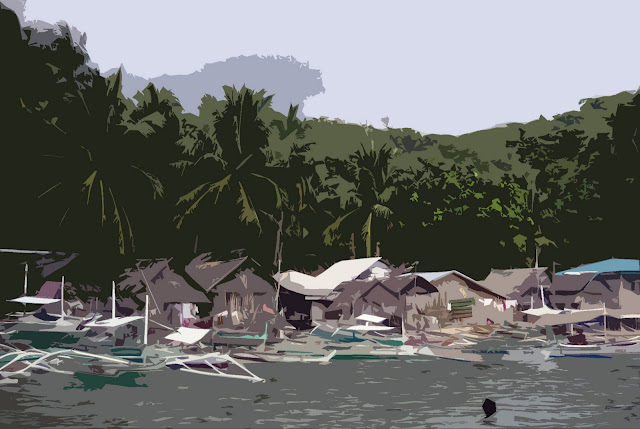
Image Credit: Philippines village (adapted) and municipalities map courtesy of PATH Foundation Philippines Inc. -
Watch: Blue Ventures PHE Program in Madagascar
›“All conservation efforts will be in vain if family planning issues aren’t addressed,” says Rebecca Hill, project manager for the Sexual and Reproductive Health Programme at Blue Ventures in a video highlighting their population, health, and environment (PHE) programming in Madagascar.
While primarily a marine conservation group, Blue Ventures also recognizes the need for integrating population into their efforts. They began a family planning program in southwestern Madagascar in 2008 as part of a “holistic approach to conservation.” The project aims to address the high unmet need for family planning, high fertility and maternal and infant mortality, and conserve the coastal environment. “We are directly saving lives,” Hill says.
Rapid population growth is creating an unsustainable strain on natural resources, as Matthew Erdman of Blue Ventures wrote in a previous post on The New Security Beat:The average total fertility rate in Velondriake is 6.7 children per woman, according to our data. On average women are only 15 years old when they first conceive. To compound this problem, a majority of the population is under the age of 15 – at or approaching reproductive age. At the current growth rate, the local population will double in only 10 to 15 years. The local food sources, already heavily depleted, barely feed the current population, let alone twice that amount. Without enabling these coastal communities to stabilize their population growth, efforts to improve the state of marine resources and the community’s food security are considerably hindered.
Hill describes the situation in the village when she joined the Blue Ventures in 2008 as “alarming,” with women “having up to 17 children despite not wanting children.” Many people in the town had never heard of condoms and had no idea how to use them, she said, and “they are desperate to have access to contraception.”
Today, the initial family planning program has been scaled up to the surrounding region and generated significant community involvement by peer educators teaching community members about sexual and reproductive health. It’s also become the first PHE project to receive support from the UNFPA within Madagascar.
There are currently 18 community-based distributors who give out two types of contraception in their villages. The fact that the community has so fully embraced the project shows that it can be replicated elsewhere, says Hill in the video. “Communities themselves have harnessed the ideas and consider that what we’re doing is vitally important.”
“Addressing family planning needs and issues is inextricably linked with conservation issues,” says Hill. “All conservation efforts will be in vain, if family planning issues are not addressed.”
Video Credit: Blue Ventures Family Planning Project from Alexander Goodman on Vimeo. -
Blue Ventures’ Integrated PHE Initiative in Madagascar
›In the small coastal village of Andavadoaka, Madagascar, the village elders offer a bottle of rum and two cigarettes to their ancestors before the men and their sons launch their wooden dugout canoes into the sea. Leaning over the side, their masked faces scour the water for their prey.
Meanwhile, the women – with babies on back and spears in hand – set out on foot into the shallow waters. One probes a small hole with her spear, and a tentacle reaches out to grapple with it. After careful coaxing, she pulls out an octopus, kills it, and adds it to her collection, which she tows on a string behind her.
In total, more than 1,850 pounds of octopus are collected on the opening day of the octopus harvest, a seasonal occurrence in Velondriake, the Indian Ocean’s first locally managed marine area.
Velondriake, which means “to live with the sea,” stretches along more than 40 km of southwestern Madagascar’s coast. The region encompasses 25 villages and is home to more than 8,000 people of the Vezo ethnic group, who are almost entirely dependent on marine resources, such as octopus, fish, and mangrove forests, for subsistence and income. But these resources are quickly disappearing due in large part to over-harvesting.
Blue Ventures Conservation – the London-based NGO I work for – has been working in the area since 2003 to protect the region’s coral reefs and mangroves, as well as their biological diversity, sustainability, and productivity, while also improving the quality of life of the local community.
To this end, Blue Ventures helped the community create a series of coastal marine reserves. Several permanent reserves protect the biodiversity of the coral reefs and mangroves, and help fish populations recover; while nearly 50 temporary reserves have increased the productivity of the octopus and crab fisheries. Octopuses reproduce quickly and juveniles grow at a nearly exponential rate, so a brief harvesting hiatus can lead to significant increases in yield. Increased yields translate to increased profits – something greatly welcomed by the people of this impoverished region.
The people of the region are also reproducing quickly: the average total fertility rate in Velondriake is 6.7 children per woman, according to our data. On average women are only 15 years old when they first conceive. To compound this problem, a majority of the population is under the age of 15 – at or approaching reproductive age. At the current growth rate, the local population will double in only 10 to 15 years. The local food sources, already heavily depleted, barely feed the current population, let alone twice that amount. Without enabling these coastal communities to stabilize their population growth, efforts to improve the state of marine resources and the community’s food security are considerably hindered.
In August 2007, Blue Ventures launched its Population, Health, & Environment (PHE) program as a weekly family planning clinic in Andavadoaka, which provided access to ingestible and injectable birth control options, as well as condoms. The clinic increased the village’s contraceptive prevalence rate (CPR) from 9.4 percent to 36.3 percent, and the Velondriake region’s CPR from 11.0 percent to 15.1 percent, in its first two years. (CPR data for the third year is not yet available, but should be notably higher, especially at the regional level.)
In 2009, Blue Ventures opened two more clinics and began holding quarterly outreach clinics in all Velondriake villages. We started offering long-acting, reversible contraceptive options, including Implanon and IUDs. Most recently, we have implemented a community-based distributor (CBD) program to provide wider access to contraceptives around the region, particularly for villagers that could not easily reach one of the clinic sites. These expansions paid dividends: the number of patients increased almost four-fold between the second and third years, with a cumulative total for all three years of just under 1,700 patients.
Recently, the PHE program began a partnership with the UN Population Fund (UNFPA), becoming the first PHE project to receive support from the UNFPA within Madagascar. The UNFPA funds will allow us to add new regional clinics; launch a behavior change campaign, including a regional theater tour and educational events; and further develop the CBD program.
UNFPA’s support of this initiative represents an important endorsement of Blue Ventures’ integrated approach to the challenges of marine sustainability, food security, reproductive health, and population growth. Funding applications to focus on improving maternal and infant health and to conduct a full health-needs assessment of the Velondriake region are pending.
In taking a population, health, and environment approach, Blue Ventures creates synergies that allow for the more effective achievement of health and conservation outcomes. Through providing family planning and health options – services the community really wants – Blue Ventures generates more support for all of its other initiatives, such as conservation and aquaculture programs.
This integrated multi-pronged approach also helps speed up the move towards a more sustainable future. By empowering and enabling couples to take control of their fertility, couples are able to have the size family they want. The use of family planning helps lower the population growth rate, and lower growth rates decrease pressures on natural resources. Decreased pressures on natural resources lead to healthier ecosystems; healthier ecosystems mean more natural resources available; and more resources lead to healthier families.
Through recognizing this inextricable link between communities, their health, and the environment they live in, Blue Ventures hopes to preserve not just the local coral reefs and mangroves, but the Vezo seafaring lifestyle. This way, the sons on the boats and the babies on the women’s backs may still have enough octopus and fish to harvest when they take their own children out to sea.
Matthew Erdman is the PHE coordinator for Blue Ventures. For more information about Blue Ventures’ PHE activities, please contact phe@blueventures.org, or visit their website at www.blueventures.org.
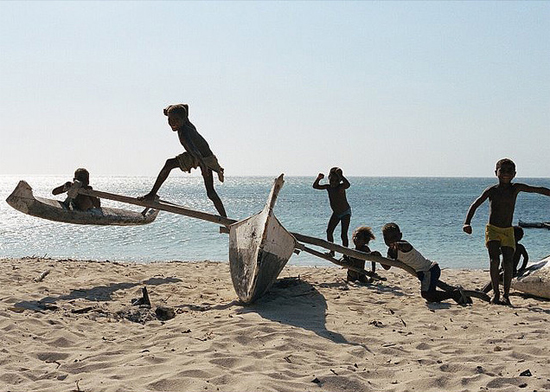
Photo Credit: Adapted from “07,” courtesy of Blue Ventures. -
U.S. v. China: The Global Battle for Hearts, Minds, and Resources
›September 22, 2010 // By Schuyler NullThis summer, Secretary Clinton gave a speech at the Association of Southeast Asian Nations (ASEAN) summit in Hanoi that Chinese Foreign Minister Yang Jiechi called “in effect an attack on China.” What did Clinton say that prompted such a direct response? She called for negotiations over the rights to resource extraction in the South China Sea to be multilateral rather than bilateral:
Showing posts from category oceans.