• woodrow wilson center
  • ecsp

New Security Beat

Subscribe:
  • rss
  • mail-to
  • Who We Are
  • Topics
    • Population
    • Environment
    • Security
    • Health
    • Development
  • Columns
    • China Environment Forum
    • Choke Point
    • Dot-Mom
    • Friday Podcasts
    • Navigating the Poles
    • Reading Radar
  • Multimedia
    • Water Stories (Podcast Series)
    • Backdraft (Podcast Series)
    • Tracking the Energy Titans (Interactive)
  • Films
    • Water, Conflict, and Peacebuilding (Animated Short)
    • Paving the Way (Ethiopia)
    • Broken Landscape (India)
    • Scaling the Mountain (Nepal)
    • Healthy People, Healthy Environment (Tanzania)
  • Publications
  • Events
  • Contact Us

NewSecurityBeat

The blog of the Wilson Center's Environmental Change and Security Program
Showing posts from category newborn and child health.
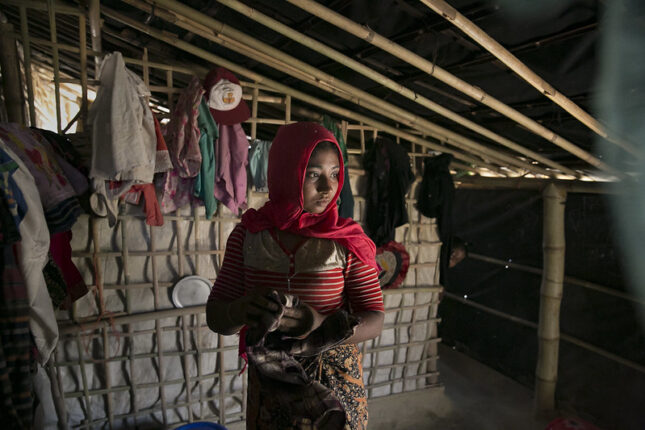
  • To Accelerate Economic Growth, Uganda Should Prioritize Young People’s Health Care

    ›
    Dot-Mom  //  Guest Contributor  //  August 21, 2019  //  By Winfred Ongom
    Young African Leaders

    Even though it has always been said that young people are the future of society, it is important to note that we are very much present. We are ready to thrive and become productive adults. Unfortunately, many adolescents and young people are robbed of their potential. We still face a high risk of unplanned pregnancy, sexually transmitted infections, teenage pregnancy, early child bearing, unsafe abortions, and dropping out of school. 

    MORE
  • Empowered Midwives Could Save More Lives

    ›
    Dot-Mom  //  August 14, 2019  //  By Sarah Barnes
    Photo credit: Karen Kasmauski, Maternal Child Survival Program, Hohoe Midwifery Training School,  Ghana

    “Midwifery is what women want and what the world needs,” said Anneka Knutsson, Chief, Sexual and Reproductive Health Branch, United Nations Population Fund (UNFPA) at the Fourth Global Midwifery Symposium held at Women Deliver on June 2, 2019. More than 200 people, mostly midwives and global midwifery experts, attended the symposium titled, “Empowered Midwives, Transformed Communities.” Organized by UNFPA, the International Confederation of Midwives (ICM), and World Health Organization (WHO), in collaboration with Jhpiego, UNICEF, Laerdal, and the Canadian Association of Midwives, the all-day symposium highlighted how the midwife-led continuity of care model and women-centered care can improve outcomes for women, their newborn, and their families. The discussion also focused on the importance of enabling environments and productive collaborations between midwives and other health professionals.

    MORE
  • Savings Mothers, Giving Life Tackled Three Delays to Improve Maternal and Newborn Health

    ›
    Dot-Mom  //  From the Wilson Center  //  April 10, 2019  //  By Nazra Amin
    SMGL

    “Saving Mothers, Giving Life has undeniably raised the bar in how we address maternal perinatal mortality,” said Dr. Florina Serbanescu, Team Lead of Global Reproductive Health Evidence for Action at the Centers for Disease Control and Prevention, for the launch of the Global Health: Science and Practice Supplement on Saving Mothers, Giving Life at a recent Wilson Center event. Saving Mothers, Giving Life (SMGL), is a public-private partnership created to reduce maternal and newborn mortality in sub-Saharan African countries. “The achievements show that what is often seen as an intractable problem,” said Serbanescu, “can be addressed with the right leadership, resources, and political will.”

    MORE
  • Where Life Begins: Reducing Risky Births in a Refugee Camp

    ›
    Dot-Mom  //  March 6, 2019  //  By Elizabeth Wang
    Jordan Zaatari Camp

    Zaatari camp, the largest Syrian refugee camp in the world, sits less than 12 kilometers away from the border between Syria and northern Jordan. Rows of houses disappear into the desert, making it hard to tell where the camp begins and ends. Metal containers pieced together like patchwork are home to around 80,000 refugees. The remnants of tattered UNHCR tents cover holes in the walls. Almost seven years after the camp opened, this dusty sea of tin roofs has evolved into a permanent settlement.

    MORE
  • Patricia Da Silva: ‘The Time is Now’ to Accelerate Progress for Sexual and Reproductive Health and Rights

    ›
    Dot-Mom  //  Friday Podcasts  //  January 25, 2019  //  By Isabel Griffith

    Patricia de Silva 235“Almost everyone of reproductive age—about 4.3 billion people—will not have access to at least one essential or reproductive health intervention over the course of their lives,” said Patricia Da Silva, Associate Director, International Planned Parenthood Federation United Nations Liaison Office. She spoke at a recent Wilson Center event showcasing recommendations from the Guttmacher-Lancet Commission report, “Accelerate progress–sexual and reproductive health and rights for all,” on how to advance sexual and reproductive health from a human rights perspective.

    MORE
  • Eliane Razafimandimby: Improving the Quality of Maternal and Child Care

    ›
    Dot-Mom  //  Friday Podcasts  //  October 12, 2018  //  By Elizabeth Wang

    Eliane Razafimandimby 235“Even in a weak system without a quality improvement structure, it is possible to support district managers and facility providers to measure and improve quality care,” said Eliane Razafimandimby, Chief of Party of USAID’s flagship Maternal and Child Survival Program (MCSP) in Madagascar, at a recent Wilson Center event on improving the quality of reproductive, maternal, newborn, and child healthcare (RMNCH).

    MORE
  • Saving Lives: Focusing on Outcomes to Improve Maternal and Newborn Healthcare Quality

    ›
    Dot-Mom  //  From the Wilson Center  //  October 3, 2018  //  By Isabel Griffith

    Pregnant women, mothers, and children wait to consult with nurses and doctors, March 6, 2018, courtesy of the Pan American Health Organization.

    Poor quality care is now a bigger barrier to reducing mortality than insufficient access to healthcare, said Dr. Margaret Kruk, Chair of The Lancet Global Health Commission on High Quality Health Systems in the Sustainable Development Goal Era. She spoke at a recent Wilson Center event on strategies to improve and sustain high-quality reproductive, maternal, and newborn care at scale. “We estimate that 8.6 million lives are lost every year due to lack of access to high quality care, and of that 8.6 million, five million lives are lost by people who have already reached out to the health system.”

    MORE
  • Mothers on the Front Lines: Armed Conflict, Aid Distribution, and Maternal and Child Health

    ›
    Dot-Mom  //  From the Wilson Center  //  September 12, 2018  //  By Elizabeth Wang
    Rohingya woman coxs bazaar

    While most people killed in wars are male, several studies have found that “mortality among women in some high-intensity conflicts was as severe as male mortality,” said Henrik Urdal, the Director of the Peace Research Institute Oslo (PRIO), at a recent Wilson Center event on the links between maternal and child health, aid, and armed conflict. “Maternal health is a very natural place to start” when researching excess mortality and indirect deaths among women impacted by war, said Urdal.

    MORE
Newer Posts   Older Posts
View full site

Join the Conversation

  • RSS
  • subscribe
  • facebook
  • G+
  • twitter
  • iTunes
  • podomatic
  • youtube
Tweets by NewSecurityBeat

Trending Stories

  • unfccclogo1
  • Pop at COP: Population and Family Planning at the UN Climate Negotiations

Featured Media

Backdraft Podcast

play Backdraft
Podcasts

More »

What You're Saying

  • Volunteers,At,The,Lagos,Food,Bank,Initiative,Outreach,To,Ikotun, Pan-African Response to COVID-19: New Forms of Environmental Peacebuilding Emerge
    Rashida Salifu: Great piece 👍🏾 Africa as a continent has suffered this unfortunate pandemic.But it has also...
  • A desert road near Kuqa An Unholy Trinity: Xinjiang’s Unhealthy Relationship With Coal, Water, and the Quest for Development
    Ismail: It is more historically accurate to refer to Xinjiang as East Turkistan.
  • shutterstock_1779654803 Leverage COVID-19 Data Collection Networks for Environmental Peacebuilding
    Carsten Pran: Thanks for reading! It will be interesting to see how society adapts to droves of new information in...

What We’re Reading

  • Rising rates of food instability in Latin America threaten women and Venezuelan migrants
  • Treetop sensors help Indonesia eavesdrop on forests to cut logging
  • 'Seat at the table': Women's land rights seen as key to climate fight
  • A Surprise in Africa: Air Pollution Falls as Economies Rise
  • Himalayan glacier disaster highlights climate change risks
More »
  • woodrow
  • ecsp
  • RSS Feed
  • YouTube
  • Twitter
  • Facebook
  • Home
  • Who We Are
  • Publications
  • Events
  • Wilson Center
  • Contact Us
  • Print Friendly Page

© Copyright 2007-2021. Environmental Change and Security Program.

Woodrow Wilson International Center for Scholars. All rights reserved.

Developed by Vico Rock Media

Environmental Change and Security Program

Woodrow Wilson International Center for Scholars

Ronald Reagan Building and International Trade Center

  • One Woodrow Wilson Plaza
  • 1300 Pennsylvania Ave., NW
  • Washington, DC 20004-3027

T 202-691-4000