• woodrow wilson center
  • ecsp

New Security Beat

Subscribe:
  • rss
  • mail-to
  • Who We Are
  • Topics
    • Population
    • Environment
    • Security
    • Health
    • Development
  • Columns
    • China Environment Forum
    • Choke Point
    • Dot-Mom
    • Friday Podcasts
    • Navigating the Poles
    • Reading Radar
  • Multimedia
    • Water Stories (Podcast Series)
    • Backdraft (Podcast Series)
    • Tracking the Energy Titans (Interactive)
  • Films
    • Water, Conflict, and Peacebuilding (Animated Short)
    • Paving the Way (Ethiopia)
    • Broken Landscape (India)
    • Scaling the Mountain (Nepal)
    • Healthy People, Healthy Environment (Tanzania)
  • Publications
  • Events
  • Contact Us

NewSecurityBeat

The blog of the Wilson Center's Environmental Change and Security Program
Showing posts from category newborn and child health.
  • Midwives Needed to Achieve Universal Health Coverage by 2030

    ›
    Dot-Mom  //  From the Wilson Center  //  March 25, 2020  //  By Deekshita Ramanarayanan

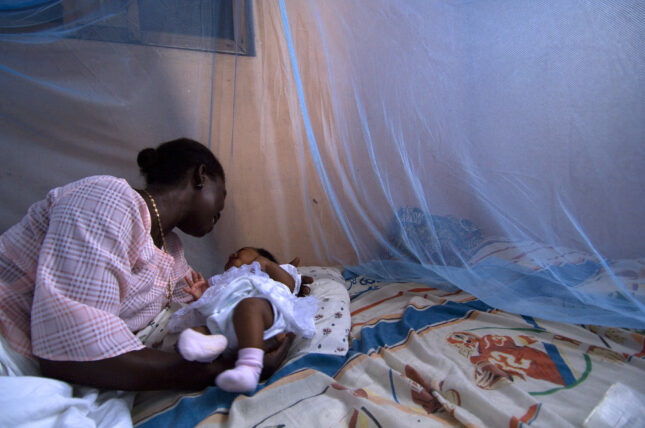
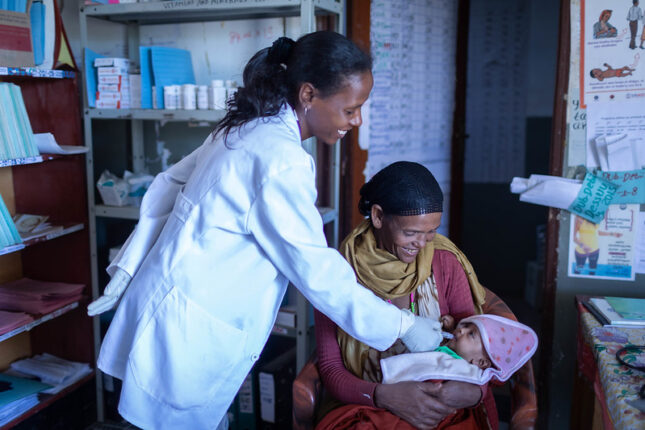
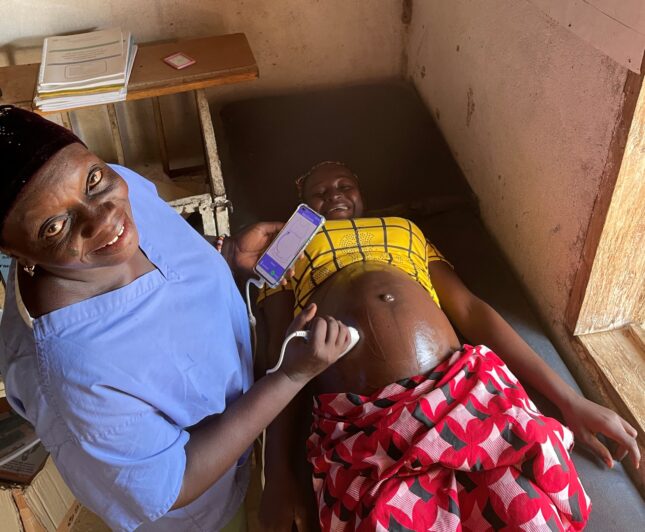
    midwifeWe are in the decade of action, said Anneka Knutsson, Chief of the Sexual and Reproductive Health Branch at the United Nations Population Fund (UNFPA), at a recent Wilson Center event on midwives’ crucial role in achieving universal health coverage by 2030. The World Health Organization (WHO) has designated 2020 as the Year of the Nurse and the Midwife to celebrate the accomplishments and importance of nurses and midwives in providing not just maternal health care, but care across the lifespan. Currently, 22 million nurses and 2 million midwives globally deliver 80 percent of all healthcare services in low-resource settings. However, the world will need 9 million more nurses and midwives by 2030 to meet rising healthcare demands.

    MORE
  • To End Fistula by 2030, First Strengthen the Healthcare Workforce

    ›
    Dot-Mom  //  Guest Contributor  //  March 4, 2020  //  By Vandana Tripathi

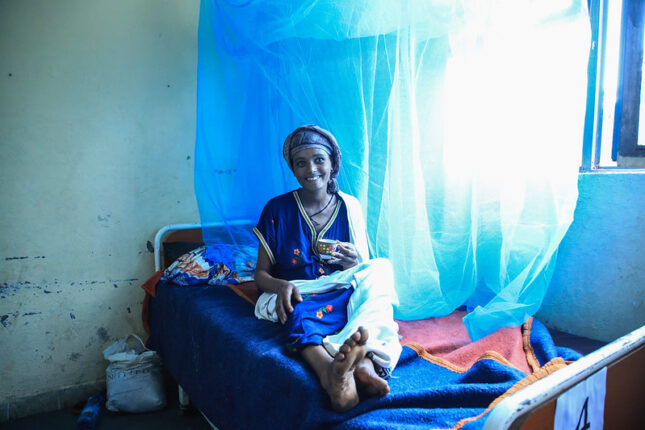
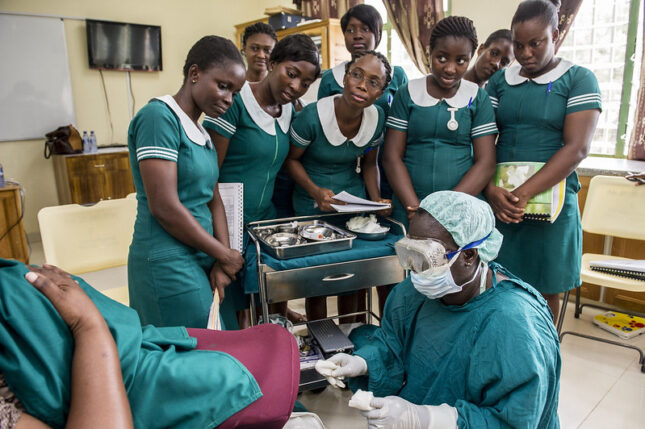
    surgeons nigeriaWhen childbirth takes place without skilled birth attendants or adequate emergency obstetric care, a woman may suffer from obstetric fistula. Women with fistula live with uncontrollable urinary and/or fecal incontinence, because a hole has formed between the birth canal and bladder or rectum. They have usually survived prolonged/obstructed labor, often lost their child to stillbirth, and frequently face severe social isolation and stigma. There are also now more and more women suffering from iatrogenic fistula caused by injuries during pelvic surgery, especially obstetric or gynecological surgery. Between 1 million and 2 million women currently need fistula repair, with thousands of new cases each year. However, most fistulas can be treated, enabling women to resume healthy, productive lives in their communities. Recognizing this, the United Nations has issued a call to end fistula by 2030.

    MORE
  • U.S. Representative Lauren Underwood on U.S. Maternal Health and Policy Solutions

    ›
    Dot-Mom  //  January 22, 2020  //  By Deekshita Ramanarayanan
    shutterstock_1108509287

    “This is a unique moment—a crisis that has demanded action for decades and is now getting the attention it deserves,” said U.S. Representative Lauren Underwood (D-IL-14) at a recent event on maternal health and disparities hosted at George Washington University’s Milken Institute School of Public Health. The United States has the highest maternal mortality rate among high-income countries and for every maternal death, there are 70 “near-misses.” It is important to take a “life-course” approach to address this issue from a policy perspective, said Underwood.

    MORE
  • All the Population Future We Cannot See

    ›
    Guest Contributor  //  Uncharted Territory  //  December 17, 2019  //  By Robert Engelman

    Engelman-645x430In the quarter century the Wilson Center’s Environmental Change and Security Program has been pondering the issues for which it’s named, the world’s demographic future has been wobbling. A key concern of analysts: How many people will farmers need to feed in 2050? Mainstream projections have teetered between 8.9 billion and 9.8 billion, amounting to an increase of between 13 and 21 percent over today’s 7.7 billion. This significant variation in projections is rarely acknowledged by prognosticators. Many simply round up today’s latest guess and state confidently that there will be 10 billion people in 2050—though just a few years ago, the number most confidently stated was 9 billion.

    MORE
  • CODE BLUE: The Importance of Integrating Care for Maternal Health and Non-Communicable Disease

    ›
    CODE BLUE  //  Dot-Mom  //  From the Wilson Center  //  December 5, 2019  //  By Deekshita Ramanarayanan

    CODE-BLUE-Graphic-1 382

    “Non-communicable diseases have been the leading cause of death for women for at least the past 30 years but are often underreported and undertreated,” said Priya Kanayson, Policy and Advocacy Manager at NCD Alliance at a recent Wilson Center event on the impact of non-communicable diseases (NCDs) on maternal health. The event marked the official launch of the Maternal Health Initiative’s CODE BLUE series, developed in partnership with EMD Serono, a business of Merck KGaA, Darmstadt, Germany. Globally, in 2018, 73 percent of deaths among women were due to NCDs, amounting to 18 million women of reproductive age dying per year due to NCDs. The compounding effects of NCDs complicate women’s experiences in many unseen ways, and the rise and gravity of NCDs pose a growing and often overlooked challenge to maternal health worldwide.

    MORE
  • ICPD25: Quality of Care and Universal Health Coverage Should Be Basic Human Rights

    ›
    Dot-Mom  //  December 2, 2019  //  By Sarah Barnes

    shutterstock_766560016The Nairobi Summit on ICPD25 was an opportunity for the global community to re-commit to the unfinished objectives of the 1994 International Conference on Population and Development’s (ICPD) Programme of Action and accelerate the progress to achieve the Sustainable Development Goals by 2030.

    MORE
  • Family Planning in Humanitarian Settings is Achievable and Effective

    ›
    Dot-Mom  //  From the Wilson Center  //  October 24, 2019  //  By Deekshita Ramanarayanan
    CH2610

     “Family planning saves lives, even in times of crisis,” said Gwen K. Young, Managing Director at the Global Emergency Response Coalition at a Wilson Center event on October 8 on the importance of providing family planning and reproductive health services in humanitarian settings. Speakers from Save the Children, CARE, the International Rescue Committee, and FP2020 spoke to programmatic successes, innovative solutions, and local partnerships in fragile settings. Young highlighted that 1 in 70 people worldwide need humanitarian assistance and a quarter of these are women and girls of reproductive age. All told, more than 30 million women and girls in 42 countries.

    MORE
  • Mayor Muriel Bowser’s Maternal and Infant Health Summit: Addressing Disparities in Maternal Health in Washington, D.C.

    ›
    Dot-Mom  //  September 26, 2019  //  By Deekshita Ramanarayanan
    Mayor Bowser

    The maternal and child health crisis in Washington, D.C. is “a public health crisis that has been hiding in plain sight for 30 years”, said D.C. Mayor Muriel Bowser at the second annual Maternal and Infant Health Summit on September 10 at the Walter E. Washington Convention Center. Panelists at this year’s summit discussed issues such as racial disparities in healthcare, proper nutrition and breastfeeding for new and expectant mothers, and support for midwives and doulas in D.C. “The health of a nation is dependent on the health of its women,” said actress and activist, Alyssa Milano.

    MORE
Newer Posts   Older Posts
View full site

Join the Conversation

  • RSS
  • subscribe
  • facebook
  • G+
  • twitter
  • iTunes
  • podomatic
  • youtube
Tweets by NewSecurityBeat

Trending Stories

  • unfccclogo1
  • Pop at COP: Population and Family Planning at the UN Climate Negotiations

Featured Media

Backdraft Podcast

play Backdraft
Podcasts

More »

What You're Saying

  • Volunteers,At,The,Lagos,Food,Bank,Initiative,Outreach,To,Ikotun, Pan-African Response to COVID-19: New Forms of Environmental Peacebuilding Emerge
    Rashida Salifu: Great piece 👍🏾 Africa as a continent has suffered this unfortunate pandemic.But it has also...
  • A desert road near Kuqa An Unholy Trinity: Xinjiang’s Unhealthy Relationship With Coal, Water, and the Quest for Development
    Ismail: It is more historically accurate to refer to Xinjiang as East Turkistan.
  • shutterstock_1779654803 Leverage COVID-19 Data Collection Networks for Environmental Peacebuilding
    Carsten Pran: Thanks for reading! It will be interesting to see how society adapts to droves of new information in...

What We’re Reading

  • Rising rates of food instability in Latin America threaten women and Venezuelan migrants
  • Treetop sensors help Indonesia eavesdrop on forests to cut logging
  • 'Seat at the table': Women's land rights seen as key to climate fight
  • A Surprise in Africa: Air Pollution Falls as Economies Rise
  • Himalayan glacier disaster highlights climate change risks
More »
  • woodrow
  • ecsp
  • RSS Feed
  • YouTube
  • Twitter
  • Facebook
  • Home
  • Who We Are
  • Publications
  • Events
  • Wilson Center
  • Contact Us
  • Print Friendly Page

© Copyright 2007-2021. Environmental Change and Security Program.

Woodrow Wilson International Center for Scholars. All rights reserved.

Developed by Vico Rock Media

Environmental Change and Security Program

Woodrow Wilson International Center for Scholars

Ronald Reagan Building and International Trade Center

  • One Woodrow Wilson Plaza
  • 1300 Pennsylvania Ave., NW
  • Washington, DC 20004-3027

T 202-691-4000