-
The Arc | Joanita Babirye on Women’s Climate Leadership in Uganda
›
In today’s episode of The Arc, ECSP’s Claire Doyle and Angus Soderberg interview Joanita Babirye, Co-founder of Girls for Climate Action. Joanita shares her firsthand experiences with climate stressors and the broader impact of climate change on women in Uganda. But it’s also a story of hope: She tells us about her work training over 300 women in climate action and facilitating climate demonstration hubs, underscoring the role that women and girls can play as catalysts for change in the face of the climate crisis.
-
Relief, Recovery, and Peace: David Nicholson on COP28’s New Theme
›In a new mini-series previewing the upcoming UN Climate Summit (COP28)’s new focus on relief, recovery, & peace, ECSP Program Director Lauren Risi spoke with David Nicholson, Director of the Environment, Energy and Climate Change Technical Support Unit at Mercy Corps.Nicholson described his role in ensuring that climate change is at the center of Mercy Corps’ wide-ranging and successful global humanitarian aid programs in 42 countries—and the importance of having local staff to make interventions a true partnership. He also talks about climate finance, and his hopes that COP28’s theme of “relief, recovery and peace” will advance the view that peacemaking is essential to adaptation efforts.
-
Circumventing the Chokepoint: Can the US Produce More Rare Earths?
›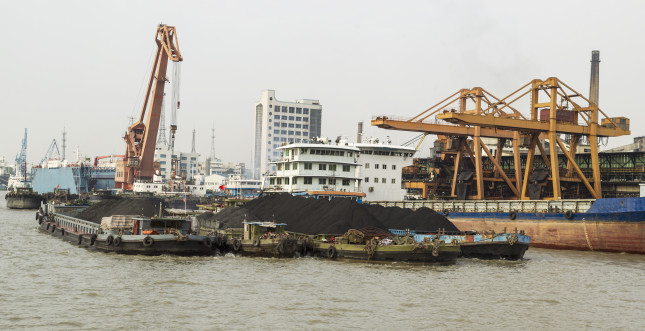
Nowhere is China’s critical mineral dominance greater than in rare earth supply chains. In 2022, the US government estimated that China controlled “nearly 60 percent of mined production, over 85 percent of processing capacity, and over 90 percent of permanent magnet production.”
-
ECSP Weekly Watch | October 23 – 27
›A window into what we are reading at the Wilson Center’s Environmental Change and Security Program
DRC Mining Project Displaces a Local Community
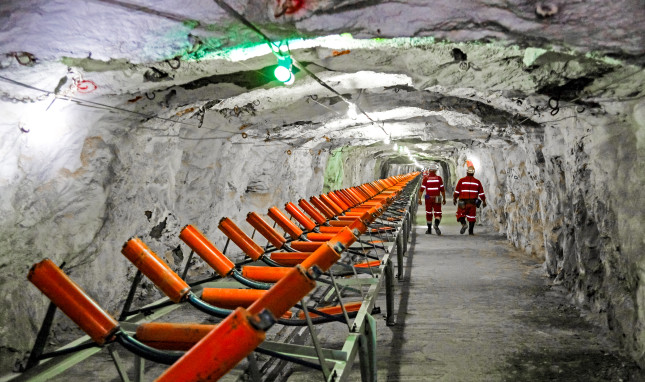
Kolwezi is the “cobalt capital of the world.” But residents of this city in the Democratic Republic of Congo are being compelled to relocate under questionable circumstances in order to make room for a new mine sponsored by the Chinese mining company COMMUS.
-
The State of Play for Critical Mineral Policies: A Berlin Climate Security Conference Roundtable
›The global transition to low-carbon energy is spurring new momentum to produce and secure the mineral inputs necessary for renewable technologies. Yet meeting demand may prove difficult. From electric cars to wind turbines, essential renewable energy technologies often require more minerals than fossil fuel-powered infrastructure. The International Energy Agency (IEA) projects that efforts to meet the goals of the Paris Agreement could lead to a fourfold increase in mineral demand by 2040.
-
ECSP Weekly Watch | October 16 – 20
›A window into what we are reading at the Wilson Center’s Environmental Change and Security ProgramWater Security Concerns in Gaza
Hamas’ surprise attack on Israel on October 7th led the Israeli government to cut off water supplies to the Gaza Strip with immediate effect. This has resulted in a clean water crisis that the UN warns is now a matter of life and death.
-
Chinese Rail Export’s Environmental Dilemma: Economic Gains or Green?
›China Environment Forum // Guest Contributor // Vulnerable Deltas // October 19, 2023 // By Keren ZhuMany developing countries today face the dual challenges of development and decarbonization, racing against climate change that makes the latter increasingly urgent. This dilemma brings China’s railway investments in Africa under the spotlight. Can stakeholders of these megaprojects achieve the goal of boosting host countries’ economies while mitigating the socio-environmental risks of these ventures? -
Water Cooperation and Scientific Networks: A Work of Passion
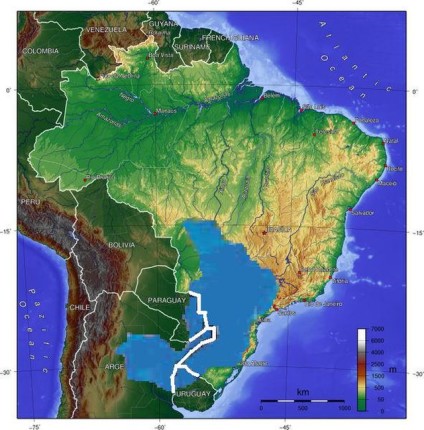
›Groundwater is relied upon for roughly half of global drinking water. And as climate change alters precipitation patterns and pollution of surface water continues to increase, our collective dependence on groundwater is likely to increase.
Getting ahead of the potential conflicts, or in some cases, catching up with them, requires an increase in effective groundwater cooperation and diplomacy. Yet the vast majority of transboundary aquifers exist without any form of agreement among the states that share them. This state of affairs leaves the aquifers—and the people who rely upon them—vulnerable to overexploitation, environmental degradation, and the risk of interstate conflict.
Showing posts from category natural resources.
 In a new mini-series previewing the upcoming UN Climate Summit (COP28)’s new focus on relief, recovery, & peace, ECSP Program Director Lauren Risi spoke with David Nicholson, Director of the Environment, Energy and Climate Change Technical Support Unit at Mercy Corps.