-
Imagine a Future Without Single-Use Plastics
›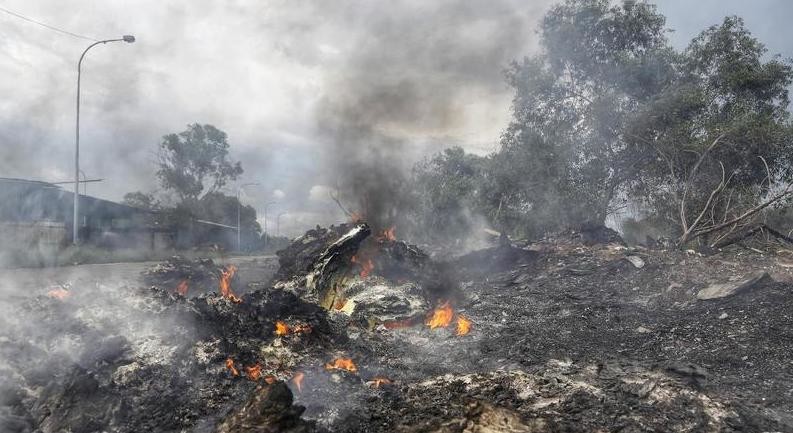
If producing plastic waste were a race, Japan would be rushing for the gold medal. Japan and the United States both rank the highest per capita for plastic packaging waste in the world. Former Prime Minister Shinzo Abe’s administration set a goal to reduce Japan’s plastic waste production by 25 percent by 2030 and recent polls show the majority of the Japanese public wants strong actions to reduce plastic waste. Nevertheless, Japan is not doing enough to stem the tide of plastic entering the ocean. If Japan and the rest of the world fail to act more boldly, global oceanic plastic waste could triple by 2040. Current commitments of governments and corporations would only reduce global plastic leakage seven percent below the business-as-usual scenario. Japan’s current waste management system prioritizes recycling and incineration, encouraging a make-take-waste linear model of plastic consumption. Japan needs a circular economy built on a culture of reduction and reuse instead of single-use plastics.
-
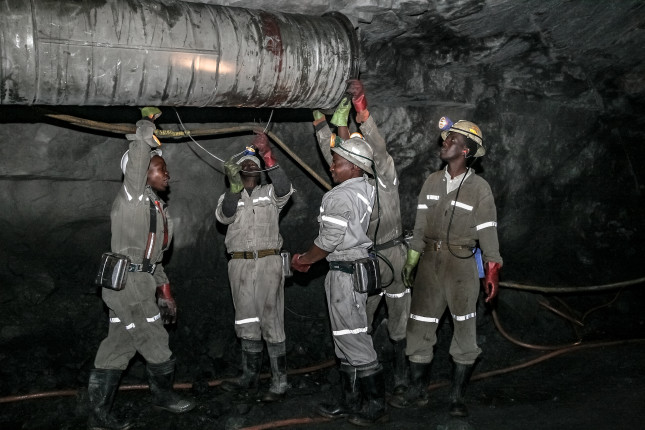
The Challenge of Securing Access to Minerals for the Green Transition
›
COP26 came to a close in Glasgow this weekend, with activists and developing country governments disappointed in the global ambition as laid out in the final agreement text. On the one hand, the final document reflects commitments to cut on methane, doubling of monetary compensation for adaptation measures, and the need for cooperation between the United States and China—the two largest carbon emitters—to set out a roadmap to keep warming below 2 degrees Celsius. On the other hand, developing countries criticized rich countries for evading the language of loss and damage—compensation that recognizes that the countries most affected by climate change have contributed the least to planet-warming greenhouse gases.
-
Hitting the Brakes on Plastics in China’s Food Delivery Industry: Q&A with Zheng Xue and Sherry Lu of Plastic Free China
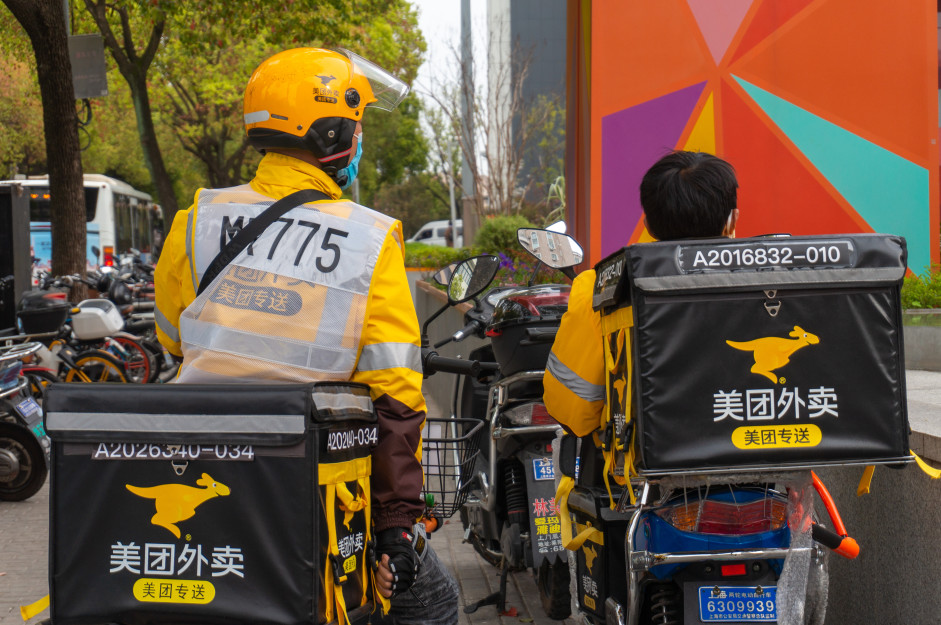
›China Environment Forum // Q&A // November 4, 2021 // By Solange Reppas, Mingwei Zhu, Tongxin Zhu & McKenna PotterIn every Chinese city, there is an army of motorcycles and mopeds weaving through the traffic jams, and sometimes even venturing on sidewalks, to deliver millions of food and e-commerce orders each day. Meituan, one of China’s most popular food delivery apps, delivers 30 million orders a day, serving up 100 million plastic containers. According to Greenpeace, e-commerce and express delivery in China generated 9.4 million tons of packaging waste in 2018 and will likely triple to 41.3 million tons by 2025. -
Can COP26 Meet the Climate and Conflict Challenge?
›Global climate action must be sensitive to ‘land grabs’ and lost livelihoods for both a safer and greener world to be built in Glasgow.
With all eyes on COP26, the world is holding its breath. This year’s negotiations will need to see truly ambitious commitments to ramp up climate action in order to avoid a dangerous future. There has never been a greater sense of the urgency in the climate movement.
As a peacebuilder, I’m looking closely at what the implications of the much-needed pledges might be for the 1.5 billion people living in fragile and conflict-affected contexts. The discussion on the impact of climate change on security and social stability is gaining momentum but is still effectively on the fringes of the COP26 agenda. That is a concern.
-
U.S. and Chinese Aquaculture Taps into a Carbon-Free Geothermal Energy Source
›From Friday night fish fries to shrimp cocktails, people sheltering in place have learned how to cook their favorite dishes at home. As a result U.S. seafood sales have doubled during the pandemic. Globally, the United States ranks fifth in seafood consumption and China—where hunger for seafood has skyrocketed with rising incomes—is number one. While wild fisheries are on the decline, aquaculture is expanding to increase the global food supply.
-
The Water Defenders: How Ordinary People Saved a Country from Corporate Greed: A Conversation with Co-authors Robin Broad and John Cavanagh
›“Many people have watched fights between communities and big corporations around the world. The corporations usually win so those are the Goliath. The Davids usually lose,” says John Cavanagh, co-author of The Water Defenders: How Ordinary People Saved a Country from Corporate Greed. In this week’s episode of Friday Podcasts, Cavanagh and co-author Robin Broad recount how local activists mobilized a global coalition of religious leaders, labor unions, and environmental activists to block an international corporation from opening a gold mine that threatened El Salvador’s fragile water supply.
-
What Next for U.S. Engagement on Cambodia’s Protected Forests?
›Cambodia’s lush Prey Lang rainforest is abundant with animals, insects and birds, including endangered species, and diverse types of forests. It also provides resin tapping and other sources of livelihood for some 250,000 people, many of whom are Indigenous Kuy, living within or adjacent to the forest.
-
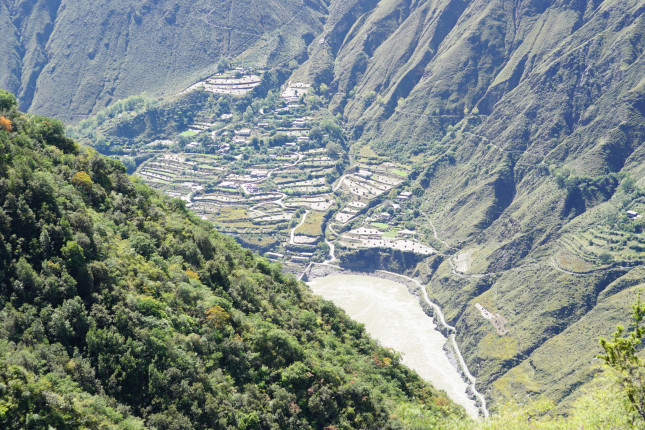
To Build or Not to Build: Western Route of China’s South-North Water Diversion Project
›China Environment Forum // Guest Contributor // August 12, 2021 // By Hongzhou Zhang & Genevieve Donnellon-MayOne of the biggest challenges facing China’s future development is water, which must support the country’s 1.4 billion people and booming industries. Despite being one of the top five countries with the largest freshwater resources, on a per capita basis, China faces serious water shortages which are further compounded by a highly uneven spatial distribution and precipitation: the densely populated north suffers from acute water shortages whereas the south is prone to severe floods. To optimize the allocation of water resources, China has embarked on the construction of a mega engineering project, the South North Water Diversion project (SNWD).
Showing posts from category natural resources.