-
The Long Tail of Paris and What to Watch for Next
›December 4, 2015 // By Schuyler Null
The most important and anticipated climate change conference in years is finally underway. In some ways, as Bill McKibben and Andrew Revkin have pointed out, its success is relatively assured thanks to the number of major commitments countries have already made. But that doesn’t mean there’s nothing to see here. “The conference isn’t the game – it’s the scoreboard,” writes McKibben. To extend the metaphor even more, you might call it the league scoreboard, giving us a glimpse of many different storylines playing out.
-
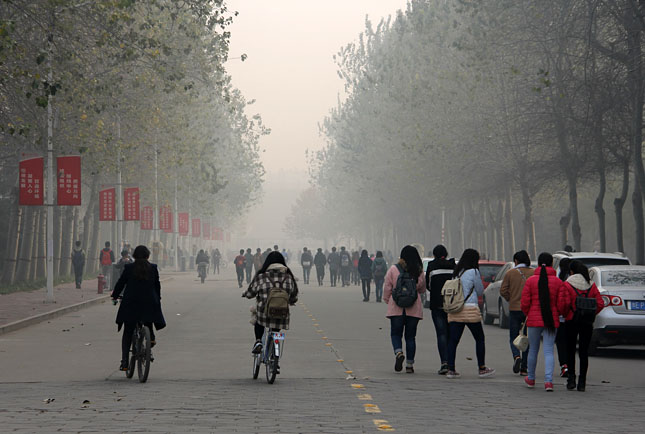
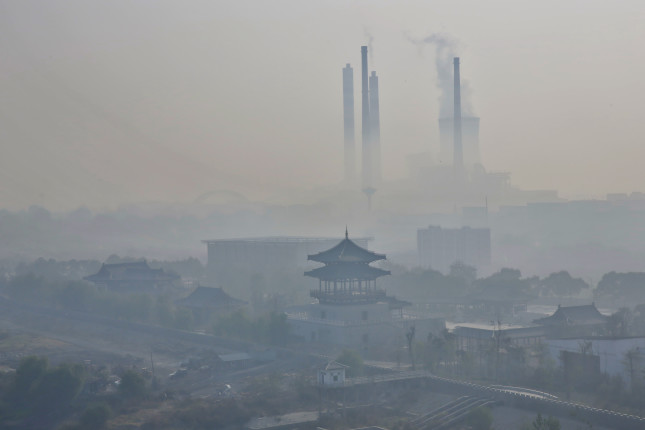
Will China’s New Air Law Solve its Pollution Crisis?
›
The recent news that China has been underreporting its already globe-leading coal consumption by nearly 20 percent for the last decade underscores the scale of its air pollution crisis.
-
Ruth Greenspan Bell and Barry M. Blechman, Foreign Affairs
Turning Down the Heat: Progress in the Fight Against Climate Change
›November 24, 2015 // By Wilson Center StaffLast week, at a meeting of the Organization for Economic Cooperation and Development in Paris, the United States, Japan, and several other nations reached an agreement that will restrict financing for overseas coal projects. The deal will limit investment in the dirtiest, coal-fired power plants but will allow some continued investment in more efficient coal technology. Japan is one of the major sources of finance for the coal industry, so the agreement is an important moment in the effort to reduce global emissions.
-
Will a Welcome Peace Derail Colombia’s Sustainable Development Plans?
›When Colombia is in the news, it’s not necessarily for the reasons we Colombians would like. We have lived through 50 years of violent conflict. Peace is a very abstract idea to most of us. Despite this we are still some of the happiest people on Earth.
-
Why Canada Is an Energy Titan and How Its Hydropower Can Help the U.S.
›The United States: The world’s lone remaining superpower, home of the world’s largest economy and military, the world’s largest producer and consumer of natural gas, and soon the leading producer and consumer of oil.
-
In Shenzhen, Tracking the Early Steps of China’s Carbon Pivot
›SHENZHEN, China – To some extent, the contemporary industrial age is a global narrative of substance abuse and recovery.
-
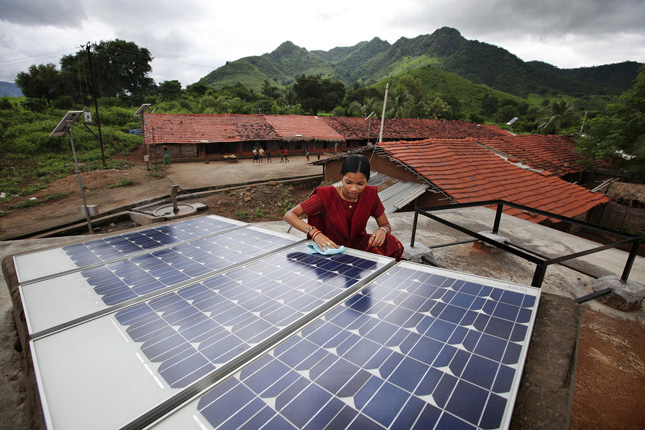
Falling Costs, Rising Opportunities: Scaling Up Renewable Energy in the Developing World [Part Two]
›“Clean energy has gone from being the ‘right thing to do’ in combating climate change, to being the most cost-effective option for many energy-insecure countries,” said Carrie Thompson, deputy director of the U.S. Agency for International Development’s Regional Development Mission for Asia, during a day-long conference on renewable energy at the Wilson Center on October 27 (read part one of our coverage here).
-
Zero-Emission Energy for 1.3 Billion People? Scaling Up Renewable Energy in the Developing World [Part One]
›The renewable energy sector has reached a critical inflection point where costs are competitive with fossil fuels and investment is ramping up in a big way, said more than a dozen experts at a day-long conference co-hosted by ECSP and the U.S. Agency for International Development’s Office of Global Climate Change on October 27.
Showing posts from category mitigation.