• woodrow wilson center
  • ecsp

New Security Beat

Subscribe:
  • rss
  • mail-to
  • Who We Are
  • Topics
    • Population
    • Environment
    • Security
    • Health
    • Development
  • Columns
    • China Environment Forum
    • Choke Point
    • Dot-Mom
    • Friday Podcasts
    • Navigating the Poles
    • Reading Radar
  • Multimedia
    • Water Stories (Podcast Series)
    • Backdraft (Podcast Series)
    • Tracking the Energy Titans (Interactive)
  • Films
    • Water, Conflict, and Peacebuilding (Animated Short)
    • Paving the Way (Ethiopia)
    • Broken Landscape (India)
    • Scaling the Mountain (Nepal)
    • Healthy People, Healthy Environment (Tanzania)
  • Publications
  • Events
  • Contact Us

NewSecurityBeat

The blog of the Wilson Center's Environmental Change and Security Program
Showing posts from category mitigation.
  • Tripp Shealy and Elke U. Weber, The Daily Climate

    Built-In Climate Solutions: Adjusting Defaults to Encourage More Efficient Design

    ›
    November 14, 2014  //  By Wilson Center Staff
    efficient-design

    The original version of this article, by Tripp Shealy and Elke U. Weber, appeared on The Daily Climate.

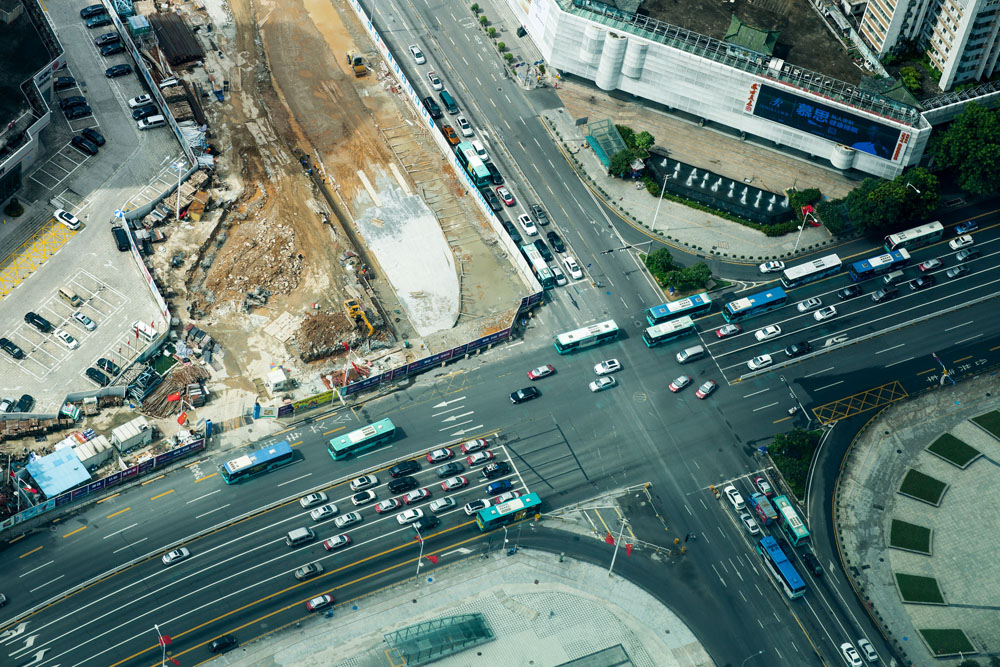
    New York City Mayor Bill de Blasio has called for “urgent, daring action” to help deliver on his pledge to reduce New York City’s greenhouse gas emissions by 80 percent by 2050. The Mayor asked us all to think about “the reckless way in which we live.”

    MORE
  • Climate Change a National Security Issue, Say Local and National Leaders From Pacific Northwest

    ›
    From the Wilson Center  //  September 18, 2014  //  By Moses Jackson
    national-guard1

    The effects of climate change “are here now” and pose a “serious challenge” for the United States, said Alice Hill, White House senior advisor for preparedness and resilience, at the Wilson Center on July 29. [Video Below]

    MORE
  • Silver Buckshot: Alternative Pathways Towards Greenhouse Gas Mitigation

    ›
    From the Wilson Center  //  August 27, 2014  //  By Benjamin Dills
    silver_buckshot

    In 1986, global nuclear weapons stockpiles peaked at nearly 70,000 warheads. By the beginning of 2013, there were just over 17,000, with only 4,400 kept operational. This dramatic reduction was the fruit of a negotiation process that began in the late 1940s. In spite of incredible tensions between the United States and the Soviet Union, negotiators were able to make progress once they focused on building trust with small, pragmatic steps, rather than starting with the complete elimination of all weapons. [Video Below]

    MORE
  • Jacob Glass, PassBlue

    New Investment Law in Peru Undermines Rights of Indigenous Women

    ›
    August 22, 2014  //  By Wilson Center Staff
    peruvian-woman

    The original version of this article, by Jacob Glass, appeared on PassBlue.

    A new law in Peru encouraging investment in the country’s extractive industries has reignited debate on the lack of power indigenous women have in the mostly rural societies where they often live. The International Indigenous Women’s Forum, which drew more than 60 native women from across the world to Peru last month, highlighted this important issue.

    MORE
  • Africa’s Trifecta: Food Security, Resilience, and Demographics at the U.S.-Africa Leaders Summit

    ›
    August 5, 2014  //  By Roger-Mark De Souza
    bananas

    “You can’t build a peaceful world on an empty stomach,” Secretary of State John Kerry said yesterday at a high-level working session on resilience and food security, quoting Norman Borlaug, the father of last century’s “Green Revolution.”

    MORE
  • Melinda Harm Benson and Robin K. Craig, Ensia

    The End of Sustainability?

    ›
    July 30, 2014  //  By Wilson Center Staff
    end-of-sustainability

    The original version of this article, by Melinda Harm Benson and Robin K. Craig, appeared on Ensia.

    The time has come for us to collectively reexamine – and ultimately move past – the concept of sustainability. The continued invocation of sustainability in policy discussions ignores the emerging realities of the Anthropocene, which is creating a world characterized by extreme complexity, radical uncertainty, and unprecedented change. From a policy perspective, we must face the impossibility of even defining – let alone pursuing – a goal of “sustainability” in such a world. It’s not that sustainability is a bad idea. The question is whether the concept of sustainability is still useful as an environmental governance framework.

    MORE
  • Climate Change Will Test Water-Sharing Agreements

    ›
    July 15, 2014  //  By Thomas Curran
    red-deer-river

    Many existing water-sharing treaties should be re-assessed in the context of climate change, write Shlomi Dinar, David Katz, Lucia De Stefano, and Brian Blakespoor in a World Bank working paper.

    MORE
  • No REDD+ Program Is an Island: Integrating Gender Into Forest Conservation Efforts

    ›
    From the Wilson Center  //  June 25, 2014  //  By Donald Borenstein

    Nepalese women carry wood harvested sustainably from a forest.Since 2005, the Reducing Emissions from Deforestation and Forest Degradation program (REDD+) has functioned as a mechanism to financially incentivize the preservation of forestlands in order to reduce greenhouse gas emissions. But beyond its original use, some organizations have also started exploring ways it can help with other development initiatives, like women’s empowerment. [Video Below]

    MORE
Newer Posts   Older Posts
View full site

Join the Conversation

  • RSS
  • subscribe
  • facebook
  • G+
  • twitter
  • iTunes
  • podomatic
  • youtube
Tweets by NewSecurityBeat

Trending Stories

  • unfccclogo1
  • Pop at COP: Population and Family Planning at the UN Climate Negotiations

Featured Media

Backdraft Podcast

play Backdraft
Podcasts

More »

What You're Saying

  • Volunteers,At,The,Lagos,Food,Bank,Initiative,Outreach,To,Ikotun, Pan-African Response to COVID-19: New Forms of Environmental Peacebuilding Emerge
    Rashida Salifu: Great piece 👍🏾 Africa as a continent has suffered this unfortunate pandemic.But it has also...
  • A desert road near Kuqa An Unholy Trinity: Xinjiang’s Unhealthy Relationship With Coal, Water, and the Quest for Development
    Ismail: It is more historically accurate to refer to Xinjiang as East Turkistan.
  • shutterstock_1779654803 Leverage COVID-19 Data Collection Networks for Environmental Peacebuilding
    Carsten Pran: Thanks for reading! It will be interesting to see how society adapts to droves of new information in...

What We’re Reading

  • Rising rates of food instability in Latin America threaten women and Venezuelan migrants
  • Treetop sensors help Indonesia eavesdrop on forests to cut logging
  • 'Seat at the table': Women's land rights seen as key to climate fight
  • A Surprise in Africa: Air Pollution Falls as Economies Rise
  • Himalayan glacier disaster highlights climate change risks
More »
  • woodrow
  • ecsp
  • RSS Feed
  • YouTube
  • Twitter
  • Facebook
  • Home
  • Who We Are
  • Publications
  • Events
  • Wilson Center
  • Contact Us
  • Print Friendly Page

© Copyright 2007-2021. Environmental Change and Security Program.

Woodrow Wilson International Center for Scholars. All rights reserved.

Developed by Vico Rock Media

Environmental Change and Security Program

Woodrow Wilson International Center for Scholars

Ronald Reagan Building and International Trade Center

  • One Woodrow Wilson Plaza
  • 1300 Pennsylvania Ave., NW
  • Washington, DC 20004-3027

T 202-691-4000