-
Highlights from the First-Ever State of the World’s Nursing Report
›
The year 2020 has been designated as the Year of the Nurse and the Midwife by the World Health Organization. In April 2020, the World Health Organization (WHO), International Council of Nurses, and Nursing Now, published the first-ever State of the World’s Nursing Report. This week’s Friday Podcast highlights remarks from a recent Wilson Center event on the report’s findings and recommendations, gender implications in the health workforce, and the role of nurses during the COVID-19 pandemic.
-
COVID-19 Shines Spotlight on Race and Gender Inequities in Healthcare
›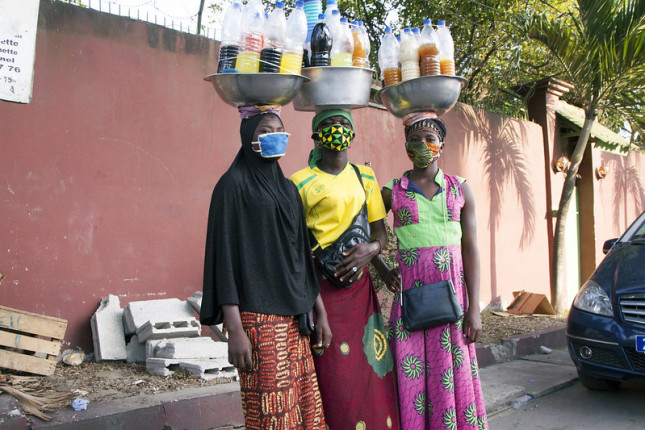
“While COVID-19 has wreaked havoc the world over, history has proven, and recent data agrees that the hardest hit will be the world’s women and girls and populations already impacted by racism and discrimination,” said Sarah Barnes, Project Director of the Maternal Health Initiative and Women and Gender Advisor at the Wilson Center, at a recent event on the impact of COVID-19 on race and gender inequities. Coronavirus has hurt women and girls in many ways. Among them, women have been pushed back into the home. And healthcare workers and caregivers who are mostly women are jeopardizing their own health, caring for others.
-
The COVID-19 Pandemic and Vulnerable Populations: A Wilson Center NOW Interview with James Hollifield
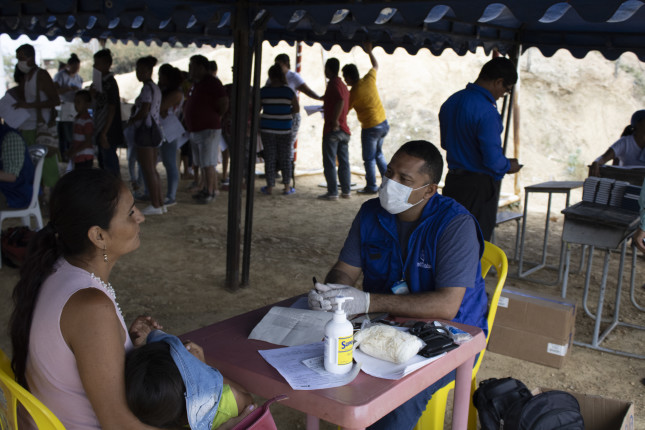
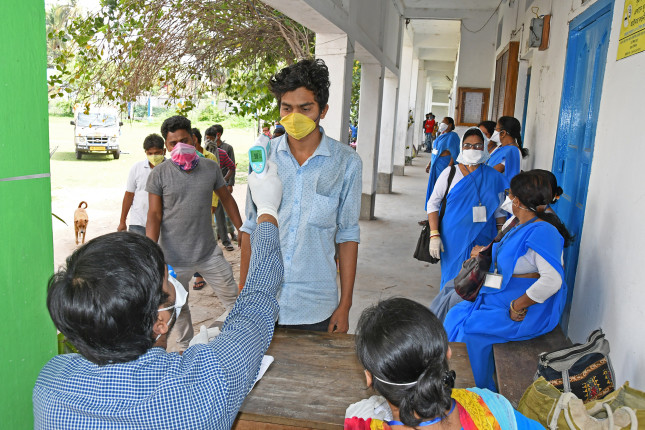
›Refugees and migrants are the most vulnerable and will bear the brunt of the Covid-19 pandemic, said James Hollifield, a Wilson Center Global Fellow, in a recent episode of Wilson NOW. These populations are often already at higher risk due to insufficient water and food supplies, and those confined in large camps are at greater risk of spreading the disease. According to Hollifield, although we have not yet seen the full extent of the damage, “we can see with both refugees and migrants in particular, especially seasonal migrants, that there’s a great danger here of the virus spreading like wildfire in the camps and in the dormitories.”
-
Navigating Land and Security When Climate Change Forces People to Relocate
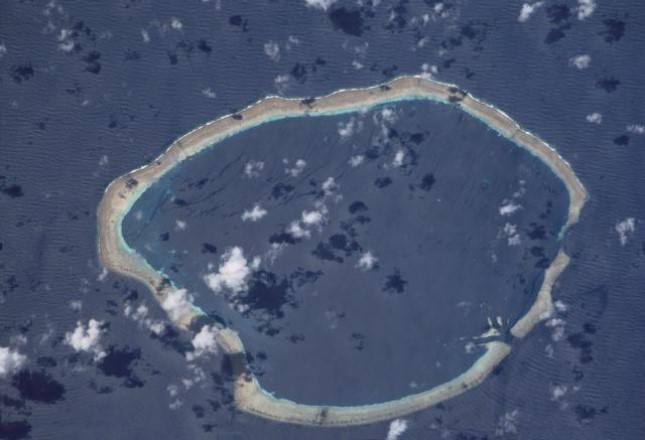
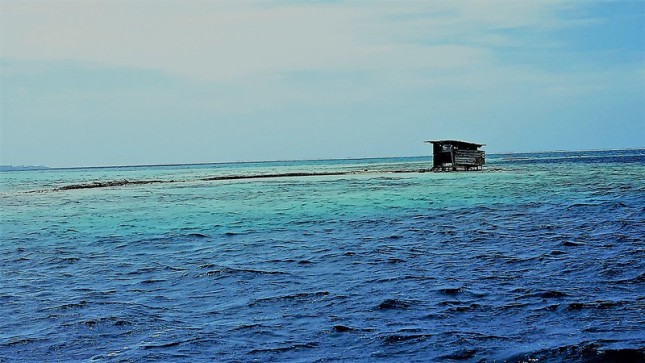
›At an event organized by the Coalition of Atoll Nations on Climate Change in December 2019, Tabitha Awerika, 21, from Kiribati, urged world leaders to listen to the climate science and to the pleas of those living in the South Pacific. “I will not leave the lands of my ancestors,” she said. “I will not abandon my motherland. I refuse to leave the only place I call home.”
-
Migrant Workers in India: Insecurity in the Time of Coronavirus
›“The only certainty is uncertainty,” Pliny the Elder reportedly said. Though all historical times are full of uncertainties, some seem more so than others. This is one of those times.
A major slowdown of the Indian economy was brewing and completely spilled over when I got to India in September 2019 to start my dissertation fieldwork on Indian women construction workers’ experiences and conceptualizations of Human Security. Wages stagnated. Consumer spending fell. Construction, real estate, and other industries were sent reeling. Construction workers’ livelihoods were teetering on the brink. Uncertainty became the backbone of their existence.
-
Why Climate and Conflict Are Shaping the Crises of Our Time (And What To Do About It)
›Humanitarian need is increasing. Crises are becoming more complex through the interactions between climate change, disasters, and conflicts. Not only are humanitarian crises on the rise, but the nature of crises is changing, largely due to climate change-driven extremes such as floods, droughts and typhoons. Over 90 percent of disasters are believed to be related to climate. -
Population, Climate, and Politics—A New Phase is Emerging
›For some time, it has been clear that a global population imbalance is emerging. High income countries, including nearly all of the Americas, Europe, and most of East and parts of South and Southeast Asia, have seen a dramatic, sustained fall in fertility. Already, this is resulting in shrinking labor forces and the oldest mean age populations seen in history. At the same time, the low income countries and even some lower middle-income countries—mainly in Africa but also in Central America, the Middle East, and parts of South and Southeast Asia—continue to have relatively high fertility. This is now, and even more in the coming decades, producing fast-growing labor forces and relatively young populations. -
Community Input Improves Climate Change-Induced Resettlement Effort
›In the Global South, climate change-induced resettlement requires a holistic and integrated approach, involving all stakeholders—state institutions, local customary and civil society institutions—and in particular respectful engagement with local traditional actors and networks. In a policy brief for the Toda Peace Institute, we examined climate change-induced resettlement from the Carteret Islands in the Pacific, a case which encompasses a broad range of issues relevant to future relocation efforts elsewhere. Those who seek to make this type of resettlement possible would do well to heed these lessons.
Showing posts from category migration.
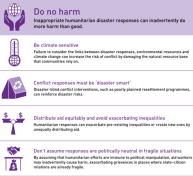 Humanitarian need is increasing. Crises are becoming more complex through the interactions between climate change, disasters, and conflicts. Not only are humanitarian crises on the rise, but the nature of crises is changing, largely due to climate change-driven extremes such as floods, droughts and typhoons. Over
 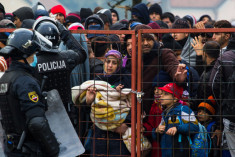 For some time, it has been clear that a global population imbalance is emerging. High income countries, including nearly all of the Americas, Europe, and most of East and parts of South and Southeast Asia, have seen a dramatic, sustained fall in fertility. Already, this is resulting in shrinking labor forces and the oldest mean age populations seen in history. At the same time, the low income countries and even some lower middle-income countries—mainly in Africa but also in Central America, the Middle East, and parts of South and Southeast Asia—continue to have relatively high fertility. This is now, and even more in the coming decades, producing fast-growing labor forces and relatively young populations.