

-
Foresight for Action | Ecosystem Degradation, Transnational Migration, and Political Instability: Three Main Tipping Points for East Africa
›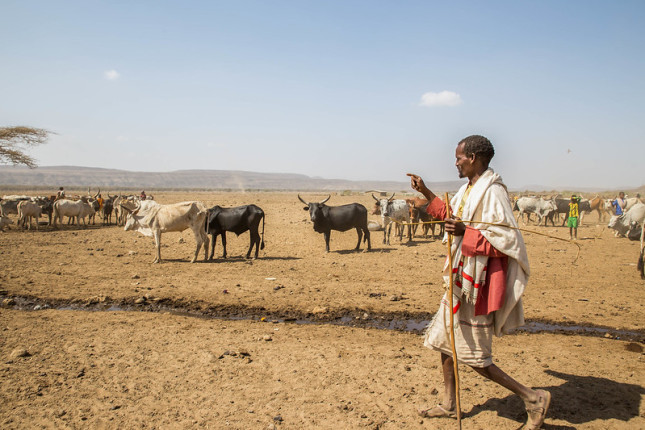
The Horn of Africa faces critical security and climate risks. Persistent droughts have precipitated the onset of food insecurity and waterborne disease, while heavy rain events such as Cyclone Sagar have caused widespread flooding, mudslides, and wind damage. These challenges are increasing in severity against a backdrop of changing demographic trends—including rapid population growth, increased migration, and urbanization—and power struggles both within and between countries in the region.
-
From Caution to Creative Solutions: The Necessary Evolution of the Climate Migration Debate
› Over the years, experts have cautioned against speaking of “climate refugees.” They argue that the term “refugee,” as defined by the 1951 Refugee Convention, only applies to those who flee across borders out of fear of persecution and violence. Furthermore, evidence shows that migration is a complex phenomenon. While climate change may influence decisions to migrate to some degree, it would likely drive internal movement along well-worn migration routes, often rural-urban in nature. Ultimately, experts have argued that policymakers should think of migration as a form of adaptation to climate change, and reject the term “climate refugee.”
 -
Mohamed’s Story: The Climate Conflict Trap in the Lake Chad Basin
›Years ago, Mohamed’s family had enough to eat, despite being poor. His daughter owned a vegetable stall at a bustling market in northeastern Nigeria. The family had options: during the dry season, when Lake Chad was shallow, Mohamed could farm; and during the wet season, he could fish or graze his cattle.
-
Permafrost Melt, Rising Seas, and Coastal Erosion Threaten Arctic Communities
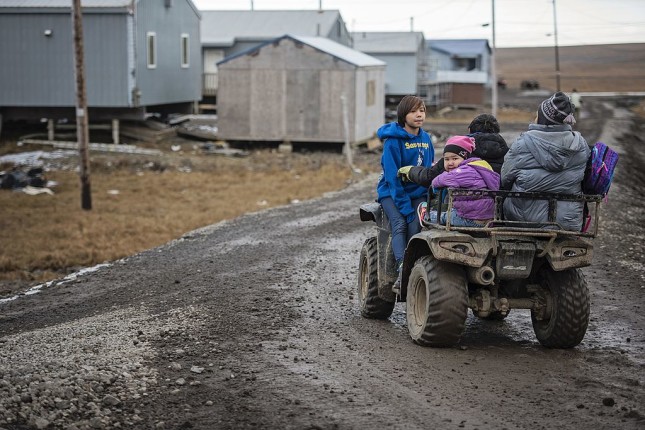
›November 5, 2019 // By Shawn Archbold“In 1959, he knew it was coming,” said Delbert Pungowiyi, a Yupik native of Savoonga, Alaska, on St. Lawrence Island in the Bering Sea in an interview at the Wilson Center’s 8th Syymposium on the Impacts of an Ice-Diminishing Arctic on Naval and Maritime Operations. “He prepared me my whole life for this. It is a crisis.”
-
Achieving the SDGs: Three New UN Reports Call for Reoriented Policy Priorities
›This summer, United Nations agencies published three reports that offer a sobering assessment of the current state of international security and development, focusing on multidimensional poverty, hunger, and forcible displacement. As some countries succeed in steadily improving the living conditions of their most vulnerable populations, others have struggled to overcome sustained episodes of political instability and violent conflict. Together, the reports affirm the urgency with which the international community must reorient its policy priorities and take action to achieve the Sustainable Development Goals (SDGs) by 2030.
-
A Generation in Limbo: Protracted Refugee Situations in Kenya Must Be Addressed
›August 15, 2019 // By John Thon MajokThe 1951 Refugee Convention spells out refugee rights, including the right to freedom of movement. Yet 68 years later, 15.9 million people are trapped in prolonged exile, living as refugees for anywhere from 5 to 47 years and counting. The unprecedented duration of protracted refugee situations (PRS) and the increasing scale of forced migration demand a comprehensive response beyond humanitarian assistance.
-
Headlines and Trend Lines: A Wilson Center NOW Interview with James Hollifield on Global Migration
›One factor frequently underestimated in the global migration discussion is climate change, said James Hollifield, a Wilson Center Global Fellow, in a recent episode of Wilson NOW. Resulting in both internal displacement and international forced migration, climate-induced migration is set to become a complex problem. So far, there are no international agreements protecting those who may be displaced by climate-induced hardships. Hollifield anticipates regions in Africa, South Asia, and Southeast Asia will be significantly impacted by these dynamics and notes that Central America is already dealing with challenges of climate-induced displacement, in part due to increasing failure of cash-crops like coffee.
-
Climate and Conflict: Where Environment, Ethnicity, and Socioeconomic Power Intersect
›As researchers investigate the connection between climate change and conflict, the relative power of communities and individuals attempting to cope with climate change has become a recurring theme. While climate change may not directly cause conflict, it may be inextricably woven into pre-existing conflicts of power, ethnicity, and economic interest.
Showing posts from category migration.
 Over the years, experts have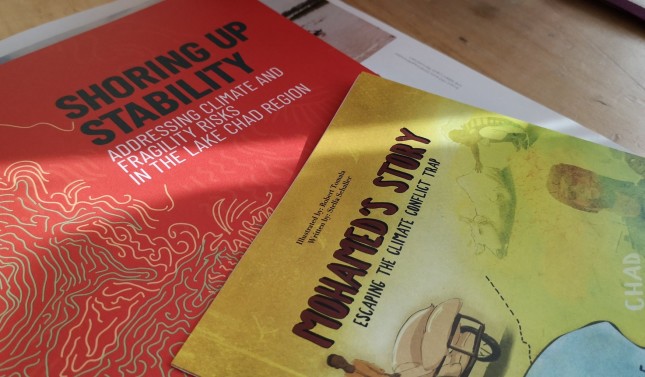

 As researchers investigate the connection between climate change and conflict, the relative power of communities and individuals attempting to cope with climate change has become a recurring theme. While climate change may not directly cause conflict, it may be inextricably woven into pre-existing conflicts of power, ethnicity, and economic interest.

