• woodrow wilson center
  • ecsp

New Security Beat

Subscribe:
  • rss
  • mail-to
  • Who We Are
  • Topics
    • Population
    • Environment
    • Security
    • Health
    • Development
  • Columns
    • China Environment Forum
    • Choke Point
    • Dot-Mom
    • Friday Podcasts
    • Navigating the Poles
    • Reading Radar
  • Multimedia
    • Water Stories (Podcast Series)
    • Backdraft (Podcast Series)
    • Tracking the Energy Titans (Interactive)
  • Films
    • Water, Conflict, and Peacebuilding (Animated Short)
    • Paving the Way (Ethiopia)
    • Broken Landscape (India)
    • Scaling the Mountain (Nepal)
    • Healthy People, Healthy Environment (Tanzania)
  • Publications
  • Events
  • Contact Us

NewSecurityBeat

The blog of the Wilson Center's Environmental Change and Security Program
Showing posts from category migration.
  • Overlooked and Misunderstood: Stories About Climate, Conflict, and Migration

    ›
    October 3, 2017  //  By Bethany N. Bella
    Drought-Ethiopia

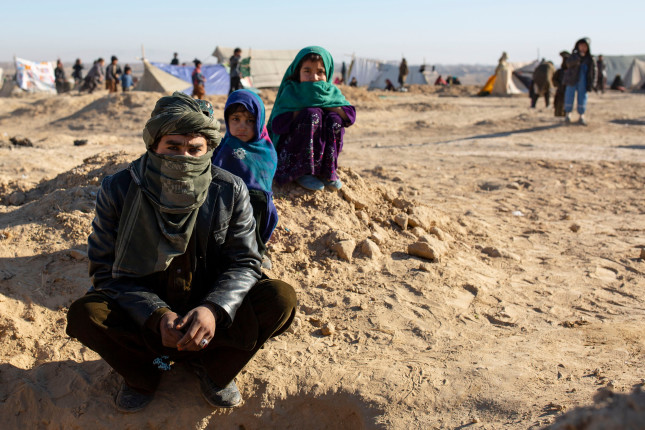
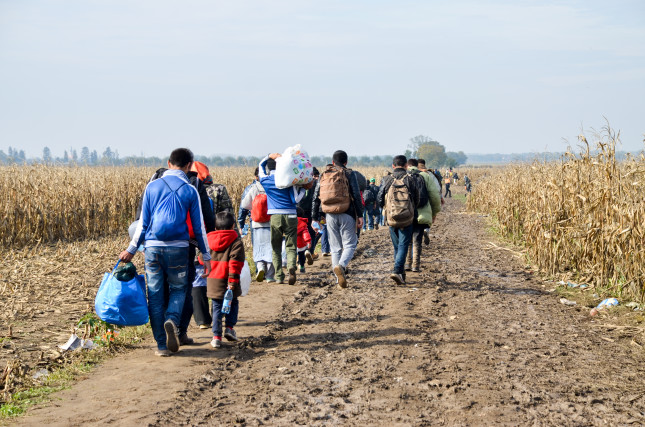
    Barbuda—an island once full of people—has been rendered completely uninhabitable by Hurricane Irma. Every single resident was evacuated from the island, and some are not planning to return. Climate-induced migration and displacement is not usually this dramatic, but it is not uncommon: Since 2008, UNHCR estimates that an average 21.5 million people each year have been forcibly displaced by weather-related natural disasters, like floods, storms, and wildfires.

    MORE
  • Climate Variability, Water, and Security in El Salvador

    ›
    August 29, 2017  //  By Herman Rosa & Chelsea Spangler
    El-Salvador

    This article is a summary of the chapter by Herman Rosa, former minister of environment for El Salvador, in the new book, Water, Security and U.S. Foreign Policy. The book was produced by the World Wildlife Fund-US and edited by David Reed. The summary was prepared by Chelsea Spangler. 

    Water-related challenges in El Salvador have acquired far greater significance over the past decade as they have intersected with other social problems including migration, criminal violence, and drug trafficking. When combined, these factors pose threats to domestic and regional stability. Damaging heavy rains, droughts, and rising temperatures are exacerbated by steadily intensifying El Niño oscillations and threaten the production of staple and export crops.  The declining viability of rural livelihoods is driving many farming families to migrate to urban centers or across borders. Food security is a constant concern across the region, and millions already rely on humanitarian assistance. Infrastructure has been damaged repeatedly by floods and raging rivers. El Salvador can mitigate many of these risks by employing ecological landscape restoration.  Improving the soil’s capacity to retain and regulate water will help maintain both agricultural and ecological viability.

    MORE
  • Flooding in Bangladesh: Calling Out Climate Change From the High Ground

    ›
    Guest Contributor  //  August 28, 2017  //  By Todd A. Eisenstadt & Mahfuzul Haque
    17.8.23-pic-in-Kutubdia-foc

    Floods have taken the lives of more than 100 people in northern Bangladesh over the last two weeks. Fully one third of the country has been flooded and some 600,000 people have been displaced in the riverine nation as a result of monsoons in India and Nepal. At international climate forums, Bangladeshi diplomats consistently decry such disasters as part of their urgent calls for action to mitigate changing weather patterns worldwide. But here in the country’s Rangpur-Kurigam region, both authorities and citizens have been reluctant to attribute these deadly disasters to the effects of climate change.

    MORE
  • Building Resilience for Peace: Water, Security, and Strategic Interests in Mindanao, Philippines

    ›
    August 1, 2017  //  By Roger-Mark De Souza & Chelsea Spangler
    Mindanao-Water-Relief

    This article is a summary of the chapter by Roger-Mark De Souza, the director of population, environmental security, and resilience for the Wilson Center, in the new book, Water, Security and U.S. Foreign Policy. The book was produced by the World Wildlife Fund-US and edited by David Reed. The summary was prepared by Chelsea Spangler. 

    The Philippines faces a breadth of social and environmental challenges that threaten its economic and political stability. A long history of violent conflict stemming from ethnic, religious, and political tensions is further complicated by changing weather patterns that cause severe drought and damaging storms. Millions of people in Mindanao have been displaced by violence and extreme weather events, and their migration from rural areas leaves room for the expansion of terrorist groups that threaten regional stability. The United States currently has strong trade and cultural ties to the Philippines, and U.S. Pacific Command operates military facilities on the islands. This chapter examines the stakes for U.S. interests in Mindanao, and recommends a security approach that combines defense, diplomacy, and development efforts to promote improved governance, social stability, and climate resilience.

    MORE
  • Planning to Move: Relocating Coastal Communities in the United States

    ›
    Reading Radar  //  July 24, 2017  //  By Antony Martel

    Reaching-Higher-GroundSea-level rise will put approximately 13 million coastal Americans at risk of displacement by 2100, but the first to move will be the most vulnerable communities. In Reaching Higher Ground: Avenues to Secure and Manage New Land for Communities Displaced by Climate Change, Wilson Center Global Fellow Maxine Burkett and her coauthors look at Native American communities on the frontlines of climate change as a model for how vulnerable coastal communities can successfully relocate. Currently, there is no central mechanism within the federal government for relocating communities displaced by climate change. Federally recognized Native American communities have historically coexisted alongside the United States government as sovereign entities, and their many avenues – legal, policy, and corporate – to acquire land could provide a starting point for addressing this imminent challenge. The authors identify tools communities can use to secure new homes and preserve their ownership of evacuated lands.

    MORE
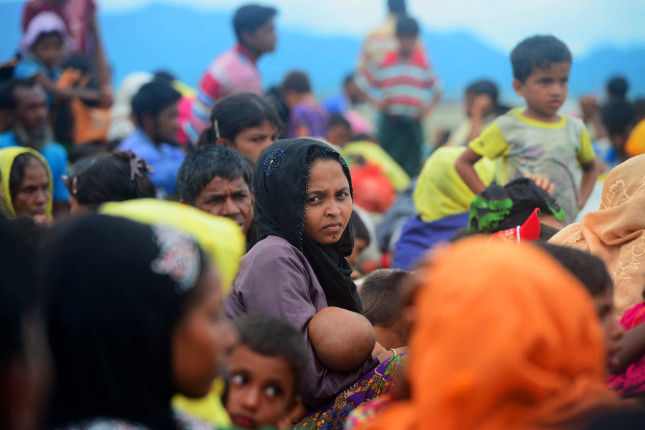
  • Focus on Refugee Skills To Move Beyond Arguments About Resettlement

    ›
    Guest Contributor  //  June 30, 2017  //  By Joseph Cassidy & Ella McElroy
    Refugees-from-Burma

    A slightly modified version of this post originally appeared on Forced Migration Forum.

    In a June 12 speech to governments and NGOs at UNHCR’s annual consultations on refugee resettlement in Geneva, UN High Commissioner for Refugees Filippo Grandi made a passionate plea for additional resettlement pledges from participating nations. He will likely be disappointed.

    MORE
  • Meeting the Maternal and Newborn Needs of Displaced Persons in Urban Settings

    ›
    Dot-Mom  //  From the Wilson Center  //  June 30, 2017  //  By Namita Rao
    Mexico-City-Maternal-Health

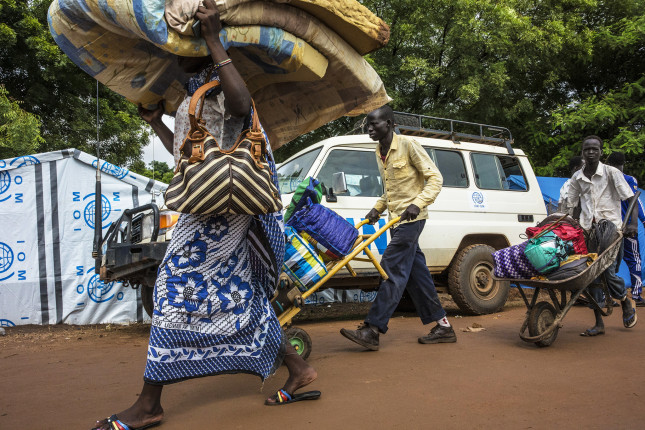
    More than 60 percent of the world’s refugees and 80 percent of internally displaced persons (IDPs) now live in urban areas. In contrast to traditional refugee camps, which have mainly been in rural areas, cities and other urban settings can offer refugees greater economic opportunities, a degree of anonymity, and better access to services—at least in theory, said Mary Nell Wegner, executive director of the Maternal Health Task Force, at the Wilson Center on May 31. However, in practice, the urban advantage may be a myth, as local systems, already strained by growing populations, are not well equipped to handle a large influx of people with complex needs.

    MORE
  • David Reed, World Wildlife Fund-US

    U.S. National Security and Prosperity Under Rising Pressure From Water Stress

    ›
    Guest Contributor  //  June 27, 2017  //  By David Reed
    Somalia-Water

    The original version of this article, by David Reed of the World Wildlife Fund-US, appeared on the World Wildlife Fund website as the executive summary of its new book, Water, Security and U.S. Foreign Policy.

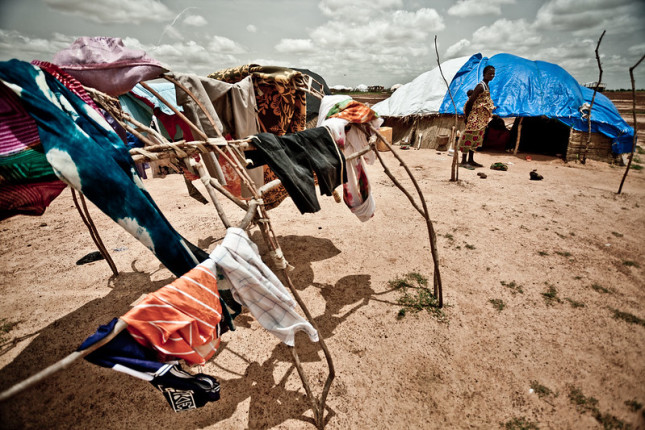
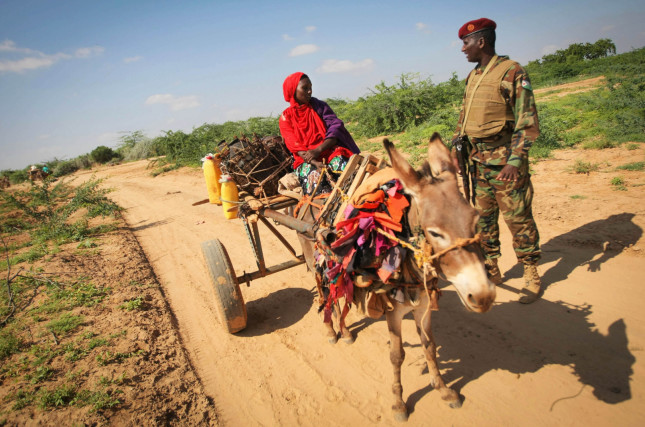
    U.S. prosperity and national security depend directly on the prosperity and stability of our partner countries and competing countries around the world. Today, water-driven stresses are, with increasing frequency, undermining economic productivity, weakening governance systems, and fraying social cohesion. Water scarcity has created a context of human and societal need wherein water stress has undermined the vitality of rural livelihoods, driven broad migratory movements, become a weapon of war, contributed to the growth of insurgencies and terrorist networks, and given rise to increased demand for U.S. development, humanitarian, and military assistance.

    MORE
Newer Posts   Older Posts
View full site

Join the Conversation

  • RSS
  • subscribe
  • facebook
  • G+
  • twitter
  • iTunes
  • podomatic
  • youtube
Tweets by NewSecurityBeat

Trending Stories

  • unfccclogo1
  • Pop at COP: Population and Family Planning at the UN Climate Negotiations

Featured Media

Backdraft Podcast

play Backdraft
Podcasts

More »

What You're Saying

  • Volunteers,At,The,Lagos,Food,Bank,Initiative,Outreach,To,Ikotun, Pan-African Response to COVID-19: New Forms of Environmental Peacebuilding Emerge
    Rashida Salifu: Great piece 👍🏾 Africa as a continent has suffered this unfortunate pandemic.But it has also...
  • A desert road near Kuqa An Unholy Trinity: Xinjiang’s Unhealthy Relationship With Coal, Water, and the Quest for Development
    Ismail: It is more historically accurate to refer to Xinjiang as East Turkistan.
  • shutterstock_1779654803 Leverage COVID-19 Data Collection Networks for Environmental Peacebuilding
    Carsten Pran: Thanks for reading! It will be interesting to see how society adapts to droves of new information in...

What We’re Reading

  • Rising rates of food instability in Latin America threaten women and Venezuelan migrants
  • Treetop sensors help Indonesia eavesdrop on forests to cut logging
  • 'Seat at the table': Women's land rights seen as key to climate fight
  • A Surprise in Africa: Air Pollution Falls as Economies Rise
  • Himalayan glacier disaster highlights climate change risks
More »
  • woodrow
  • ecsp
  • RSS Feed
  • YouTube
  • Twitter
  • Facebook
  • Home
  • Who We Are
  • Publications
  • Events
  • Wilson Center
  • Contact Us
  • Print Friendly Page

© Copyright 2007-2021. Environmental Change and Security Program.

Woodrow Wilson International Center for Scholars. All rights reserved.

Developed by Vico Rock Media

Environmental Change and Security Program

Woodrow Wilson International Center for Scholars

Ronald Reagan Building and International Trade Center

  • One Woodrow Wilson Plaza
  • 1300 Pennsylvania Ave., NW
  • Washington, DC 20004-3027

T 202-691-4000