• woodrow wilson center
  • ecsp

New Security Beat

Subscribe:
  • rss
  • mail-to
  • Who We Are
  • Topics
    • Population
    • Environment
    • Security
    • Health
    • Development
  • Columns
    • China Environment Forum
    • Choke Point
    • Dot-Mom
    • Friday Podcasts
    • Navigating the Poles
    • Reading Radar
  • Multimedia
    • Water Stories (Podcast Series)
    • Backdraft (Podcast Series)
    • Tracking the Energy Titans (Interactive)
  • Films
    • Water, Conflict, and Peacebuilding (Animated Short)
    • Paving the Way (Ethiopia)
    • Broken Landscape (India)
    • Scaling the Mountain (Nepal)
    • Healthy People, Healthy Environment (Tanzania)
  • Publications
  • Events
  • Contact Us

NewSecurityBeat

The blog of the Wilson Center's Environmental Change and Security Program
Showing posts from category migration.
  • Richard Black: Future Climate-Migration Interactions Will Stress Cities, “Trap” Vulnerable Populations

    ›
    Eye On  //  January 30, 2012  //  By Kayly Ober

    “In a 50-year time span, climate change, in particular, is likely to have a quite a strong impact on the drivers of migration,” said Richard Black, professor of human geography at University of Sussex and lead author of Migration and Global Environmental Change: Future Challenges and Opportunities. “But in a way that is different to what has been understood until now.”

    MORE
  • UNEP Maps Conflict, Migration, Environmental Vulnerability in the Sahel

    ›
    Eye On  //  January 25, 2012  //  By Kate Diamond
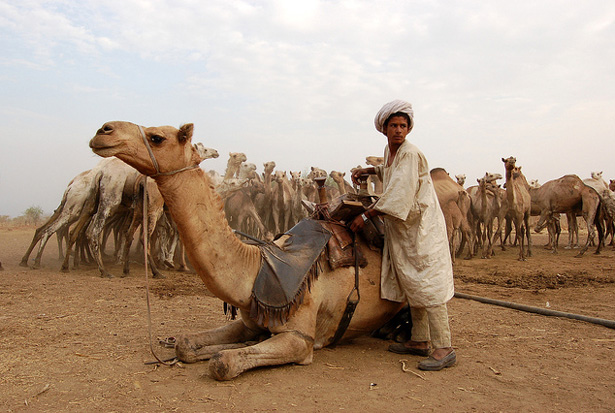
    A new set of maps from the United Nations Environment Programme (UNEP) identifies “climate hotspots” – areas vulnerable to instability exacerbated by climate change – in 17 sub-Saharan countries in and bordering the Sahel region. The maps reflect the fact that, more often than not, the impact of climate change on local populations is compounded by changes in migration, conflict, or both. According to Livelihood Security: Climate Change, Migration and Conflict in the Sahel, the UNEP report accompanying the maps, understanding “the exacerbating effect of changes in climate on population dynamics and conflict in the region” will be essential to developing successful adaptation strategies throughout the region.

    UNEP’s maps analyze 40 years of data to pinpoint where the region’s most at-risk populations are located based on environmental, population, and conflict trends dating back to 1970. In a single map pinpointing the Sahel’s 19 hotspots, UNEP synthesizes subnational data from four environmental indicators over time – rainfall (from 1970 to 2006), temperature changes (1970 to 2006), drought (1982 to 2009), and flooding (1985 to 2009) – which are then layered on top of population trends (1970 to 2010) and conflict data (1970 to 2005) in order to identify the region’s most insecure areas.

    Composite Vulnerability

    At first glance, the map can appear hard to decipher; it is flooded with different colors and symbols, each indicating something different about the extent of climate change, migration, and conflict in the region. A Google Earth version of the map (available for download here) makes all this information easier to process by allowing users to select which indicators they want to see mapped out, cutting back on the number of lines, dots, colors, and pie charts the user has to decode.

    Given the vast amount of the information being condensed into these maps, the report is a helpful and worthwhile read. For instance, eight hotspots are in places with growing populations and another seven are located in places that have experienced conflict; altogether, 4 of the 19 hotspots have both past conflict and growing populations. The report digs deeper into the confluence of climate, conflict, and migration by discussing case studies that highlight how the three intersect in local communities (at the same time, the report is careful to avoid suggesting that there is a causal relationship between the three issues.). In Niger, Nigeria, and Chad, for example, tensions have been mounting between northern pastoralists and southern farmers as each group has moved further and further afield in search of water and arable land to sustain their livelihoods.

    Holes In the Data

    While the hotspot maps include a wealth of information, the report makes clear that it is by no means exhaustive. Rising sea levels are, for instance, a major impending threat to coastal populations in the Sahel, but only the downloadable Google Earth map – not the hotspot map in the report or the Google Earth map as presented online – incorporates this factor. Compounded with a skyrocketing population in the coastal areas – the coast between Accra and the Niger delta is expected to be “an urban megalopolis of 50 million people” by 2020, according to the report – an increase in sea levels could have a huge impact on the region’s stability.

    The report also readily admits that the datasets for population trends and conflict have shortcomings. Population data is largely based on censuses, which both the report and its data sources (UNEP’s African Population Database and the Gridded Population of the World, version 3) acknowledge can be inconsistent in their accuracy. Additionally, after 2000, population data is based on projections rather than estimates, which, as last year’s update from the UN Population Division showed, have often proven inaccurate, particularly in sub-Saharan Africa.

    Regarding conflict, the UNEP report is straightforward in admitting its limits. The report lacks data on small-scale conflict (fewer than 25 battle deaths, following the Uppsala Conflict Data Program’s threshold that separates conflicts from lower-level violence), even as it acknowledges that such conflict is “often the first to occur” when climate change threatens communities’ access to resources and livelihoods.

    Ultimately, however, these maps give valuable data on specific locations that are uniquely vulnerable to trends in population, climate, migration, and conflict. They add focus to the conventional wisdom that climate change will impact the region’s stability, and, taken together, the maps and the report provide a valuable resource for scholars and policymakers attempting to craft adaptation policies that take into consideration these complex links.

    Sources: Socioeconomic Data and Applications Center at Columbia University’s Earth Institute, UNEP, Uppsala Conflict Data Program.

    Image Credit: UNEP.
    MORE
  • Jon Barnett: Climate Adaptation Not Just Building Infrastructure, But Expanding Options

    ›
    Eye On  //  January 6, 2012  //  By Kayly Ober

    “I think it’s appropriate to think about [climate change] adaptation or investments in adaptation as investments to open up the range of choices available to people to deal with an uncertain future,” said Jon Barnett, associate professor of geography at the University of Melbourne, in an interview with ECSP. “In some circumstances it might be appropriate to build infrastructure and hard options where we’re very certain about the nature of the risk…but in other cases, expanding the range of choices and freedoms and opportunities that people have to deal with climate change in the future is perhaps the better strategy.”

    MORE
  • Migration and Environmental Change, Minority Land Rights and Livelihoods

    ›
    Reading Radar  //  January 4, 2012  //  By Theresa Polk
    Migration and Global Environmental Change: Future Challenges and Opportunities, from the UK Government Office for Science’s Foresight Programme, looks at how environmental change, including climate change, land degradation, and the degradation of coastal and marine ecosystems, over the next 50 years will affect migration trends. The report emphasizes that migration is a complex and multi-causal phenomenon, which makes it difficult to differentiate environmental migrants as a distinct group. Nevertheless, research suggests that global environmental changes will affect the drivers of migration, particularly economic forces, such as rural wages and agricultural productivity.

    Though Foresight finds that many will use migration as an adaptation strategy that improves resilience to environmental change, they also point out that some affected individuals may become “trapped” in vulnerable situations, lacking the financial capacity to respond to environmental changes, while others may be able to move but will inadvertently enter more exposed areas, particularly, at risk urban centers. For recommendations, they stress the importance of strategic, long-term urban planning, and recognition within adaptation and development policies that migration can be part of the solution.

    A study, released on December 5 by Minority Rights Group International, finds that minority communities in Kenya, Uganda, and South Sudan face significant challenges around access to and control of critical natural resources. The report, Land, Livelihoods, and Identities: Inter-Community Conflicts in East Africa, shows how rapid population growth, climate change, and globalization are increasing competition for land, water, and forest and mineral resources in territories traditionally occupied by minority groups. These pressures can undermine livelihoods and trigger multiple and overlapping conflicts, especially where ownership has not been formalized in law. The study also notes that women are doubly vulnerable as their access to land and resources is frequently mediated through customary law, which depends on their communities retaining control over traditional territory. Although the report makes national-level legal and policy recommendations, the authors note that some of the most effective resource management and conflict resolution strategies adapt traditional cultural practices to the current circumstances of communities.
    MORE
  • Book Preview: In ‘War and Conflict in Africa’, GWU Scholar Skeptical That Natural Resources Play a Leading Role

    ›
    November 30, 2011  //  By Elizabeth Leahy Madsen
    While there is widespread agreement that the incidence of conflict in Africa is high, scholars and development agencies alike debate its driving forces and how to move toward solutions. Paul Williams, associate professor in the Elliott School of International Affairs at George Washington University and collaborator with the Wilson Center’s Africa Program, recently published a book that aims to both quantify African conflicts and devise a framework of their causes. In War and Conflict in Africa, Williams evaluates which factors explain the frequency of conflict in Africa during the post-Cold War era and how the international community has tried to build peace and prevent future conflict.

    Although there have been promising trends toward establishing peace and democracy in some African countries, the continent still accounts for about one-third of all armed conflicts annually – more than Europe, the Middle East, and the Americas combined. International responses to these events range from focused humanitarian and conflict resolution efforts, to new regional organizations and global strategic and defense partnerships.

    Seven of the 16 current UN peacekeeping missions operate in Africa, more than any other continent. The UK government has elected to spend nearly one-third of its development assistance in conflict-affected areas, and more than half of its “focus” countries are in Africa. In 2008, the Department of Defense created the U.S. Africa Command (AFRICOM), whose commander, General Carter Ham, in a speech to Congress earlier this year, described “an insidious cycle of instability, conflict, environmental degradation, and disease that erodes confidence in national institutions and governing capacity,” as motivation for American military attention. “This in turn often creates the conditions for the emergence of a wide range of transnational security threats,” he said.

    Evaluating the Ingredients of Conflict

    Williams rejects earlier theses that attribute conflict across the continent to a single factor, such as the boundary legacies of colonialism, greed, or ethnicity. Instead, he characterizes African conflicts as “recipes” composed of case-specific mixes of factors, many of which are underlying and only some of which are sufficient triggers for conflict. “Collier is wrong,” Williams explained in an email interview. “Governance structures are always an important part of the buildup to war.”

    Lou Rios and Amy Krakowka on teaching environment and security at West Point
    Five “ingredients” of conflict are examined in-depth: neo-patrimonial governance structures; natural and human resources; sovereignty and self-determination; ethnicity; and religion. Among these, the book presents a fairly skeptical view of resources, ethnicity, and religion as immediate drivers of conflict. This assessment that environmental and identity issues are not sufficient to generate conflict on their own aligns with the book’s overarching argument: The decisions of political actors can instigate conflict or motivate peace from virtually any context, manipulating factors such as ethnicity and religion for their own advantage.

    Effects of Natural Resources Are “Open-Ended”

    A widely publicized thread of peace and conflict studies posits that resources, either when scarce or abundant, have an important role in triggering wars. A 2009 UN Environment Programme report found that 40 percent of all internal conflicts since 1950 “have a link to natural resources.” Recent peer-reviewed research has suggested that certain environmental changes increase the likelihood of civil conflicts or are directly responsible for it. Yet the question remains a source of much debate. For his part, Williams asserts that natural resources alone are insufficient to cause conflict.

    War and Conflict in Africa presents several reasons that researchers and policymakers should avoid linking resources directly to conflict without considering the influence of intervening factors. Chief among them is that the value of any resource is socially constructed – no stone or river carries worth until humans decide so. Therefore, Williams argues that “it is political systems, not resources per se, that are the crucial factor in elevating the risk of armed conflict.”

    The book suggests that two extant theories successfully demonstrate the connection between resources and conflict. The first body of research finds that conflict is more likely in regions that face a combination of resource abundance and a high degree of social deprivation. The second theory suggests that the link between resources and conflict lies in bad governance, whether exploitative or unstable. Both theories have explanatory power for Williams’s central line of thinking: Resources can be either a blessing or a curse, depending on leadership.

    “Inserted into a context where corrupt autocrats have the advantage, resources will strengthen their hand and generate grievances,” he writes (p. 93). “Inserted into a stable democratic system, they will enhance the opportunities for leaders to promote national prosperity.”

    Population and the Environment

    Williams does accede that particular resource factors – land and demography, for example – may play a more significant role than others in conflict, but calls for more research. In a brief discussion of population age structure, the book suggests that there is no single relationship between demography and conflict but multiple ways that the two can relate. Williams mentions the theory that “large pools of disaffected youth” with few opportunities can raise the risk of volatility. However, he then notes other research showing that the most marginalized members of certain African societies are less likely to participate in political protests and more likely to tolerate authoritarian rule than those who are better off.

    “The most marginalized from society are the truly destitute without patrons and suffering from severe poverty. They may well be inclined to join an insurgency movement once it begins to snowball but they will not usually play a key role in establishing the rebel group in the first place,” Williams said. However, “any time there are large pools of poor and unemployed youth there is the potential for leaders to manipulate them.”

    On environmental resources, the book argues that land should be a central feature of quantitative research on the relationship between resources and conflict. Most African economies continue to rely on agriculture, and Williams observes that land has been “at the heart” of many conflicts in the region through a variety of governance-related mechanisms relating to its management and control. He places less emphasis on water scarcity as a potential factor in conflict, noting that the 145 water-related treaties signed around the world in the past decade auger well for cooperation rather than competition.

    Williams is also dubious of emerging arguments that climate change could directly increase the incidence of conflict, either through changing weather patterns or climate-induced migration.

    “Because armed conflicts are, by definition, the result of groups choosing to fight one another, any process, including climate change, can never be a sufficient condition for armed conflict to occur,” he argued. “Armed conflicts result from the conscious decisions of actors which might be informed by the weather but are never simply caused by it.”

    No Simple Formula

    Williams is not the only observer to find the narrative that resource shortage (or abundance) precipitates conflict too simplistic. His message to policymakers is a common refrain from academics and analysts seeking to counteract policymakers’ quest for simple formulas: We need more data.

    “When deciding how to spend our money, we need to spend more of it on developing systems which deliver accurate knowledge about what is happening on the ground, often in very localized settings,” Williams said. War and Conflict in Africa contributes to a more complex understanding of the political actors and systems that catalyze or prevent conflict and offers a cautionary tale to those who seek only proven, easy predictions.

    Elizabeth Leahy Madsen is a consultant on political demography for the Wilson Center’s Environmental Change and Security Program and senior technical advisor at Futures Group. She was previously a senior research associate at Population Action International. Full disclosure: She was a graduate student of Paul Williams’ in 2007.

    Sources: DFID, Englebert and Ron (2004), Ham (2011), Hsiang et al (2011), Kahl (1998), Leysens (2006),Østby et al (2009), Radelet (2010), Themnér and Wallensteen (2011), UNEP (2009), UN Peacekeeping, Williams (2011)

    Image Credit: Conflicts in Africa 2000-09, reprinted with permission courtesy of P.D. Williams,
    War and Conflict in Africa (Williams, 2011), p.3.
    MORE
  • George Washington University’s PISA Helps Share Rural Vietnamese Climate Adaptation Strategies

    ›
    Beat on the Ground  //  November 21, 2011  //  By Schuyler Null

    “Climate change is not a topic of debate in Vietnam, it’s a real challenge to future prosperity and security,” says George Washington University’s Partnerships for International Strategies in Asia (PISA) program in this video about their climate adaptation and mitigation work in Nam Dinh province. “[Vietnam’s] population density (265 people/square kilometer), its long coastline (3,444 km), its two major rivers (the Red and Mekong) – all help make it one of the 10 countries considered most vulnerable to climate change,” the narrator says.

    MORE
  • Weathering Change: New Film Links Climate Adaptation and Family Planning

    ›
    From the Wilson Center  //  October 3, 2011  //  By Theresa Polk

    “Our planet is changing. Our population is growing. Each one of us is impacting the environment…but not equally. Each one of us will be affected…but not equally,” asserts the new documentary, Weathering Change, launched at the Wilson Center on September 22. The film, produced by Population Action International (PAI), explores the devastating impacts of climate change on the lives of women in developing countries through personal stories from Ethiopia, Nepal, and Peru. Family planning, argue the filmmakers, is part of the solution.

    MORE
  • Broadening Development’s Impact: From Sustainability to Governance and Security

    ›
    Reading Radar  //  September 22, 2011  //  By Kate Diamond
    John Drexhage and Deborah Murphy’s UN background paper, “Sustainable Development: From Brundtland to Rio 2012,” looks at how “sustainable development” has evolved since the 1987 Brundtland Report first brought the concept to the forefront of the international community’s attention. Drexage and Murphy write that climate change has become a “de facto proxy” for sustainable development and they offer various recommendations for how policymakers and institutions can better integrate social and economic issues into a sustainable development framework. Considering that “increasing consumption, combined with population growth, mean that humanity’s demands on the planet have more than doubled over the past 45 years,” the authors conclude that “the opportunity is ripe” to bring “real systemic change” to how the world thinks about – and acts on – sustainable development.

    The World Bank’s World Development Report 2011 makes an argument for “bringing security and development together to put down roots deep enough to break the cycles of fragility and conflict.” The report gives an overview of the “interconnections among security, governance, and development” and offers recommendations on how understanding and addressing them can end cycles of violence. Just as Drexhage and Murphy point to population changes as a challenge for sustainable development, the World Bank notes that growing urbanization has “increased the potential for crime, social tension, communal violence, and political instability” locally while a threefold increase in refugees and internally displaced persons over the past 30 years has put strains on regional relations around the world. Though the report acknowledges that there’s no quick fix to any of these problems, the conclusion underlining the report’s findings is that “strengthening legitimate institutions and governance to provide citizen security, justice, and jobs is crucial to break cycles of violence.”
    MORE
Newer Posts   Older Posts
View full site

Join the Conversation

  • RSS
  • subscribe
  • facebook
  • G+
  • twitter
  • iTunes
  • podomatic
  • youtube
Tweets by NewSecurityBeat

Trending Stories

  • unfccclogo1
  • Pop at COP: Population and Family Planning at the UN Climate Negotiations

Featured Media

Backdraft Podcast

play Backdraft
Podcasts

More »

What You're Saying

  • Volunteers,At,The,Lagos,Food,Bank,Initiative,Outreach,To,Ikotun, Pan-African Response to COVID-19: New Forms of Environmental Peacebuilding Emerge
    Rashida Salifu: Great piece 👍🏾 Africa as a continent has suffered this unfortunate pandemic.But it has also...
  • A desert road near Kuqa An Unholy Trinity: Xinjiang’s Unhealthy Relationship With Coal, Water, and the Quest for Development
    Ismail: It is more historically accurate to refer to Xinjiang as East Turkistan.
  • shutterstock_1779654803 Leverage COVID-19 Data Collection Networks for Environmental Peacebuilding
    Carsten Pran: Thanks for reading! It will be interesting to see how society adapts to droves of new information in...

What We’re Reading

  • Rising rates of food instability in Latin America threaten women and Venezuelan migrants
  • Treetop sensors help Indonesia eavesdrop on forests to cut logging
  • 'Seat at the table': Women's land rights seen as key to climate fight
  • A Surprise in Africa: Air Pollution Falls as Economies Rise
  • Himalayan glacier disaster highlights climate change risks
More »
  • woodrow
  • ecsp
  • RSS Feed
  • YouTube
  • Twitter
  • Facebook
  • Home
  • Who We Are
  • Publications
  • Events
  • Wilson Center
  • Contact Us
  • Print Friendly Page

© Copyright 2007-2021. Environmental Change and Security Program.

Woodrow Wilson International Center for Scholars. All rights reserved.

Developed by Vico Rock Media

Environmental Change and Security Program

Woodrow Wilson International Center for Scholars

Ronald Reagan Building and International Trade Center

  • One Woodrow Wilson Plaza
  • 1300 Pennsylvania Ave., NW
  • Washington, DC 20004-3027

T 202-691-4000