• woodrow wilson center
  • ecsp

New Security Beat

Subscribe:
  • rss
  • mail-to
  • Who We Are
  • Topics
    • Population
    • Environment
    • Security
    • Health
    • Development
  • Columns
    • China Environment Forum
    • Choke Point
    • Dot-Mom
    • Friday Podcasts
    • Navigating the Poles
    • Reading Radar
  • Multimedia
    • Water Stories (Podcast Series)
    • Backdraft (Podcast Series)
    • Tracking the Energy Titans (Interactive)
  • Films
    • Water, Conflict, and Peacebuilding (Animated Short)
    • Paving the Way (Ethiopia)
    • Broken Landscape (India)
    • Scaling the Mountain (Nepal)
    • Healthy People, Healthy Environment (Tanzania)
  • Publications
  • Events
  • Contact Us

NewSecurityBeat

The blog of the Wilson Center's Environmental Change and Security Program
Showing posts from category migration.
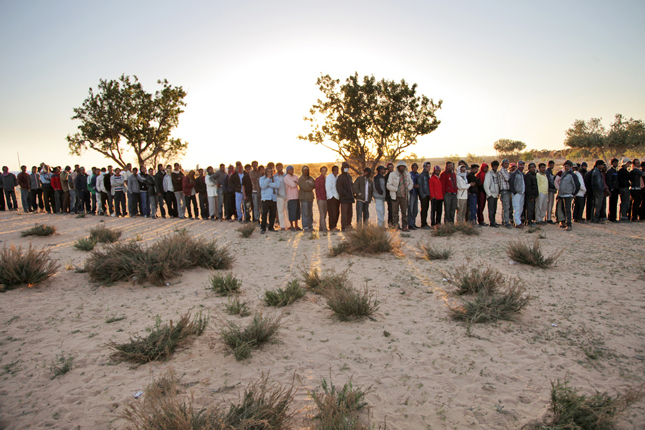
  • UNHCR Report on East African Environmental Migrants: Long on Anecdotes, Short on Data

    ›
    July 6, 2012  //  By Graham Norwood
    As part of the recently-concluded Rio+20 Conference on Sustainable Development, the UN High Commissioner for Refugees (UNHCR) presented a new report last week, titled Climate Change, Vulnerability, and Human Mobility: Perspectives of Refugees From the East and Horn of Africa. The report was created in order to “understand the extent to which refugees and IDPs (internally displaced persons) in the East and Horn of Africa have perceived, experienced, and responded to climatic events and trends in recent years.”

    In order to achieve this goal, UNHCR and its collaborators (including the United Nations University Institute for Environment and Human Security, the London School of Economics, and the University of Bonn) interviewed approximately 150 refugees and IDPs in parts of Ethiopia and Uganda.

    While the narrative is more anecdotal than data-driven, it nevertheless identifies several apparent trends in climate-related migration:
    Overwhelmingly, stories of mobility associated with moving away from worsening impacts associated with climate variability followed a specific pattern. That is, where movement related to climatic stressors did occur, such movement was taken as a last resort (only after all efforts to remain and adopt other methods of adaptation had been exhausted), particularly where the land being left was self-owned and only after all efforts to remain and try a number of alternative forms of adaptation had failed. Where movement occurred, in most cases it was likely to be internal, circular, and temporary rather than cross-border and permanent.
    Stories of international migration were rare, and generally occurred either because migrants already lived near a border and were familiar with the area, or because they had encountered violent conflict (often of a political nature) during an earlier intra-state relocation.

    The report also mentions that a majority of those interviewed claimed to have noticed significant changes in weather patterns over a 10- to 15-year period. In fact, many interviewees frequently claimed to be able to distinguish “normal” climate variability from more “permanent” changes.

    Significantly, Climate Change, Vulnerability, and Human Mobility highlights several ongoing sources of debate and controversy regarding the issue of climate-induced migration as well.

    The links between climate change, migration, and violent conflict are not well understood. And the question of whether climate change precipitates conflict or merely exacerbates it is still unresolved, though research on the subject is ongoing.

    The terminology used to describe climate migrants remains a hotly-contested issue as well. While terms like “environmental refugee” and the especially popular “climate refugee” can make for good headlines, the UNHCR report strongly disapproves of such terms, given that the word “refugee” has a very specific legal definition.

    Indeed, there is still much debate over how to classify climate migrants. It has been pointed out, for instance, that it is virtually impossible to separate out the various factors that induce migration, and questions as to whether migration is forced or voluntary also persist. For the most part, the UNHCR report shies away from such contentious questions, aiming instead to present a general and “human” narrative designed to call attention to the plight of climate migrants.

    Definitional debates aside, the issue of climate-induced migration has been in headlines recently. The Asian Development Bank reported in March that 42 million people were displaced in the region during the last two years due to storms, floods, and other extreme weather events. And Israel signaled a tougher stance on immigration by deporting South Sudanese refugees in the wake of a major Israeli Ministry of Environmental Protection report warning of future climate-induced migration.

    The particular vulnerability of women too is drawing increased interest. An article in Environmental Research Letters points out that “women tend to be poorer, less educated, have a lower health status, and have limited direct access to or ownership of natural resources,” and will therefore be disproportionately affected by climate change. Gender disparities must be accounted for in policymaking then, to ensure that future climate migration policies are equitable and inclusive, the author, Namrata Chindarkar, argues.

    The challenges of defining and measuring the phenomenon remain – the UN Environment Program’s 2006 prediction of 50 million climate migrants by 2010 has not come true, and has even been a source of some embarrassment for the organization – but the recent UNHCR report is a timely reminder that climate-induced migration remains a major issue with tremendous long-term implications.

    Sources: Asian Development Bank, Environmental Research Letters, Human Rights Education Association (HREA), The Jerusalem Post, The New Republic, National Geographic, OECD, Scientific American, Der Spiegel, UNHCR, The Washington Post.

    Photo Credit: Displaced Somalis, courtesy of UNHCR.
    MORE
  • Poor Planning, Population Boom Stress Abuja’s Water System, Says Pulitzer Center

    ›
    June 26, 2012  //  By Graham Norwood
    Nigerian journalist Ameto Akpe, who recently spoke as part of the Wilson Center’s “Nigeria Beyond the Headlines” event, has published a new article on water scarcity in Abuja, Nigeria’s capital city, for the Pulitzer Center on Crisis Reporting’s “Waiting for Water” series.

    Abuja faces acute shortages due to insufficient government planning and a major population boom, she writes:
    The FCT [Federal Capital Territory] has seen an unprecedented population growth in the last 10 to 15 years. In 2006, population growth rate was pegged at 9.3 percent, the highest rate in the country and way above what the city’s planners envisaged. Recently, increased migration to the city has been spurred by terrorism attacks in the North, numerous incidences of kidnappings in the South, and the generally high unemployment rate in the country as millions of young graduates pour into the city in search of the very elusive promise of a “government job.”

    Jibril Ibrahim, the Director of the FCT water board, the agency solely responsible for the production and supply of water in the territory, admits that the authorities did not see this coming. He says this unexpected population growth has overwhelmed existing water infrastructure and ruined the careful plans for water service delivery in the territory.

    “This is what has made nonsense of the design we have in the city,” Ibrahim says. “Nobody believed that we were going to have this huge number of people and not even within this space of time.”

    Patience Achakpa, executive secretary for the Women’s Environment Programme, believes that the government should have foreseen the potential attraction a city like Abuja presents to the urban migrant and should have put in place more efficient plans.

    This lack of foresight means there is no pipe reticulation in many districts, particularly in peripheral areas. Even government housing projects are routinely built without being connected to the grid, simply lacking the crucial distribution network that would bring water to individual homes. Thus each household is forced to sink its own borehole, which in the long run has obvious implications on ground water.
    Read the full article on the Pulitzer Center website.

    Photo Credit: A water point in Gishiri, Abuja, courtesy of Ameto Akpe/Pulitzer Center.
    MORE
  • Taming Hunger in Ethiopia: The Role of Population Dynamics

    ›
    May 4, 2012  //  By Laurie Mazur
    Lalibela, Ethiopia

    Ethiopia has been deemed a population-climate “hotspot” – a place where rapid growth and a changing climate pose grave threats to food security and human well-being.

    MORE
  • Karen Newman: Population and Sustainable Development Links Are Complex, Controversial, and Critical

    ›
    April 23, 2012  //  By Kate Diamond
    “The one child family norm in China has fixed the global imagination around population to be around doing something which constricts people’s and women’s choices, rather than expands women’s possibilities to take control of their lives,” said Karen Newman, the coordinator for the UK-based Population and Sustainability Network. But contemporary population programs are about educating people on and providing access to voluntary reproductive, sexual, and maternal health services.

    Newman spoke to ECSP, during the Planet Under Pressure conference this year, about family planning efforts and the connection between population dynamics and the environment.

    “You have what I would describe as a sort of kaleidoscope of complexity” between climate change and population dynamics – not just growth, said Newman, but urbanization and migration.

    For example, China recently overtook the United States as the world’s largest emitter of carbon, and although China has 1.3 billion people compared to the United States’ 310 million, population can hardly be credited as the most important driver for the country’s emissions. “How fair is it [to credit population growth] without in the same nanosecond saying, ‘but most of the carbon that was emitted in China was to manufacture the goods that will of course be consumed in the West?” said Newman.

    “It makes it more difficult to say in a sound bite that ‘OK, population and sustainable development, it’s the same conversation,’ which I believe it to be.”

    The Population and Sustainability Network, working through the Population and Climate Change Alliance, collaborates with international organizations from North America, Europe, Ethiopia, and Madagascar to support on-the-ground groups working on integrated population, health, and environment programming. These programs address environmental issues, like marine conservation and deforestation, while also providing reproductive health services, including different methods of contraception, diagnosis and treatment of sexually-transmitted diseases, antenatal and postnatal care, and emergency obstetric care.

    “As a result of people wanting to place a distance between those coercive family planning programs in the ‘60s and the way that we do reproductive health now…because it’s such a large package, there is a sense that…this reproductive health thing is too much, we can’t really get ahold of this,” said Newman.

    “What I think we need to do is keep people focused on the fact that these are women’s rights,” she said. “But we at the same time have to say ‘this is relevant if you care about sustainable development and the world’s non-renewable resources.’”

    Sources: United Nations Population Division.
    MORE
  • Megacities, Global Security, and the Map of the Future

    ›
    From the Wilson Center  //  April 19, 2012  //  By Stuart Kent
    “We’re in an urban century, there is no doubt,” said Peter H. Liotta, visiting scholar at the U.S. Military Academy West Point and co-author of The Real Population Bomb: Megacities, Global Security, and the Map of the Future, during a March 20 event at the Wilson Center. Liotta’s book focuses on the geopolitical impacts of poorly managed urbanization on the most vulnerable as well as the security issues such urbanization might create. He was joined by Jaana Remes of the McKinsey Global Institute, who painted a more promising picture of a globally rising, economically prosperous urban middle class, and Stimson Center visiting fellow Peter Engelke, who grappled with the contradictions between these alternative urban realities. [Video Below]

    “Urbanization is key to economic development, but it has been, is now, and will continue to be into the future beset by a very large shadow side, wherein the marginalized face grinding poverty, squalor, and despair,” explained Engelke.


    Although Liotta and Remes laid out very different “maps of the future,” Engelke suggested three commonalities. First, they both highlight the “unprecedented scale and speed of global change.” Second, they acknowledge that “a global demographic shift is well underway, and has been for some time.” And third, they accept that we have yet to fully integrate cities into the physical and mental maps by which we navigate the world, he said. Despite the economic dynamism of cities, “we live in a world that, I submit, has not yet grasped this reality even in conceptual terms, much less political and policy ones.”

    The City as a Source of Vulnerability

    People come to megacities “because there’s a chance,” said Liotta. “It looks like a nightmare to us, but people come because they’re waiting for a future.” This chance, however, is often slim, according to Liotta.

    The sheer scale of modern urbanization (approximately 200,000 people move every day from rural to urban areas) produces myriad sources of vulnerability for the poorest and most marginalized, said Liotta. “World population growth will occur in the poorest, youngest, and often heavily Muslim states, which lack education, capital, and employment. And for the first time in history the world will be primarily urbanized, with most megacities in the poor states where you don’t have policing, sanitation, and health care.”

    Catherine Kyobutungi on monitoring the health needs of urban slums
    This urban shift concentrates young populations presumed to be unstable, exacerbates the risk of disease and climate change, and increases the threat of declining resource availability and food production, Liotta said. In states where “the lights are out” – that is, where urbanization is not met with sufficient economic development – our new urban century may feature significant security challenges, he argued. “Every single security problem we have today, and in the future – whether it’s human security, environmental security, or national security – is [in] the places where the lights are out.”

    In The Real Population Bomb, Liotta links these sorts of security issues to what he terms “entangled vulnerability scenarios,” such as scarcity of water for drinking and irrigation, outbreak and rapid spread of disease, or lack of sufficient warning systems for natural disasters or environmental impacts. These scenarios, he argues, deserve a greater showing next to the traditional focus on hard security “threats.”

    Fertility rates are generally declining, which will eventually dissipate the youth bulges being experienced by many countries, but the challenge is how to “manage that glide path,” said Liotta. It is about “doing it well collectively, because we are not thinking collectively well about how to do this and places in the world are in serious trouble.”

    The City as a Center of Growth

    Jaana Remes presented both a broader scale of analysis and a more positive outlook. Urbanization is “the most powerful positive economic force in today’s environment,” she asserted, drawing on the McKinsey Global Institute report, Urban World: Mapping the Economic Power of Cities.

    Compared to the historical experiences of the Western world, change in the most rapidly urbanizing of today’s developing states is occurring at “100 times the scale, in one tenth of the time,” said Remes. This change is fundamentally shifting the economic profiles of states such as India and China, which are projected to account for approximately one third of global GDP by 2050.

    This growth in economic prominence can be accounted for by the rise of urban populations of middle class consumers not just in megacities, but also in the rapidly growing “middleweight” cities (from 200,000 to 10 million people) explained Remes. The path that these cities take will be “very significant for…how our world is going to look like in the next few decades,” she said. They are where “the lion’s share of global investment is going to be made.”

    Engaging Global Urbanization

    “That we are seeing cities rise in their profile is nothing new in history,” said Remes, “in fact you can argue that cities are actually some of the longest-lasting assets in the world.” Today, 600 urban centers generate more than 60 percent of global GDP; 400 of these are in emerging markets. So, “even though the scale of the change we expect to see is very dramatic, from the cities perspective, it is probably going to be more evolution than revolution.”

    Taking advantage of this growth will require some significant global re-posturing. In terms of commercial diplomacy for instance, most nations continue to distribute their people more according to the “geopolitical power of the 20th century than the economic opportunity of the 21st,” said Remes. She points out, for example, that the city of Wuhan in China is expected to generate 10 times the GDP growth of Auckland, New Zealand, yet the number of foreign service officials stationed in each city is in the opposite proportion.

    Policymakers looking to adapt should also look more closely at opportunities to re-develop existing, or “brownfield,” infrastructure. The challenge of accommodating the tremendous pace of urbanization may be great, she said, but “we have not yet seen one piece of infrastructure where you can’t make substantial improvements.”

    Summing up the need to work on what he argued has been a shortfall in policy engagement, Engelke concluded that, “we are indeed quite a ways from acknowledging the enormous challenges, but also the opportunities, that global urbanization presents to us.”

    Event Resources
    • Book preview
    • Photo gallery
    • Video
    Sources: UN Population Division.

    Photo Credit: David Hawxhurst/Wilson Center.
    MORE
  • Youth, Aging, and Governance: A Political Demography Workshop at the Monterey Institute of International Studies

    ›
    April 5, 2012  //  By Schuyler Null
    “Demography is sexy – it’s about nothing but sex and death (and migration),” said Rhodes College Professor Jennifer Sciubba at the Monterey Institute of International Studies during a workshop on March 30.

    Jack Goldstone of James Madison University, Richard Cincotta of the Stimson Center, and ECSP’s Geoff Dabelko joined Sciubba in a workshop for students and faculty on key developments in political demography. Sciubba and Cincotta were contributors to Goldstone’s recently released edited volume, Demography: How Population Changes Are Reshaping International Security and National Politics.

    “Demography is changing the entire economic and strategic divisions of the world,” Goldstone told the room. “We’ve had a 15 year increase in life expectancy just in the last half century,” and today, “90 percent of children under 10 are growing up in developing countries.”

    Many countries, said Goldstone, are caught in a difficult race between growth and governance, with governments struggling to provide services and opportunity to their growing populations. This challenge is especially acute in cities, which for the first time in human history are home to the majority of all people.

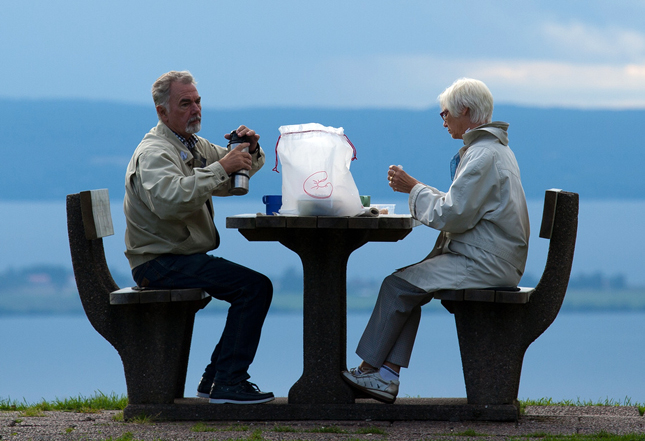
    At the same time, aging is a phenomenon that will affect many developed countries. In the United Sates, the baby boomers are becoming “the grayest generation,” Goldstone said, and similar imbalances between the number of working age people and their dependent elders will soon affect Western Europe, Japan, Korea, Russia, and others.

    Re-Examining the Aging Narrative

    Some have predicted this “graying of the great powers” will have disastrous consequences for many of the G8, as state pension costs blunt economic growth and innovation, military adventurousness, and global influence, but Jennifer Sciubba presented a case for why fears may be overblown.

    When discussing the aging phenomenon in developing countries, many analysts focus too closely on the fiscal environment, argued Sciubba. This creates tunnel vision that ignores the potential coping mechanisms that states have at their disposal. Alliances, for example, are under-accounted for, she said, and closer European Union and even NATO integration could help ameliorate the individual issues faced by aging countries like Germany, France, and Italy.

    She also pointed to evidence that the developing world’s declining fertility may be have been “artificially depressed” by large proportions of women that delayed pregnancy starting in the 1990s. But now the average age of childbearing has stopped rising. The UN total fertility rate projections for industrialized states for the period 2005 to 2010 was revised upward from 1.35 children per woman in 2006 to 1.64 in 2008 and 1.71 in 2010.

    This brings into focus a key leverage point for many developed countries that is not often discussed in traditional conversations about aging: making the workplace friendlier for women. Offering money to couples to have children does not work, said Sciubba – women do not make a simple monetary cost-benefit analysis when they decide to have children. Much more likely is a calculation about the cost to their professional career. Therefore, instituting more liberal leave policies and making it harder for employers to fire both men and women for taking maternity or paternity leave is more likely to have a real impact on fertility rates.

    The growing efficiency – and retirement age – of today’s workers can blunt the effect of older workforces on developed economies, said Sciubba. And the stability, strong institutions, and legal protections for innovation are all advantages that will continue to attract the best and the brightest from developing countries.

    The competing phenomena of aging in the developed world and continued growth in the developing – which some have dubbed the “demographic divide” – will likely make immigration a very important, possibly friction-inducing issue in the coming decades. Goldstone pointed to the challenges Europe is having today coping with immigrants from North Africa and the Middle East as a possible harbinger of things to come.

    Applying Demographic Theory: The Age Structural Maturity Model

    While many regions will continue to experience population growth for the next two decades, including sub-Saharan Africa, the Middle East, and parts of East and South Asia and Latin America, the overall global trend is towards older populations. This is good news for democracy, according to Richard Cincotta.

    Cincotta, who consults with the National Intelligence Council on demographic issues, explained his “age structural maturity” model, which finds a historical correlation between the median age of countries and their Freedom House scores (an annual global assessments of political rights and civil liberties). Older populations tend to have more liberal regimes, while the opposite is true in younger populations. Combining this model with demographic projections, one can predict when it will become likely for democracy to emerge as a country ages. Before the Arab Spring – to some disbelief at the time – Cincotta used the model to predict that Tunisia would reach a 50/50 chance of achieving liberal democracy in 2011 (see more on this in his posts about Tunisia and the Arab Spring).

    For those youthful countries that do achieve some level of liberal democracy, the model predicts they have a high likelihood of falling back towards authoritarianism (Mali is a tragic recent example).

    This model, said Cincotta, can be a useful tool for analysts to challenge and add to their assessments. For example, it paints a bleak picture for democracy in Afghanistan (median age 16.6 years old), Iraq (18.5), or Yemen (17.7) and a comparatively rosier one for Tunisia (29.8), Libya (26.1), and Egypt (25.0). Some other observations may useful as well: no monarch has survived without some limits of power being introduced after countries reach a median age of 35, and military rulers too never pass that mark.


    The age structural maturity model is, however, not perfect, Cincotta said. The most common outliers are autocracies (Freedom House score of “not free”) and partial democracies (“partly free”) with one-party regimes (China, North Korea), regimes led by charismatic “founder figures” (Cuba, Singapore), or those that where the regime is either supported or intimidated by a nearby autocratic state (Belarus).

    Like all analyses, the model has its limitations, said Cincotta, but if used as a tool to generate “alternative hypotheses,” it can help predict dramatic political changes, like the Arab Spring. The research also suggests that the “third wave” of democratization is not over and will in fact continue to expand as countries with younger populations mature.

    In conclusion, the panelists recommended the students find ways to include political demography in their work moving forward. “Consider it an alternative tool that may be useful,” said Geoff Dabelko. Policymakers today are overburdened with information and conventional analyses can sometimes become stuck in familiar lines of thought – demography can supplement these or shake them up by providing alternative narratives.

    Sources: UN Population Division.

    Photo Credit: Schuyler Null/Wilson Center; chart courtesy of Richard Cincotta.
    MORE
  • Taking Stock of Past and Current Demographic Trends

    ›
    March 29, 2012  //  By Kayly Ober
    ECSP is at London’s 2012 Planet Under Pressure conference following all of the most pertinent population, health, and security events.

    “Demography is a science of assumptions,” said Sarah Harper, a demographer at the University Oxford, during a panel at the Planet Under Pressure conference. Thirty years ago, she said, demographers believed the world would reach 24 billion by 2050, now the latest UN median projections predict 10 billion. That means a lot of progress has been made for families and development as a whole, but there are some obstacles yet.

    Harper stressed that the development community should focus on parts of the world with stubbornly high fertility rates, particularly sub-Saharan Africa. If total fertility rates came down there by 2050, below the expected four children per woman, the region could be home to as many as a billion fewer people than current projections. The earlier we acknowledge this growth, the easier it will be to offer interventions like family planning and reproductive health to hedge it, she said.

    Additionally, demographers need worry about important changes in modern population and environment dynamics.

    As Harper notes in an interview with ECSP (video below):
    There has been so much hype around population growth that I think we’ve ignored the other characteristics of population…that it’s changing in its density – we’re all becoming more urban; it’s changing in its distribution – we’re becoming more mobile; and it’s also changing in its composition – the world is getting older.

    I think it’s very clear that these changes are going to interact with the environment and be affected by environmental change but are also going to impact upon future environmental change.
    Sir John Sulston of the Royal Society agreed: population is a more-nuanced subject than many can digest. “Population has been much too ignored because it’s difficult,” he said.

    Sulston urged us to look not just at the diversity of the world, but also the inequity. Today, there is “inequity in countries, between countries, and between generations.”

    There is no silver bullet – the international community need to look at three components in concert if we want to make a difference, he said: first, bring down infant mortality; second, invest in family planning; and third, emphasize education for women.

    “It’s not about surviving, it’s about flourishing,” Sulston said.

    When the ECSP delegation isn’t attending plenary and breakout sessions here at the conference, we’re manning our Wilson Center information booth. And over the last few days, we’ve had the pleasure of introducing our work to a number of new faces, including curious faculty, energetic students, and hopeful doctoral candidates. If you’re attending please feel free to stop by.

    Expect more updates from East London, including more short video interviews, in the next three days as ECSP highlights the unique perspectives coming out of the Planet Under Pressure conference.

    Pictures from the event are available on our Facebook and Flickr pages, and you can join the conversation on Twitter (#Planet2012) or watch the livestream here.

    Photo Credit: Sean Peoples/Woodrow Wilson Center,
    MORE
  • Water and Population: Limits to Growth?

    ›
    February 3, 2012  //  By Laurie Mazur

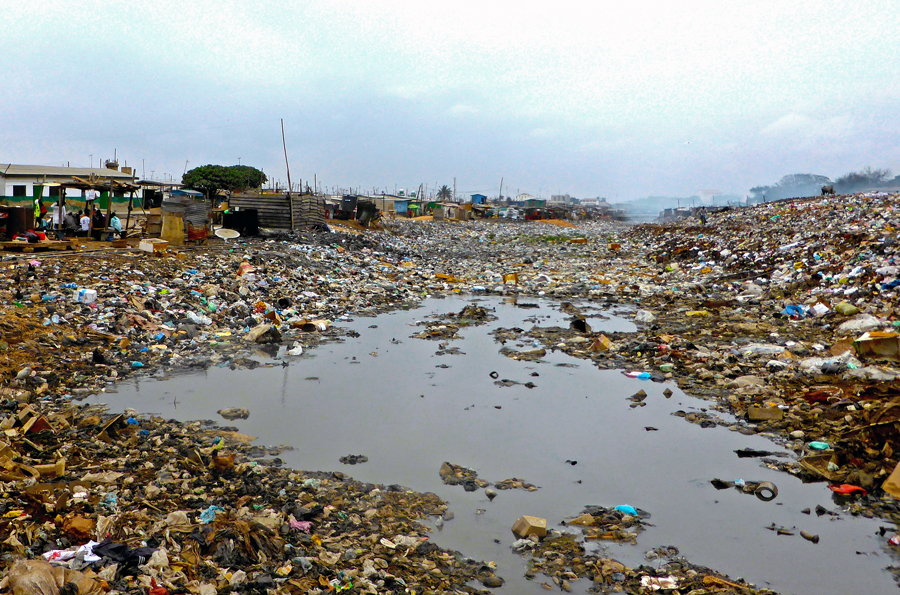
    Water – essential, finite, and increasingly scarce – has been dubbed “the new oil.” Experts debate whether human societies are approaching “peak water,” beyond which lies a bleak future of diminishing supplies and soaring demand. Others observe that, for many, the water crisis has already arrived.

    MORE
Newer Posts   Older Posts
View full site

Join the Conversation

  • RSS
  • subscribe
  • facebook
  • G+
  • twitter
  • iTunes
  • podomatic
  • youtube
Tweets by NewSecurityBeat

Trending Stories

  • unfccclogo1
  • Pop at COP: Population and Family Planning at the UN Climate Negotiations

Featured Media

Backdraft Podcast

play Backdraft
Podcasts

More »

What You're Saying

  • Volunteers,At,The,Lagos,Food,Bank,Initiative,Outreach,To,Ikotun, Pan-African Response to COVID-19: New Forms of Environmental Peacebuilding Emerge
    Rashida Salifu: Great piece 👍🏾 Africa as a continent has suffered this unfortunate pandemic.But it has also...
  • A desert road near Kuqa An Unholy Trinity: Xinjiang’s Unhealthy Relationship With Coal, Water, and the Quest for Development
    Ismail: It is more historically accurate to refer to Xinjiang as East Turkistan.
  • shutterstock_1779654803 Leverage COVID-19 Data Collection Networks for Environmental Peacebuilding
    Carsten Pran: Thanks for reading! It will be interesting to see how society adapts to droves of new information in...

What We’re Reading

  • Rising rates of food instability in Latin America threaten women and Venezuelan migrants
  • Treetop sensors help Indonesia eavesdrop on forests to cut logging
  • 'Seat at the table': Women's land rights seen as key to climate fight
  • A Surprise in Africa: Air Pollution Falls as Economies Rise
  • Himalayan glacier disaster highlights climate change risks
More »
  • woodrow
  • ecsp
  • RSS Feed
  • YouTube
  • Twitter
  • Facebook
  • Home
  • Who We Are
  • Publications
  • Events
  • Wilson Center
  • Contact Us
  • Print Friendly Page

© Copyright 2007-2021. Environmental Change and Security Program.

Woodrow Wilson International Center for Scholars. All rights reserved.

Developed by Vico Rock Media

Environmental Change and Security Program

Woodrow Wilson International Center for Scholars

Ronald Reagan Building and International Trade Center

  • One Woodrow Wilson Plaza
  • 1300 Pennsylvania Ave., NW
  • Washington, DC 20004-3027

T 202-691-4000