-
Climate Security and Europe’s Greens: A Match Made in Political Heaven?
›
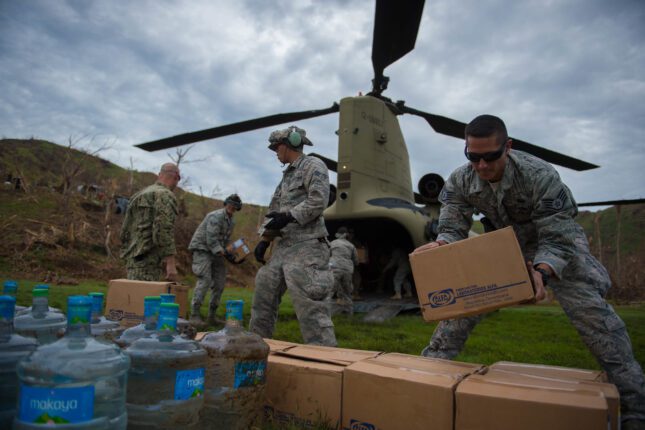
When Luxembourg’s Green Party was offered the defense portfolio in coalition talks after performing strongly in the country’s 2019 elections, its senior members faced a dilemma. Never before had a party of its political stripe held that brief anywhere in the world.
Some of the Green rank and file, drawn from pacifist backgrounds, seemed uncertain as to what to make of it all. But to François Bausch, the Green politician who ultimately took on the roles of defense minister and deputy prime minister there, the answer seemed obvious. Here was an opportunity for the party to advocate for climate security from a highly relevant perch, all while showing voters that it could be trusted with such strategic concerns.
-
ECSP Weekly Watch | June 3 – 7
›
A window into what we are reading at the Wilson Center’s Environmental Change and Security Program
The Perils of Climate Reporting: Global Threats to Journalists Surge
Environmental journalists are under attack. That is the conclusion of a new global survey conducted by Internews’ Earth Journalism Network and Deakin University. These researchers found that nearly 40% of climate and environment journalists have been threatened with harm, with 11% experiencing actual physical violence—often from individuals involved in illegal logging, mining, and other activities. Testimony from journalists at a recent ECSP event titled Environmental Journalists on the Frontlines of Democracy also made it clear that covering such illegal activities is increasingly perilous.
-
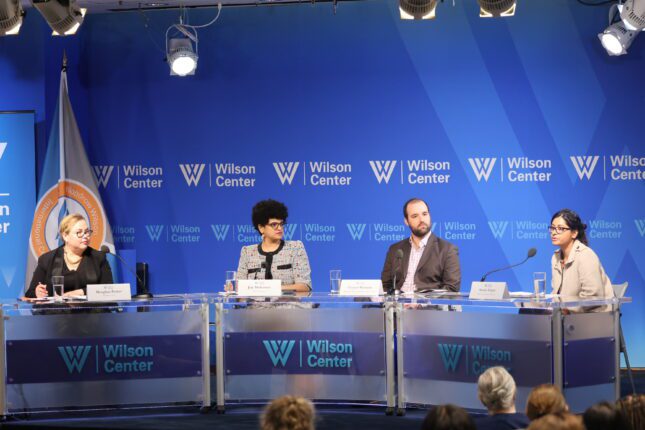
Environmental Journalists on the Frontlines of Democracy
›From record-breaking heat in 2023 to alarming levels of biodiversity loss, our global climate and environmental crises pose a growing threat to human and planetary wellbeing. But even as these crises intensify, the work of documenting them has itself become increasingly risky.
Across the world, threats and attacks against journalists who report on environmental degradation and investigate environmental crimes are on the rise. A recent UNESCO survey reported 300 attacks against environmental journalists in the last five years—a 42 percent jump from the previous 5-year period.
-
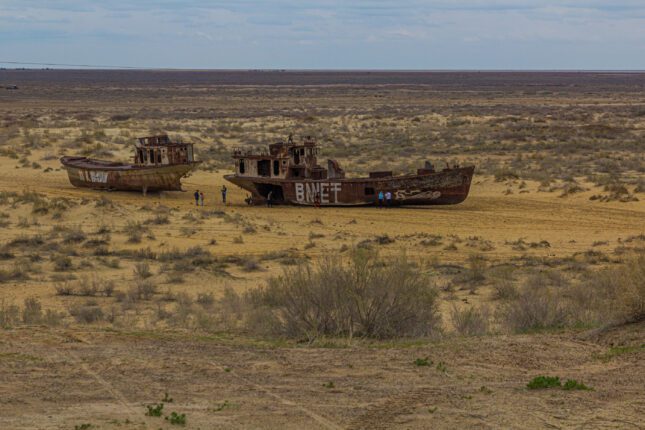
The Future of Central Asian Water Diplomacy
›Central Asia is known for its rich mineral resources and oil reserves, and its unique geographic position between Russia, China, and Iran. But it is also beginning to position itself as a potential leader in water diplomacy. This June, policymakers, academics, and those in the private sector will convene in Tajikistan for the Dushanbe Water Process. In partnership with the United Nations, the country is hosting biennial conferences between 2018-2028; this June will mark the third international high level conference on the topic.
-
International Donors and AID Beneficiaries Face Elevated Cybersecurity Threats
›The promise of global connectivity to enhance developing countries’ well-being is a reality as more citizens go online and international donors and their partners improve their digital service delivery. This surge can spur economic growth, advance freedom, boost transparency, increase accountability, strengthen civil society, and empower women.
-
ECSP Weekly Watch | May 27 – 31
›A window into what we are reading at the Wilson Center’s Environmental Change and Security Program
Panama’s First Climate-Related Relocation
The Guna Indigenous people of Gardi Sugdub—an island in Panama’s San Blas Archipelago—are moving to new mainland homes in Carti Port’s Isber Yala neighborhood. This move is part of a larger relocation effort supported by the country’s government since 2010 to address the impacts of climate change on its indigenous peoples.
-
The US Department of Defense’s Role in Integrating Climate Change into Security Planning
›The recent floods and landslides in Brazil, displacing almost 100,000 and killing at least 100, reminds us that climate change-fueled extreme weather, combined with an intense El Niño, is a deadly combination. Governor Eduardo Leite of the southern Brazilian province, Rio Grande du Sol, described the devastation the region was subjected to as “unprecedented.” As President Luiz Inacio Lula da Silva noted: “We need to stop running behind disasters. We need to see in advance what calamities might happen and we need to work.”
-
ECSP Weekly Watch | May 20 – 24
›A window into what we are reading at the Wilson Center’s Environmental Change and Security Program
Southern Africa’s Drought Offers a Window into the Region’s Climate Future
Southern Africa has been hit by one of its worst droughts in decades, and this calamity highlights the vulnerability of smallholder farmers who rely on rainfed agriculture. For the first time, farmers like Esnart Chogani, who works on a farm just outside Zambia’s capital, Lusaka, were unable to bring in a harvest. The region is normally a major exporter of maize, yet it now has begun importing the grain to meet demand.
Showing posts from category security.