-
ECSP Weekly Watch | September 16 – 20
›
A window into what we’re reading at the Wilson Center’s Environmental Change and Security Program
COP29-Host Azerbaijan Accused of Hypocrisy (The Guardian)
Azerbaijan holds the presidency for the upcoming COP29 in November 2024, and it is using that platform to call for all member states to cease any ongoing conflict they are involved in during the two-week conference. The Central Asian country will also host a “peace day” on November 15, and is putting forth a COP29 Climate and Peace Initiative to support vulnerable countries and advance action in the climate and peace nexus.
-
War and Climate Change Intensify Global Water-related Conflicts
›
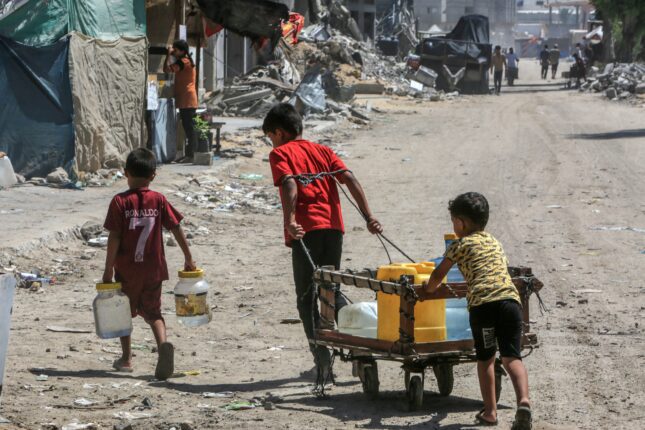
The Pacific Institute recently updated its Water Conflict Chronology—a database of water-conflict events that began to take form in the 1980s. The recent updates include the addition of 300 new entries to the database, highlighting the alarming rise of water-related conflicts in the last few years. Despite this overwhelming evidence of a growing trend in water-related conflicts, global attention toward addressing them remains negligible.
-
ECSP Weekly Watch | September 3 – 6
›A window into what we’re reading at the Wilson Center’s Environmental Change and Security Program
Proliferation of Icebreakers in the Arctic (Foreign Policy)
As climate change-induced melting of ice sheets clears new pathways, the fast-melting Arctic now has a new strategic race: icebreakers. Russia covers over half of what is defined as “Arctic” territory, and it has the largest number of icebreakers in the region. Russia’s attempt to consolidate and expand has led the US and its NATO allies to redefine their own Arctic security strategy.
-
Climate Security in South Sudan: A Conversation with Ratia Tekenet
›In today’s episode of New Security Broadcast, ECSP Director Lauren Risi interviews Ratia Tekenet, a Climate Security Expert with the UN Mission in South Sudan (UNMISS) and a former ECSP staff member. In their conversation, Ratia explores how climate change is intensifying South Sudan’s security challenges, creating an immense humanitarian crisis. She also discusses the efforts of UN agencies, the South Sudanese government, and local communities to build resilience and respond to ongoing climate disasters, as well as the need for greater integration of the humanitarian-development-peace (HDP) nexus. Select quotes from the interview are featured below. -
Signs and Signals: Exploring How a Novel Foresight Approach Gains Prominence
›A number of highly respected research entities in the US and abroad—including the US National Intelligence Council and the European Union—produce hefty global trends reports. These valuable in-depth guides inform new policies (such as USAID’s just-released Democracy, Development and Human Rights Policy)—or refresh older ones. They focus on the risks, uncertainties, and opportunities that lie ahead for the international development community, and they can provide an empirical basis to shape ongoing and future aid programming.
-
Environmental NGOs as Tools of State Security Policy: A Growing Trend
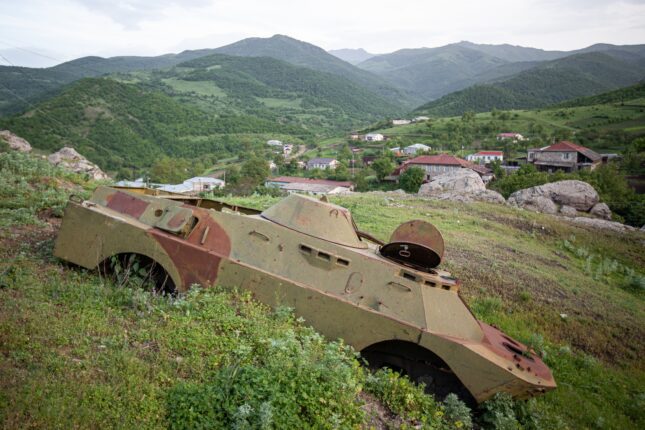
›For a group of self-described environmentalists, the roughly two dozen Azerbaijanis who suddenly assembled along the highway near the Armenian border in late 2022 looked like a pretty atypical lot. None of them appeared to have a background in any kind of green movement. Nor did any of them, clad in largely matching cold weather gear, attempt to explain how they could protest mining operations (their declared raison d’être) without encountering problems in a police state. Indeed, they remained unbothered even as their numbers swelled over the following weeks.
-
ECSP Weekly Watch | August 19 – 23
›A window into what we are reading at the Wilson Center’s Environmental Change and Security Program
What’s Next for the Teesta Water Disputes? (The Hindu)
The recent political upheaval in Bangladesh which led to the resignation of Prime Minister Sheikh Hasina and the return of Nobel Peace Prize laureate Muhammed Yunus as leader of an interim government is not the only tumult in this nation. A worsening trend in weather events there has heightened Bangladesh’s exposure to climate shocks and allowed a dispute over the Teesta River to reemerge.
-
Supercharging US Mineral Exploration: A Call for Federal Support
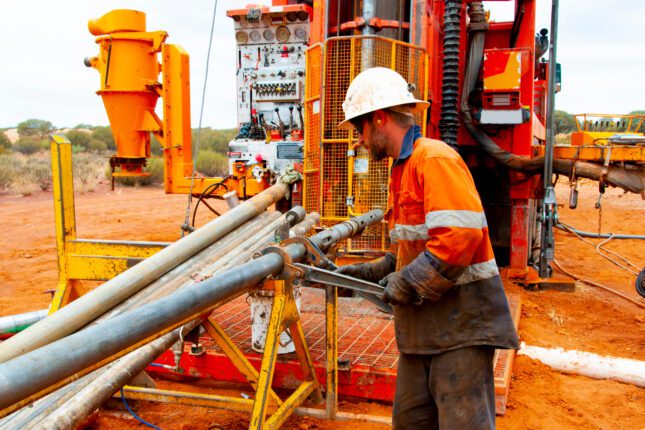
›Critical minerals—and the soaring demand for them—are a key challenge for policymakers and analysts around the world. The factors driving that demand, especially energy transition technologies like electric vehicle batteries, are usually the focus of discussion. But the story of critical minerals is two-sided; it features both demand and supply.
Showing posts from category security.
 In today’s episode of New Security Broadcast, ECSP Director Lauren Risi interviews Ratia Tekenet, a Climate Security Expert with the UN Mission in South Sudan (UNMISS) and a former ECSP staff member. In their conversation, Ratia explores how climate change is intensifying South Sudan’s security challenges, creating an immense humanitarian crisis. She also discusses the efforts of UN agencies, the South Sudanese government, and local communities to build resilience and respond to ongoing climate disasters, as well as the need for greater integration of the humanitarian-development-peace (HDP) nexus. Select quotes from the interview are featured below.