-
Guam and Vanuatu: Different Paths from Environmental Change to Human Insecurity
›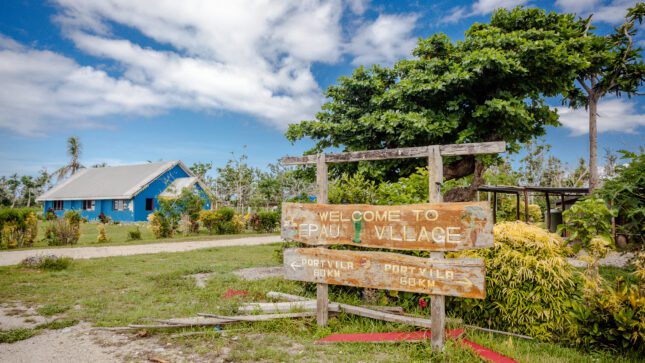
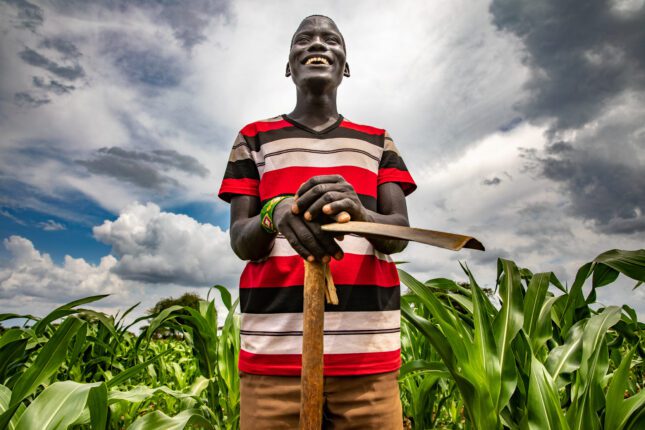
Our present ecocrisis drives human insecurity. Single weather events killed hundreds in 2024, even in wealthy countries such as the United States or Spain. And beyond that staggering toll in human lives lurk staggering amounts of money required to repair and rebuild. In the United States alone, inflation-adjusted disaster-attributable costs have reached on average $153 billion each year. These factors and others make global environmental change a severe risk to human security.
-
The 2024 Montreal Climate Security Summit: Four Takeaways
›
“I think we need to approach climate security completely differently,” said Sharon Burke, Founder and President of Ecospherics and Wilson Center Global Fellow, at the recent 2024 Montreal Climate Security Summit. “It’s not just that climate change is an opportunity cost in combat power, or that it’s effecting our bases and operating environment, or that it is an accelerant to instability. It is itself the threat.”
-
Swathi Veeravalli on the Importance of Climate Security for US Strategic Interests
›In today’s episode of New Security Broadcast, ECSP Program Director Lauren Risi sits down with Swathi Veeravalli on her last day as the Director for Climate Security and Adaptation at the National Security Council (NSC) to discuss the new US Framework for Climate Resilience and Security, its significance for the future of US security and economic interests, and what success in building climate security looks like over the next decade. -
New Tool Offers Key Insights for Tackling Climate and Conflict Challenges
›When the White House released the US Framework for Climate Resilience and Security in September 2024, it was an important opportunity to highlight the significant impacts of climate change on US national security, economic, and strategic interests. The Framework also emphasized the need for tailored approaches in fragile, conflict-affected, and vulnerable (FCV) contexts, particularly in managing and allocating resources, as well as ensuring that climate finance addresses conflict drivers.
-
The Story Behind Climate Security and What it Means for US Foreign Policy
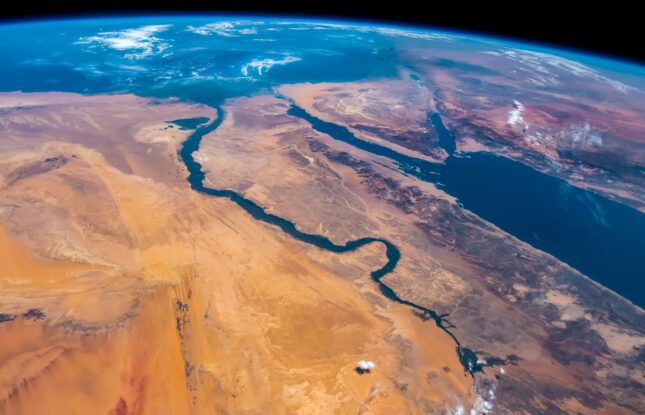
›Hurricanes Helene and Milton battered the southeastern US in September and October and caused a combined estimate of $300 billion in damages. These storms were only the latest example of a cascade of disasters that is expected to worsen as climate change intensifies. Yet the impacts do not stop at dollars and human lives. Threats to security and stability also will multiply as rising temperatures increase the variability of rainfall patterns and the intensity of storms.
-
Finding a Place for “The Planetary?”
›One of academia’s latest buzz phrases is “the planetary.” While it may seem on the surface to lack a clear connection with climate security, a closer inspection suggests that this term does have significant relevance to discussions about this key concept.
Use of “the planetary” is an attempt to compel people to think much more carefully about the current human condition. The climate crisis—as well as the extinction event we are living through—are challenging contemporary notions that humans are somehow separate from nature. In short, a relatively stable world in which our infrastructure, economies, and modes of thinking remain rooted is no longer a useful construct.
-
ECSP Weekly Watch | October 7 – 11
›A window into what we’re reading at the Wilson Center’s Environmental Change and Security ProgramEscalations in Middle East Spur Oil Security Concerns (Reuters)
One year on from the brutal reignition of the Israeli-Palestinian Conflict on October 7, 2023, the situation in the Middle East has escalated drastically. Hamas’ attack on Israel has been followed by Israeli strikes across the region, which have killed tens of thousands of civilians, displacing millions in Gaza and in Lebanon. Now, tit for tat attacks between Israel and Iran have made Gulf states, particularly Saudi Arabia, Qatar, and the United Arab Emirates (UAE), worry about oil security in the region.
-
Long Term Climate Resilience: A Pathway to Stabilize Somalia
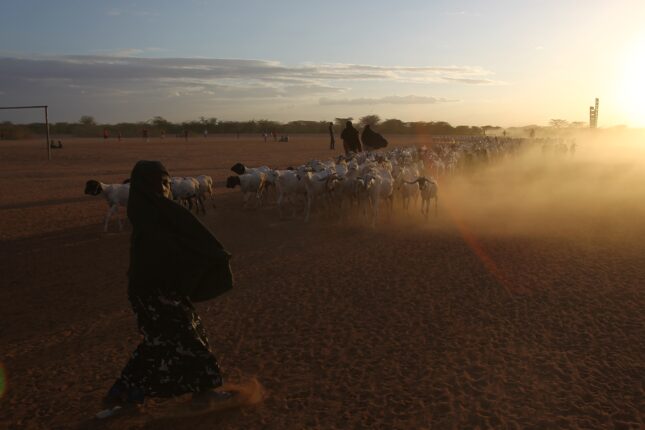
›Somalia is trapped in a cycle where climate impacts—droughts, floods, and erratic weather patterns—fuel displacement, poverty, and conflict. With agriculture and pastoralism at the core of its economy, the country is particularly vulnerable to these environmental shocks, which create fertile ground for insurgent groups to exploit the resulting instability.
Showing posts from category security.

 In today’s episode of New Security Broadcast, ECSP Program Director Lauren Risi sits down with Swathi Veeravalli on her last day as the Director for Climate Security and Adaptation at the National Security Council (NSC) to discuss the new US Framework for Climate Resilience and Security, its significance for the future of US security and economic interests, and what success in building climate security looks like over the next decade.