-
Book Review: “Making America Green and Safe” Explores History of Sustainable Development and Climate Change
› In his book, Making America Green and Safe: A History of Sustainable Development and Climate Change, Alan Hecht offers an insider’s account of the years that shaped sustainable development and climate change policy in the United States. The arc of Hecht’s career spans the evolution of the modern environmental movement. Serving for more than 40 years in the U.S. government, he devoted his career to environmental protection and sustainable development. The stories he tells reflect his belief that “history is a critical part of future planning.”
-
Panelists Call for Creation of World Commission to Handle Solar Radiation Management
›
“Right now, it’s the Wild West in regard to governance with geoengineering,” said Paul Wapner, a professor at the School of International Service at American University at a recent panel about solar radiation management (SRM) at the Arizona State University’s Washington Center. According to the Governing Solar Radiation Management report which was the focus of the event, SRM, which theoretically would cool the planet by reflecting sunlight back into space, may be a viable last-resort option if climate change mitigation and adaptation efforts fail. Wapner said that “there’s a danger in SRM, there’s a danger in climate change. And, balancing those risks is part of the exercise and will continue to be part of the exercise.”
-
Power Play: Can Micro-Hydropower Electrify Remote Afghanistan and Promote Peace?
›After close to 40 years of armed conflict, Afghanistan may be poised to begin a period of economic recovery. Electrifying remote areas and establishing pervasive political control is critical to its success. India is currently planning and funding several major hydropower projects along the Kabul River and its tributaries. Micro-hydropower is bringing electricity to remote areas such as the Banda Miralamji Village in eastern Nangarhar Province. However, in some areas far from the capital, the central government in Kabul and opposition groups are struggling for control and influence. While electrification of a village often eases poverty, health concerns, and improves communication, it does not always benefit the government in Kabul.
-
Does Demographic Change Set the Pace of Development?
›The research presented in this article was subsequently published in a peer-reviewed article: https://doi.org/10.1093/acrefore/9780190228637.013.327
This year, 2018, marks the 60th anniversary of a landmark publication by a pair of academic social scientists who first recognized the close relationship between population age structure (the distribution of a country’s population, by age) and development. In Population Growth and Development in Low Income Countries (Princeton U. Press, 1958), demographer Ansley Coale (1917-2002) and economist Edgar M. Hoover (1907-1992) theorized that eventual declines in fertility would transform developing-country age structures. Coale and Hoover demonstrated that these newly transformed age structures would exhibit larger shares of citizens in the working ages, and smaller shares of dependent children and seniors (Fig. 1). This transition, they argued, would someday help lift countries with youthful populations in Asia, Latin America, and Africa out of the low-income bracket.
-
Aaron Wolf on Transboundary Water Conflict and Cooperation
›Friday Podcasts // Water Stories (Podcast Series) // November 30, 2018 // By Evan Barnard & Sharif Wahab“Countries—even countries that don’t like each other much—have, and continue to have, conversations over water resources, even when they won’t about other issues,” says Aaron Wolf, Director of Water Conflict Management and Transformation at Oregon State University, in this week’s Water Stories podcast. -
International Water Cooperation Opens the Door to Peacemaking
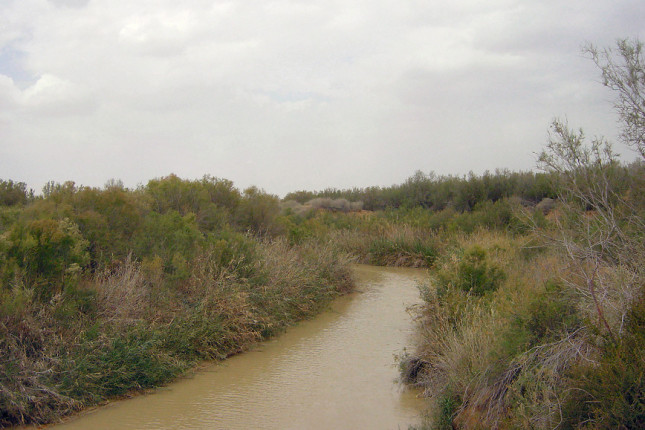
›Although water is an essential input for agriculture and industrial production, it is also scarce in many regions. When it crosses international borders via shared rivers, lakes and aquifers, it can become a source of conflict and contention. Yet while water can be a source of instability, especially in the face of climate change, it can also be a source or catalyst for cooperation and even peace.
-
Stormy Weather: Human Security Should Include Freedom from Hazard Impacts
›It is imperative that countries adopt a human security approach to achieve “freedom from hazard impacts”—nationally through a scientific disaster risk reduction strategy and internationally through climate diplomacy.
-
Environmental Security in Times of Armed Conflict
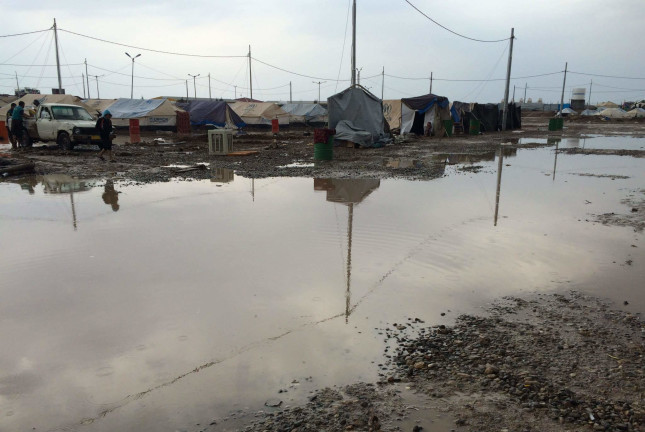
›This summer, Iraqi citizens in Basra demonstrated in the streets to protest a serious public health crisis caused by polluted water. The condition of their water infrastructure was deplorable after years of devastating wars, corruption, and droughts and regional hydropolitics. More than 100,000 people have reportedly been poisoned by polluted water, while recent estimates warn that some 277,000 children are at risk of diseases, such as cholera due to rundown water and sanitation facilities at schools.
Showing posts from category security.
 In his book, Making America Green and Safe: A History of Sustainable Development and Climate Change, Alan Hecht offers an insider’s account of the years that shaped sustainable development and climate change policy in the United States. The arc of Hecht’s career spans the evolution of the modern environmental movement. Serving for more than 40 years in the U.S. government, he devoted his career to environmental protection and sustainable development. The stories he tells reflect his belief that “history is a critical part of future planning.”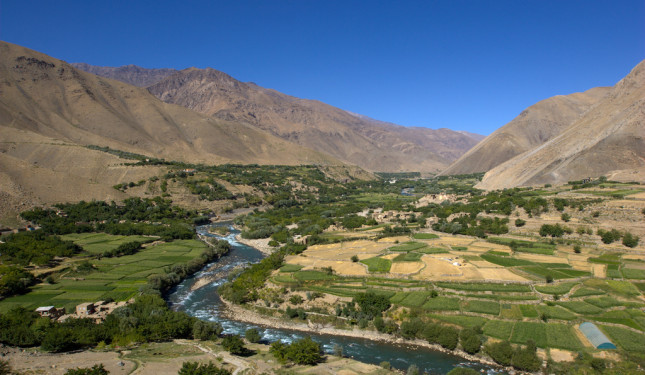

 “Countries—even countries that don’t like each other much—have, and continue to have, conversations over water resources, even when they won’t about other issues,” says