

-
How Natural Resources Could Help Build Peace in Afghanistan
›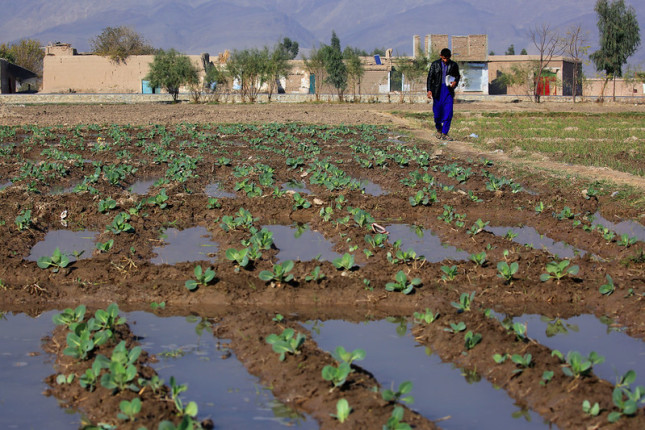
Potential water wars due to plans for multiple dams, violent opium cartels supporting world heroin markets, and many conflict-financing minerals including everyday talc used for baby powder. These are the types of natural resources stories that usually make front page news about Afghanistan. But natural resources have a significant role to play in stabilizing Afghanistan. Instead of being a source of conflict, they may help with peacebuilding by creating livelihoods and creating opportunities for ex-combatants.
-
Common Climate Impact Assessments Underestimate Future Vulnerability
›
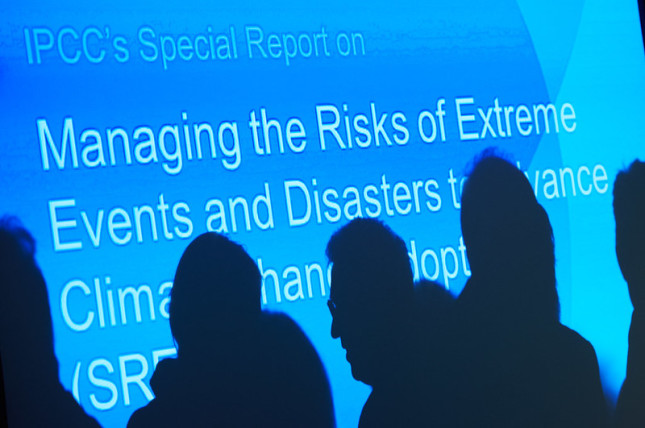
Climate-related disasters are a major source of human and material losses. Poverty and low level of economic development are important determinants of environmental vulnerability. Achieving stable and sustainable development thus represents an important strategy to reduce adverse impacts of climate change. However, present efforts to evaluate possible consequences of climate change in the future suffer from too optimistic assumptions about economic growth in poor countries, as we document in a new article just published in the journal Global Environmental Politics.
-
Dr. Mishkat Al-Moumin on the Importance of Women & the Environment to Sustainable Peace
›“I believe if you acknowledge women as primary users of environmental resources, if you draft the policy with women [at] the table, offering you their unique perspective and unique feedback, you’re going to have a more stable policy. A policy that gets implemented,” says Mishkat Al-Moumin, scholar in residence at the Environmental Law Institute, in this week’s Friday Podcast, and second in a series of interviews recorded at the First International Conference on Environmental Peacebuilding. -
Geoff Dabelko and Sharon Burke on Environmental Peacebuilding in an Era of Great Power Competition
› United States and China are on the road to war, said Senior Advisor of New America’s Resource Security Program, Sharon Burke in this week’s Friday Podcast. “And if you’re an environmental peacebuilder and you’re not thinking about that, you might want to,” she added. She spoke with Geoffrey Dabelko, Professor at Ohio University and Senior Advisor to ECSP, at the first ever International Conference on Environmental Peacebuilding in October 2019 at the University of California, Irvine. It’s a war we can’t afford, said Burke. “But we’re not doing anything to avoid it at the moment, in my opinion, other than deterrence.” -
Population, Climate, and Politics—A New Phase is Emerging
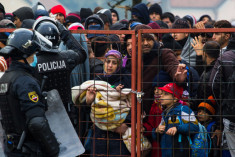
›For some time, it has been clear that a global population imbalance is emerging. High income countries, including nearly all of the Americas, Europe, and most of East and parts of South and Southeast Asia, have seen a dramatic, sustained fall in fertility. Already, this is resulting in shrinking labor forces and the oldest mean age populations seen in history. At the same time, the low income countries and even some lower middle-income countries—mainly in Africa but also in Central America, the Middle East, and parts of South and Southeast Asia—continue to have relatively high fertility. This is now, and even more in the coming decades, producing fast-growing labor forces and relatively young populations. -
Unsung Sheroes, Climate Action, and the Global Peace and Security Agendas
›“We’re fighting for our lands, for our water, for our lives,” said an indigenous woman from Colombia, describing her work as an environmental defender. She spoke at a December 2019 workshop on Gender, Peace and the Environment held in Bogotá, Colombia, that brought together social, environmental, and legal scholars and practitioners—including indigenous women—to discuss women, peace, and security issues.
-
Environmental Science and National Security: Overcoming Barriers to Connecting Research with Policy
›Beginning with the end of the Cold War, a relatively small but growing number of scholars began to investigate the connections between environmental change, conflict, peace, and changing notions of security. The recognition of these linkages wasn’t new, but as the heavy weight of superpower confrontation lifted and new foreign policy dynamics unfolded across the globe, an expanded range of research questions and tools emerged.
-
It’s Time We Think Beyond “Threat Multiplier” to Address Climate and Security
›If you have even a passing familiarity with the climate and security literature, you undoubtedly have come across the phrase “threat multiplier.” The phrase conveys the idea that climate change intersects with other factors to contribute to security problems. It’s used as short-hand to avoid the charge of environmental determinism, that climate change somehow on its own causes negative security outcomes.The 2007 CNA Military Advisory Board (MAB) report on climate security introduced this formulation and, at the time, it served the purpose of recognizing that there is a link between climate change and security. But research on climate security has progressed and so must our framing of the risks and needed interventions.
Showing posts from category security.
 “I believe if you acknowledge women as primary users of environmental resources, if you draft the policy with women [at] the table, offering you their unique perspective and unique feedback, you’re going to have a more stable policy. A policy that gets implemented,” says Mishkat Al-Moumin, scholar in residence at the Environmental Law Institute, in this week’s Friday Podcast, and second in a series of interviews recorded at the First International Conference on Environmental Peacebuilding.
 United States and China are on the road to war, said Senior Advisor of New America’s
  For some time, it has been clear that a global population imbalance is emerging. High income countries, including nearly all of the Americas, Europe, and most of East and parts of South and Southeast Asia, have seen a dramatic, sustained fall in fertility. Already, this is resulting in shrinking labor forces and the oldest mean age populations seen in history. At the same time, the low income countries and even some lower middle-income countries—mainly in Africa but also in Central America, the Middle East, and parts of South and Southeast Asia—continue to have relatively high fertility. This is now, and even more in the coming decades, producing fast-growing labor forces and relatively young populations.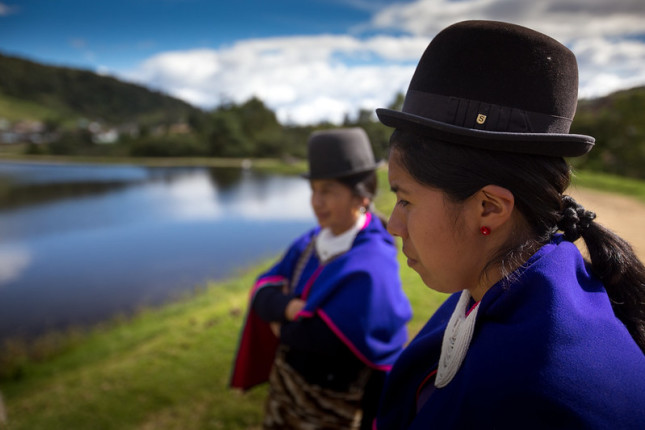

 If you have even a passing familiarity with the climate and security literature, you undoubtedly have come across the phrase “

