• woodrow wilson center
  • ecsp

New Security Beat

Subscribe:
  • rss
  • mail-to
  • Who We Are
  • Topics
    • Population
    • Environment
    • Security
    • Health
    • Development
  • Columns
    • China Environment Forum
    • Choke Point
    • Dot-Mom
    • Friday Podcasts
    • Navigating the Poles
    • Reading Radar
  • Multimedia
    • Water Stories (Podcast Series)
    • Backdraft (Podcast Series)
    • Tracking the Energy Titans (Interactive)
  • Films
    • Water, Conflict, and Peacebuilding (Animated Short)
    • Paving the Way (Ethiopia)
    • Broken Landscape (India)
    • Scaling the Mountain (Nepal)
    • Healthy People, Healthy Environment (Tanzania)
  • Publications
  • Events
  • Contact Us

NewSecurityBeat

The blog of the Wilson Center's Environmental Change and Security Program
Showing posts from category security.
  • Ripple Effects: Sharing Water and Building Peace in the Jordan River Valley

    ›
    From the Wilson Center  //  December 15, 2017  //  By Julianne Liebenguth
    EcoPeace-Event

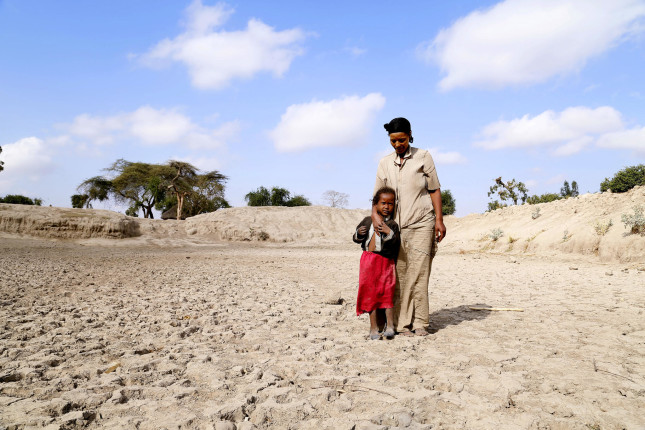
    In the war-torn Jordan River Valley, we can meet the “strategic objective of reducing conflict by promoting cooperation on shared waters,” said former defense official Sherri Goodman at a recent Wilson Center event on environmental peacebuilding. Even in the midst of political disputes, Jordanians, Israelis, and Palestinians must work together to manage the scarce supplies of clean water to protect their health, their economies, and their security.

    MORE
  • “Journalists Need to Do More to Cover Wildlife and Environmental Crime”

    ›
    Guest Contributor  //  December 14, 2017  //  By Sharon Guynup

    Sharon Guynup, a global fellow at the Woodrow Wilson International Center for Scholars and a National Geographic Explorer, offers her perspective on the role journalists can play in uncovering and combating illegal wildlife trafficking. This piece originally appeared on the Revelator.

    For the past few years, much of my work as a journalist has focused on wildlife and environmental crime. I’ve covered poaching busts and seizures of everything from pangolin scales and big-cat skins to rhino horn, live turtles and songbirds. I’ve reported on the Asian, African and South American markets that sell animals live, dead and in parts, and about the consumers that drive this black-market trade. I’ve written about China, the largest consumer, where many endangered species products are luxury items bought by the wealthiest and most influential as a way to flaunt power and gain prestige. I’ve also explored the trade here in the United States — the world’s second largest consumer. I covered the ubiquitous bird trade in Latin America, where ownership of pet parrots and other birds is so rampant that few realize these animals are endangered, or that it’s against the law to buy or keep them.

    MORE
  • Sustainable Water, Resilient Communities: The Problem of Too Much Water

    ›
    From the Wilson Center  //  Water Security for a Resilient World  //  December 12, 2017  //  By Julianne Liebenguth
    Bangladesh Flood

    This article is part of ECSP’s Water Security for a Resilient World series, a partnership with USAID’s Sustainable Water Partnership and Winrock International to share stories about global water security.

    “Floods are one of many factors that keep massive amounts of the population in poverty and always on the brink of disaster,” said Eric Viala at the second event in a four-part series on water security organized by the Wilson Center in cooperation with the Sustainable Water Partnership, which Viala directs. Panelists at the event discussed the impact of intense flooding on vulnerable communities and proposed innovative and collaborative approaches to reducing their risks in the face of disasters.

    MORE
  • Playing Energy Politics: The Risks of Securitizing Natural Gas Markets in Europe

    ›
    Guest Contributor  //  December 1, 2017  //  By Tim Boersma
    State-Tillerson

    Russia is “playing politics with energy supplies,” said U.S. Secretary of State Rex Tillerson at a major policy speech at the Wilson Center this week. He accused Russia of wielding natural gas “as a political weapon” and said that ensuring European energy security was “fundamental” to U.S. national security objectives. In Europe, the debate is raging over how best to achieve energy security in the face of the twin challenges of Russian dominance and the need to decarbonize the economy. The ongoing securitization of Russian natural gas could not only complicate the road to a low carbon future in Europe, it could also undermine a European integration project that has mostly been a success.

    MORE
  • The “Most Important Issue We Face”: New U.S. Global Strategy for Water Emphasizes Health and Security

    ›
    Guest Contributor  //  November 29, 2017  //  By Wilson Center Staff
    water-delivery

    “Water may be the most important issue we face for the next generation,” writes President Donald J. Trump on the first page of the first-ever U.S. Global Water Strategy. Prepared by the U.S. State Department and released in mid-November, the landmark report was required by Congress’ bipartisan Senator Paul Simon Water for the World Act of 2014. During the public comments phase, the New Security Beat published recommendations from its fellows and experts. Now that it is out, we’ve asked them to share their thoughts on the final report.

    MORE
  • Building Stability in the Middle East: Defining a Transatlantic Agenda for Climate Resilience

    ›
    From the Wilson Center  //  November 20, 2017  //  By Julianne Liebenguth
    Solar Plant

    Climate change can undermine stability in the Middle East and North Africa, where both the United States and Europe have critical foreign policy and security interests. The Middle East and North Africa (MENA) region “is impacted by climate and resource scarcity risks now, in the medium, and in the long term,” said Nick Mabey, director and chief executive of the environmental think tank E3G, during a recent Wilson Center event on building climate resilience in MENA countries. “It’s a region that is highly vulnerable to climate change,” said Mabey, and “also incredibly vulnerable to global systems.” 

    MORE
  • Alice Hill: Invest in Resilience to Manage Future Risks to Economy, Security

    ›
    From the Wilson Center  //  November 8, 2017  //  By Gretchen Johnson

    As our climate changes, “we are vulnerable to unacceptable risks of failures in functionality, durability, and safety,” said Alice C. Hill, former senior director for resiliency policy for the National Security Council, as she launched Resilience Week at the Wilson Center. During the week, members of the UN Resilience Academy joined representatives from the Wilson Center, Stanford Woods Institute for the Environment and the Hoover Institute for in-depth discussions on building global resilience in the face of environmental change. “Resilience is proving necessary to withstand the disruptions to our very interconnected systems,” she said.

    MORE
  • A Toxic Legacy: Remediating Pollution in Iraq

    ›
    Guest Contributor  //  November 6, 2017  //  By Wim Zwijnenburg
    Boys-Playing-Oil-Fires

    As the so-called Islamic State loses control over the areas it once occupied, it is leaving behind a toxic legacy.  The initial findings of a scoping mission undertaken by UN Environment Programme’s Conflict and Disasters branch found a trail of localized pollution that could have acute and chronic consequences for Iraq—and not just for its environment.

    MORE
Newer Posts   Older Posts
View full site

Join the Conversation

  • RSS
  • subscribe
  • facebook
  • G+
  • twitter
  • iTunes
  • podomatic
  • youtube
Tweets by NewSecurityBeat

Trending Stories

  • unfccclogo1
  • Pop at COP: Population and Family Planning at the UN Climate Negotiations

Featured Media

Backdraft Podcast

play Backdraft
Podcasts

More »

What You're Saying

  • Volunteers,At,The,Lagos,Food,Bank,Initiative,Outreach,To,Ikotun, Pan-African Response to COVID-19: New Forms of Environmental Peacebuilding Emerge
    Rashida Salifu: Great piece 👍🏾 Africa as a continent has suffered this unfortunate pandemic.But it has also...
  • A desert road near Kuqa An Unholy Trinity: Xinjiang’s Unhealthy Relationship With Coal, Water, and the Quest for Development
    Ismail: It is more historically accurate to refer to Xinjiang as East Turkistan.
  • shutterstock_1779654803 Leverage COVID-19 Data Collection Networks for Environmental Peacebuilding
    Carsten Pran: Thanks for reading! It will be interesting to see how society adapts to droves of new information in...

What We’re Reading

  • Rising rates of food instability in Latin America threaten women and Venezuelan migrants
  • Treetop sensors help Indonesia eavesdrop on forests to cut logging
  • 'Seat at the table': Women's land rights seen as key to climate fight
  • A Surprise in Africa: Air Pollution Falls as Economies Rise
  • Himalayan glacier disaster highlights climate change risks
More »
  • woodrow
  • ecsp
  • RSS Feed
  • YouTube
  • Twitter
  • Facebook
  • Home
  • Who We Are
  • Publications
  • Events
  • Wilson Center
  • Contact Us
  • Print Friendly Page

© Copyright 2007-2021. Environmental Change and Security Program.

Woodrow Wilson International Center for Scholars. All rights reserved.

Developed by Vico Rock Media

Environmental Change and Security Program

Woodrow Wilson International Center for Scholars

Ronald Reagan Building and International Trade Center

  • One Woodrow Wilson Plaza
  • 1300 Pennsylvania Ave., NW
  • Washington, DC 20004-3027

T 202-691-4000