-
ICPD25: Midwives are a Key Part of any Health Workforce Dream Team
› “Midwifery is a fix, it is not an add-on,” said Franka Cadée, President of the International Confederation of Midwives (ICM) at the Nairobi Summit on ICPD25. The World Health Organization designated 2020 the Year of the Nurse and the Midwife in recognition of the invaluable contributions of these two professions. To meet the Sustainable Development Goals by 2030, midwives and nurses must be valued and utilized as essential members of the health workforce. Increased utilization of skilled midwives will also help countries achieve universal health coverage and improve access to sexual and reproductive health services, two key actions from the 1994 International Conference on Population and Development (ICPD).
 -
All the Population Future We Cannot See
›In the quarter century the Wilson Center’s Environmental Change and Security Program has been pondering the issues for which it’s named, the world’s demographic future has been wobbling. A key concern of analysts: How many people will farmers need to feed in 2050? Mainstream projections have teetered between 8.9 billion and 9.8 billion, amounting to an increase of between 13 and 21 percent over today’s 7.7 billion. This significant variation in projections is rarely acknowledged by prognosticators. Many simply round up today’s latest guess and state confidently that there will be 10 billion people in 2050—though just a few years ago, the number most confidently stated was 9 billion. -
Which Demographic “End of History”?
›First published 30 years ago in the National Interest, Francis Fukuyama’s landmark essay, “The End of History?,” argued that, with the fall of fascism and communism, no serious blueprint for modern-state development lay open, save for those paths that would ultimately embrace both political and economic liberalism. Over the past two decades, movement toward this ideal end-state has trickled to a halt. Instead, the political elites of Eurasia’s regional powers—Russia, Turkey, Iran, and China—have crafted stable illiberal regimes that borrow whatever they need from free-market economics, electoral politics, nationalism, and religion. Their ascent has produced a form of “non-endpoint stability”—two mutually antagonistic camps: one composed of liberal democracies, the other a mix of illiberal hybrids. As long as these camps remain stable, the international system falls far short of Fukuyama’s theoretical end of history. -
Three Trends to Track in Population-Environment-Security
›Exactly 25 years ago the international community met in Cairo for the 1994 International Conference on Population and Development. In the aftermath of the Cold War, ethnic conflict seemed to be exploding globally and research on the role of population growth and resource scarcity found an eager audience among policy makers struggling to understand this new international disorder. ECSP’s founding in that same year positioned the program as a leader in bringing together the scholarly and policy communities around non-traditional security issues over the last 25 years. The last two-and-a-half decades have brought tremendous change in population trends, environmental change, and the security landscape. Over the next 25 years three trends will shape the agenda of those working on the nexus of population-environment-security issues. -
To Address Security in Africa, Focus on the Citizen: Ambassador Phillip Carter III on the Connections between Development and Security
›To address the security challenges facing Sub-Saharan Africa we need to shift the focus from a concept of state security to one of citizen security, says Ambassador Phillip Carter III (ret.), former Ambassador to the Ivory Coast and the Republic of Guinea, in this week’s Friday Podcast. “Our current strategy of a military response to terrorist organizations or criminal networks is inadequate at best, and probably unsustainable at worst,” says Carter. “To me, the greatest security threat in Africa is poor or bad governance.” -
ICPD25: Quality of Care and Universal Health Coverage Should Be Basic Human Rights
›The Nairobi Summit on ICPD25 was an opportunity for the global community to re-commit to the unfinished objectives of the 1994 International Conference on Population and Development’s (ICPD) Programme of Action and accelerate the progress to achieve the Sustainable Development Goals by 2030. -
ICPD25: I March for Gender Equality
› The Nairobi Summit on ICPD25 came a quarter century after the landmark International Conference on Population and Development (ICPD) was held in Cairo in 1994. Pledges made 25 years ago by 179 countries recognized that human rights, including reproductive rights, were fundamental to development and population concerns. A rigorous Programme of Action was created to reduce maternal deaths, ensure access to family planning, and protect women and girls from gender-based violence, including female genital mutilation and child marriage. -
Foresight for Action | Ecosystem Degradation, Transnational Migration, and Political Instability: Three Main Tipping Points for East Africa
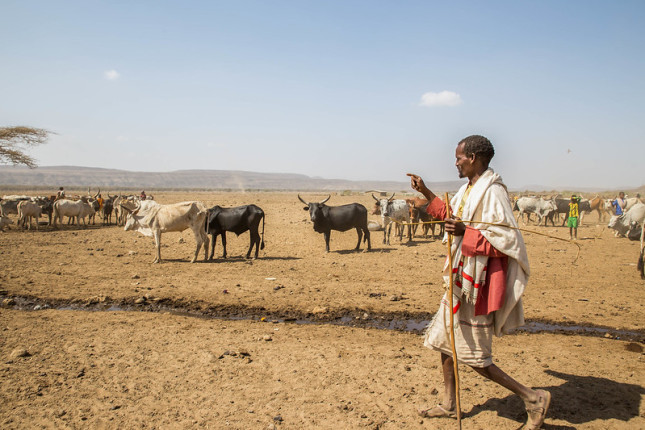
›The Horn of Africa faces critical security and climate risks. Persistent droughts have precipitated the onset of food insecurity and waterborne disease, while heavy rain events such as Cyclone Sagar have caused widespread flooding, mudslides, and wind damage. These challenges are increasing in severity against a backdrop of changing demographic trends—including rapid population growth, increased migration, and urbanization—and power struggles both within and between countries in the region.
Showing posts from category population.
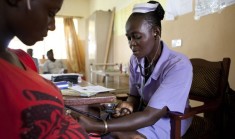 “Midwifery is a fix, it is not an add-on,” said Franka Cadée, President of the International Confederation of Midwives (ICM) at the Nairobi Summit on ICPD25. The World Health Organization designated 2020 the
 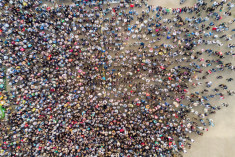 In the quarter century the Wilson Center’s Environmental Change and Security Program has been pondering the issues for which it’s named, the world’s demographic future has been wobbling. A key concern of analysts: How many people will farmers need to feed in 2050? Mainstream projections have teetered between 8.9 billion and 9.8 billion, amounting to an increase of between 13 and 21 percent over today’s 7.7 billion. This significant variation in projections is rarely acknowledged by prognosticators. Many simply round up today’s latest guess and state confidently that there will be 10 billion people in 2050—though just a few years ago, the number most confidently stated was 9 billion.
 First published 30 years ago in the National Interest, Francis Fukuyama’s landmark essay, “
 Exactly 25 years ago the international community met in Cairo for the
 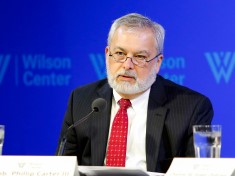 To address the security challenges facing Sub-Saharan Africa we need to shift the focus from a concept of state security to one of citizen security, says Ambassador Phillip Carter III (ret.), former Ambassador to the Ivory Coast and the Republic of Guinea, in this week’s Friday Podcast. “Our current strategy of a military response to terrorist organizations or criminal networks is inadequate at best, and probably unsustainable at worst,” says Carter. “To me, the greatest security threat in Africa is poor or bad governance.”
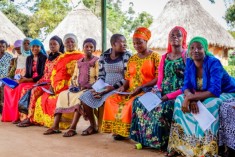 The Nairobi Summit on ICPD25 was an opportunity for the global community to re-commit to the unfinished objectives of the 1994 International Conference on Population and Development’s (ICPD)
 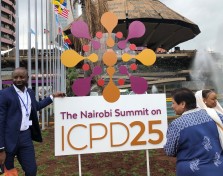 The Nairobi Summit on