-
Headlines and Trend Lines: A Wilson Center NOW Interview with James Hollifield on Global Migration
›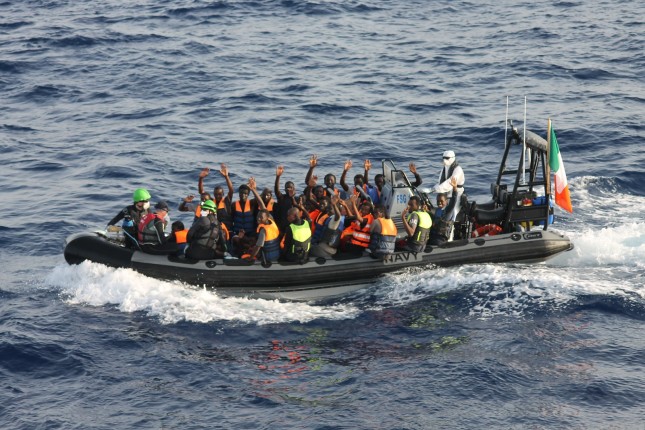
One factor frequently underestimated in the global migration discussion is climate change, said James Hollifield, a Wilson Center Global Fellow, in a recent episode of Wilson NOW. Resulting in both internal displacement and international forced migration, climate-induced migration is set to become a complex problem. So far, there are no international agreements protecting those who may be displaced by climate-induced hardships. Hollifield anticipates regions in Africa, South Asia, and Southeast Asia will be significantly impacted by these dynamics and notes that Central America is already dealing with challenges of climate-induced displacement, in part due to increasing failure of cash-crops like coffee.
-
Healthy Women, Healthy Economies: Gender Parity in the Workplace
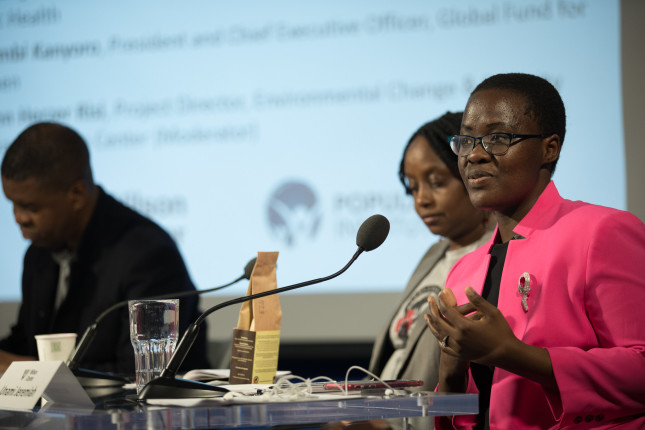
› “When you get to the power of voice, you have to be brave and you have to be that person that will speak up and say this isn’t right, but I want to be a part of the solution,” said Eileen Martin, the Global Director of Inclusion at EMD Serono, the U.S. division’s biopharmaceutical arm, of Merck KGaA, Darmstadt, Germany. She spoke at a recent Wilson Center event on the intersections between women’s health, leadership, and economic prosperity. This edition of Friday Podcasts is led by Sarah B. Barnes, Project Director of the Maternal Health Initiative at the Wilson Center.
 -
Water as a Tool for Resilience in Times of Crisis
›Water serves as a tool for resilience only when access to it is consistent and the system for making it consistent is in place, said David De Armey, Director of International Partnerships for Water for Good, an international NGO. He spoke at a recent Wilson Center event, “Water as a Tool for Resilience in Times of Crisis,” the second event in a three-part series, Water Security for a Resilient World, sponsored by the Wilson Center, Winrock International, the Sustainable Water Partnership, and USAID. Water for Good monitors 80 percent of wells across seven provinces in Central African Republic (CAR), he said. By keeping the water infrastructure working, the nonprofit creates a stable environment within an unstable country. “Thus,” he said, “we see reliability and services as a tool for resilience.”
-
New Report: Six Steps Towards Ending Preventable Maternal Mortality
›In Six Steps Towards Ending Preventable Maternal Mortality, Sarah B. Barnes, Project Director of the Maternal Health Initiative, Geeta Lal, Senior Technical Advisor at the United Nations Population Fund (UNFPA), and Elizabeth Wang, Staff Intern at the Maternal Health Initiative, discuss suggested steps to prevent avoidable maternal deaths, globally.
-
Africa in Transition: Highlights from a Conversation on Investing in Youth for Economic Prosperity
›Africa in Transition, a new series hosted by the Wilson Center and the Population Institute, explores the role of population trends—migration, urbanization, fertility, maternal mortality—in shaping sub-Saharan Africa’s chances for prosperity, health, and security. In this podcast, we share highlights from the first Africa in Transition event. Parfait Eloundou-Enyegue, Professor at Cornell University, starts the conversation by reminding us that “African countries are in the middle of multiple transitions that have the potential to create opportunities for prosperity, growth, and increased human capital, but also to create greater inequality. The challenge, therefore, is to build prosperity, but to do it for all.”
-
Healthy Women, Healthy Economies: A Look at Brazil (New Report)
›“Globally, women face obstacles to entering, advancing in, and remaining in the workforce as a result of gender discrimination, harassment, and a lack of supportive, gender-sensitive policies.” – Healthy Women, Healthy Economies: A Look at Brazil
In Healthy Women, Healthy Economies: A Look at Brazil, Sarah B. Barnes, Project Director of the Maternal Health Initiative, and Elizabeth Wang, Maternal Health Initiative Intern, discuss the intersections of women’s health and well-being and their economic empowerment. The report also takes a look at current progress and remaining barriers to female participation in Brazil’s workforce.
-
Environmental Security Risks: How to Plan for Disasters in the Face of Uncertainty
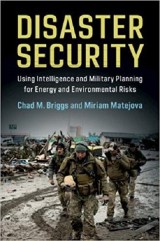
›How do we plan for disasters that have never occurred before? One million species are at risk of extinction in the near future from environmental changes. The frequency of historic tropical storms is increasing. The rapidly melting permafrost in the Arctic is placing unprecedented pressures on northern infrastructure. Given the overwhelming and unpredictable nature of new disaster risks, it is not clear what the appropriate responses should be. Our book, Disaster Security: Using Military and Intelligence Planning for Energy and Environmental Risks, addresses how to assess unique environmental hazards and disaster risks, based on tools used by the U.S. intelligence and military communities. The book draws on lessons learned from developing, applying, and translating scenarios and simulations (or wargames) to plan for future environmental security risks. -
International Aid, Local Capacity Building: Improving Community Health Through Partnerships
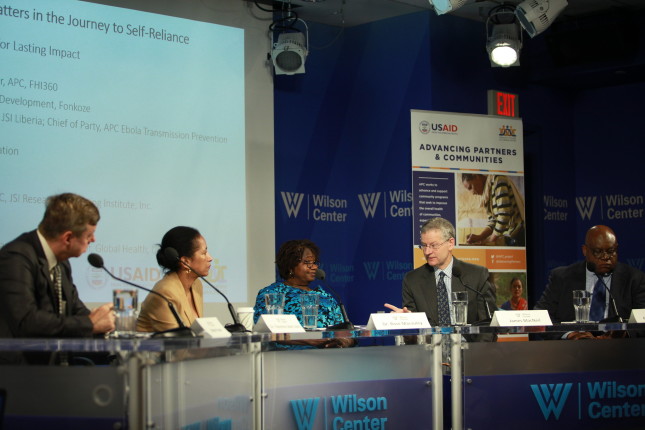
›Seeing the influx of international aid into Haiti following the 2010 earthquake, Dr. Florence Jean-Louis, Director of Human Development at Fonkoze, asked herself, “How can all this support, all this solidarity, stay in-country and have a real impact in the long-term?” She spoke at a recent Wilson Center event on the importance of community health systems to the sustainable development and stability of countries. The answer, she concluded, was to build the capacity of local organizations.
Showing posts from category featured.
 “When you get to the power of voice, you have to be brave and you have to be that person that will speak up and say this isn’t right, but I want to be a part of the solution,” said Eileen Martin, the Global Director of Inclusion at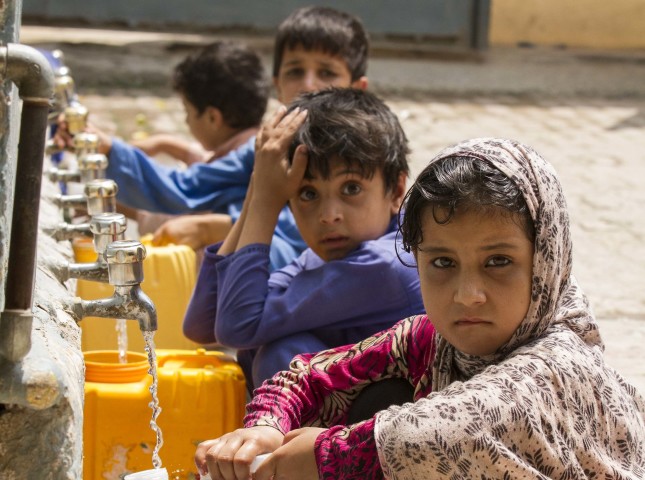

 How do we plan for disasters that have never occurred before?