-
Race, Bias, and Equity in Prenatal Care: No Pregnant Woman is the Same
›
It’s disturbing to see the data going in the wrong direction and it means we have to go beyond what we’ve been doing, said Terri D. Wright, Vice President of Programs and Community at the Eugene and Agnes E. Meyer Foundation at a recent event on equitable prenatal care in the United States hosted by The Jennifer Bush-Lawson Foundation and the American Medical Association at Duke University in DC. “We can’t do the same things the same way and expect a different outcome,” she said. “We’ve got to do something different.”
-
Reservoirs in Parched Chennai, City of Millions, Are Dry. Can Better Forecasting Avert Future Crises?
›
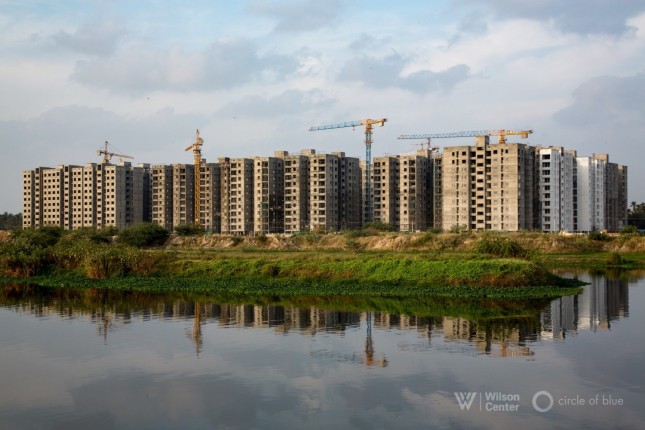
Residents of Chennai, by all accounts, are miserable and anxious. The city’s main reservoirs are dry, depleted by the failure of successive monsoons to provide replenishing rains. The shortfall has crippled the piped distribution network, which is now meeting just half of typical demand through a mix of secondary sources: desalinated water, groundwater, and the impoundments from nearby stone quarries. Even that supply is far from adequate. Piped water reaches households once a week or less. Tanker trucks, an expensive alternative, dole out water by the bucketful to desperate crowds.
-
Partnerships, Politics, & Plastic Pollution: A Conversation with Rob Kaplan on Reducing Ocean Plastics
›“I’ve never seen this kind of political and public sector engagement in an environmental topic happen so fast,” said Rob Kaplan, the Founder and CEO of Circulate Capital in an interview with Ambassador David Balton following a recent Wilson Center event on reducing marine plastic pollution. Interest in reducing ocean plastics has gone from a blip on the radar at ocean conferences to “now becoming a top priority,” said Kaplan. -
Transforming Africa: Women and Young People Will Drive Progress
›“Too often in the United States, the narrative that we hear about Africa is one of poverty, war, and ineffective or failed states. It is a crisis, a place best engaged through aid packages and humanitarian assistance,” said Keith Lee, President and Chief Operating Officer of Brown Capital Management at a recent Wilson Center event hosted by the Africa Program. “This has never been the entire story, and today more than ever, Africa is undergoing enormous transformations that challenge this narrative,” Lee said.
-
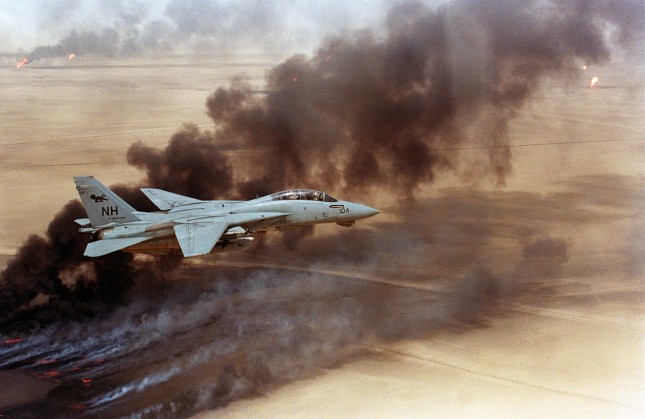
Inclusive Protection of Civilians During Conflicts: Making a Case for the Environment
›It is important to take an inclusive and tangible approach to protecting civilians by protecting the environment during armed conflicts. In recent decades, the link between conflict, the environment and the protection of civilians has become painstakingly clear. From Iraq to Ukraine, Libya to Yemen, dozens of incidents have surfaced where environmental damage resulting from conflict has led to acute or chronic health risks to civilians and their communities, undermining their socioeconomic development.
-
Urban Elites’ Livestock Exacerbate Herder-Farmer Tensions in Africa’s Sudano-Sahel
›In recent years, conflict between herders and farmers for access to increasingly scarce natural resources in Africa’s Sudano-Sahel has escalated. While the problems fueling these tensions are both hyper-local and transnational in nature, one important piece of the puzzle has been overlooked. The real “elephant in the room” is who owns the livestock. -
Weathering the Storm: Wastewater Resiliency in the US and China
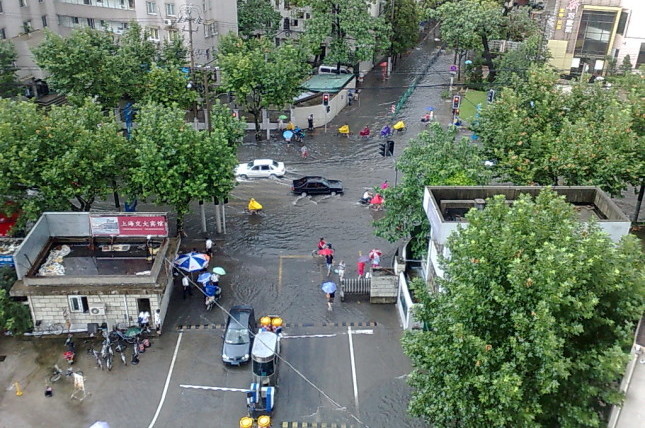
›In 2018, floods resulted in over 20 casualties and billions of yuan in damage in China, with the government issuing 835 flood warnings nationwide. As global temperatures rise, the combination of extreme weather events and sea level rise threaten the basic infrastructure and water security of low-elevation Chinese cities. Coastal residents account for 43% of China’s population – approximately 170 million citizens live less than ten meters above sea level. In fact, seven of China’s ten largest cities are on the coast, creating high stakes for the government to address impending threats of flooding and sea level rise. Shanghai, China’s largest city, is on the frontlines of climate change as one of the world’s most flood-vulnerable major cities. Shanghai’s government was eager to invest in the sponge city initiative and expand greenspace, rooftop gardens and porous pavements to control stormwater floods. However, officials have been hesitant to invest in climate adaptation measures that don’t create a big splash, like the unglamorous networks of sewage and wastewater infrastructure.
-
Middle East: EcoPeace Urges UN to Back Water-Energy Cooperation to Increase Security
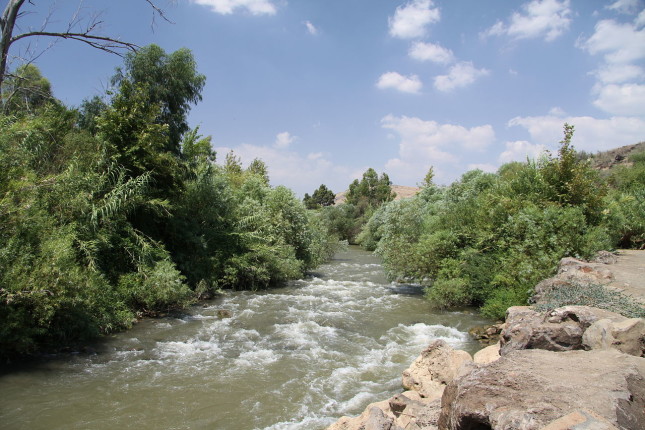
›“Action is needed today,” said EcoPeace Middle East’s Palestinian Co-Director Nada Majdalani. EcoPeace’s Palestinian and Israeli Co-Directors spoke at a recent session of the United Nations Security Council that focused on potential solutions to the decades-old Palestinian-Israeli crisis. They emphasized the importance of cooperation over shared water resources to help address human health and national, regional, and global security concerns. While EcoPeace has been working to foster cooperation over water for more than 25 years, as a way to build peace in the Middle East, this was the first time the trilateral organization briefed the Security Council.
Showing posts from category featured.
 “I’ve never seen this kind of political and public sector engagement in an environmental topic happen so fast,” said Rob Kaplan, the Founder and CEO of Circulate Capital in an interview with Ambassador David Balton following a recent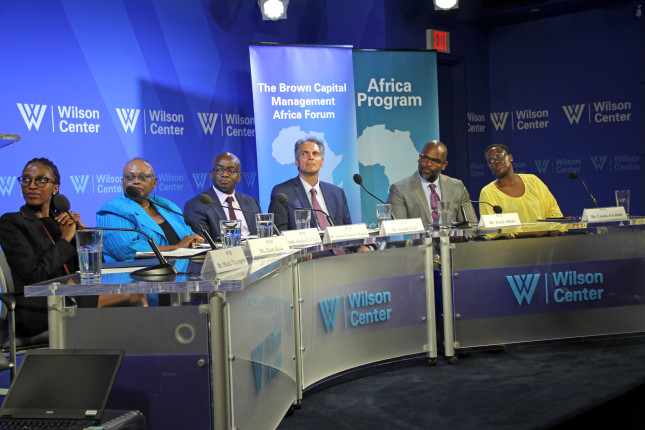
 In recent years, conflict between herders and farmers for access to increasingly scarce natural resources in Africa’s Sudano-Sahel has escalated. While the problems fueling these tensions are both hyper-local and transnational in nature, one important piece of the puzzle has been overlooked. The real “elephant in the room” is who owns the livestock.