-
Sharon Guynup, Mongabay
Can ‘Slow Food’ save Brazil’s fast-vanishing Cerrado savanna?
›April 2, 2021 // By Wilson Center Staff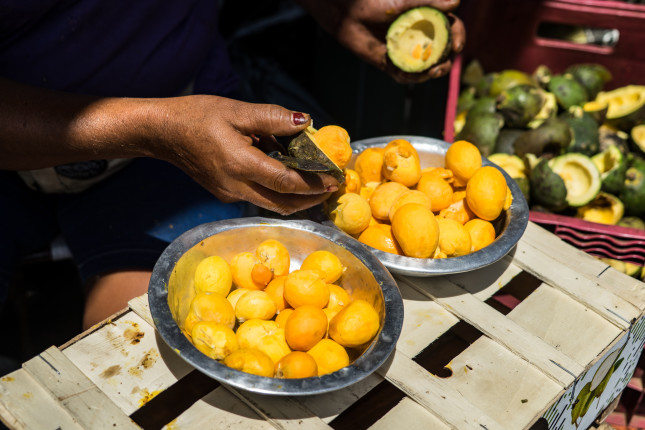
It’s November in southeast Brazil, and the tall, feathery macaúba palms (Acrocomia aculeata) are beginning to drop ripe coconuts. By January, the ground is littered with them, as some 67 families that live nearby, outside the town of Jaboticatubas, get to work dragging the trove home.
This coconut serves as the lifeblood for these traditional farming communities in the Cerrado savanna in Minas Gerais state, Brazil. Archaeological sites trace its use back to at least 9,000 B.C.
Every part of the all-purpose coconut is used, from its delicious yellowish flesh to the nut at its core. It’s a favorite kids’ snack, and is used to make a highly nutritious flour, baked into bread and cookies. Livestock eat it too.
-
Arctic Security Redefined: Human Security Through an Arctic Urban Lens
›
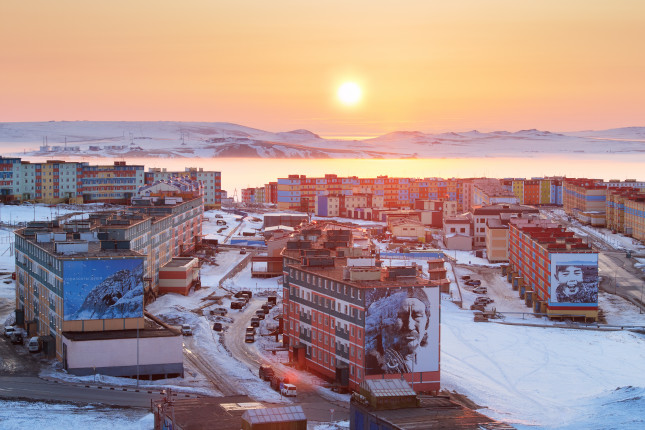
“We are so few, we have no one to lose,” said Christina Henriksen, the president of Saami Council, during an interview on Coronavirus in the Arctic. The COVID-19 pandemic highlights the vulnerability of Arctic residents and the longstanding challenges related to the lack of sanitization, social infrastructure, and health service capacities. The impacts of the pandemic are coupled with the potential negative effects of climate change, including a 3-5 °C temperature increase projected over the Arctic Ocean by 2050.
-
Improving America’s Ecological Security Requires Public-Private Partnerships
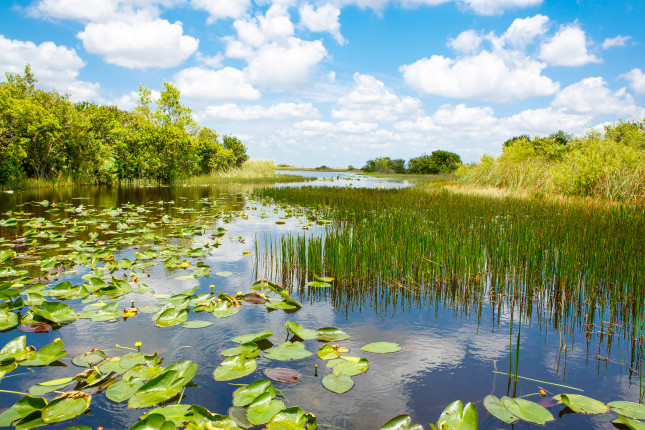
›In January, President Biden joined other world leaders in committing to conserve 30 percent of their nations’ lands and oceans by 2030. Also known as “30 by 30,” the pledge aligns government action with the growing recognition by the intelligence community that the loss of ecosystems and biodiversity presents serious risks to the U.S. economy and national security. Risks to the U.S. include the expanded likelihood of wildlife-borne diseases spilling over into our communities, water system challenges, decreased crop production, and increased natural disasters like floods.
-
Elizabeth L. Chalecki, The Internationalist
An Internationalism that Protects: Why We Need to Reboot the Baruch Plan for Geoengineering
›March 26, 2021 // By Wilson Center StaffNew planet-changing geoengineering technology is available to help humanity combat an existential security threat. However, like atomic fission, this technology is not to be jumped at without caution.
This year is the seventy-fifth anniversary of the Baruch Plan. Almost no one knows this, or if they do, they probably don’t remember who Bernard Baruch was, or what his eponymous plan was for. But the Baruch Plan of 1946 was our first and last real attempt at world governance of nuclear weapons. Three-quarters of a century later, the ill-fated effort carries important lessons for addressing the crisis of climate change.
-
Sue Biniaz on Getting the U.S. Back on Track for Climate Action
›“The more the United States can get itself back on track, the better position it is in to exercise climate leadership,” says Sue Biniaz, a member of Special Presidential Envoy for Climate John Kerry’s team, in today’s Friday Podcast. Biniaz spoke about the Biden administration’s efforts to center climate change in U.S. foreign policy and national security at a recent Wilson Center event on climate security risks in the Arctic. -
Going Big on Climate: Opportunities and Challenges Facing the New Administration
›“With climate change, we can make no small plans—we need to go big,” said Lieutenant General Wallace Gregson (ret.), former Assistant Secretary of Defense for Asian and Pacific Security Affairs, during a recent event co-hosted by the Environmental Peacebuilding Association and Wilson Center on opportunities and challenges facing the new administration relating to the environment, peace, and conflict.
-
A Conversation with Marisa O. Ensor on Securitizing Youth and Youth’s Role in Peace and Security Agendas
›“I’ve been quite impressed by the wide diversity and complexity of young women’s and men’s engagement for peacebuilding and development often while confronting seemingly insurmountable challenges,” says Marisa O. Ensor, Adjunct Professor in the Justice and Peace Studies Program at Georgetown University, in this week’s Friday Podcast. -
Climate-Conflict Research: A Decade of Scientific Progress
›The last decade was the warmest on record, with 2020 tied with 2016 for the all-time high average annual global temperature. This 10-year period also saw armed conflicts at severity levels not seen since the Cold War era. Could there be a causal link between these trends?
To the frustration of policymakers and laymen alike, empirical research has been unable to provide a simple and coherent answer to this question. Instead, studies of climate-conflict connections have for a long time continued to produce diverging findings and – occasionally – inspired heated debates. So, where do we stand?
In a review article introducing a new special issue of the Journal of Peace Research (JPR) on the security implications of climate change, we assess the nature and extent of scientific progress in climate-conflict research over the past decade. As yardsticks for measuring progress, we identify seven key research priorities frequently advocated in earlier reviews of the quantitative literature.
Showing posts from category environment.

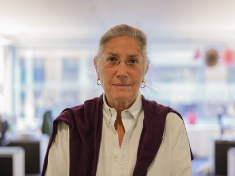 “The more the United States can get itself back on track, the better position it is in to exercise climate leadership,” says Sue Biniaz, a member of Special Presidential Envoy for Climate John Kerry’s team, in today’s Friday Podcast. Biniaz spoke about the Biden administration’s efforts to center climate change in U.S. foreign policy and national security at a recent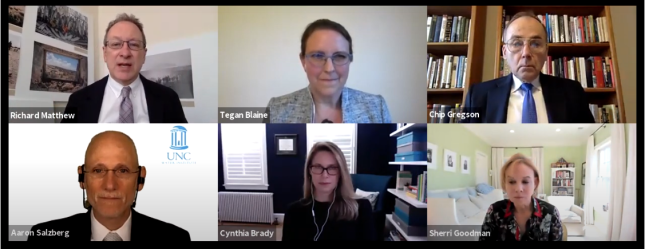
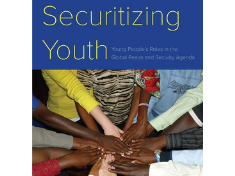 “I’ve been quite impressed by the wide diversity and complexity of young women’s and men’s engagement for peacebuilding and development often while confronting seemingly insurmountable challenges,” says Marisa O. Ensor, Adjunct Professor in the Justice and Peace Studies Program at Georgetown University, in this week’s Friday Podcast.