

-
Dispatches From the World Conservation Congress: John Pielemeier
›October 7, 2008 // By John Pielemeier This has been quite an interesting first day at the World Conservation Congress Forum in Barcelona. Since I’m not a conservation expert (I’m here to participate on a panel on population, health, and environment programs), I’m enjoying the opportunity to view the conference a bit like an anthropologist. Here are a few observations from Day One:
The conference has an interesting structure. In an effort to provide some organization for such a large conference (8,000 participants and 800 panels/events) there are three main “streams,” including “Healthy Environments, Healthy People”—the reason our panel was accepted—along with “A New Climate for Change” and “Safeguarding the Diversity of Life.” The participants are also encouraged to join one of 12 “journeys” (e.g., “Forests Journey,” “Species Journey”) to help bring them together for smaller meetings and social events. I found that I couldn’t get into the Forests Happy Hour this evening because I hadn’t signed up for the “Journey.” Some incentives do matter—if only I had known!
Despite the “healthy” headlines, very few panels discuss the relationships between human or animal health and the environment, and there are no health-related “journeys.” The one bright spot regarding interdisciplinary linkages thus far was an announcement by the Australian national parks director that he would host a major “Healthy Parks, Healthy People” meeting in 2010 where 50 percent of the attendees would be health professionals.
Some sessions are held in the Knowledge Café, a large room where folks join one of 12 round conversation tables based on special topics. The United Nations has funded a special program, called “Poble,” which has brought a significant number of indigenous people, in tribal headgear and colorful traditional dress, to the conference. The Poble meetings are in a large room with a low stage and no chairs; attendees sit or lie on the floor while listening to the presentations of their colleagues. The room has been full every time I have peered in.
Attendance seems to vary considerably among sessions. A Knowledge Café roundtable meeting on climate change attracted mid-career pros from the Global Environment Facility, the European Union, the United Nations, and scientific organizations, and the level of the unmoderated discussion was extremely high. Participants were well-informed about the issues facing the international community over the next few months, and were also familiar with the latest ideas regarding how to address climate change. On the other hand, a panel session on accountability in conservation programs and among environmental NGOs attracted only nine attendees who listened to four (good!) speakers. After tomorrow’s sessions, I’ll have an even better sense of which themes are attracting the attention of the conservation professionals here.
John Pielemeier is an international development consultant. During his 22-year career at the U.S. Agency for International Development (USAID), he served as USAID mission director in Brazil, USAID/Washington office director for South Asia, and as a special assistant in the office of the USAID administrator.
Photo courtesy of Heidi Fancher and the Woodrow Wilson Center. -
Paul Ehrlich: Human Technological Achievement Has Outpaced Ethical Evolution
›September 25, 2008 // By Rachel WeisshaarHuman beings have harnessed culture and technology to become the most dominant animals on Earth, said Paul Ehrlich at a September 18, 2008, launch of his new Island Press book, The Dominant Animal: Human Evolution and the Environment, but “we’re really backward ethically—in terms of how we treat each other and…the environment. And this leads to a lot of problems, not the least of which is we’re destroying our life-support system.” -
New Video “Water Wars or Water Woes?” Unveils Surprising Truths About Water, Conflict
›September 18, 2008 // By Wilson Center StaffIn the new video “Water Wars or Water Woes? Water Management as Conflict Management,” Environmental Change and Security Program (ECSP) Director Geoff Dabelko explains that although newspapers and politicians constantly warn of impending “water wars,” water rarely leads to interstate violence. By focusing on “water wars” – which evidence shows are extremely rare – we “are missing a lot of what is important around conflict management around water,” argues Dabelko.
According to Dabelko, cooperative water management can also help resolve conflicts caused by unrelated problems, such as those between India and Pakistan or Israel and Palestine. “You’ve got to go through it to get out of the conflict and support a sustainable peace,” he says.
“Water Wars or Water Woes?” is the newest addition to ECSP’s YouTube channel, which was launched earlier this summer with “Population, Health, and Environment: Exploring the Connections,” which offers a lively, brief, and accessible explanation of population, health, and environment (PHE) connections, with examples and photos from successful programs in the Philippines. -
Weekly Reading
›“African and global leaders must promote better integration of environment and health sectors and sustain more effective coordination across the continent,” argues an op-ed in The Lancet addressing the recent meeting of African health and environment ministers.Strengthening Land Tenure and Property Rights in Angola evaluates a U.S. Agency for International Development-funded project to bolster the land tenure and property rights of Angolans living in peri-urban and rural areas.
According to an article in the Christian Science Monitor, rebel groups in the
The Sierra Leone Integrated Diamond Management Program, which “was designed to improve local incentives for clean diamond management, enable local communities to benefit from the diamond resource, and to assist the Government of Sierra Leone (GOSL) in its effort to manage this critical resource,” has achieved considerable success over a short time period, according to a final report on the program.
The 2007 Liberia Demographic and Health Survey, available in full online, covers population; family planning; fertility; child health, mortality, and nutrition; maternal health, mortality, and nutrition; malaria, HIV/AIDS, and other diseases; gender-based violence; and a variety of other topics.
The
-
Weekly Reading
›“Over the next twenty years physical pressures – population, resource, energy, climatic, and environmental – could combine with rapid social, cultural, technological, and geopolitical change to create greater uncertainty,” warns the newly released 2008 National Defense Strategy. Demographic trends, resource scarcity, and environmental change all inform the updated strategy, which encourages international cooperation to address these impending challenges.
The “Population Forum” in the September issue of WorldWatch Magazine “reveals that empowering women to make their own family size choices…is the best strategy to tackle population growth” and the environmental and security problems linked to it. A short history of population trends is available online; the website offers free previews of Lori Hunter’s article on PHE and gender, as well as “Population and Security” by Elizabeth Leahy and ECSP’s own Sean Peoples. Bernard Orimbo links population growth and environmental degradation in his native Kenya, and PAI staff discuss urbanization.
Climate change threatens to exaggerate the challenges faced by the billions of people worldwide who depend upon natural resources for their survival. But the competition and, at times, violent conflict that results from increased resource scarcity is not a given; the recently released World Resources Report 2008 finds that “well-designed, community-based enterprises” can ease the environmental burden on natural resources and pave the way for sustainable dependence on the land.
At the 2008 World Expo’s “Water and Conflict Resolution” week, municipal representatives working with Friends of the Earth Middle East (FoEME) presented case studies from its “Good Water Neighbors” programs: cross-border solutions for the Lower Jordan River; the Jordan River Peace Park project; and the town of Auja in the Jordan River Valley. Speaking about these programs the Wilson Center, FOEME’s Gidon Bromberg said that “by working together, not only do we advance the environmental issues…we also advance peace between our peoples.” -
Population, Natural Resource Pressures Could Ignite Human-Wildlife Conflict in Laos
›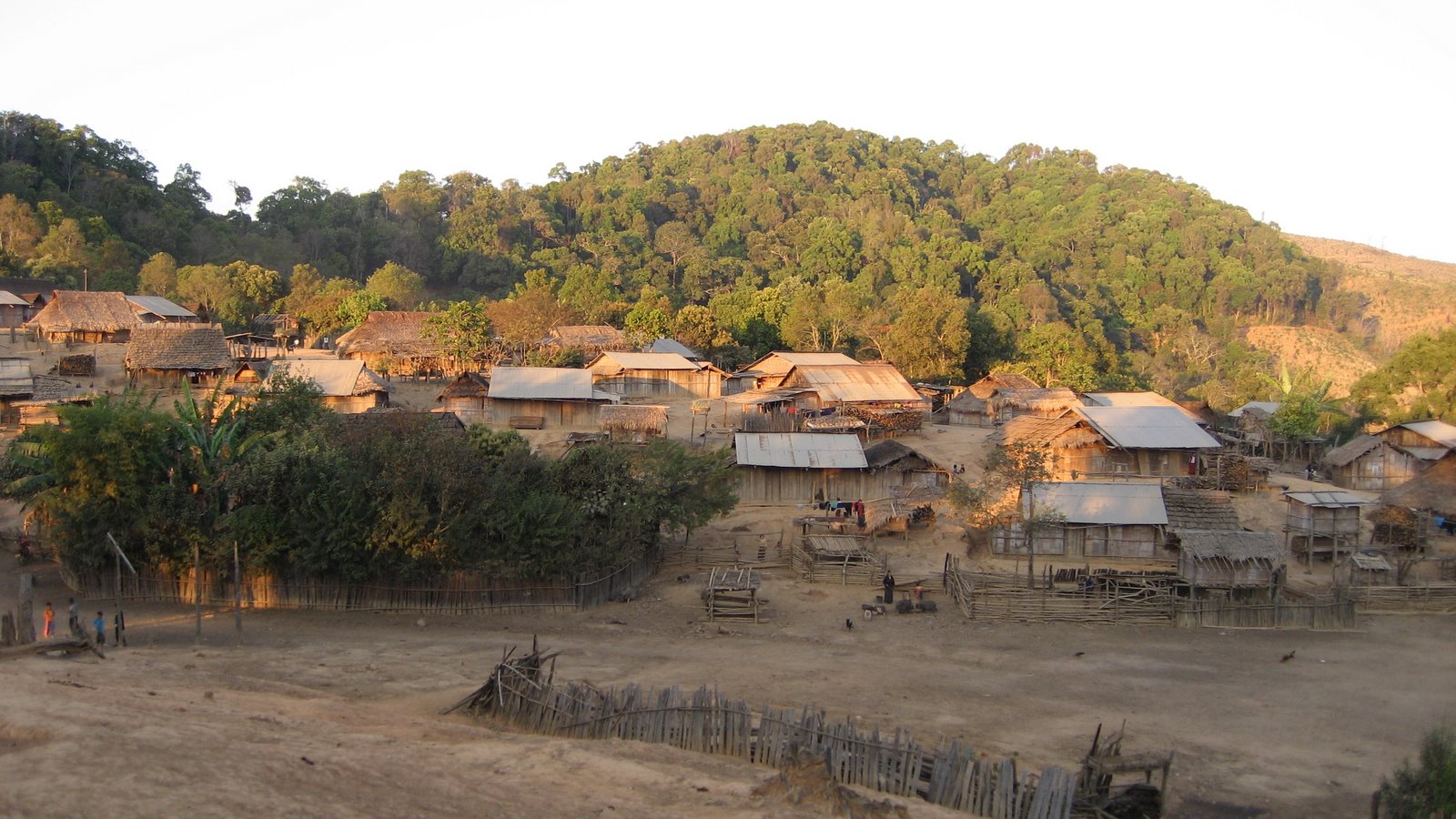 High population growth, limited arable land, and soaring rice prices in Lao People’s Democratic Republic mean that land access is critical for food security. At the same time, there is immense pressure to convert forests and small-scale agricultural land into commercial plantations for rubber, coffee, and other valuable crops. Together, these factors are significant threats not only to people, but to wildlife and biodiversity as well. They are also resulting in the emergence of new tensions between people and wildlife across the Lao landscape.
 -
Weekly Reading
›“Some argue that global demographic trends are progressively pushing the world toward greater peace and prosperity. They are wrong. The risks of both chaotic state collapse and neoauthoritarian reaction are rising,” argue Neil Howe and Richard Jackson in “Battle of the (Youth) Bulge,” published in the National Interest.
A recent online discussion with the Population Reference Bureau’s Jason Bremner covered a variety of topics related to environmental change and migration, including climate change migrants, rural-to-rural migration, and disease vectors.
Rising food and fuel prices could trigger turmoil in Guinea-Bissau, says the latest report from the International Monetary Fund. The country already suffers from chronic food insecurity, reports IRIN News. -
Senate Bill Links Population Growth to Conflict, Environmental Degradation
›August 1, 2008 // By Meaghan ParkerThe Senate’s FY 2009 foreign assistance bill cites the stresses “caused by high rates of population growth, which contribute to competition for limited resources, environmental degradation, malnutrition, poverty and conflict” in its recommendation for funding family planning. The $520 million in funding is $15 million above the FY08 level and $219 million above President Bush’s request. This noteworthy new language cements the re-emergence of population issues in Congress, following the record $600 million in reproductive health funding recently approved by the House (also nearly double Bush’s request).
According to an email from Tod Preston of Population Action International, “it is the first time in several years (at least) that population language like this has been included in the foreign assistance bill, and it will almost certainly remain as is.” The impact of rapid population growth on critical issues “referenced in the report (i.e., malnutrition, environmental degradation, poverty and conflict) is getting back on the ‘radar screen’ of policymakers and the media,” which “should help increase support for programs such as voluntary family planning and girls’ education, which we know help reduce population growth rates,” he said.
Showing posts from category environment.
 This has been quite an interesting first day at the
  Human beings have harnessed culture and technology to become the most dominant animals on Earth, said Paul Ehrlich at a

