• woodrow wilson center
  • ecsp

New Security Beat

Subscribe:
  • rss
  • mail-to
  • Who We Are
  • Topics
    • Population
    • Environment
    • Security
    • Health
    • Development
  • Columns
    • China Environment Forum
    • Choke Point
    • Dot-Mom
    • Friday Podcasts
    • Navigating the Poles
    • Reading Radar
  • Multimedia
    • Water Stories (Podcast Series)
    • Backdraft (Podcast Series)
    • Tracking the Energy Titans (Interactive)
  • Films
    • Water, Conflict, and Peacebuilding (Animated Short)
    • Paving the Way (Ethiopia)
    • Broken Landscape (India)
    • Scaling the Mountain (Nepal)
    • Healthy People, Healthy Environment (Tanzania)
  • Publications
  • Events
  • Contact Us

NewSecurityBeat

The blog of the Wilson Center's Environmental Change and Security Program
Showing posts from category environment.

  • New Research on Climate and Conflict Links Shows Challenges for the Field

    ›
    From the Wilson Center  //  January 23, 2012  //  By Theresa Polk

    “We know that there will be more conflicts in the future as a result of climate change than there would have been in a hypothetic world without climate change,” said Marc Levy, deputy director of the Center for International Earth Science Information Network (CIESIN) at Columbia University’s Earth Institute, although existing data and methodologies cannot predict how many additional conflicts there will be, or which causal factors will matter most. [Video Below]

    MORE
  • John Donnelly, Global Post

    A Call for Young People to “Get Angry” About Global Warming

    ›
    January 18, 2012  //  By Wilson Center Staff
    The original version of this article, by John Donnelly, appeared on Global Post.

    The elder called on the younger generation to speak up.

    At a session on climate change and family planning Thursday, Mary Robinson, the former president of Ireland, said that she keeps hoping that more young people will demand action on global warming.

    “Maybe there’s a need to link the more thoughtful aspects of the Occupy movement with this, to get some of that more radical thinking,” she said. “As younger people increasingly understand the issues, I would say, ‘get angry’ so that we feel the need to do something more urgent. Let us know this is your future and for goodness sake it is absolutely urgent.”

    She spoke at a session called “The Road to Rio: Climate Change, Population and Sustainability,” part of the Aspen Institute’s “7 Billion: Conversations that Matter” roundtable series (watch above). The discussion, organized by Aspen Global Health and Development, focused on strategies leading up to the Rio+20 United Nations Conference on Sustainable Development Summit in June – as well as what should be happening beyond Rio.

    Continue reading on Global Post.

    Video Credit: The Aspen Institute.
    MORE
  • Jon Barnett: Should Climate Change Be Addressed by the UN Security Council?

    ›
    Eye On  //  January 12, 2012  //  By Schuyler Null

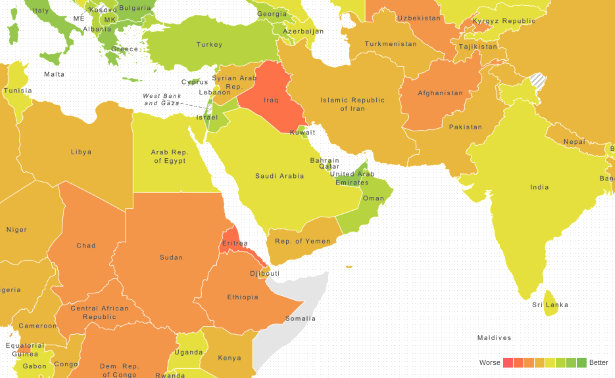
    For a small island state like Tuvalu, climate change is an enormous security issue and they have told the UN Security Council as much, said Jon Barnett, professor of resource management and geography at the University of Melbourne, in an interview with ECSP. But, despite debate in 2007 and 2011, the Council has been unable to reach agreement on whether climate change is an international security issue or not.

    MORE
  • Jon Barnett: Climate Adaptation Not Just Building Infrastructure, But Expanding Options

    ›
    Eye On  //  January 6, 2012  //  By Kayly Ober

    “I think it’s appropriate to think about [climate change] adaptation or investments in adaptation as investments to open up the range of choices available to people to deal with an uncertain future,” said Jon Barnett, associate professor of geography at the University of Melbourne, in an interview with ECSP. “In some circumstances it might be appropriate to build infrastructure and hard options where we’re very certain about the nature of the risk…but in other cases, expanding the range of choices and freedoms and opportunities that people have to deal with climate change in the future is perhaps the better strategy.”

    MORE
  • Migration and Environmental Change, Minority Land Rights and Livelihoods

    ›
    Reading Radar  //  January 4, 2012  //  By Theresa Polk
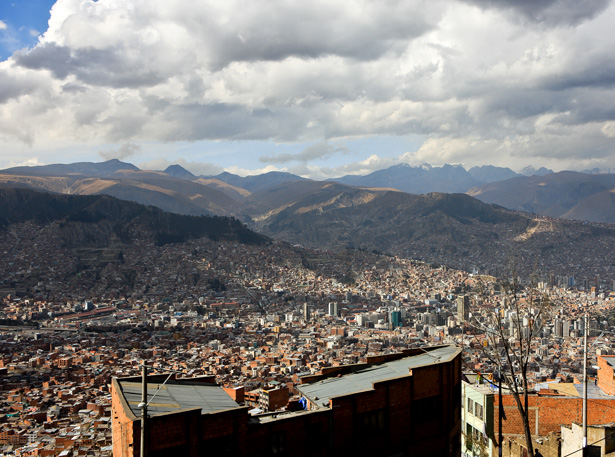
    Migration and Global Environmental Change: Future Challenges and Opportunities, from the UK Government Office for Science’s Foresight Programme, looks at how environmental change, including climate change, land degradation, and the degradation of coastal and marine ecosystems, over the next 50 years will affect migration trends. The report emphasizes that migration is a complex and multi-causal phenomenon, which makes it difficult to differentiate environmental migrants as a distinct group. Nevertheless, research suggests that global environmental changes will affect the drivers of migration, particularly economic forces, such as rural wages and agricultural productivity.

    Though Foresight finds that many will use migration as an adaptation strategy that improves resilience to environmental change, they also point out that some affected individuals may become “trapped” in vulnerable situations, lacking the financial capacity to respond to environmental changes, while others may be able to move but will inadvertently enter more exposed areas, particularly, at risk urban centers. For recommendations, they stress the importance of strategic, long-term urban planning, and recognition within adaptation and development policies that migration can be part of the solution.

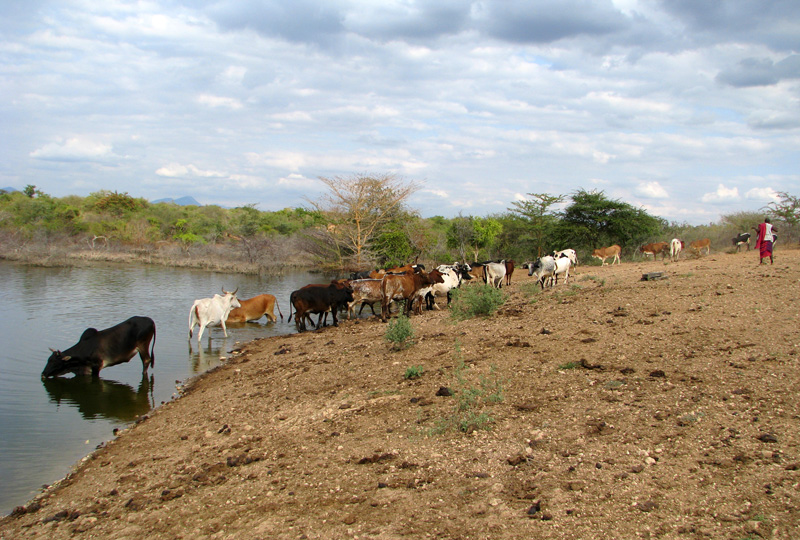
    A study, released on December 5 by Minority Rights Group International, finds that minority communities in Kenya, Uganda, and South Sudan face significant challenges around access to and control of critical natural resources. The report, Land, Livelihoods, and Identities: Inter-Community Conflicts in East Africa, shows how rapid population growth, climate change, and globalization are increasing competition for land, water, and forest and mineral resources in territories traditionally occupied by minority groups. These pressures can undermine livelihoods and trigger multiple and overlapping conflicts, especially where ownership has not been formalized in law. The study also notes that women are doubly vulnerable as their access to land and resources is frequently mediated through customary law, which depends on their communities retaining control over traditional territory. Although the report makes national-level legal and policy recommendations, the authors note that some of the most effective resource management and conflict resolution strategies adapt traditional cultural practices to the current circumstances of communities.
    MORE
  • Managing the Planet: The Road to Rio+20

    ›
    From the Wilson Center  //  December 27, 2011  //  By Theresa Polk
    “We still see people thinking about the environment as if it is something apart. The idea of a synergy, a balance of development still, I think, eludes us both in theoretical, but especially in practical terms. And that is what Rio+20 is about,” said Ambassador Luiz Alberto Figueiredo Machado, under-secretary for environment, energy, science, and technology at the Brazilian Ministry of Foreign Affairs.

    The Rio+20 conference next year, marks the 20th anniversary of the 1992 UN Earth Summit. It will be an opportunity to generate new answers to the question of how to collectively develop in a more sustainable and balanced way, said Figueiredo. Jacob Scherr, director of strategy and advocacy at the Natural Resources Defense Council, Richenda Van Leeuwen, senior director for energy and climate at the UN Foundation, and Thomas Lovejoy, biodiversity chair at the Heinz Center for Science and professor of environmental science and policy at George Mason University, joined the ambassador at the Wilson Center on November 16 for a discussion about preparations for the upcoming conference. The event was part of the Managing the Planet seminar series, coordinated jointly by George Mason University and the Wilson Center.

    Sustainable Development Goals

    Rio+20 should reaffirm the sustainable development vision of the first Earth Summit, said Scherr, “of our ability to deal with all of these issues at once: to move forward on economics, and dealing with poverty, of being equitable, and protecting and preserving the environment for future generations.”

    Figueiredo said he sees the concept of a “green economy” as an “instrument to promote sustainable development and eradicate poverty. And in that sense, it seems clear that we will not find one green economy as such, but probably as many green economies as countries in the world, because each country will find its way of using that kind of tool.”

    One proposal for the conference, supported by Brazil, is to devise a set of sustainable development goals, which would “embrace the Millennium Development Goals and instill a certain sustainability viewpoint to all of them,” Ambassador Figueiredo said. Furthermore, they would be global in nature, rather than geared towards developing countries, providing a vision for collective development.

    “The Millennium Development Goals were good in some ways [but] they were fairly weak on the environmental side,” said Thomas Lovejoy. “This is a chance to actually improve on that, to really bring these elements together.”

    Action and Accountability

    Through “sustainable development dialogues,” Brazil is working to provide a new mechanism for civil society input at the conference. According to Figueiredo, Brazil hopes to “create a bridge between those who understand the issues, those who have a deep knowledge of the issues, and those who have the power again to do something about it.”

    “We have been talking about these issues for 40 years, what we really need is a meeting that, as the Secretary General recently said, is a conference about implementation…to really start moving us down the path towards a sustainable future,” said Scherr.

    “You might argue that everything that happened 20 years ago was an absolute failure, but of course it was not, because an awful lot has happened in the interim, it’s just that it hasn’t happened on a big enough scale or fast enough,” Lovejoy said.

    “What gives me a lot of reason for hope going into Rio+20 is there are a lot of very practical, very pragmatic efforts involved,” he said.

    Richenda Van Leeuwen pointed to the UN Secretary General’s Sustainable Energy for All initiative as a potential agenda to follow. The initiative has three objectives: ensuring universal access to modern energy services; doubling the rate of improvement in energy efficiency; and doubling the share of renewable energy in the global energy mix.

    “We are using Rio, and the seminal opportunity that it represents, as a mechanism to be able to bring these new commitments together…to show that there is an opportunity for concrete actions,” Van Leeuwen said.

    A robust accountability framework is vital to that effort, Van Leeuwen said. “It’s easy to make a pledge at a pledging conference, but really what we are looking at is a whole new way of doing business, a whole new action agenda,” she said. “So we are very optimistic and very excited about the opportunity for Rio, but Rio not as an end really, but as a beginning and as an opportunity to be a springboard to get much further global action.”

    Photo credit: “Brazil!,” courtesy of Flickr user sparktography.

    Event Resources
    • Photo gallery
    • Video
    MORE
  • IRP Editors Cover Rwanda’s Population, Health, and Environment Challenges

    ›
    On the Beat  //  December 26, 2011  //  By Wilson Center Staff
    The original version of this article appeared on the International Reporting Project website.

    The International Reporting Project (IRP) and 12 senior editors and producers from across the United States traveled to Rwanda this year to learn about issues affecting Rwanda and other countries in Africa and to help them improve their news organizations’ international coverage. Some of the editors focused on Rwanda’s extensive population, health, and environmental challenges:

    Nicholas Aster, founder and publisher of San Francisco’s Triple Pundit, covered sustainable development in Kigali, coffee’s empowerment potential, and eco-tourism sites like Volcanoes National Park. Aster also became interested in Rwanda’s efforts to avert disaster by corralling Lake Kivu’s CO2 reserves into a power supply. At the close of his trip, Aster reflected on Rwanda’s sustainability goals in a photo essay.

    Tom Paulson, host and reporter for KPLU’s Humanosphere, discovered the positive side of aid and development in Rwanda, including girls’ education initiatives and coffee farming improvements. Moreoever, Paulson documented the Gatekeepers’ trip to Volcanoes National Park, including a visit from a mountain gorilla who became a little too friendly. Paulson has also posted several questions the Gatekeepers asked President Paul Kagame when they met with him, including his policies on restricting free speech, curbing population growth, and preventing another genocide. At the close of the trip, Paulson composed a photo slideshow that shows a growing, vibrant Rwanda, and he also outlined 10 reasons why the complex and sometimes contradictory country can’t be described in a sound-bite.

    Sue Horton, op-ed and Sunday Opinion editor of the Los Angeles Times, began chronicling her trip with a survey of Rwanda’s history on genocide, governance, and gorillas. On the road to meet Rwanda’s famed gorillas, Horton noted Rwanda’s strengths and challenges: its ambitious vision for the future encourages a growth in infrastructure and the country has showed impressive gains in healthcare provision and access, but Kigali is relocating residents who don’t fit the image.

    The deputy managing editor of Global Post, Andrew Meldrum, also found a note of optimism in witnessing how far Rwanda has come since the genocide, particularly after hearing the testimonies of the genocide’s youngest victims: children born of sexual violence during the genocide. And his Global Post colleague Jon Rosen delves into the country’s population growth and the government’s approach to family planning.

    In addition to the Gatekeeper Editor Trips, the IRP offers individual Fellowships to U.S. reporters to travel overseas on five-week reporting trips. In 2009, IRP Fellow Perry Beeman discovered a Rwanda similar to that which the Gatekeepers encountered: a country that has made much progress, but still has many challenges ahead. Beeman, who also was a public policy scholar at the Woodrow Wilson Center, created a multimedia series, “Renewal in Rwanda”, for The Des Moines Register; his reporting garnered him an Overseas Press Club citation for Best Reporting in 2010.

    Rwandans, Beeman found, are dedicated to conservation. President Kagame is committed to the environment and is driven to develop clean, sustainable power and to convert from subsistence agriculture to a stronger, more diversified economy. But everyone has a hand in this effort, including schoolchildren who report on conservation in song, dance, and dramatic arts. Beeman also examined efforts to preserve the Gishwati Forest, including gorilla and chimpanzee preservation efforts from villagers to businessmen to researchers. Beeman emphasized the importance of immersing oneself in an environment in order to report on it, and he did so by, among other things, tracking wild chimpanzees in the forest.

    For more information about IRP’s Fellowships and Gatekeeper Editor trips, visit their website at InternationalReportingProject.org.

    Photo Credit: “The Broadsheet in Kyovu, Kigali,” courtesy of flickr user noodlepie (Graham Holliday).
    MORE
  • Ambassador Melanne Verveer, U.S. Department of State

    Ambassador-at-Large for Global Women’s Issues on Durban and the Role of Women in Combating Climate Change

    ›
    December 23, 2011  //  By Wilson Center Staff
    The original version of this article, by Ambassador Melanne Verveer, appeared on the White House Council on Environmental Quality blog.

    Last week I traveled to Durban, South Africa to participate in the Conference of the Parties to the United Nations Framework Convention on Climate Change to highlight the critical and largely untapped potential of women to combat climate change. Studies have shown that it is often women who are on the frontlines of, and suffer disproportionately from, the impacts of climate change. This is certainly important. But we must remember that women are also a powerful force for finding solutions to climate change across the board, including in areas such as agriculture, sustainable forest management, and energy access.

    Agriculture, which accounts for approximately 14 percent of global greenhouse gas emissions and is a sector that can be particularly sensitive to climate variability and change, is one key area where women can play a major role. A recent FAO report shows that women, in many places, are the main producers of the world’s staple crops, particularly in developing countries and regions likely to be adversely affected by climate change impacts. However, globally, only a small minority of women farmers have access to land tenure. This is a problem for many reasons – including that it limits women’s potential to combat climate change. Studies have shown that women with the right to property are significantly more capable of investing in climate-smart agricultural productivity; we have a lot of work to do to unlock women’s potential in this area.

    Women also have untapped potential for increasing energy access, which directly relates to climate change. For example, nearly three billion people globally still rely on traditional cookstoves and open fires to prepare food for their families. In most instances, women are responsible for cooking – not to mention also spending many hours per week collecting fuel, which often puts women at risk of gender based violence. The resulting smoke exposure causes an estimated two million premature deaths annually, with women and young children the most affected. Cookstoves also impact the climate through emissions of greenhouse gases and short-lived particles such as black carbon. Engaging women is critical to tackling this problem. As we work to build a global market for clean cookstoves, integrating women into the cookstoves supply chain will help increase clean cookstove adoption rates while also creating new economic development opportunities. And as Secretary Clinton has noted, women create a multiplier effect in local communities because they disproportionately spend more of their earned income on food, healthcare, home improvement, and schooling.

    The United States recognizes the power of women’s potential in these areas and many others, and is investing in major initiatives including Feed the Future and the Global Alliance for Clean Cookstoves, where women’s role in generating transformative change is front and center.

    I went to Durban to highlight the critical role of women in combating climate change. While there, I worked with U.S. negotiators on the Durban texts and participated in public engagement events. Our efforts to build on the gender equality and women’s empowerment language in the Cancun agreements are reflected in several crucial institutional developments, including language on gender balance related to the composition of the board of the new Green Climate Fund, the Standing Committee, and the Adaptation Committee. We also worked to reflect gender considerations in the mission of the Climate Technology Center and Network. USAID Assistant Administrator Eric Postel and I solicited input during a meeting with leading non-governmental organizations working on gender and climate issues, and I hosted a high-level side event at the U.S. Center focused on unlocking women’s potential to combat climate change. The level of enthusiasm among my fellow panelists and the audience at the event was inspirational.

    We made progress in Durban, but we can’t stop here. To achieve the future we all seek, we must do more. As the late Wangari Maathai, founder of the Green Belt Movement and ground-breaking advocate on women and the environment said, “We must not tire, we must not give up, we must persist.” The future of not only women, but our planet, depends on it.

    Ambassador Melanne Verveer is U.S. Ambassador-at-Large for Global Women’s Issues.

    Sources: Food and Agriculture Organization, Intergovernmental Panel on Climate Change, The White House.

    Photo Credit: “Melanne S. Verveer,” courtesy of the U.S. Embassy, Kabul.
    MORE
Newer Posts   Older Posts
View full site

Join the Conversation

  • RSS
  • subscribe
  • facebook
  • G+
  • twitter
  • iTunes
  • podomatic
  • youtube
Tweets by NewSecurityBeat

Trending Stories

  • unfccclogo1
  • Pop at COP: Population and Family Planning at the UN Climate Negotiations

Featured Media

Backdraft Podcast

play Backdraft
Podcasts

More »

What You're Saying

  • Volunteers,At,The,Lagos,Food,Bank,Initiative,Outreach,To,Ikotun, Pan-African Response to COVID-19: New Forms of Environmental Peacebuilding Emerge
    Rashida Salifu: Great piece 👍🏾 Africa as a continent has suffered this unfortunate pandemic.But it has also...
  • A desert road near Kuqa An Unholy Trinity: Xinjiang’s Unhealthy Relationship With Coal, Water, and the Quest for Development
    Ismail: It is more historically accurate to refer to Xinjiang as East Turkistan.
  • shutterstock_1779654803 Leverage COVID-19 Data Collection Networks for Environmental Peacebuilding
    Carsten Pran: Thanks for reading! It will be interesting to see how society adapts to droves of new information in...

What We’re Reading

  • Rising rates of food instability in Latin America threaten women and Venezuelan migrants
  • Treetop sensors help Indonesia eavesdrop on forests to cut logging
  • 'Seat at the table': Women's land rights seen as key to climate fight
  • A Surprise in Africa: Air Pollution Falls as Economies Rise
  • Himalayan glacier disaster highlights climate change risks
More »
  • woodrow
  • ecsp
  • RSS Feed
  • YouTube
  • Twitter
  • Facebook
  • Home
  • Who We Are
  • Publications
  • Events
  • Wilson Center
  • Contact Us
  • Print Friendly Page

© Copyright 2007-2021. Environmental Change and Security Program.

Woodrow Wilson International Center for Scholars. All rights reserved.

Developed by Vico Rock Media

Environmental Change and Security Program

Woodrow Wilson International Center for Scholars

Ronald Reagan Building and International Trade Center

  • One Woodrow Wilson Plaza
  • 1300 Pennsylvania Ave., NW
  • Washington, DC 20004-3027

T 202-691-4000