• woodrow wilson center
  • ecsp

New Security Beat

Subscribe:
  • rss
  • mail-to
  • Who We Are
  • Topics
    • Population
    • Environment
    • Security
    • Health
    • Development
  • Columns
    • China Environment Forum
    • Choke Point
    • Dot-Mom
    • Friday Podcasts
    • Navigating the Poles
    • Reading Radar
  • Multimedia
    • Water Stories (Podcast Series)
    • Backdraft (Podcast Series)
    • Tracking the Energy Titans (Interactive)
  • Films
    • Water, Conflict, and Peacebuilding (Animated Short)
    • Paving the Way (Ethiopia)
    • Broken Landscape (India)
    • Scaling the Mountain (Nepal)
    • Healthy People, Healthy Environment (Tanzania)
  • Publications
  • Events
  • Contact Us

NewSecurityBeat

The blog of the Wilson Center's Environmental Change and Security Program
  • A. Tianna Scozzaro, Population Action International

    Population Dynamics Are Crucial to Sustainable Development – So Why Isn’t Anyone Talking About Them?

    January 29, 2014 By Wilson Center Staff
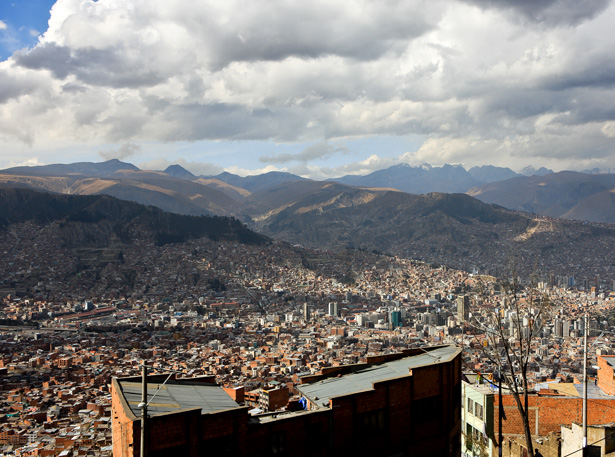
    la_paz

    The original version of this article, by A. Tianna Scozzaro, appeared on Population Action International’s All Access blog.

    For the past 11 months, a group of United Nations member states has been holding meetings seeking input on future goals for sustainable development once the Millennium Development Goals (MDGs) expire in 2015. Led by co-chair ambassadors from Hungary and Kenya, this Open Working Group of 69 countries has delved into topics ranging from governance to health and everything in between.

    Last week was the working group’s seventh session, which dedicated five full days to discussing sustainable cities; human settlements and sustainable transport; sustainable production and consumption (including chemicals); climate change; and disaster risk reduction. Leaders in business, industry, science, and politics kicked off each session, framing the issues and describing the complex task of producing goals, indicators, and targets for each theme.

    These are big topics, and women play a crucial role in all of them. However, women’s reproductive and maternal health, family planning, and population issues were – as we’ve seen too often – left out of the conversation. If countries care about sustainable development, then ignoring these topics is foolish and dangerous.

    Continue reading on All Access.

    Photo Credit: La Paz, Bolivia, courtesy of flickr user cliff hellis.

    Topics: development, disaster relief, environment, environmental health, family planning, gender, global health, livelihoods, maternal health, MDGs, population, poverty, risk and resilience, SDGs, UN, urbanization
    • Barbara Rogers

      Could we not start from a new point in the UN? The General Assembly is widely regarded as toothless BUT it has the power to instruct all the UN specialised agencies. An example some years ago was a GA resolution (put forward by the Fourth Committee) instructing the agencies to do all in their power to prepare the then colonies of Portugal in Africa (Angola, Mozambique and Guinea-Bissau) for independence. So the IPU designed and printed stamps, the WHO prepared health plans, Unicef drew up proposals for a new education system and so on.
      It’s too late I assume for the GA this year (though maybe not) but what about next year? Apart from the UNFPA, none of the specialised agencies currently offers contraceptive services, nor do they transfer any of their funds to UNFPA to boost their capacity to do so, when working alongside them. This is probably the result of massive lobbying by the Vatican, backed by the US at that time, to stop the work that the agencies were doing. A lot of intimidation and bullying was involved – officials who know about it are still reluctant to speak out.
      How great if there could be a planning group preparing a relevant resolution for the GA and assembling a new Coalition of the Willing (all the states that have contraceptive programmes for their citizens, or are starting to see why this would be important) to sponsor it. The UN and its agencies can’t solve the problem on their own but they work especially with the most needy (including refugees) and could make a real difference wherever they operate. The effectiveness of such work could also then influence the debates at the UN itself on the importance of contraception to help women avoid unwanted pregnancies.

Join the Conversation

  • RSS
  • subscribe
  • facebook
  • G+
  • twitter
  • iTunes
  • podomatic
  • youtube
Tweets by NewSecurityBeat

Trending Stories

  • unfccclogo1
  • Pop at COP: Population and Family Planning at the UN Climate Negotiations

Featured Media

Backdraft Podcast

play Backdraft
Podcasts

More »

What You're Saying

  • Volunteers,At,The,Lagos,Food,Bank,Initiative,Outreach,To,Ikotun, Pan-African Response to COVID-19: New Forms of Environmental Peacebuilding Emerge
    Rashida Salifu: Great piece 👍🏾 Africa as a continent has suffered this unfortunate pandemic.But it has also...
  • A desert road near Kuqa An Unholy Trinity: Xinjiang’s Unhealthy Relationship With Coal, Water, and the Quest for Development
    Ismail: It is more historically accurate to refer to Xinjiang as East Turkistan.
  • shutterstock_1779654803 Leverage COVID-19 Data Collection Networks for Environmental Peacebuilding
    Carsten Pran: Thanks for reading! It will be interesting to see how society adapts to droves of new information in...
  • woodrow
  • ecsp
  • RSS Feed
  • YouTube
  • Twitter
  • Facebook
  • Home
  • Who We Are
  • Publications
  • Events
  • Wilson Center
  • Contact Us
  • Print Friendly Page

© Copyright 2007-2021. Environmental Change and Security Program.

Woodrow Wilson International Center for Scholars. All rights reserved.

Developed by Vico Rock Media

Environmental Change and Security Program

Woodrow Wilson International Center for Scholars

Ronald Reagan Building and International Trade Center

  • One Woodrow Wilson Plaza
  • 1300 Pennsylvania Ave., NW
  • Washington, DC 20004-3027

T 202-691-4000
