-
The Arc | Climate Justice in the Arctic: Part 2
› In today’s episode of The Arc, ECSP’s Claire Doyle and Angus Soderberg interview Dr. Benno Fladvad, Junior Professor for Natural Science Peace Research with a focus on Climate and Security at the University of Hamburg. Dr. Fladvad unpacks the potential environmental justice issues that arise as renewable energy deployment across the globe accelerates. Additionally, he also describes the challenges of balancing the demand for rapid decarbonization with equity and justice considerations, drawing on examples from the Saami communities’ experience with green hydrogen and wind development. We also glean Dr. Fladvad’s insights into how energy projects can move beyond ineffective consultation processes toward peacebuilding and justice for marginalized communities. Select quotes from the interview are featured below.
 -
ECSP Weekly Watch | September 3 – 6
›
A window into what we’re reading at the Wilson Center’s Environmental Change and Security Program
Proliferation of Icebreakers in the Arctic (Foreign Policy)
As climate change-induced melting of ice sheets clears new pathways, the fast-melting Arctic now has a new strategic race: icebreakers. Russia covers over half of what is defined as “Arctic” territory, and it has the largest number of icebreakers in the region. Russia’s attempt to consolidate and expand has led the US and its NATO allies to redefine their own Arctic security strategy.
-
Climate Security in South Sudan: A Conversation with Ratia Tekenet
›In today’s episode of New Security Broadcast, ECSP Director Lauren Risi interviews Ratia Tekenet, a Climate Security Expert with the UN Mission in South Sudan (UNMISS) and a former ECSP staff member. In their conversation, Ratia explores how climate change is intensifying South Sudan’s security challenges, creating an immense humanitarian crisis. She also discusses the efforts of UN agencies, the South Sudanese government, and local communities to build resilience and respond to ongoing climate disasters, as well as the need for greater integration of the humanitarian-development-peace (HDP) nexus. Select quotes from the interview are featured below. -
Environmental NGOs as Tools of State Security Policy: A Growing Trend
›For a group of self-described environmentalists, the roughly two dozen Azerbaijanis who suddenly assembled along the highway near the Armenian border in late 2022 looked like a pretty atypical lot. None of them appeared to have a background in any kind of green movement. Nor did any of them, clad in largely matching cold weather gear, attempt to explain how they could protest mining operations (their declared raison d’être) without encountering problems in a police state. Indeed, they remained unbothered even as their numbers swelled over the following weeks.
-
ECSP Weekly Watch | August 19 – 23
›A window into what we are reading at the Wilson Center’s Environmental Change and Security Program
What’s Next for the Teesta Water Disputes? (The Hindu)
The recent political upheaval in Bangladesh which led to the resignation of Prime Minister Sheikh Hasina and the return of Nobel Peace Prize laureate Muhammed Yunus as leader of an interim government is not the only tumult in this nation. A worsening trend in weather events there has heightened Bangladesh’s exposure to climate shocks and allowed a dispute over the Teesta River to reemerge.
-
The Arc | Climate Justice in the Arctic: Part 1
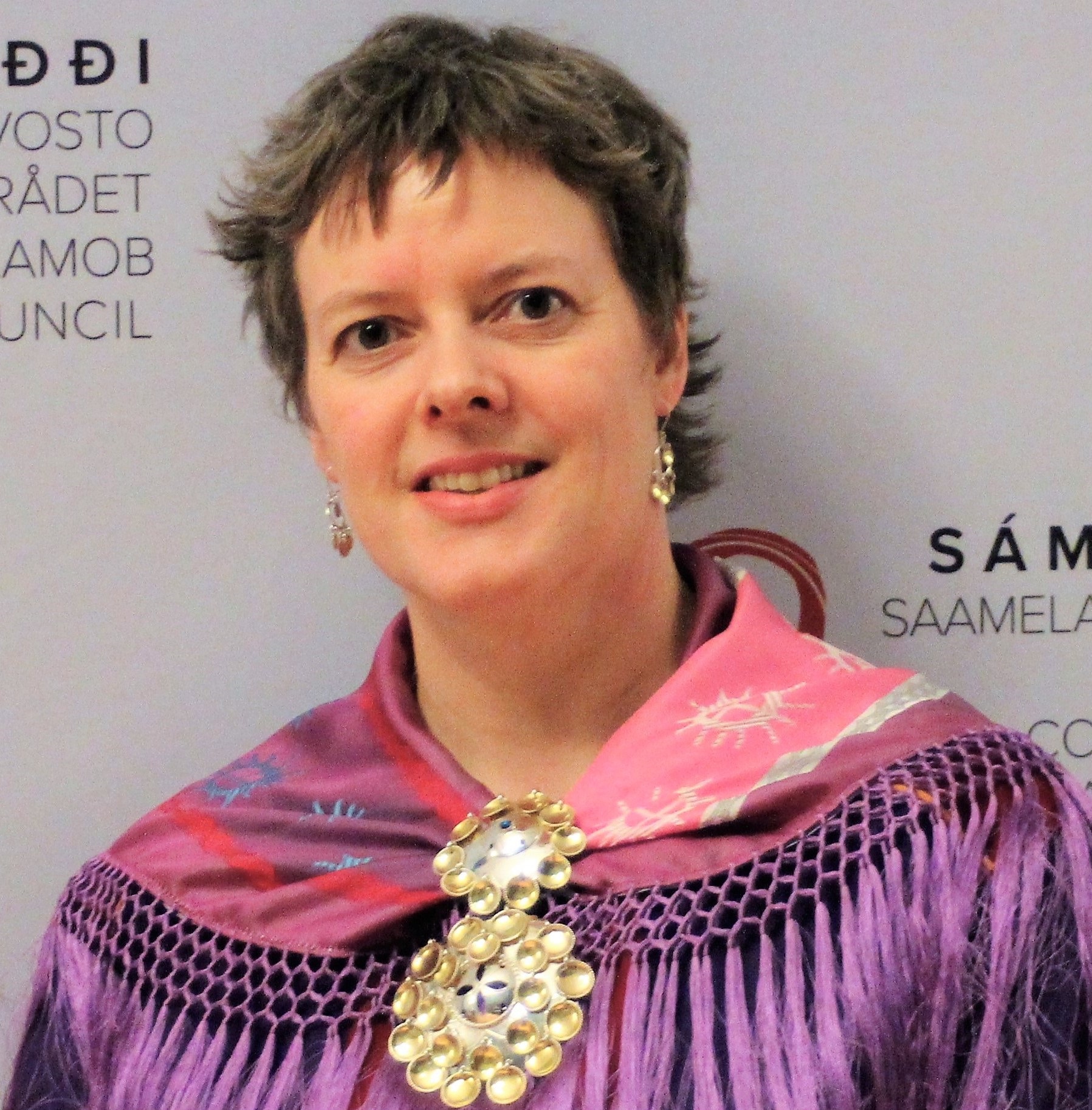
›In today’s episode of The Arc, ECSP’s Claire Doyle and Angus Soderberg interview Gunn-Britt Retter, Head of the Arctic and Environmental Unit at the Saami Council, in part one of three episodes focused on climate justice in the Arctic. We dive into Gunn-Britt’s background and her work on the Saami Council. Gunn-Britt outlines how climate change is impacting the livelihoods and daily lives of the Saami people and how even our responses to climate change can threaten Indigenous rights and land use. She also makes the case for a fundamental reexamination of our relationship with nature to make progress on addressing climate change. Select quotes from the interview are featured below. -
ECSP Weekly Watch | July 29 – August 2
›A window into what we are reading at the Wilson Center’s Environmental Change and Security Program
How One Loss and Damage Fund Bore Fruit (The Guardian)
The Loss and Damage Fund established during the UN COP27 was a monumental breakthrough in the climate finance realm and aimed to provide financial assistance to vulnerable nations impacted by climate change. Such damage can be catastrophic. When Cyclone Freddy hit Malawi in 2023, it killed 1,200 people and displaced 659,000 more. The estimated economic loss exceeded $1 billion, and it landed especially hard on farmers—including the women who make up more than 70% of Malawi’s agricultural workforce.
-
Earlier Assessments of Conflict Damage Can Spur Timely Relief
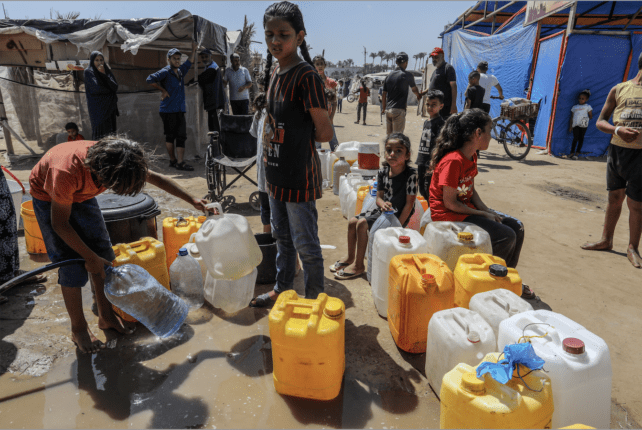
›The widespread destruction of infrastructure has been a calamitous and common feature across many of the recent wars in the Middle East and North Africa and Ukraine—and urban landscapes such as Aleppo, Raqqa, Kharkiv, Mariupol, and Gaza City have borne the brunt of attacks. Without clean drinking water, electricity, treated sewage, food supplies, and medical services, cities become uninhabitable, disrupting the infrastructure upon which populations depend for basic services, and often leading to their forcible displacement. Civilians are also at risk of malnutrition, starvation, and preventable diseases that spread from dirty water and raw sewage in urban centers.
Showing posts from category environment.
 In today’s episode of New Security Broadcast, ECSP Director Lauren Risi interviews Ratia Tekenet, a Climate Security Expert with the UN Mission in South Sudan (UNMISS) and a former ECSP staff member. In their conversation, Ratia explores how climate change is intensifying South Sudan’s security challenges, creating an immense humanitarian crisis. She also discusses the efforts of UN agencies, the South Sudanese government, and local communities to build resilience and respond to ongoing climate disasters, as well as the need for greater integration of the humanitarian-development-peace (HDP) nexus. Select quotes from the interview are featured below.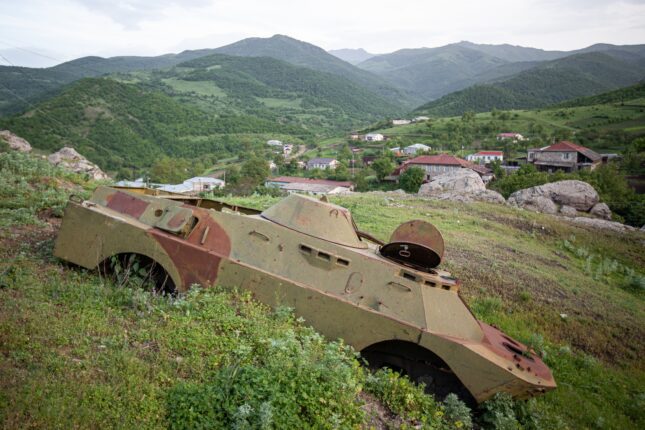
 In today’s episode of