-
Thought-leaders and Frontline Workers in Environmental Peacebuilding: An Oral History | Carl Bruch
›Environmental Peacebuilding Oral History // New Security Broadcast // July 26, 2024 // By Claire Doyle In this episode of New Security Broadcast, ECSP’s Claire Doyle speaks with Carl Bruch, Senior Attorney and Director of International Programs at the Environmental Law Institute and the founding President of the Environmental Peacebuilding Association. Bruch is a recognized expert on environmental governance and environmental peacebuilding around the world, having worked to provide legal assistance and capacity building in dozens of countries throughout the Americas, Asia, Africa, and Europe. And he has been a key leader in the field of environmental peacebuilding, from the early conversations and visioning to the growing traction of the field today.
 -
ECSP Weekly Watch | July 22 – 26
›
A window into what we are reading at the Wilson Center’s Environmental Change and Security Program
Worsening Health Conditions in War-Torn Gaza (BBC)
Water infrastructure in Gaza was already weak before the beginning of the war in 2023, but intensified conflict and siege of critical infrastructure the damage wreaked by Israel’s military forces on critical infrastructure (including water, energy, and food), has left 70% of the people in Gaza exposed to salinated and contaminated water. Traces of polio have been found in wastewater flowing both between displacement camp tents and in inhabited areas, and experts suggest that this water might be circulating.
-
ECSP Weekly Watch | July 15 – 19
›A window into what we are reading at the Wilson Center’s Environmental Change and Security Program
Shedding Light on Imperial Oil’s Dark Waters (Mongabay)
Canada has the fourth-largest tar sands (oil deposits) in the world. Separating the bitumen used in industries and construction creates large volumes of toxic wastewater, which is stored in tailings ponds that now cover a staggering 270 square kilometers. Unresolved infrastructure mishaps at one such site in Alberta operated by Imperial Oil means that contaminants have polluted nearby waters so significantly that it has affected public health and the livelihoods of indigenous communities in downstream areas.
-
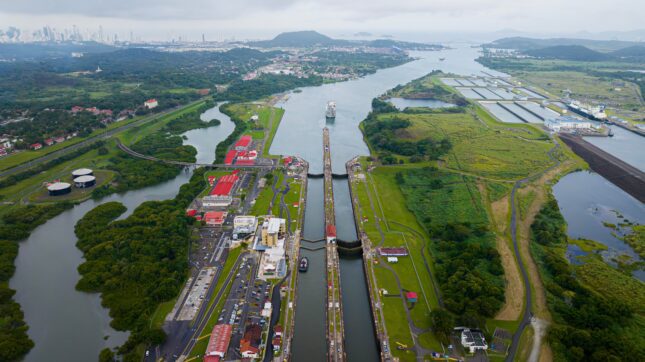
No, the Panama Canal is Not Running Dry
›Earlier this year the media made much ado about drought conditions constraining traffic through the Panama Canal. But is it really all they’re making it out to be?
The most recent drought conditions started with below-average rainfall in late 2022, and by January 2024 were being described as the worst drought in Canal history. The Panama Canal Authority (ACP) ranked 2023 as the second driest year since 1950. News articles reported cargo traffic was reduced by nearly 40% and that the world faced a $270 billion traffic jam in Panama.
-
Environmental Cooperation in the Middle East: A Conversation with Dr. Tareq Abu Hamed
›In today’s episode of New Security Broadcast, Wilson Center Global Fellow and environmental journalist Anneliese Palmer speaks with longtime leader in regional environmental diplomacy and Executive Director of the Arava Institute for Environmental Studies, Dr. Tareq Abu Hamed. In their conversation, Dr. Hamed unpacks the opportunities and challenges of climate and environmental diplomacy, environmental peacebuilding efforts in Gaza and the Middle East, as well as his role in Jumpstarting Hope, a project that works to provide essential services such as safe drinking water and sustainable electricity to communities in Gaza. -
ECSP Weekly Watch | July 8 – 12
›A window into what we are reading at the Wilson Center’s Environmental Change and Security Program
Climate Security and Canada’s Promises to NATO (Global News)
As a founding member of the North Atlantic Treaty Organization (NATO), Canada has been influential in the integration of climate change policy with the alliance’s mission. It supported the development of NATO’s Climate Change and Security Action Plan aligning with the alliance’s core tasks of deterrence and defense, crisis prevention and management, and cooperative security. Following the Canadian proposal 2021, Global Affairs Canada and the Department of National Defense jointly lead NATO’s Climate Change and Security Centre of Excellence (CCASCOE) to research and identify best practices to address climate change and security-related challenges.
-
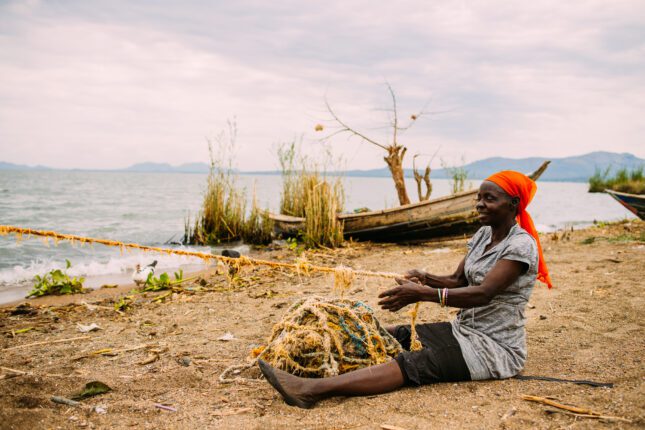
Weaving Baskets of Change: Women Organizing in Kenya’s Fisheries and Aquaculture
›Mildred is a fish trader in Kenya. I met her a few years ago, when I was conducting research. (“Mildred” is not her real name; I promised all my participants anonymity as I worked.) She mentors, trains, and educates young women on how to dry, gut, fry fish, and run successful fish businesses.
-
ECSP Weekly Watch | June 24 – 28
›A window into what we are reading at the Wilson Center’s Environmental Change and Security Program
Renewable Energy Needs a Social Vision (Mongabay)
The Zapotec of the Isthmus of Tehuantepec have accused energy giant EDF (Électricité de France) of causing human rights abuses while building wind farms in Oaxaca state. They also claim the company intimidated and harassed social movements who opposed this construction on their ancestral lands. The Zapotec are indigenous peoples of Mexico who call themselves Bën Za or “The People”—and after three years of struggle and stalling tactics by EDF’s legal representatives, French courts have authorized their civil case filing at last.
Showing posts from category environment.
 In today’s episode of New Security Broadcast, Wilson Center Global Fellow and environmental journalist Anneliese Palmer speaks with