-
From Communities to Landscapes: Multi-Scale Approaches to Climate Adaptation in Nepal
›
“Some people are more vulnerable than others” to climate change, said Judy Oglethorpe, senior director of Multilateral Program Development of the World Wildlife Fund-US (WWF) at a recent event on climate change, biodiversity, and livelihoods. Oglethorpe is the chief of party for the Hariyo Ban (Green Forests) Program, which seeks to increase ecological and community resilience to climate change in two biodiverse landscapes in Nepal. Taking a “multi-scale approach let[s] us focus on the most vulnerable people,” said Oglethorpe, and “work at different scales and across different disciplines…to reduce people’s vulnerability.”
-
Women on the Front Lines of Change: Empowerment in the Face of Climate and Displacement
›
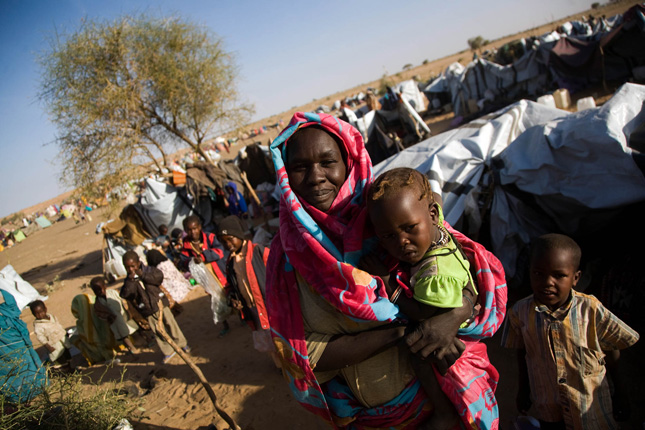
With a swiftly changing climate comes rapidly rising sea levels, more frequent storms, and rising inequality. Slow yet consistent events like sea-level rise, as well as extreme events like hurricanes and other climate disasters, can force women and families from their homes. As the climate continues to change, adaptation will become more difficult, spurring some to leave home in search of safer ground. In the face of climate-induced instability, women are not just on the frontline of impacts, but also at the forefront of solutions.
-
Panacea for the Pacific? Evaluating Community-Based Climate Change Adaptation
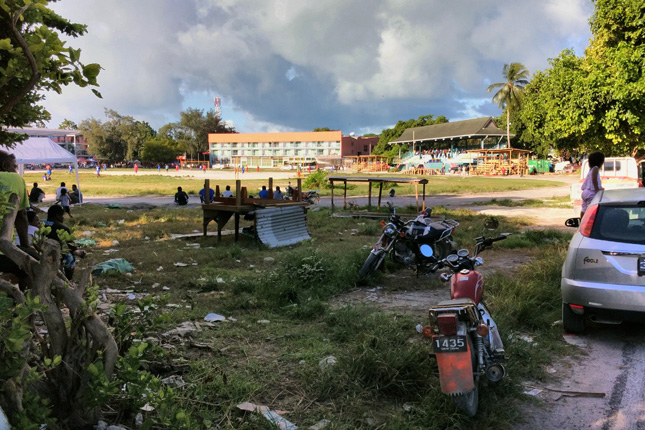
›Guest Contributor // February 22, 2018 // By Rachel Clissold, Tahlia Clark, Benjamin Priebbenow & Karen McNamaraThe Australian government’s recent Foreign Policy White Paper has been criticized for its underwhelming climate change section. Penny Wong, the current opposition leader in the Australian Senate, said that its acknowledgement of the need to support a more resilient Pacific region “rings hollow in light of the Abbott/Turnbull Government’s massive aid cuts.” But despite these criticisms, the Australian government continues to support a range of climate change initiatives in the Pacific. Increasingly, Australian Aid and its fellow donors, including USAID, JICA and GIZ, take a community-based approach to climate adaptation. Germany’s GIZ, for example, carries out community-level adaptation activities for all beneficiaries in the Pacific; and USAID has highlighted its community-level projects as important models. Our recent evaluation of some of these community-level adaptation programs in Vanuatu and Kiribati found that they provide some development benefits, including increased awareness, empowerment, cooperation, and self-esteem, but that it is too soon to tell whether this approach can reduce long-term vulnerability to climate change.
-
Safe Passage: China Takes Steps to Protect Shorebirds Migrating From Australia to the Arctic
›Every year, millions of shorebirds migrate to the Arctic to breed—some coming from as far away as Australia and New Zealand—and then head back again. Nearly all of the birds making this journey spend time in the food-rich intertidal mudflats of the Yellow Sea ecoregion, on the east coast of China and the west coasts of the Korean peninsula. But as China’s economy has grown, around 70 percent of the intertidal mudflats in the Yellow Sea area have disappeared—the land drained and “reclaimed” for development. All of the more than 30 species of shorebirds that rely on the mudflats are declining, and those that stop there twice a year are declining at a faster rate than those that stop only once. If the current trajectory continues, the Yellow Sea—once known as the cradle of China—will become the epicenter of extinction.
-
Drying Out: Climate Change and Economic Growth Drive Water Scarcity in the Third Pole
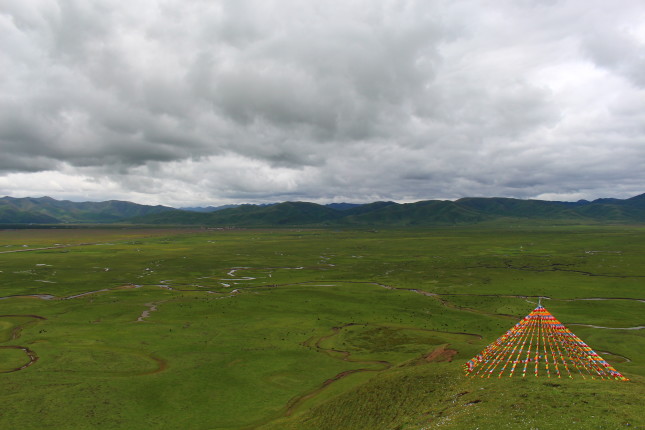
›I pulled my horse to a stop along the banks of a little stream, which was wedged between two grassy hills speckled with wildflowers and pika holes, to admire the view of the Tibetan-Qinghai Plateau’s rolling hills evolving into snowcapped mountains.
-
A Matter of Survival: Learning to Cooperate Over Water
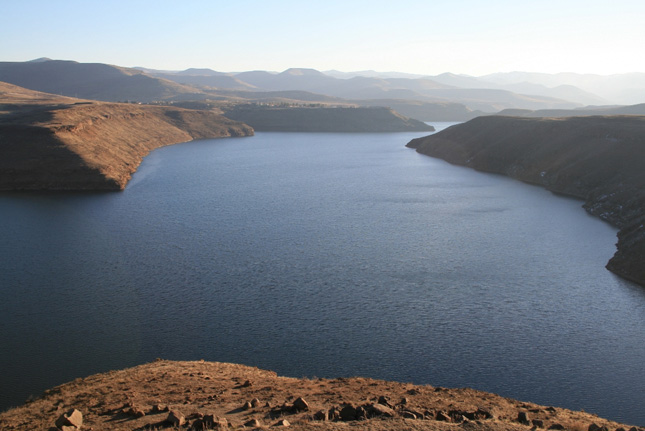
›“Water security and management represent the cornerstone of global conflict prevention,” said President Danilo Türk, chair of the Global High-Level Panel on Water and Peace and former president of Slovenia, at a recent Wilson Center event on water and peace. “The only alternative to water is water, and therefore, the matter of water is a matter of survival,” said Sundeep Waslekar, president of Strategic Foresight Group.
-
Respect for Creation: Leaders and Religious Groups Confront Climate Change in the Caribbean and South Pacific Islands
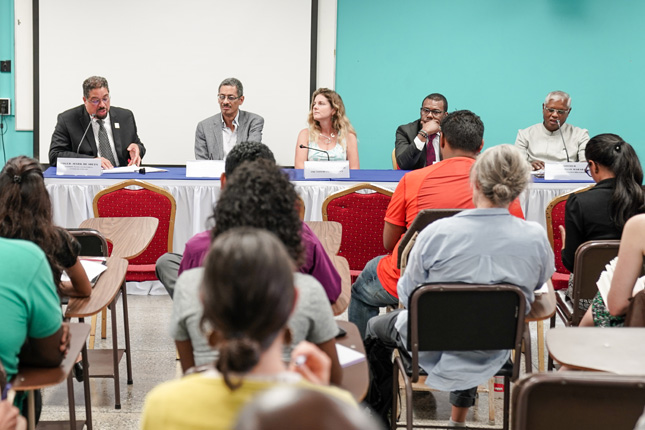
›Climate change is “unfolding as we speak,” said John Agard, professor of Tropical Island Ecology at the University of the West Indies (UWI) at a recent public forum on island nations hosted in Trinidad by UWI’s Institute of International Relations. The “close coupling of terrestrial, coastal, and marine systems” in islands “results in fast-spreading impacts across systems,” said Roger-Mark De Souza¹, formerly the director of population, environmental security, and resilience for the Wilson Center, which partnered with UWI and American University’s Center for Latin American and Latino Studies to organize the event.
-
Story of the Decade: Population Dynamics (and Women and Water) Top List of Our Most Popular Posts
›This One Goes to 11.
Eleven years ago this week, the New Security Beat began covering population, environment, and conflict connections. Today, our goal remains the same as in 2007: to provide insight on today’s new security threats and to share overlooked opportunities for cooperation. As we wrote then, “countries in crises often share the problems of rapid population growth and deteriorating environmental resources”: and unfortunately, the same trends continue undermine peace and deepen poverty. But we’ve also analyzed notable global efforts, including the Sustainable Development Goals and the growing resilience agenda, that offer hope for progress.
Showing posts from category development.