-
The Covid-19 Crisis in Africa
›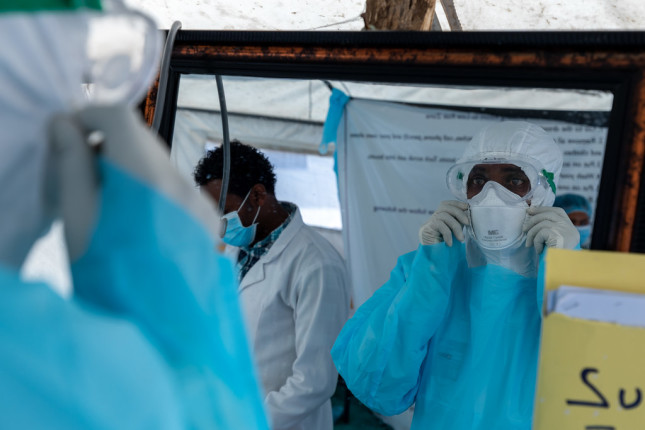
“African countries are facing a severe health crisis. As of this morning, there are 14,573 confirmed cases of Covid-19 and 790 deaths in 52 out of 54 countries,” said Judd Devermont, director the Center for Strategic and International Studies’ Africa Program, at an April 13th event on the impacts of Covid-19 in Africa. The World Health Organization has estimated a 5 percent drop in Africa’s GDP and the United Nations Economic Commission for Africa (UNECA) believes that as many as 20 million jobs will be lost. There is also a political dimension to this crisis, as governments struggle to deliver services, provide safety and security, and allow people to continue livelihoods, said Judd.
-
Chitra Nagarajan on What’s Changed for Women in Lake Chad Region
› “Women and men face very different risks and challenges,” said Chitra Nagarajan, a writer and journalist who covers climate change, conflict, and gender. She spoke in this week’s podcast about what’s changed in the Lake Chad region. In the last few years the combination of profound climate change and high levels of insecurity have made life harder for the local population. To get a sense of how recent changes have affected Lake Chad’s residents, Nagarajan interviewed more than 250 people. These are some of her findings.
 -
Healthcare Facilities in Developing Countries a High Risk for Coronavirus Transmission
›The front lines in the battle to limit damage from the new coronavirus are expanding.
Covid-19, the disease caused by the virus, emerged in China and then blossomed in comparatively wealthy countries like Italy, South Korea, and the United States.
Now, the virus is spreading in poorer regions — in sub-Saharan Africa, South Asia, and parts of Latin America — where essential defensive measures against infectious disease are often missing.
-
A Conversation with Rodolfo Camacho on Using Data for Water Security
›Friday Podcasts // Water Security for a Resilient World // Water Stories (Podcast Series) // March 20, 2020 // By Eliana GutermanWhile there are many uses for global data sets and innovative data analysis technologies, the most important thing, Rodolfo Camacho said in this week’s Water Stories podcast, is not analyzing the data. It’s the collaboration among countries sharing data. Camacho, Project Director at Winrock International and Chief of Party for USAID’s Sustainable Water Partnership (SWP), sat down with Lauren Herzer Risi, Project Director of the Environmental Change & Security Program to discuss the importance of big data and machine learning on improving water security. -
How Natural Resources Could Help Build Peace in Afghanistan
›Potential water wars due to plans for multiple dams, violent opium cartels supporting world heroin markets, and many conflict-financing minerals including everyday talc used for baby powder. These are the types of natural resources stories that usually make front page news about Afghanistan. But natural resources have a significant role to play in stabilizing Afghanistan. Instead of being a source of conflict, they may help with peacebuilding by creating livelihoods and creating opportunities for ex-combatants.
-
From Arms to Farms: A Conversation with Casimiro Olvida
›“This project is serious,” Casimiro Olvida said. “It will help the community. If you do not believe me, you can kill me anytime.” He recalled saying this in 1995 to Communist rebels in Mindanao who were suspicious that his USAID-funded team was supporting the Philippine government. We have the same goals, he told them, to help the poor and protect the environment. Apparently, he was convincing. Now Watershed Protection Project Manager of the Sarangani Energy Corporation, Olvida spoke in this week’s podcast with ECSP’s Lauren Risi, at the International Conference on Environmental Peacebuilding in October 2019, describing his decades of work in forest management in the Philippines. -
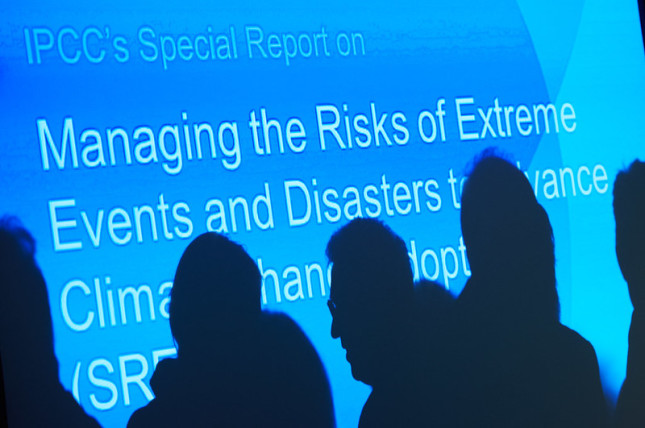
Why Climate and Conflict Are Shaping the Crises of Our Time (And What To Do About It)
›Humanitarian need is increasing. Crises are becoming more complex through the interactions between climate change, disasters, and conflicts. Not only are humanitarian crises on the rise, but the nature of crises is changing, largely due to climate change-driven extremes such as floods, droughts and typhoons. Over 90 percent of disasters are believed to be related to climate. -
Common Climate Impact Assessments Underestimate Future Vulnerability
›Climate-related disasters are a major source of human and material losses. Poverty and low level of economic development are important determinants of environmental vulnerability. Achieving stable and sustainable development thus represents an important strategy to reduce adverse impacts of climate change. However, present efforts to evaluate possible consequences of climate change in the future suffer from too optimistic assumptions about economic growth in poor countries, as we document in a new article just published in the journal Global Environmental Politics.
Showing posts from category development.
 “Women and men face very different risks and challenges,” said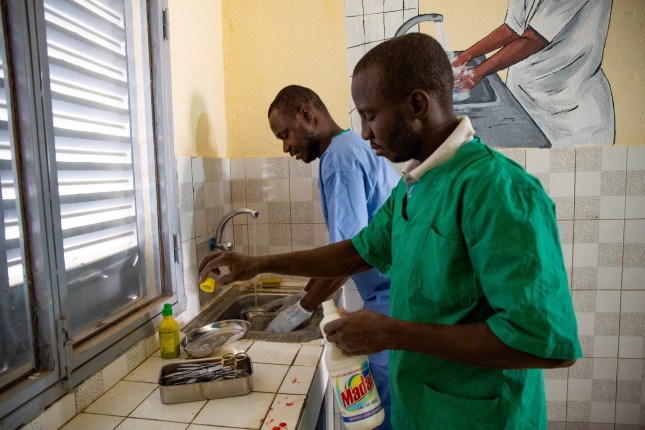
 While there are many uses for global data sets and innovative data analysis technologies, the most important thing, Rodolfo Camacho said in this week’s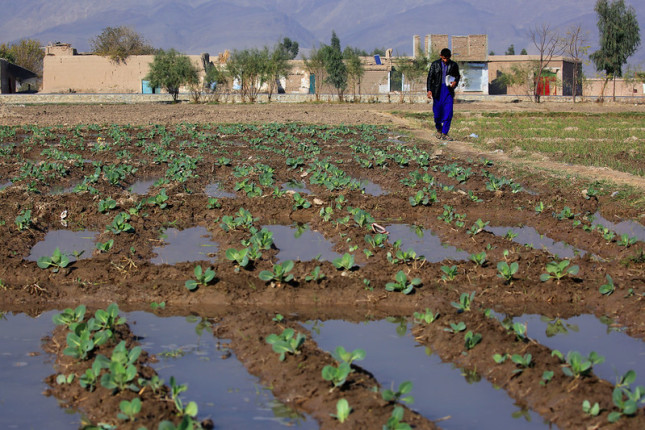
 “This project is serious,” Casimiro Olvida said. “It will help the community. If you do not believe me, you can kill me anytime.” He recalled saying this in 1995 to Communist rebels in Mindanao who were suspicious that his USAID-funded team was supporting the Philippine government. We have the same goals, he told them, to help the poor and protect the environment. Apparently, he was convincing. Now Watershed Protection Project Manager of the Sarangani Energy Corporation, Olvida spoke in this week’s podcast with ECSP’s Lauren Risi, at the International Conference on
 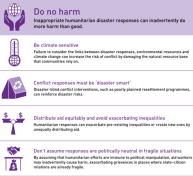 Humanitarian need is increasing. Crises are becoming more complex through the interactions between climate change, disasters, and conflicts. Not only are humanitarian crises on the rise, but the nature of crises is changing, largely due to climate change-driven extremes such as floods, droughts and typhoons. Over