

-
Unsung Sheroes, Climate Action, and the Global Peace and Security Agendas
›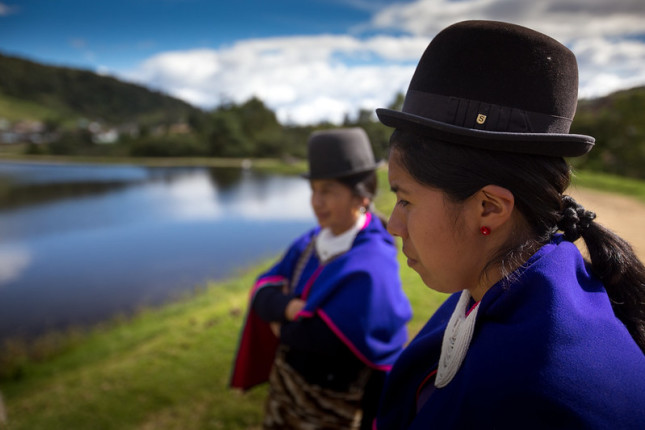
“We’re fighting for our lands, for our water, for our lives,” said an indigenous woman from Colombia, describing her work as an environmental defender. She spoke at a December 2019 workshop on Gender, Peace and the Environment held in Bogotá, Colombia, that brought together social, environmental, and legal scholars and practitioners—including indigenous women—to discuss women, peace, and security issues.
-
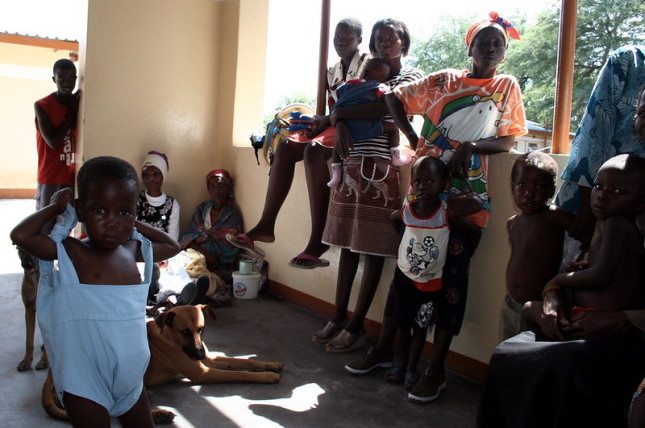
Emulating Botswana’s Approach to Reproductive Health Services Could Speed Development in the Sahel
›
The Western Sahel region—a cluster of arid, low-income countries stretching from Senegal, on Africa’s Atlantic coast, inland to Mauritania, Burkina Faso, Mali, Niger, and Chad—is home to the world’s most youthful populations. According to current UN Population Division estimates, about 57 percent of this six-country region’s population is 19 years old or younger. As security conditions deteriorate across the rural Sahel, governments in Europe and North Africa are taking notice of these countries’ demographic status—and for good reasons. Sustained population youthfulness (often called a “youth bulge”) contributes to low levels of educational attainment, joblessness and social immobility, and ultimately to rapid population growth, which tends to drive declines in per-capita availability of freshwater and other critical natural resources: factors that are associated with the risk of persistent violent conflict and represent powerful push factors for migration.
-
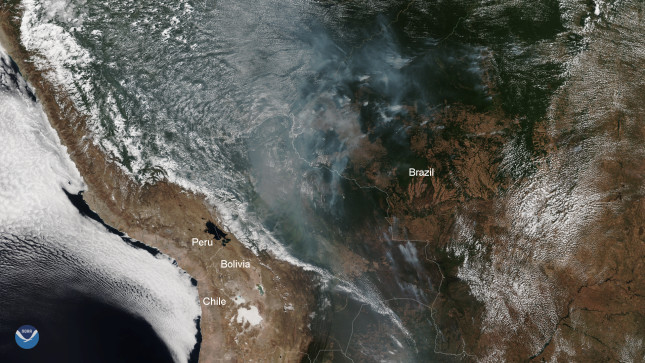
Intense 2019 Amazon Fire Season May Become Dangerous Template for 2020
›The Amazon endured the most intense fire season in almost a decade in August 2019. On August 19, smoke from the faraway fires blackened the skies over Sao Paulo. By the next day, the hashtag “#PrayforAmazonia” was sweeping across Twitter. The social media outcry brought world attention to the already dire scientific warnings, and world leaders offered aid and pressured Brazilian President Jair Bolsonaro to take action.
-
The Environmental Dimensions of Sustainable Recovery: Q&A with Ken Conca and Anita van Breda (Report Launch)
›Recognizing the need to address environmental challenges in the wake of war and disaster, American University’s School of International Service and World Wildlife Fund (WWF) joined together to launch the project “Environmental Dimensions of Sustainable Recovery: Learning from Post-Conflict and Disaster Response Experience.” As representatives of a leading conservation NGO (World Wildlife Fund) and a professional graduate school with extensive expertise in environment, development, and conflict resolution (American University’s School of International Service), Anita van Breda and Ken Conca’s partnership helped to conduct a truly cross-organizational, cross-perspective exchange and familiarized them with the challenges and opportunities that occur when working across sectors and organizational cultures.
-
Starting at the Top: Environmental Security in the Himalayas
›As an inhabitant of the Himalayan region of Nepal, where 8 of the 10 highest peaks of the world are situated, I am experiencing first hand several environmental stresses and insecurities. Many of the high mountains I can see from my village, once covered in snow, are turning black. Neighboring areas are experiencing massive out-migration and demographic changes. Consequently, agriculture in the region is facing an unprecedented crisis.Droughts, irregular rainfall and erratic floods, landslides and mudslides, forest fires, pollution of our land and water, and energy insecurity are frequently observed in Nepal. River systems born out of the Himalayas are shrinking. Erratic climate behavior is heavily affecting the flora and fauna and contributing to biodiversity loss.
-
Great Power Resource Competition in a Changing Climate: New America’s Natural Security Index
›Late last year, Reuters reported that the U.S. Defense Department plans to fund mining and processing operations for rare earth elements—a class of minerals for which China dominates the global market, producing over 80 percent of the world’s supply. In the past, China has restricted exports of rare earths, and recently threatened to do so again. Even with a phase one trade deal hammered out between the United States and China, natural resources are likely to remain a point of geopolitical tension.
-
China’s Risky Gamble on Coal Conversion
›China Environment Forum // Choke Point // January 9, 2020 // By Richard Liu, Zhou Yang & Xinzhou QianAt the September 2019 United Nations General Assembly (UNGA) Climate Summit, the U.S. delegation, under the shadow of intended withdrawal from Paris, did not volunteer a speaker. Attention instead focused on China. As the world’s largest carbon emitter, China was poised to assert leadership on the climate crisis. However, perhaps lacking the sibling rivalry pressure that brought the U.S. and China together in 2014 on a joint climate agreement, State Councilor and Foreign Minister Wang Yi offered no new commitments: no carbon tax, no increased investment in renewables, and no announcement to set a more ambitious coal consumption cap.
-
To Help Save the Planet, Stop Environmental Crime
›Since the dawn of the Industrial Revolution, humans have so vastly altered Earth’s systems that we’re now in the midst of what many are calling the Anthropocene Epoch. Human activity has become the dominant influence on climate and the environment, inflicting changes that may persist for millennia.We are razing the planet’s last intact wild lands, degrading, deforesting, carving up, and destroying huge swathes of habitat. We’re overfishing and poisoning our rivers and oceans. We continue to pump greenhouse gases into the atmosphere, raising CO2 levels and hastening climatic changes that are already affecting all life on Earth.
Showing posts from category development.
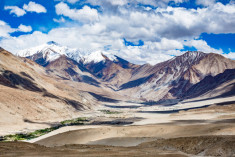 As an inhabitant of the Himalayan region of Nepal, where 8 of the 10 highest peaks of the world are situated, I am experiencing first hand several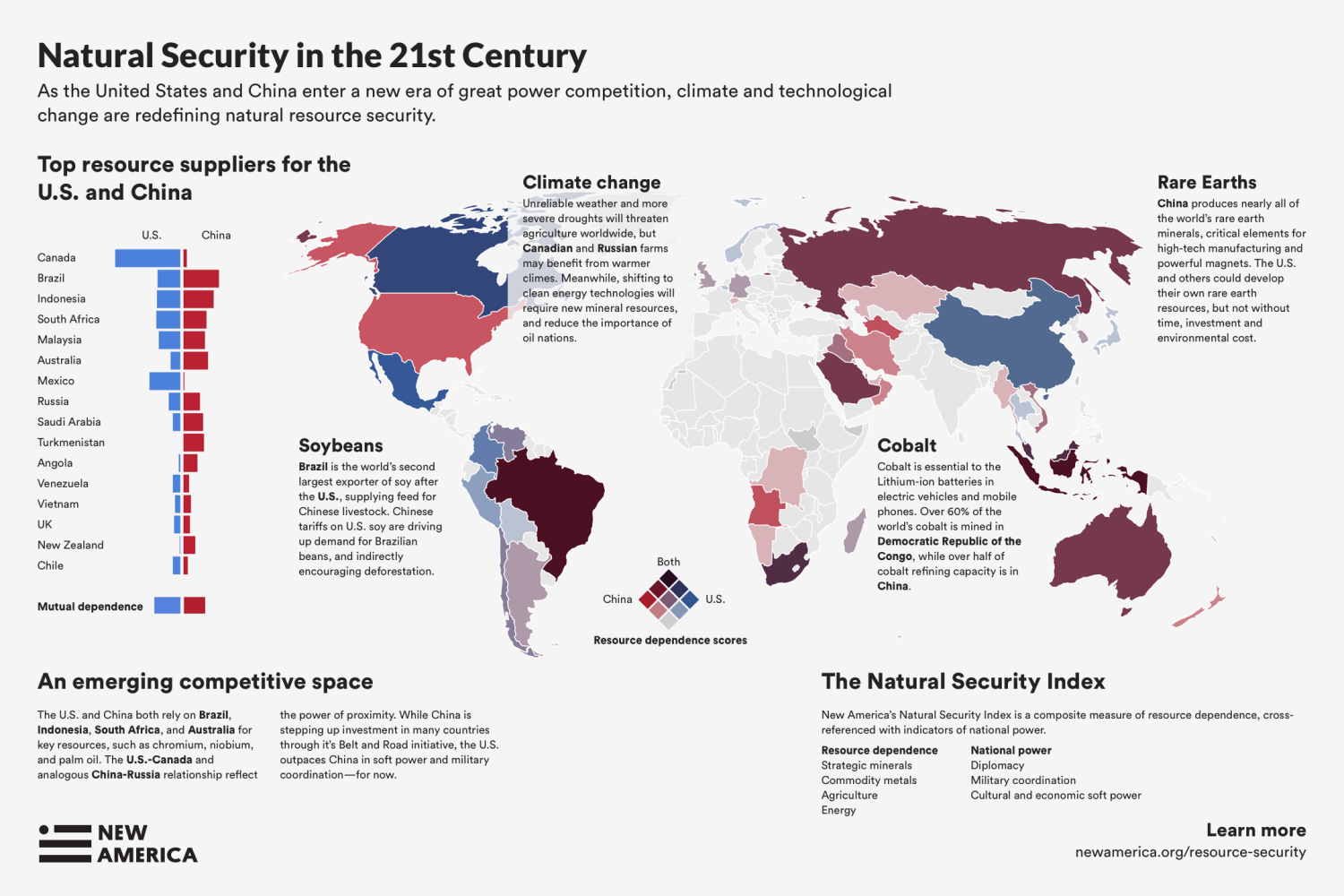

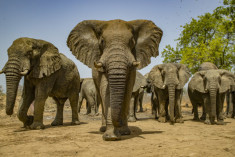 Since the dawn of the Industrial Revolution, humans have so vastly altered Earth’s systems that we’re now in the midst of what many are calling the

