-
Strengthening Fragile States: Why It Makes Sense to Invest in Global Health
›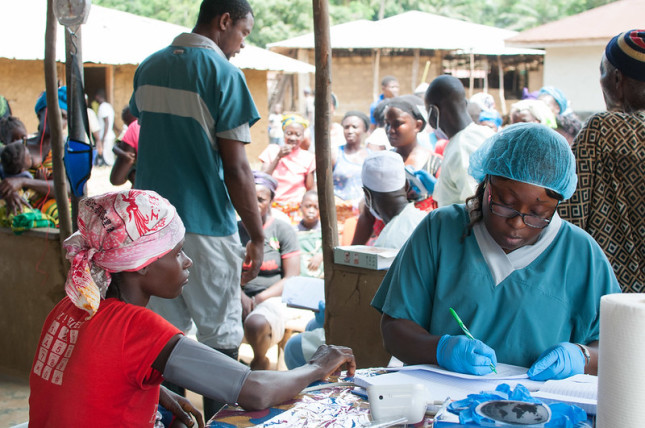
Fragile states, where 1.8 billion people live, continue to be where one is most likely to find extreme poverty, violent extremism, and those most vulnerable to natural disasters and pandemics, said Nancy Lindborg, President and CEO of United States Institute of Peace, at a recent Truman Center event on the ties between national security, global health, and development. Those governments that do not have the capacity to meet the needs of their people, she said, also tend to be the ones that cannot manage external shocks.
-
COVID-19 Reignites Interest in Scenario Planning for Development … But Will It Last?
›
Not since COVID-19 burst onto the scene a few months ago have so many individuals and institutions, outside the business, military, and intelligence communities, woken up to the need for a smart way to characterize and communicate uncertainty. The overwhelming choice for many is scenario planning. Today, scenario planning applies to a wide spectrum of issues, not just international development. It has been used to anticipate changes in higher education, rethink workforce composition, and explore options for individual financial planning.
-
COVID-19 Could Have Devastating Effects on Adolescents’ Sexual and Reproductive Health and Rights
›In just a single year, a 10 percent decrease in sexual and reproductive health services in low- and middle-income countries could lead to another 49 million women with unmet need for contraception, according to Guttmacher Institute estimates from April 2020. Other possible effects include another 15 million unintended pregnancies, another 28,000 maternal deaths and 168,000 newborn deaths due to untreated complications, and another 3 million unsafe abortions and 1,000 maternal deaths due to unsafe abortions. The implications are staggering in terms of unmet needs, unintended pregnancies, unsafe abortions, and maternal and newborn deaths in 132 countries that are home to more than 1.6 billion women of reproductive age (15–49 years).
-
Reports Highlight the Need for Further Consideration of Gender, Climate, and Security Linkages
›In a recent Stockholm International Peace Research Institute (SIPRI) paper, Elizabeth Seymour Smith, a Research Assistant with SIPRI’s Climate Change and Risk Programme, explores the intersection of climate change, gender, and security in Women, Peace and Security (WPS) national action plans (NAPs) of 80 countries. Using qualitative content analysis, the article finds that states frame and respond to climate change and gender-based security in differing ways. -
Global Cooperation for the Environment: Policy, Technology, and Community Action
›From the Wilson Center // June 9, 2020 // By Elizabeth M.H. Newbury, Alex Long, Metis Meloche & Magdalena Baranowska“50 years ago, 20 million young people protested about the damage to our Earth. Over the past 5 decades, a lot has happened. Our ozone layer is healing, renewable energy is booming worldwide, environmental awareness has never been higher. But some risks are even more acute than before,” said Denis Hayes, coordinator of the first Earth Day and founder of Earth Day Network, in a video message at a recent Wilson Center event commemorating the 50th Earth Day.
-
How to Think and Work Politically to Reach Biodiversity Conservation Goals
›“You might know what to do,” said Rachel Kleinfeld, a Senior Fellow for Democracy, Conflict, and Governance Program at the Carnegie Endowment for International Peace. “But if you don’t think about how to do it, your reform isn’t going to move forward.” She spoke at a recent Wilson Center virtual event on how to think and work politically while supporting biodiversity conservation goals. It may sound counterintuitive, she said, but undertaking what’s considered the best intervention may not be the best approach.
-
Rohingya Refugees Smuggle Drugs for Insurgents in Myanmar
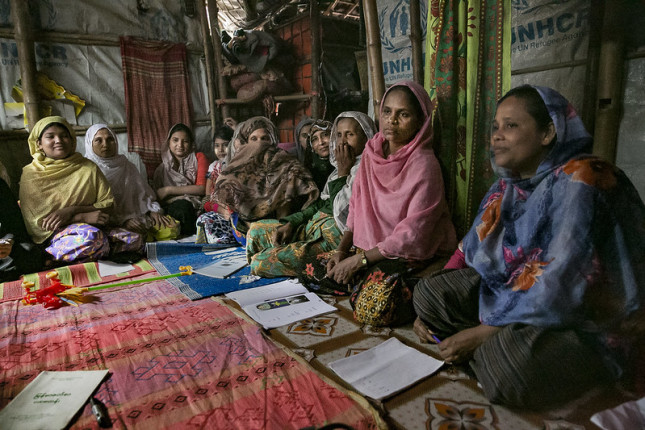
›Rohingya refugees fleeing anti-Muslim persecution in Myanmar are exploited by the Arakan Army to smuggle synthetic drugs into Bangladesh. The army, which demands greater autonomy for Myanmar’s Rakhine State, uses the drug sales to purchase arms and ammunition. It moves the drugs from production centers in Myanmar’s interior to Rakhine State, where Rohingya make the arduous trek along refugee migration routes into neighboring Bangladesh. Lacking other sources of income, the Rohingya are vulnerable to recruitment by the army’s drug smugglers.
-
Improve Biodiversity Conservation, Enhance Public Health and Food Security
›Our collective development objectives will not be achieved if they come at the expense of biodiversity and natural resource management, said Jeff Haeni, Acting Deputy Assistant Administrator in the Bureau for Economic Growth, Education, and Environment at USAID. He spoke at a recent Wilson Center virtual event, co-hosted with USAID, that explored the links between conservation and public health with examples from USAID’s BRIDGE project, which aims to build the evidence base for integrating biodiversity conservation considerations into policy discussions and decision-making across sectors. “The ability of societies around the world to develop and thrive is dependent on the health of the forests, fisheries, and natural systems around them,” he said.
Showing posts from category development.
 In a
In a