-
Universal WASH Gains Traction Even as Hand Pumps Lose Ground: Troubled Water Supply Systems in Africa Spur Demand for New Technology
›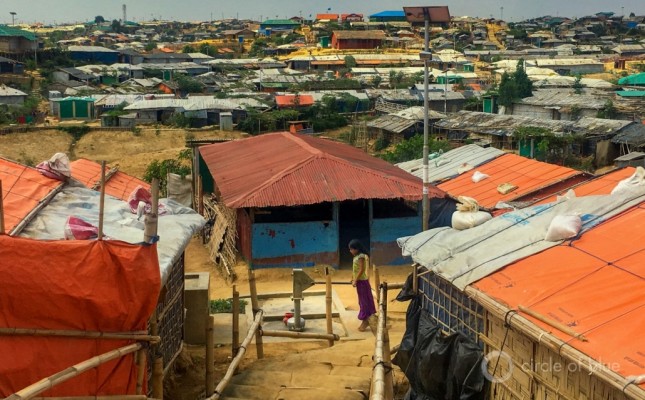
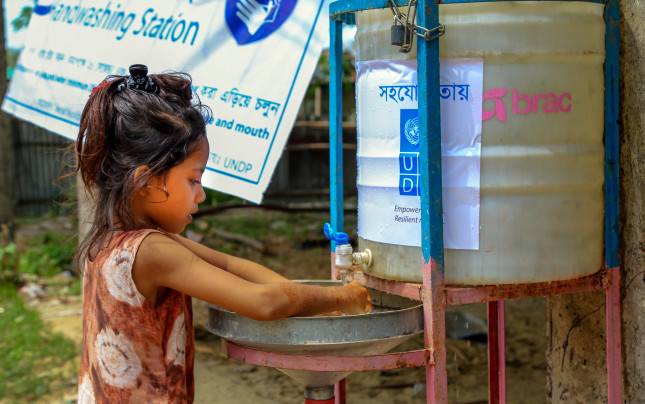
With their blocky stamped metal heads and long arms, the India Mark II and Afridev hand water pumps are hardly aesthetically appealing. What matters is their design. That is, how well do they work?
Introduced in the 1980s, manufactured by the millions, and installed in communities across Africa and Asia, the two hand pumps are the most popular tools for lifting water to the surface from rural underground reserves. In that capacity, the two pumps occupy prominent space in the WASH sector’s long-running and formative debate over whether the global campaign is succeeding or slipping in the effort to attain universal access to clean water, sanitation, and hygiene.
-
Innovation in Financing Brightens WASH Galaxy: Funding for Water, Sanitation and Hygiene Starts to Arrive Faster, With Clearer Requirements
›
People devoted to financing water, sanitation and hygiene in developing nations worried for much of 2020. Utility customers stopped paying their water bills. Funders altered their priorities. Heads of state turned their attention to other virus-related emergencies.
But did COVID-19 affect funding enough to slow progress toward universal access to clean water, safe sanitation, and hygiene? And if it did, by how much?
-
Smart Power: Leveraging the Women, Peace, and Security Agenda
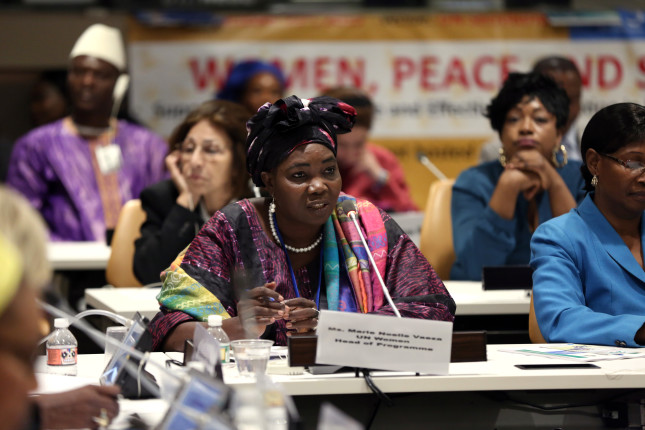
›“Without women and empowering women, there will be no peace,” said Dr. Valerie Hudson, Distinguished Professor and George H.W. Bush Chair at Texas A&M University. Hudson spoke at an event by the United States Institute of Peace (USIP) and the United States Department of Defense (DoD) in collaboration with the United States Civil Society Working Group on Women, Peace, and Security (U.S. CSWG). The event focused on how the United States can leverage the United Nation’s Women, Peace, and Security (WPS) agenda to advance gender equality and promote peace worldwide.
-
Embracing Risk: Lessons Learned from Integrating Climate Adaptation and Biodiversity Conservation in Nepal
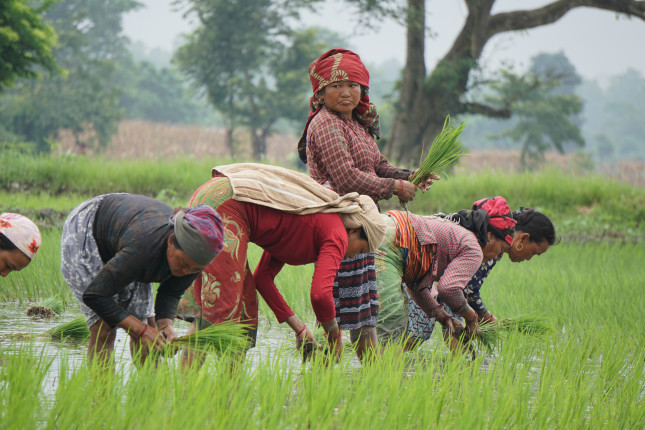
›The Hariyo Ban Program is one of the best examples of a sustainable development initiative that I’ve ever seen, said Nik Sekhran, Chief Conservation Officer of the World Wildlife Fund-US during a recent Wilson Center event on lessons learned from a decade of building resilience through participatory and inclusive natural resource management, climate adaptation, and biodiversity conservation in Nepal.
-
Why Cities Matter
›Do you remember a year ago when many of us traveled regularly? Do you remember the experience of flying into a major city somewhere in the world, picking up your bags in a modern airport (that probably functioned more efficiently than in the United States), and getting a vehicle to take you downtown? After leaving the airport, we would often drive past miles of informal settlements—self-built shelters unkindly called “slums” much of the time. We may have even found ourselves asking why local authorities “don’t do something” about them.
-
A Conversation with Steven Gale on USAID’s New Foresight Unit
›“I think most people will agree today that the development landscape is, well, it’s highly uncertain, it’s increasingly complex,” says Steven Gale, Lead of the Futures/Foresight Team at the U.S Agency for International Development (USAID), in this week’s Friday Podcast. “I think the future is even going to be more complex.”
-
Climate-Conflict Research: A Decade of Scientific Progress
›The last decade was the warmest on record, with 2020 tied with 2016 for the all-time high average annual global temperature. This 10-year period also saw armed conflicts at severity levels not seen since the Cold War era. Could there be a causal link between these trends?
To the frustration of policymakers and laymen alike, empirical research has been unable to provide a simple and coherent answer to this question. Instead, studies of climate-conflict connections have for a long time continued to produce diverging findings and – occasionally – inspired heated debates. So, where do we stand?
In a review article introducing a new special issue of the Journal of Peace Research (JPR) on the security implications of climate change, we assess the nature and extent of scientific progress in climate-conflict research over the past decade. As yardsticks for measuring progress, we identify seven key research priorities frequently advocated in earlier reviews of the quantitative literature.
-
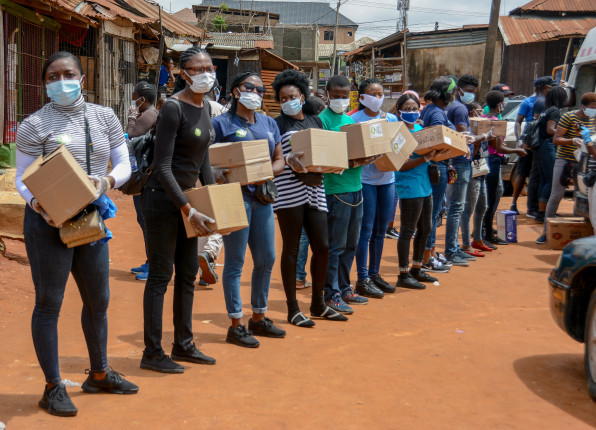
Pan-African Response to COVID-19: New Forms of Environmental Peacebuilding Emerge
›Guest Contributor // February 8, 2021 // By Elaine (Lan Yin) Hsiao, Fakunle Aremu & Ousseyni KalilouEarly predictions about COVID-19’s impacts on Africa suggested that the continent would be a disaster zone marked by weak medical systems collapsing under strain and undemocratic states failing to provide social services to destitute populations. These predictions did not come to pass. Instead, many countries across the continent stepped up early on to join the world in curtailing the spread of COVID-19. The second order effects of the virus have been significant, however. Despite the low numbers of infections and deaths, lockdowns and the decline of a large percentage of informal trade and commerce in Sub-Saharan Africa have sent the region’s economy into recession, with increased inflation rates, widespread unemployment, and increased food insecurity. It’s within this context that collaboration (internationally and within the continent, between governments, the private sector, and local communities) to protect the environment—and by extension enhance livelihoods, promote sustainable development, and achieve enduring peace—has taken new forms.
Showing posts from category development.