-
How Climate Change May Speed Democratic Turnover, and Beyond a “Naïve” Understanding of Drought and Conflict
› In a recent paper published by Climatic Change, Nick Obradovich conducts the “first-ever” investigation into the relationship between rising global temperatures, electoral returns, and climate change. Using data from more than 1.5 billion votes cast across electoral contests held in 19 countries, he found that when the annual average temperature for a country rose above 70°F, there was a “marked” decrease in the number of votes received by incumbent officeholders.
 -
Why Women’s Empowerment Must Start With Land Rights
›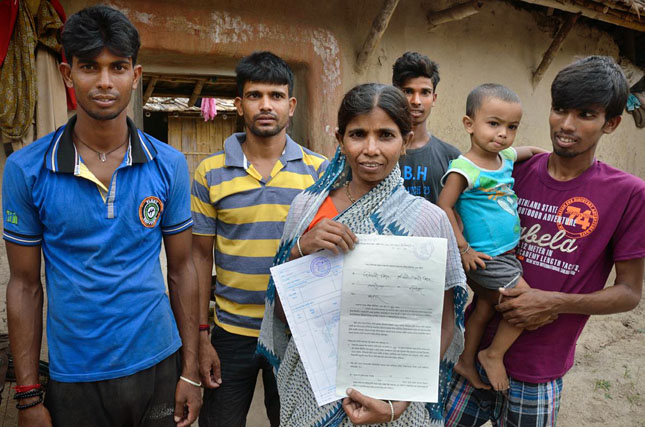
Property and citizenship are in many ways what define us, and they interact in fascinating ways.
-
Harnessing African Women’s Roles in Artisanal Mining to Build Peace
›Women make up between 40 to 50 percent of the artisanal mining workforce in Africa compared to a world average of 30 percent, says Southern Voices Network Scholar Maame Esi Eshun in an interview with Wilson Center NOW. But despite the number of women in the sector, they are often relegated to the periphery when it comes to decision-making and leadership, undermining peacebuilding efforts in these areas.
-
After Conflict, Peacebuilding and Recovery Efforts Too Often Miss the Environment
›In June 2010, The New York Times published a front page story trumpeting a Pentagon announcement of roughly $1 trillion worth of mineral resources in Afghanistan. Officials said the discovery was “far beyond any previously known reserves and enough to fundamentally alter the Afghan economy and perhaps the Afghan war itself.” Then-President Hamid Karzai soon inflated the figure to $3 trillion and then again to $30 trillion, enough to transform the country into the “Saudi Arabia of lithium.”
-
Candido Pastor, Human Nature
From Machetes to Maps: How a “Red Line” Eased Conflict in Bolivia’s Amazon
›August 24, 2016 // By Wilson Center StaffI remember the first time I made the four-day trek into the heart of Bolivia’s Carrasco National Park (CNP) 12 years ago like it was yesterday. I knew it would be a challenge to help communities agree on the boundaries of the protected area, given the high level of tension between indigenous communities, illegal migrant farmers, and park authorities over land rights, but I was unprepared for just how intense our first meeting would be.
-
UNEP Releases GEO-6 North American Region Report: A Good Grade, With Qualifications
›With so much focus on global environmental problems, many may wonder how their region is faring more specifically. This is the sentiment behind the United Nations Environment Program’s process for the latest iteration of its flagship assessment, the Global Environmental Outlook 6 (GEO-6). [Video Below]
-
A Matter of Perspective: Astronaut Susan Helms on Seeing Humanity’s Impact From Space
›Susan Helms is a former NASA astronaut and retired member of the United States Air Force. During her time in the military, Helms flew over 30 different types of aircraft and received four Legion of Merit awards and three Defense Superior Service medals. She also holds the record for longest space walk and spent over 5,000 hours in space. She retired in 2014 with the rank of lieutenant general and now serves on the Wilson Center Board of Trustees. What did she learn over the course of such a distinguished career, much of it spent miles above the ground?
-
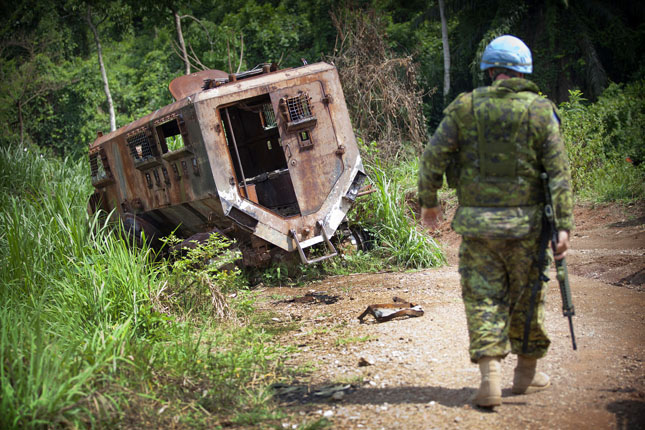
Conflict in Food Producing and Consuming Communities, and How to Help Women in the DRC
›A working paper by Eoin Mcguire (Brown University) and Marshall Burke (Stanford University) examines the impact of food price increases on conflict in Africa. Under the hypothesis that negative income shocks contribute to the outbreak of conflict, the authors compare the effect of significant increases in food prices in communities that predominantly produce food to the effect in those that predominantly consume food. In food producing areas, conflict driven by food surplus allocations increased but conflict driven by territorial factors decreased.
Showing posts from category land.