-
How AGWA is Tracking and Shaping Water’s Crucial Role in Climate Adaptation
›
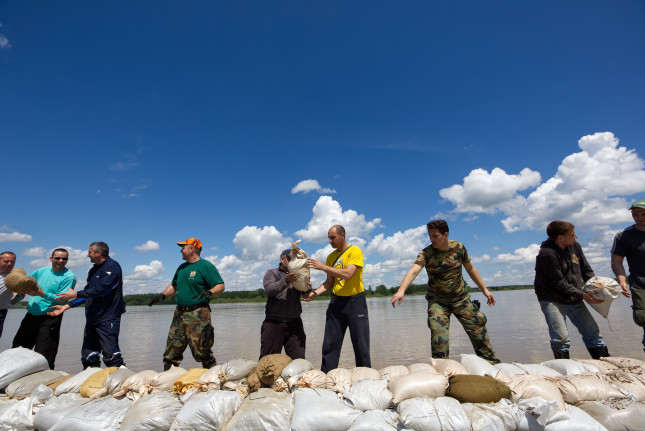
As the last decade has brought about a dramatic shift in approaches to addressing climate change, water is increasingly at the forefront of the conversations around adaptation and resilience. In part, this is because more countries now experience the damaging effects of climate change through water-related events including rising sea levels, intensification of natural disasters, droughts, and flooding.
In this week’s New Security Broadcast, John Matthews, Executive Director of the Alliance for Global Water Adaptation (AGWA), observes that the heightened attention to water has placed his group at the center of discussions at the 2022 United Nations Climate Change Conference (COP27) in Sharm El-Sheikh, Egypt.
-
What Better Looks Like: Breaking the Critical Minerals Resource Curse
›
In recent years, the urgency of climate action has brought fresh attention to the critical minerals sector. Growing renewable energy investments are driving up demand for resources like lithium, cobalt, and copper, which form the mineral backbone of green technologies. But there are substantial concerns to navigate when it comes to sourcing green energy minerals.
-
Alok Sharma: Sustain Progress and Surmount Challenges for Success in Climate Action
›As the world turns its attention to the 27th UN Climate Change Conference (CoP27) in Sharm El Sheikh, CoP26 President Alok Sharma reflects upon the achievements won thus far in the fight against climate change in our latest podcast. Sharma’s address at the Wilson Center also outlines the steps that need to be taken at CoP27 and in the future to ensure a sustainable and prosperous future for all.
Sharma observes that the CoP26 in Scotland last year represented a “fragile win” and that the Glasgow Climate Pact went further than many had imagined it would to keep accepted climate goals in place. “The pulse of 1.5 degrees remained alive,” he says.
-
Top 5 Posts for June 2022
›From climate change to COVID-19 and the war in Ukraine, the world is a landscape of increasing instability. Book-ending the Top 5 posts of June are two articles that explore different aspects of these converging risks. In the top post for June, Steven Gale and Mat Burrows write that globally, younger generations are becoming increasingly disengaged and discontent with their democratic governments, civil society, and institutions. Youth disillusionment is not a result of ignorance to current affairs, but rather a lack of faith in democratic institutions to address today’s most pressing global issues. Tackling youth disillusionment, suggest Gale and Burrows, begins with examining youth engagement trends and placing it at the top of the agenda.
-
Sustaining Shared Waters: An African Case Study
›As we face the twin crises of biodiversity loss and climate change, natural resource management is now more critical than ever—especially in the protection of one of our most precious resources: water.
The stakes of getting it wrong couldn’t be higher: increasing economic inequities and substandard public health for a growing population. And the evidence that such issues have won the attention of political leaders is increasing, with the June 2022 introduction of a White House Action Plan on Global Water Security that links this crucial issue directly to U.S. national security and offers pathways and proposed resources to advance progress broadly on multiple fronts.
-
New Security Broadcast | Jeff Colgan on Oil Politics and International Order
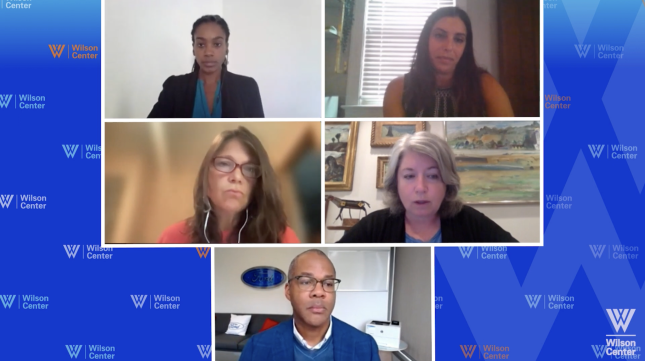
›Debates around whether and to what extent international order is changing can be misguided “so long as we are thinking about international order as a single, monolithic thing,” says Jeff Colgan, Associate Professor of Political Science and director of the Climate Solutions Lab at Brown University in this week’s episode of New Security Broadcast. Colgan spoke at a recent Wilson Center event featuring his new book, Partial Hegemony: Oil Politics and International Order. In the book, Colgan challenges the idea of a monolithic ‘global order’ and shows that international order instead comprises a set of interlinked “subsystems.” In a world where there is no single, all-encompassing hegemon to trigger universal global change, this framework of subsystems allows us to explore how particular geopolitical realms can alter without fundamentally changing the geopolitical landscape, he says. -
Merging the Environmental and Security Sectors in Climate Risk Responses
›Environmental security notions have evolved over the past 30 years. Once a sub-field of Security and Peace Studies focusing on how environmental issues correlate with modern security theories and policies, the concept is rapidly merging environmental and security sectors. Former Greek Naval Officer in the Hellenic Navy and current environmental security scholar Dimitrios Kantemnidis’ expertise sits at the center of the two merging fields. His military background informs perspectives on growing environmental security risks and potential responses for civilian and military actors.
-
Russia’s ‘Nyet’ Does Not Mean Climate Security Is off the Security Council Agenda
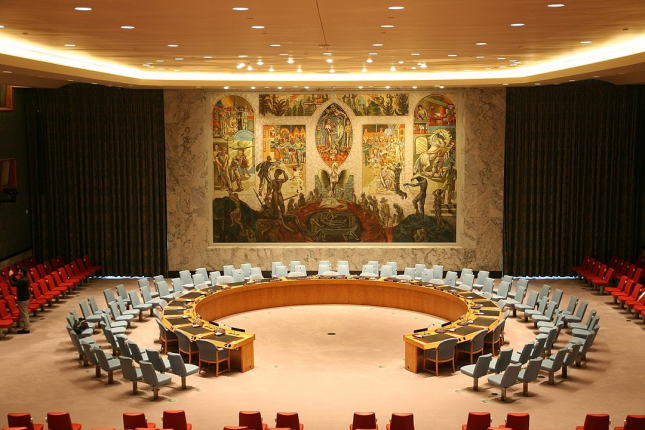
›On Monday, 13 December, Russia used its veto in the United Nations Security Council to block a thematic resolution on climate change and security put forward by Ireland and Niger. While the draft resolution contained specific actions, its main purpose was symbolic: to put the security implications of climate change firmly on the Security Council’s agenda, much as Resolution 1325 did with women, peace and security.
Showing posts from category international environmental governance.



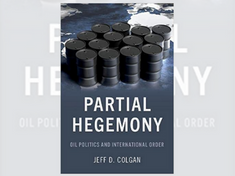 Debates around whether and to what extent international order is changing can be misguided “so long as we are thinking about international order as a single, monolithic thing,” says Jeff Colgan, Associate Professor of Political Science and director of the Climate Solutions Lab at Brown University in this week’s episode of New Security Broadcast. Colgan spoke at a recent Wilson Center