Showing posts from category global health.
-
Population, Health, and Environment Approaches in Tanzania
›“Quality of life, human health, food security, and biodiversity are all connected,” said Elin Torell, research associate for the BALANCED Project and the University of Rhode Island Coastal Resource Center. Torell was joined at the Wilson Center on July 19 by Patrick Kajubili from the Tanzania Coastal Management Partnership, and Alice Macharia, director of the East Africa Program at the Jane Goodall Institute to discuss the importance of integrated population, health, and environment (PHE) initiatives that work to simultaneously improve health and livelihoods, manage natural resources, and conserve ecosystems in Tanzania.
Building Resilient Coastal Communities
The Coastal Resources Center’s work in Tanzania’s Saadani National Park provides an example of an integrated PHE approach that sustains the flows of environmental goods and services, maintains biological diversity, and empowers and improves the wellbeing of local residents, said Torell. Since 1996, the CRC has focused on protecting sea turtles, promoting energy-saving stoves, and tracking elephants, while at the same time improving livelihoods through savings and credit associations, eco-tourism, and beekeeping.
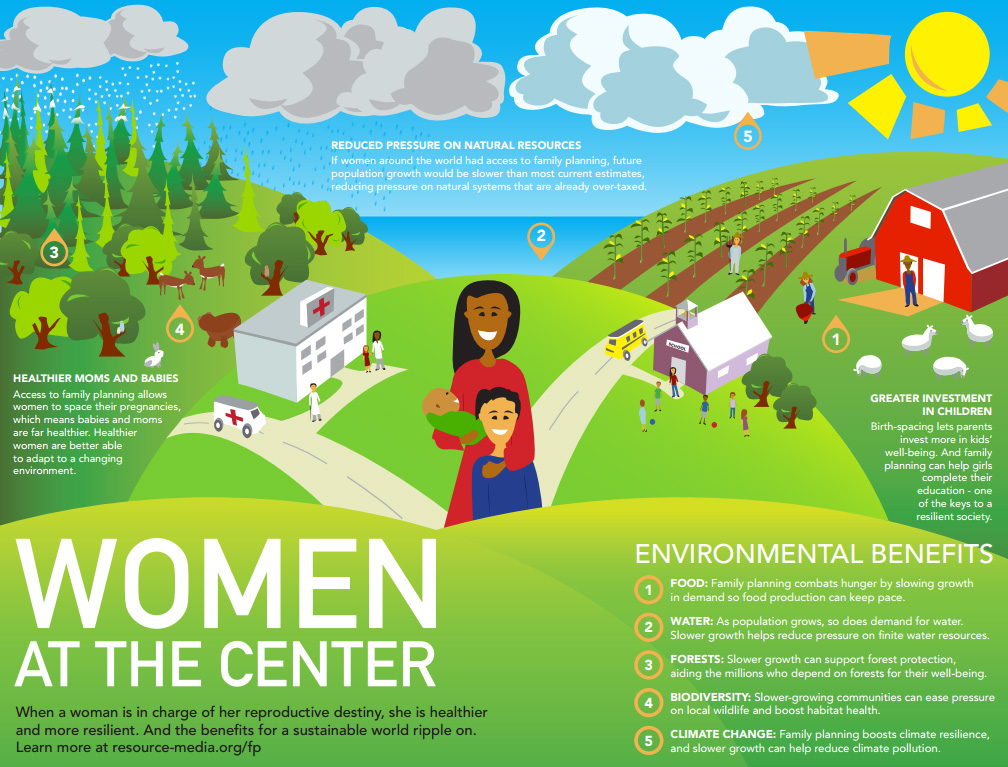
“Adding family planning makes a whole lot of sense,” said Torell. There is a high unmet need for family planning in Tanzania and the population is growing rapidly with an average number of 5.6 children per woman. Family planning not only helps families limit and space births but indirectly works to improve food security and human health, reduce demand for scarce natural resources, and empower women, she said.
“Integration is key,” concluded Torell: A coordinated and synergistic approach that meets the varied needs of local communities will be more effective and sustainable than if interventions were delivered independently.
Effective Integration in the Field
“Conceptual linking is not enough,” said Kajubili. “Integration also needs to happen at the organizational and field levels.”
On the ground, the Tanzania Coastal Management Partnership integrates family planning education and services into conservation work, said Kajubili. Peer educators deliver information about family planning, health, and coastal resources management; and community-based distributors deliver family planning services and supplies.
“Now people easily access reproductive health services,” said Kajubili. To date, the program has increased referrals to health centers, promoted contraceptive use, and reduced the distance that women need to travel to receive family planning services.
“Integration makes sense and cents,” said Kajubili. By combining resources, health and natural resource management organizations can potentially reach a broader population while sharing costs.
But “reinforcing the linkages between PHE of course takes time and education,” said Kajubili, highlighting a major challenge to implementing integrated approaches. “Advocacy is needed to overcome cultural and institutional barriers.”
“What About Our Needs?”
“Socio-economic development; family planning and AIDS education; sustainable forestry and agriculture practices; and water and sanitation all underpin and support sustainable natural resource management,” said Macharia.
The Lake Tanganyika Catchment Reforestation and Education Project (TACARE) led by the Jane Goodall Institute was initiated in 1994 to arrest the rapid degradation of land through tree planting and forest degradation, said Macharia. “But at some point, the communities raised the question: What about our own needs?” she said.
Community members prioritized the need for health services, education, clean water, and financial capital. But environmental degradation was not seen as a major issue, suggesting a need for a more integrated approach to TACARE’s conservation efforts.
“Integrated programs including population, health, and environment activities are cost-efficient and add value to conservation goals,” said Macharia. By responding to the needs of the community, the integrated approach adopted by TACARE has gained more credibility among local people, while a strong focus on building local capacity has helped to ensure sustainability of the program.
While there are many challenges to implementing and maintaining integrated PHE programs, “partnerships at the local, district, and national level are key to making this a success,” concluded Macharia.
Sources: Population Reference Bureau.
Photo Credit: “Environment near Vumari Village,” courtesy of flickr user treesftf. -
Reducing Health Inequities to Better Weather Climate Change
›In an article appearing in the summer issue of Global Health, Dr. Margaret Chan, director-general of the World Health Organization (WHO), brings to light what she calls the starkest statistic in public health: the vast difference in the mortality rates between rich and poor countries. For example, the life expectancy of a girl is doubled if she is born in a developed country rather than in a developing country. Chan writes that efforts to improve health in developing countries now face an additional obstacle: “a climate that has begun to change.”
Climate change’s effect on health has increasingly moved into the spotlight over the past year: DARA’s Climate Vulnerability Monitor measures the toll that climate change took in 2010 on human health, estimating some 350,000 people died last year from diseases related to climate change. The majority of these deaths took place in sub-Saharan Africa, where weak health systems already struggle to deal with the disproportionate disease burden found in the region. The loss of “healthy life years” as a result of global environmental change is predicted to be 500 times greater in poor African populations than in European populations, according to The Lancet.
The majority of these deaths are due to climate change exacerbating already-prominent diseases and conditions, including malaria, diarrhea, and malnutrition. Environmental changes affect disease patterns and people’s access to food, water, sanitation, and shelter. The DARA Climate Vulnerability Monitor predicts that these effects will cause the number of deaths related to climate change to rise to 840,000 per year by 2030.
But few of these will be in developed countries. With strong health systems in place, they are not likely to feel the toll of a changing environment on their health. Reducing these inequities can only be achieved by alleviating poverty, which increases the capacity of individuals, their countries, and entire regions to adapt to climate change. It would be in all of our interests to do just this, writes Chan: “A world that is greatly out of balance is neither stable nor secure.”
Sarah Lindsay is a program assistant at the Ministerial Leadership Initiative for Global Health and a Masters candidate at American University.
Sources: DARA, Global Health, The Lancet, World Health Organization.
Image Credit: Henry J. Kaiser Family Foundation and the World Health Organization. -
Maternal Health Challenges in Kenya: What New Research Evidence Shows
›“Although there have been improvements in the recent past, the status of maternal health care has not met the required international standards,” said Professor at the University of Nairobi Geoffrey Mumia Osaaji during a live video-conference from Nairobi on July 12.
As part of the 2011 Maternal Health Dialogue Series the Woodrow Wilson Center’s Global Health Initiative is partnering with the African Population and Health Research Center to convene a series of technical meetings on improving maternal health in Kenya. The 20 Kenyan experts attending the workshop in Nairobi also shared their strategies and action points with a live audience in Washington, DC during a video conference discussion. [Video Below]
Osaaji was joined by panelists Lawrence Ikamari, director of Population Studies and Research Institute (PSRI), and Catherine Kyobutungi, director of Health Systems and Challenges at the African Population and Research Center to discuss new maternal health research in Kenya. Panelists also shared recommendations for moving the maternal health agenda forward that came out of discussions during the two-day, in-country workshop with Kenyan policymakers, community health workers, program managers, media, and donors. Following the panelists’ presentations, Dr. Nahed Mattta, senior maternal and newborn health advisor at U.S. Agency for International Development (USAID) and John Townsend, vice-president of reproductive health program for Population Council provided reflecting remarks from the Woodrow Wilson Center during the live webcast.
Maternal Health Challenges in Rural Kenya
“Maternal mortality in rural Kenya is still very high,” said Ikamari. “Rural women in Kenya need to have increased access to maternal health services.” Ikamari discussed a number of factors that contribute to high rates of maternal mortality in rural Kenya, including lack of access to quality care and skilled birth attendants, the high burden of HIV/AIDS, and an unmet need for family planning.
Though nearly 90 percent of women in rural Kenya seek antenatal care, according to the UNFPA, many wait until the second or third trimester, limiting the benefits. Additionally, a majority of women in rural Kenya give birth outside of health facilities, oftentimes without the care of a skilled birth attendant, said Ikamari. In a recent survey, many rural women indicated that transportation to often distant health facilities prevented them from seeking adequate maternal health care, he added.
Additionally, “the burden of HIV is really felt in rural Kenya,” said Ikamari. Survey results show that HIV/AIDS prevalence is about seven percent in rural Kenya and because the majority of the Kenyan population lives in rural areas, this adds yet another layer of complications.
“Family planning saves lives,” said Ikamari, stressing the importance of contraception on maternal health outcomes. Only 35 to 40 percent of currently married Kenyan women use family planning, according to the last demographic and health surveys, and unmet need remains particularly high in rural areas. Promoting institutional delivery systems, improving antenatal and postnatal care, and finding other ways to increase access to family planning can help to improve maternal health outcomes and reduce preventable deaths in rural Kenya, concluded Ikamari.
Comparison of Urban and Rural Areas
“The interventions to address maternal health are well known: family planning, increased access to safe abortion services, skilled health workers, health facilities that are accessible, as well as referral systems that work,” said Kyobutungi. “Yet urban averages [of maternal mortality] are becoming either close or worse than rural averages.”
“As much as we appreciate the rural-urban divide that exists for most health indicators, the urban-urban divide (the fact that there are huge intra-urban differences) needs attention”
“Teenage pregnancy is a failure of family planning,” said Kyobutungi. Studies indicate that there are three times more teenagers that are pregnant among the urban poor, compared to the urban rich.
As in rural Kenya, access to quality health facilities and care is also limited in cities. “Health facilities are few and far between and the referral systems are weak,” said Kyobutungi, and “when you remove Nairobi from the numerator, the number of skilled physicians per population is in the decimals.”
Moving forward, there is a need to promote effective integration and improvement of health worker training and monitoring but also development of performance-based incentives to ensure successful programs are properly funded. “It’s not all gloom and doom in urban areas,” concluded Kyobutungi.
Innovative Ideas for Better Results
“By year 2025 there will be 25 percent more people [in Kenya],” said Townsend. “What that means is, when we are planning…we have to think about the scale of solutions that we are proposing in 2025 and 2050.” Therefore, it is essential to acquire new models of data and evidence to better predict future population growth and maternal needs, he suggested.
In addition to expanding services to meet the needs of a growing population, the panelists in Washington emphasized the need to support integration at all levels. Trends are moving in the right direction: Within the Obama administration’s Global Health Initiative, “there is a strong push and recommendation for integration among the health sectors,” said Matta.
But integration is not a magic bullet to improve maternal health, warned the panelists. “Integration is a terrific issue, but when the health sectors are weak, putting more burden on a local community health worker does not usually make sense; we have to think about smart integration,” said Townsend.
Focusing on Kenya’s health sector from all aspects, both at the private and public level, and improving family planning, institutional delivery care, as well as antennal care will help Kenya overcome its maternal health barriers. Additionally, thinking of ways to utilize new models of data and integrating the various sectors will yield substantial benefits, concluded Matta and Townsend.
Following the technical meeting, a public dialogue was held on July 13 in Nairobi to share the recommendations and knowledge gaps identified with members of Kenya’s Parliament, including Hon. Sofia Abdi, parliamentary health committee member; Hon. Ekwee Ethuro, chair of the parliamentary network for population and development; and Hon. Jackson Kiptanui. They joined a group of more than 50 maternal health experts, program managers, members of the media, and donors – such as the UK Department for International Development (DFID) – to identify real solutions and action points for improving maternal health in Kenya.
The formal report from the in-country technical meeting will be available in the near future.
See also the Maternal Health Task Force’s coverage of the event, here and here.
Sources: Kenya National Bureau of Statistics, UNFPA.
Photo Credit: Jonathan Odhong, African Population and Health Research Center. -
Watch: Alecia Fields on Population, Health, and Environment Advocacy with the Sierra Club
›July 29, 2011 // By Roza Essaw
“The issues of population, health, and environment are pretty foreign to a lot of people,” said Alecia Fields, a recent University of Kentucky graduate who participated in a Sierra Club Global Population and Environment Study Tour of Ethiopia last summer as a student fellow.
“I learned about the program, how to be an effective advocate, and I took those tools back to my university on campus and shared it with young people,” said Fields in this interview with ECSP.
Fields came from a women’s health background but found the connections between population, health, and environment (PHE) compelling enough that she wanted to become an advocate on campus. “At first, people don’t think they have a connection to the issue, but once you start talking with people, they really start to see how they are central to a larger issue,” said Fields.
“It is challenging in the United States to see some of the population and environmental issues…but when you go to a developing country, you see the effects right in front of you,” explained Fields. The Sierra Club’s Global Population and Environment Study Tours bring a select group of student advocates abroad to see PHE projects in the field with the aim of creating pro-active messengers of the importance of integrated development in the United States.
Fields visited various sites and organizations in Ethiopia including the Gauraghe People’s Self-help Development Organization (GPSDO), located in the southwest region. “People in Ethiopia have had tremendous success in connecting population, health, and environment within communities and starting integrated programs that work towards development,” said Fields.
Going to Ethiopia provided Fields with concrete examples of the importance of PHE and allowed her to share her experience with young people through meaningful illustrations and moving stories.
“A lot of it deals with figuring out where people are in their attachment to the subject…and try to figure out how that program can connect to them,” she said. -
Emily Puckart, MHTF Blog
Maternal Health in Kenya From a Human Rights Perspective
›The original version of this article, by Emily Puckart, appeared on the Maternal Health Task Force blog. This is the second post about MHTF and the Woodrow Wilson Center’s trip to Nairobi, Kenya to host a cross-Atlantic web-cast meeting on “Maternal Health Challenges in Kenya: What New Research Shows.” The first is available here along with video of the conference.
“Do you want to be a pregnant woman or a prisoner in Kenya?” asked Dr. Margret Meme, one of speakers in Nairobi at the recent policy dialogue “Maternal Health Challenges in Kenya: What New Research Shows.” She explained that the last prisoner killed in Kenya through capital punishment was over 20 years ago, yet pregnant women continue to die of treatable causes not just in Kenya, but globally.
As Dr. Meme addressed maternal health through the lens of a human rights perspective she highlighted a number of recommendations in order to more adequately address maternal health challenges in Kenya. She was concerned that pregnancy was treated more like a medical disease with purely medical solutions. Dr. Meme urged maternal health advocates to also focus on the cultural, social, gender, and economic factors that influence maternal health and asked that these factors be addressed along with medical solutions in order to truly address maternal health challenges.
Naturally, addressing maternal health challenges can come with a monetary price. However, instead of viewing that cost as a cost that must come after more immediate government priorities such as infrastructure and defense, Dr. Meme argued that cost should be borne as the government would bear any other cost for public goods. As pregnancy builds a nation, Dr. Meme argued that maternal health is a public good, in the same vein as defense. Therefore maternal health should have a budget allocation that is just as important as the budget line for defense.
Of course, pushing for more public funding of maternal health can lead to other complications. If advocates successfully encourage politicians to increase funding for maternal health programs, the work of maternal health advocates cannot simply end there. Advocates should hold governments accountable; not just in putting aside funding for maternal health, but also for actually making sure that the money reaches the intended beneficiaries. Therefore budget accountability tracking mechanisms should go hand and hand with pushing for increased public funding to maternal health programs.
Finally, Dr. Meme addressed the need for men to be more involved in maternal health. As she clearly stated; the role of men in maternal health shouldn’t stop at conception. Men focused programs which clarify reproductive and sexual health rights, as well as educate men on issues of maternal mortality and morbidity should encourage men to respect the rights of women to space their pregnancies and deliver their babies safely.
Emily Puckart is a senior program assistant for the Maternal Health Task Force (MHTF).
Photo Credit: Jonathan Odhong, African Population and Health Research Center. -
Emily Puckart, MHTF Blog
Maternal Health Challenges in Kenya: An Overview of the Meetings
›The original version of this article, by Emily Puckart, appeared on the Maternal Health Task Force blog.
I attended the two day Nairobi meeting on “Maternal Health Challenges in Kenya: What New Research Evidence Shows” organized by the Woodrow Wilson International Center and the African Population and Health Research Center (APHRC). [Video Below]
First, here in Nairobi, participants heard three presentations highlighting challenges in maternal health in Kenya. The first presentation by Lawrence Ikamari focused on the unique challenges faced by women in rural Kenya. Presently Kenya is still primarily a rural country where childbearing starts early and women have high fertility rates. A majority of rural births take place outside of health institutions, and overall rural women have less access to skilled birth attendants, medications, and medical facilities that can help save their lives and the lives of their babies in case of emergency.
Catherine Kyobutungi highlighted the challenges of urban Kenyan women, many of whom deliver at home. When APHRC conducted research in this area, nearly 68 percent of surveyed women said it was not necessary to go to health facility. Poor road infrastructure and insecurity often prevented women from delivering in a facility. Women who went into labor at night often felt it is unsafe to leave their homes for a facility and risked their lives giving birth at home away from the support of skilled medical personnel and health facilities. As the urban population increases in the coming years, governments will need to expend more attention on the unique challenges women face in urban settings.
Finally, Margaret Meme explored a human rights based approach to maternal health and called on policymakers, advocates, and donors to respect women’s right to live through pregnancies. Further, she urged increased attention on the role of men in maternal health by increasing the education and awareness of men in the area of sexual and reproductive health as well as maternal health.
After these initial presentations, participants broke out into lively breakout groups to discuss these maternal health challenges in Kenya in detail. They reconvened in the afternoon in Nairobi to conduct a live video conference with a morning Washington, DC audience at the Woodrow Wilson Center. It was exciting to be involved in this format, watching as participants in Washington were able to ask questions live of the men and women involved in maternal health advocacy, research and programming directly on the ground in Kenya. It was clear the excitement existed on both sides of the Atlantic as participants in Nairobi were able to directly project their concerns and hopes for the future of maternal health in Kenya across the ocean through the use of video conferencing technology.
There was a lot of excitement and energy in the room in Nairobi, and I think I sensed the same excitement through the television screen in DC. I hope that this type of simultaneous dialogue, across many time zones, directly linking maternal health advocates around the globe, is an example of what will become commonplace in the future of the maternal health field.
Emily Puckart is a senior program assistant at the Maternal Health Task Force (MHTF).
Photo Credit: MHTF. -
Life on the Edge: Climate Change and Reproductive Health in the Philippines
›July 18, 2011 // By Hannah MarquseeHigh population growth and population density have placed serious stress on natural resources in the Philippines. No one lives far from the coast in the 7,150-island archipelago, making the population extremely dependent on marine resources and vulnerable to sea-level rise, flooding, and other effects of climate change. The coastal megacity of Manila – one of the most densely populated in the world – is beset by poor urban planning, lack of infrastructure, and a large population living in lowland slums, making it particularly vulnerable to increased flooding and natural disasters. [Video Below]
The Philippines is now home to 93 million people and by 2050 is expected to reach 155 million, according to the UN’s medium fertility variant projections. Development programs in the country have made great strides towards increasing access to family planning and reproductive health services as well as improving management of marine resources, but the underlying trends remain troubling.
The Battle Over Reproductive Health
Since 1970, the government’s Commission on Population has been addressing population growth, reproductive health, and family planning. “The impact of the high rate of population growth is intricately linked to the welfare and sustainable development for a country like the Philippines, where poverty drives millions of people to overexploit their resource base,” wrote the commission. As a result of these efforts and others, total fertility rate has dropped from 6.0 children per woman in 1970, to the present 3.2.
The Philippines has also made great gains towards achieving Millennium Development Goal targets, “particularly in the alleviation of extreme poverty; child mortality; incidences of HIV/AIDS, tuberculosis, and malaria; gender equality in education; household dietary intake; and access to safe drinking water,” according to the United Nations Development Program (UNDP). Yet, “glaring disparities across regions persist,” UNDP states.
One of the poorest regions in the country, the Autonomous Region of Muslim Mindanao, is also home to a violent separatist movement. With limited access to health services, fertility and population growth rates are the highest in the country. Women in Mindanao average 4.2 children per woman; one in four married women has an unmet need for contraception; and 45 percent of households live in poverty (compared to 24 percent nationally).
Nationally, “serious challenges and threats remain with regard to targets on maternal health, access to reproductive health services, nutrition, primary education, and environmental sustainability,” according to UNDP–in particular, indicators on maternal health are “disturbing” and of all the MDGs, are labeled “least likely to be achieved.”
Out of three million pregnancies that occur every year, half were unplanned and one-third of these end in abortions, according to a 2006 report of the Allan Guttmacher Institute conducted in the Philippines. Induced abortion was the fourth leading cause of maternal deaths, and young women accounted for 17 percent of induced abortions. Over half of births occurred at home and one-third of them were assisted by traditional birth attendants. Around 75 percent of the poorest quintile did not have access to skilled birth attendants compared to only 20 percent of the richest quintile.
The politically influential Catholic Church recently blocked passage of a reproductive health bill, despite support by President Benigno Aquino and a majority of Filipinos. The bill seeks to provide universal access to contraception and would make sex education required from fifth grade onwards, a provision that has angered Church officials.
Manila Under Water
The Philippines’ combination of high population growth and limited land area (nearly all of which is near the coast) makes the country extremely vulnerable to the effects of climate change. Sixty-five percent of Filipinos live in coastal areas and 49 percent live in urban areas. Paul Hutchcroft, in Climate Change and Natural Security, writes that “even in the best of times, the frequency of typhoons, floods, earthquakes, and volcanic eruptions makes the Philippines one of the most disaster-prone countries in the world” (p. 45).
Population growth, climate change, and deforestation will only increase the severity of these disasters, he concludes. Hutchcroft points out that by 2080, projected temperature increases of between 1.2 to 3.9 degrees Celsius could raise sea levels by an estimated 0.19 to 1.04 meters – a scary thought for the 15 million living within a one-meter elevation zone (p. 46).
In 2009, metropolitan Manila, currently home to 11 million people (18,650 per square kilometer) and projected to grow to 19 million by 2050, was hit by tropical storms that caused devastating flooding – at their peak, waters reached nearly seven meters, according to a World Bank report. “More than 80 percent of the city was underwater,” write the authors, “causing immense damage to housing and infrastructure and displacing around 280,000-300,000 people.”
“Even if current flood infrastructure plans are implemented, the area flooded in 2050 will increase by 42 percent in the event of a 1-in-100-year flood,” says the World Bank report. Climate change could also increase the cost of flooding as much as $650 million, or 6 percent of GDP. Only by considering climate-related risks in urban planning can the Philippines hope to mitigate the effects of climate change, the report concludes.
Integrated Development: One Piece of the Puzzle?
Population, health, and environment (PHE) programs that integrate family planning and natural resource management are one way to help the majority of Filipinos that live in densely populated and resource-stressed coastal areas.
In ECSP’s FOCUS Issue 15, “Fishing for Families: Reproductive Health and Integrated Coastal Management in the Philippines,” Joan Castro and Leona D’Agnes explain how Path Foundation Philippines, Inc.’s IPOPCORM project – which ran from 2000 to 2006 – helped “improve reproductive health and coastal resource management more than programs that focused exclusively on reproductive health or the environment – and at a lower total cost.” A recent peer-reviewed study, co-authored by Castro and D’Agnes and published in Environmental Conservation, proved the same point with rigorous analysis.
“When we started IPOPCORM, there was really nothing about integrating population, health, and environment,” said Castro in an interview with ECSP. IPOPCORM provided some of the first evidenced-based results showing there is value added to implementing coastal resource management and family planning in tandem rather than separately. In part due to the success of the IPOPCORM, the Philippines have become one of the major PHE development implementers in the world.
Creating sustainably managed marine sanctuaries while improving access to family planning provides a way forward for many coastal communities. However, the Philippines’ urban woes – 44 percent of urban dwellers live in slums, according to the Population Reference Bureau – internal divisions, and natural vulnerability will likely make it difficult to dodge considerable climate-related effects in the near future. Already the archipelago’s vast biodiversity is in crisis, according to studies over two thirds of native plant and animal species are endemic to the islands and nearly half of them are threatened; only seven percent of its original old-growth less than 10 percent of the islands’ original vegetation remains; and 70 percent of nearly 27,000 square kilometers of coral reefs are in poor condition.
Sources: CIA, Conservation International, Field Museum, The Guardian, The Huffington Post, Philippines National Statistics Office, Population Reference Bureau, United Nations, U.S. Census Bureau, World Bank, World Wildlife Fund.
Photo Credit: “Climate Risk and Resilience: Securing the Region’s Future” courtesy of Flickr user Asian Development Bank. -
Vik Mohan, Rebecca Hill, and Alasdair Harris
In FOCUS: To Live With the Sea: Reproductive Health Care and Marine Conservation in Madagascar
›July 12, 2011 // By Wilson Center StaffDownload FOCUS Issue 23: “To Live With the Sea: Reproductive Health Care and Marine Conservation in Madagascar,” from the Wilson Center.
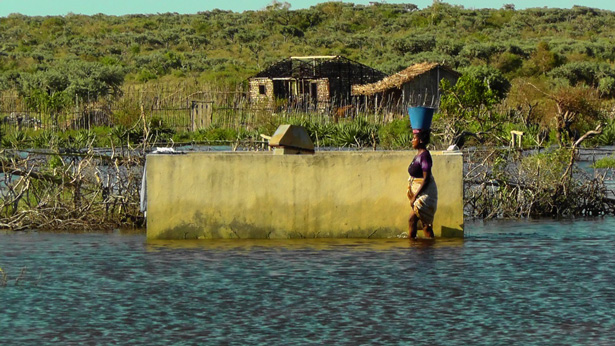
Christine does not know how old she is. She has 16 children and lives on a remote island off the southwestern coast of Madagascar. She and her children, like other members of the Vezo ethnic group, depend entirely on the ocean for their survival. Her husband, a fisherman, struggles to catch enough to feed his family.
In this isolated area, most girls have their first child before the age of 18, and families with 10 children or more are commonplace. But since the marine conservation NGO Blue Ventures launched a family planning program in 2007, couples and women like Christine are able to make their own reproductive health choices.
Blue Ventures’ Vik Mohan, Rebecca Hill, and Alasdair Harris argue that their integrated approach, which combines reproductive health care and education with conservation and alternative livelihoods, offers these communities – and the marine environment on which they depend – the best possible chances of survival.