Showing posts from category global health.
-
What’s in a Name? Watch Don Lauro on PHE, HELP, and HELPS
›
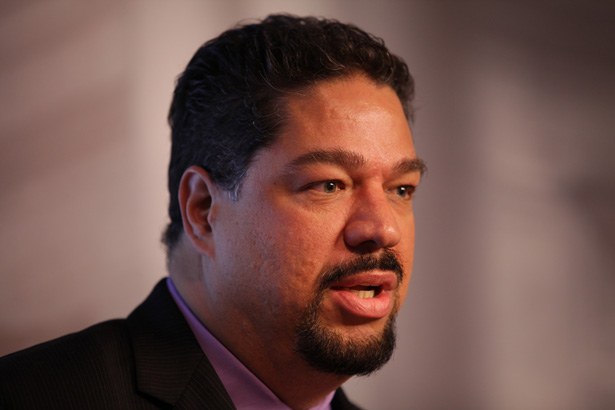
Population, health, and environment (PHE) expert Don Lauro has worked on integrated projects for decades as a scholar, an implementer, a donor, and an evaluator. He recently visited the USAID-funded BALANCED Project in Tanzania as part of a wider look at this integrated approach. In an interview with ECSP, Lauro said the effort “made me think more broadly…about this area that we call population, health, and environment and what’s really in a name like that.”
“We commonly say PHE, and we all know what we’re talking about,” Lauro said of the population and development community, “but when you look deeply into these projects – or even not so deeply – you see that there’s other things going on as well.”
For example, Lauro pointed to the focus on livelihoods that many PHE programs have: “In the project I saw in Tanzania, there were many microcredit groups on the ground – mostly women – taking small loans for developing little enterprises that they had, like baking bread, raising bees, buying a cow…little enterprises to make their lives a little bit better.”
“Some people don’t use the term ‘PHE’…maybe it’s a ‘HELP’ project; that is health, environment, livelihoods, and population,” Lauro said. “Other people would say it’s maybe something even longer, ‘HELPS’ – health environment, livelihoods, population, and sustainability (or ‘security’ – Ed.).” When he was at the Wilson Center, Gib Clarke coined the “HELP” term in ECSP’s FOCUS Issue 20, arguing that livelihoods is such a critical component that it ought to be more formally recognized.
But, said Lauro, “on the ground they don’t use these terms – they say things like, ‘this is a healthy community program’ or ‘this is a green community program.’”
“I think it’s very important for us to realize what happens on the ground is lot different, and maybe more real, than how we talk about it.” -
The Role of Faith-Based Organizations in Maternal and Newborn Health Care
›Government and nongovernmental organizations have consistently played a key role in addressing maternal mortality. While these initiatives are well documented, the role of faith-based organizations (FBOs) in maternal and newborn health is less well understood.
In November, the Wilson Center’s Advancing Policy Dialogue to Improve Maternal Health series will bring diverse institutions together such as the Pakistan Initiative for Mothers and Newborns (PAIMAN) and Pathfinder International to discuss country experiences and evaluate opportunities for overcoming challenges.
According to the World Health Organization, FBOs own up to 70 percent of the health infrastructure in sub-Saharan African countries and often work in remote regions where government and NGO services are limited. FBO’s are critical to improving maternal health as they fill gaps in the health system – particularly in low-resource settings – and approaching culturally sensitive barriers that often prevent mothers from seeking health care.
The level of trust communities place on their religious leaders explains one of the main reasons why FBOs are attaining success. A study conducted by Pew Charitable Trust found that a vast majority of people in sub-Saharan Africa identify themselves as adherents of Christianity or Islam, and approximately 75 percent trust their religious leaders.
As partnerships with FBO’s increase, it is imperative that organizations share their lessons learned and identify capacity and knowledge gaps in order to improve effectiveness.
Pakistan Initiative for Mothers and Newborns
The Pakistan Initiative for Mothers and Newborns (PAIMAN), which started out as a six-year project funded by USAID and led by JSI Research and Training Institute, is a strong example of a program incorporating faith to improve maternal mortality rates. The project aims to ensure that women have access to skilled birth attendants during and immediately after giving birth. Additionally, the project focused on increasing the quality of care both in the public and health sectors. PAIMAN was able to achieve substantial success by utilizing various communication interventions such as mass media, community media, and advocacy efforts. One of the most successful initiatives PAIMAN organized was reaching out to 1,000 religious scholars, known as ulamas, to deliver frequent messages on maternal and newborn health care. Since its initiation, this project has “saved more than 30,000 newborn lives resulting in a 23 percent decrease in neonatal mortality,” according to their numbers.
Pathfinder International
Pathfinder International is another great example of an organization that has understood the value of FBOs and worked in collaboration with them to achieve results for maternal health. Pathfinder has worked in numerous countries including Nigeria, Ghana, Ethiopia, Egypt, Uganda, Kenya, and Bangladesh to educate religious leaders and communities on communication strategies for improving maternal health behaviors.
In Ethiopia, Pathfinder organized over 250 religious leaders representing the Orthodox Christian, Catholic, Protestant, Seventh Day Adventist, Mekaneyesus Christian, and Muslim faiths to educate them about maternal mortality. At the conclusion of the seminar, the religious leaders agreed to condemn a host of harmful traditional practices, including female genital cutting, marriage by abduction, early marriage, rape, and unsafe abortion and agreed that they are not required by the Bible or Korean. Religious leaders in Egypt also came to similar conclusions after participating in these types of seminars.
“By helping religious leaders see the links between reproductive health and families’ well-being, Pathfinder enables them to become committed advocates for positive reform,” wrote Mary K. Burke, technical communications associate at Pathfinder International in the 2006 report, Advancing Reproductive Health and Family Planning through Religious Leaders.
Challenges: Equipping and Encouraging
Despite the prevalence of success stories among FBOs to improve maternal mortality, challenges do exist. For instance, although religious leaders are highly respected by their communities, their teachings become useless, as pointed out by a USAID-sponsored Extending Service Delivery Project report, unless they are also properly trained and equipped with the latest service delivery systems and scientific information.
The report also describes the importance of cooperation and support from the government and decision-making representatives. If the private, public, and government sectors are fragmented and no formal recognition exists to acknowledge the work of religious leaders for improving maternal mortality, then success may be significantly hampered.
To learn more about the role of faith-based organizations in women’s health, be sure to check out the Global Health Initiative event on FBOs coming in November, with representatives from PAIMAN, Pathfinder International, and others.
Sources: Extending Service Delivery Project, JSI Research and Training Institute, Pathfinder International, Pew Charitable Trust, USAID, World Health Organization.
Photo Credit: “Woolly hats needed,” courtesy of flickr user Church Mission Society (CMS). -
Zo Zatovonirina, PHE Champion
Improving Human Health and Conservation in Madagascar’s Forest Communities
›This PHE Champion profile was produced by the BALANCED Project.
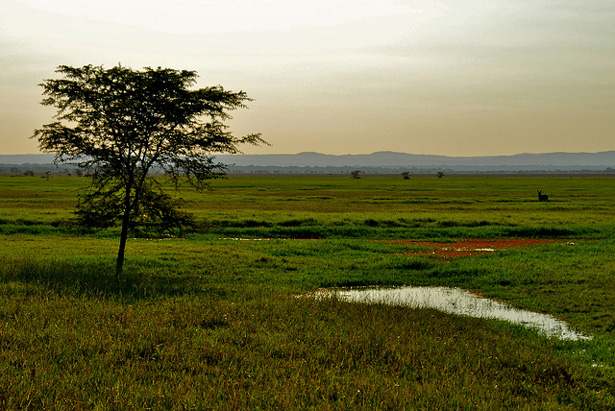
Madagascar is one of the world’s most unique ecosystems, with a total of eight plant families, five bird families, and five primate families that live nowhere else on Earth. Madagascar’s tropical forests and marine environments are home to endemic species of flora and fauna, although tragically 15 species are now extinct. At the same time, Madagascar is rich in freshwater resources, yet more than 60 percent of the island’s 19.7 million people do not have access to safe drinking water.Since 2003, Zo Zatovonirina has worked for Conservation International (CI) in Madagascar, and he has seen up-close the challenges of reaching remote forest communities, often requiring one- or two-day hikes over treacherous roads. As coordinator for USAID’s Healthy Families, Healthy Forests Program, Zo worked with two Malagasy nongovernmental organizations (NGOs), MATEZA, and the Association for Health Action and Security, to implement integrated population, health, and environment (PHE) approaches in response to community needs in the Ankeniheny Zahamena forest corridor in eastern Madagascar.
From 2003-2008, CI and partners reached more than 25,000 village residents with PHE messages; increased contraceptive prevalence in target zones from 17 percent in 2005 to 30 percent in 2008; constructed 3,000 latrines; and improved environmental health in all priority sites.
Today, biodiversity in Madagascar is under increased pressure, in light of political instability since 2009 and continued population pressures. Recognizing CI and partner experience and investments in conservation efforts to improve human well-being, USAID Madagascar and World Learning recently awarded a new 15-month grant to CI Madagascar and two Malagasy NGO partners – Voahary Salama and Ny Tanintsika – to implement an integrated PHE project in the southeastern Ambositra Vondrozo forest corridor. All three organizations have implemented PHE projects in Madagascar, and they have established trusting relationships with the people living in these fragile ecosystems.
Madagascar has a rich history of implementing successful PHE projects, and this project represents a new PHE pilot phase in the midst of political uncertainty. According to Zo, PHE approaches remain constant – simultaneously addressing several complex and linked problems such as poverty, child survival, and unsustainable dependency on natural resources. In Zo’s experience, CI’s PHE approach touches on all these aspects and delivers a pragmatic, integrated package of interventions designed to increase community capacity to better manage their health and environment. Utilizing PHE approaches, CI, Voahary Salama, and Ny Tanintsika will strive to reach communities for the first time ever with family planning, water, sanitation, and hygiene services while helping them conserve their biological heritage.
This PHE Champion profile was produced by the BALANCED Project. A PDF version can be downloaded from the PHE Toolkit. PHE Champion profiles highlight people working on the ground to improve health and conservation in areas where biodiversity is critically endangered.
Photo Credit: The forests of Madagascar, courtesy of Conservation International/Russ Mittermeier, and Zo Zatovonirina, courtesy of Conservation International. -
Jay Ulfelder, Dart-Throwing Chimp
Public-Health Campaigns as Outsized Threats to Authoritarian Rule
›August 17, 2011 // By Wilson Center StaffThe original version of this article, by Jay Ulfelder, appeared on his blog, Dart-Throwing Chimp.
Are certain forms of popular activism more likely to hasten the fall of dictatorships than others? This question occurred to me after reading a recent Washington Post story describing how one Russian woman, Darya Makarova, has turned her own frustration with the poor health care given to her (now dead) young son into a wider campaign that’s has caught Moscow’s eye:Thousands have turned out for her rallies, written letters, signed petitions or joined in Internet forums. Since Maxim’s death in November, she has raised money to reopen a children’s clinic, with an emergency room, in her community. She has shamed the city into buying three new ambulances, with proper equipment. She has launched a nonprofit organization, Health Care for Children, that has national ambitions. Politicians have sought her out. Pavel Astakhov, who holds the newly created title of children’s ombudsman, came from Moscow to see her – and then appointed her his unpaid deputy, giving her more access and clout. Even officials from the sprawling and notoriously indifferent Health Ministry started to pay attention.
I can see why government officials would be nervous about this still-modest and outwardly apolitical campaign. Popular activism around matters of public health and safety seems like it should pose a special challenge to authoritarian regimes, like Russia’s, that stake their right to rule on paternalistic claims about their ability to deliver both social welfare and social protection.
Movements organized around failures of public health and safety are threatening to these regimes because they call out the paternalistic state for failing at its own game. Whatever the form of government involved, one of the modern state’s fundamental roles is to protect its citizens from public health threats. Even when they serve this function poorly, most autocrats claim to be trying, and these campaigns reveal that they are not succeeding.
Continue reading on Dart-Throwing Chimp.
Photo credit: “Your Health rests with…,” courtesy of flickr user okeos. -
Russell Sticklor, World Politics Review
The Hungry Planet: Global Food Scarcity in the 21st Century
›August 16, 2011 // By Wilson Center StaffThe original version of this article, by Russell Sticklor, appeared on World Politics Review.
At the dawn of the 20th century, the world population was inching toward a modest two billion. In the 111 years since, notwithstanding the impact of war, genocide, disease, and famine, the global population has soared, reaching three billion around 1960 and now quickly approaching the neighborhood of seven billion. By 2050, the planet will likely be home to two billion more.
We may not be witnessing the detonation of the “population bomb” that Paul Ehrlich warned of in his seminal 1968 book, but such rapid demographic change is clearly pushing the international community into uncharted territory. With a limited amount of arable land and a finite supply of fresh water for irrigation, figuring out how to feed a planet adding upward of 70 million people each year looms as one of the 21st century’s most pressing challenges.
The push to ensure global food security transcends the desire to avoid repeating the famines that devastated the Soviet Union, China, North Korea, Ethiopia, and so many other corners of the world during the past century. Instead, aid and development organizations today rightly view food insecurity problems as deeply intertwined with issues of economic development, public health, and political stability, particularly in the developing world. To maintain order in the international community and prevent the emergence of new failed states in the decades ahead, it will be critical to find innovative means of feeding the rapidly growing populations of sub-Saharan Africa, the Middle East, and South and East Asia.
Continue reading on World Politics Review.
Note: World Politics Review has graciously white-listed all entrances from NSB for this article, so as long as you use the above link, you should be able to read the full article for free.
Russell Sticklor is a consultant for the Environmental Change and Security Program.
Photo Credit: “Crowded market street,” courtesy of flickr user – yt –. -
Benefits of Integrating Population, Health, and Environment
›“Mainstreaming Environment and Climate Change: Health,” a joint publication from the International Institute for Environment and Development and Irish Aid, is part of a series that aims to show the links between the environment, climate change, and key development sectors, while suggesting key solutions to move into national policies. This health-focused briefing asserts that “nearly one quarter of the global disease burden can be attributed to the environment.” While anyone is prone to the negative effects of climate change, the poor are especially vulnerable because they often live in some of the most precarious environmental conditions. Consequently, the briefing argues that “improving environmental health – raising its profile at national, state and local levels, and integrating environmental health issues into development plans and activities – is critical if we are to reduce poverty and meet the Millennium Development Goals.”
In An Assessment of the Benefits of Integrating Family Planning and Environmental Management Activities in the Visayas Region of the Philippines, a study from the University of Rhode Island’s Coastal Resources Center, authors Richard B. Pollnac and Kira Dacanay argue that benefits can be reaped from integrated population, health and environment (PHE) development, but only under certain conditions. Factors influencing the level of benefits include “levels of participation in integrated projects [both by individuals and communities], and how NGOs implement these projects.” Thus, it is important to “tailor strategies based on place-based context and personal characteristics of different participants,” write Pollnac and Dacanay. In the Philippines, the authors suggest that one of the actions future PHE initiatives should take is to “stimulate more project participation, with special efforts in larger, less dense communities and tailor strategies better to different targeted populations within the community.” -
Fistula, Stigmatization, and Development
›Although obstetric fistula may not be as widely recognized as other maternal health issues, the Fistula Foundation estimates that over two million women and girls in developing countries suffer from this condition today. The World Health Organization has labeled it as “the single most dramatic aftermath of neglected childbirth.”
Obstetric fistula is a devastating condition often resulting from obstructed labor that can cause infections, incontinence, and even paralysis. The condition largely afflicts poor, rural, and illiterate women in developing countries who lack resources and access to emergency care and surgery, and sufferers often face an additional burden of social stigma.
Economic Development and Social Standing
Poor infrastructure and poverty significantly increases the occurrence rate of obstetric fistula. Lewis Wall, in an article for The Lancet, writes that “poverty is the breeding-ground where obstetric fistulas thrive.” Wall cites early marriage, low social status of women, malnutrition, inadequately developed social and economic infrastructures, and lack of access to emergency obstetric services as being major contributors of fistulas in developing countries.
Additionally, “postponing the age of marriage and delaying childbirth can significantly reduce the risk of subjecting young women to the arduous labor that induces fistulas,” wrote Sonny Inbaraj of Inter Press Service News Agency (IPS) in an article about how fistula makes social outcasts of child brides.
In most developing societies where child marriage is common, the social standing of women is defined largely in terms of marriage and childbearing. Child marriages are typically arranged without the knowledge or consent of the girls involved. The norms emphasize a girl’s domestic roles and de-emphasize investments such as education.
Stigmatization of Fistula
There is an undeniable link between fistula and social stigmatization. Rather than receiving assistance from their families and communities, women are often ostracized and in many instances exiled from their communities. This is especially true in developing countries where “the role of women is merely limited to providing sexual satisfaction for their husbands, [and] producing children,” said Dr. Catherine Hamlin, founder of the Addis Ababa Fistula Hospital, in an interview with IPS.
“Many women and girls with fistula endure lives of shame, misery, violence, and poverty,” said Agnes Odhiambo, Africa women’s rights researcher and author of ‘I Am Not Dead, But I Am Not Living‘: Barriers to Fistula Prevention and Treatment in Kenya, in a Human Rights Watch article. Human Rights Watch has focused on fistula, recognizing that birth is a human rights issue. Ignoring the issues of women and girls only diminishes progress on human rights and sends a message that says the rights of women do not deserve adequate attention.
Prevention Efforts
Thus far the fight to end fistula has attracted various government agencies and organizations including USAID, UNFPA, EngenderHealth, Maternal Health Task Force, and the Human Rights Watch. Outstanding individuals have also played a key role in fistula prevention efforts, like Drs. Reginald and Catherine Hamlin, Australian gynecologists who came to Addis Ababa in 1959 for temporary medical work, but after hearing heart-breaking stories from fistula patients, they decided to move to Ethiopia permanently and open the Addis Ababa Fistula Hospital. As the only hospital dedicated exclusively to women with obstetric fistula, the hospital provides care free of change, and has done so since 1974.
Although fistula has gotten some support and attention, the need to scale-up the prevention initiatives has never been greater. As a result of the “poverty and the stigma associated with their condition, most women living with fistulas remain invisible to policy makers both in their own countries and abroad,” wrote Inbaraj on IPS.
“Preventing fistula and restoring women’s health and dignity requires more than good policies on paper,” said Odhiambo at Human Rights Watch. Seriously tackling the issue will require much more than traditional medical and public health interventions – prevention efforts must also take into account underlying social issues, food and economic security.
Sources: The Addis Ababa Fistula Hospital, Campaign to End Fistula, The Center for Global Development, The Fistula Foundation, Human Rights Watch, The Lancet, World Health Organization.
Photo Credit: “Hauwa’u, 25, mother from Rogogo community,” courtesy of flicker user DFID-UK Department for International Development. -
What’s the Impact of Family Planning in the Developing World? ‘Science’ Magazine’s Population Issue
›“Does Family Planning Bring Down Fertility” in Science’s special July issue on population, author Jocelyn Kaiser engages various experts to explore whether family planning programs actually help to reduce high fertility. Social demographer Amy Tsui of Johns Hopkins University argues that surveys indicating “unmet need” in family planning “don’t tell us anything about causation.” On the other hand, Martha Campbell, a lecturer at the University of California, stressed that in countries such as Niger where the population could soar from 16 million today to 58 million by 2050, “You can’t expand [schools] fast enough.” Thus, focusing on family planning is indispensable and “the benefits [will] far outweigh the costs.”
In “Population Policy in Transition in the Developing World,” also published in the population issue of Science, authors John Bongaarts and Steven Sinding explain why there has been renewed interest on family planning in developing countries. Since rapid population growth in the poorest countries is hampering development, “economists, once notably skeptical, increasingly acknowledge that fertility decline has beneficial economic effects for nations and families,” they write. Moving forward, Bongaarts and Sinding suggest family planning needs to be at the forefront of population and development discussions. Not only is family planning “cost effective,” they write, but it is responsible for “relieving population pressures, stimulating economic development, improving health, and enhancing human freedom.”
See the full line-up of articles from Science’s population edition here.