Showing posts from category global health.
-
Quality and Quanitity: The State of the World’s Midwifery in 2011
›Each year, 350,000 women die while pregnant or giving birth, as many as two million newborns die within the first 24 hours of life, and there are 2.6 million stillbirths. Sadly, the majority of these deaths could be prevented if poor and marginalized women in developing countries had access to adequate health facilities and qualified health professionals. In fact, according to the new UNFPA report, State of the World’s Midwifery 2011: Delivering Health, Saving Lives, just doubling the current number of midwives in the 58 countries highlighted in the report could avert 21 percent of maternal, fetal, and newborn deaths.Launched last week, the report is the first of its kind, using new data from 58 low-income countries with high burdens of maternal and neonatal mortality to highlight the challenges and opportunities for developing an effective midwifery workforce.
“Developing quality midwifery services should be an essential component of all strategies aimed at improving maternal and newborn health,” write the authors of the report. Qualified midwives ensure a continuum of essential care throughout pregnancy and birth, and midwives can help facilitate referrals of mothers and newborns to hospitals or specialists when needed:Unless an additional 112,000 midwives are trained, deployed, and retained in supportive environments, 38 of 58 countries surveyed might not met their target to achieve 95 per cent coverage of births by skilled attendants by 2015, as required by Millennium Development Goal 5.
There is a total shortage of 350,000 skilled midwives globally, with some countries, like Chad and Haiti, needing a tenfold increase to match demand, according to the report. But quantity isn’t the only issue; there has also been an insufficient focus on quality of care. Additionally, most countries do not have the capacity to accurately measure the number of practicing midwives, and national policies focusing on maternal and newborn health services often do not view midwifery services as a priority.
To help overcome these challenges, the report outlines a number of “bold steps” to be taken by governments, regulatory bodies, schools, professional associations, NGOs, and donor agencies in order to maximize the impact of investments, improve mutual accountability, and strengthen the midwifery workforce and services. Of course, the needs of each country are unique, and the report ends with individual country profiles that highlight country-specific maternal and neonatal health indicators.
While this report does much to highlight the critical importance of midwives in promoting the health and survival of mothers and newborns, real impact will only come when governments, communities, civil society, and development partners work together to implement these recommendations.
Sources: UNFPA.
Video Credit: UNFPA. -
Nepal to East Africa: Population, Health, and Environment Programs Compared
›“Practice, Harvest and Exchange: Exploring and Mapping the Global, Health, Environment (PHE) Network of Practice,” by the University of Rhode Island’s Coastal Resources Institute and the USAID-supported BALANCED Project, explores the successes and challenges of their global population, health, and environment (PHE) network (with a heavy presence in East Africa). In order to increase support of the nascent PHE approach, the network seeks to shorten the “collaborative distance” between “PHE champions,” so they can develop a stronger body of evidence for the links between population, health, and the environment. In their analysis, the authors write that the network has facilitated the development of independent, information-sharing relationships between “champions.” However, they also observed shortfalls in the network, such as its limited reach into less technologically advanced yet more biodiverse regions, its bias toward BALANCED meet-up event participants, and its exclusion of those experts unlikely to be included in published works.
In “Linking Population, Health, and the Environment: An Overview of Integrated Programs and a Case Study in Nepal” from the Mount Sinai Journal of Medicine, Sigrid Hahn, Natasha Anandaraja, and Leona D’Agnes provide both a broad survey of the structure and content of programs using the PHE method and an in-depth case study of a successful initiative in Nepal. Hahn et al. praise the Nepalese program for simultaneously addressing deforestation from fuel-wood harvesting, indoor air pollution from wood fires, acute respiratory infections related to smoke inhalation, as well as family planning in Nepal’s densely populated forest corridors. “The population, health, and environment approach can be an effective method for achieving sustainable development and meeting both conservation and health objectives,” the authors conclude. In particular, one benefit of cross-sectoral natural resource and development programs is the inclusion of men and adolescent boys typically overlooked by strictly family planning programs. -
Irene Kitzantides
In FOCUS Coffee and Community: Combining Agribusiness and Health in Rwanda
›June 29, 2011 // By Wilson Center StaffDownload FOCUS Issue 22: “Coffee and Community: Combining Agribusiness and Health in Rwanda,” from the Wilson Center.
Rwanda, “the land of a thousand hills,” is also the land of 10 million people, making it the most densely populated country in Africa. Rwandans depend on ever-smaller plots of land for their food and livelihoods, leading to poverty, soil infertility, and food insecurity. Could Rwanda’s burgeoning specialty coffee industry hold the key to the country’s rebirth, reconciliation, and sustainable development?
In the latest issue of ESCP’s FOCUS series, author Irene Kitzantides describes the SPREAD Project’s integration of agribusiness development with community health care and education, including family planning. She outlines the project’s successes and challenges in its efforts to simultaneously improve both the lives and livelihoods of coffee farmers and their families. -
The Implications of Urbanization on Food Security and Child Mortality of the Urban Poor
›In the chapter, “Urban Agriculture and Climate Change Adaptation: Ensuring Food Security Through Adaptation,” of the edited volume, Resilient Cities: Cities and Adaptation to Climate Change – Proceedings of the Global Forum 2010, authors Marielle Debbeling and Henk de Zeeuw assess the viability of urban and peri-urban agriculture (UPA) as a method of climate change adaptation for the urban poor. Debbeling and de Zeeuw assert that UPA increases the resilience of cities by diversifying both food supply and income streams for the urban poor; decreasing the negative effects of “heat island effect,” air pollution, and urban flooding; conserving water and utilizing organic waste; and reducing energy use and greenhouse gas emissions. Given the scale and impact of modern urbanization, the authors write that “the integration of UPA into urban development and master plans, urban land use and zoning plans, as well as active maintenance of the protected agricultural zones…is crucial.”
In “Urban Area Disadvantage and Under-5 Mortality in Nigeria: The Effect of Rapid Urbanization,” published by Environmental Health Perspectives, authors Diddy Antai and Tahereh Moradi found a significant link between the mortality rate of children under five years of age and a poor and disadvantaged urban environment; such an environment is characterized by poor sanitation, overcrowding, a lack of access to safe water, and high levels of disease-inducing air pollution and hazardous wastes. Although urban living may increase proximity to health care and other social amenities, low- and middle-income countries, such as Nigeria, have overstretched their adaptive capacities and the result is poor health indicators. Antai and Moradi predict that the rapid urbanization of Nigerian cities will bring increased infant mortality, unless individual- and community-based policy interventions are implemented to counter the adverse environmental conditions of deprived areas. -
Watch: Catherine Kyobutungi on Monitoring the Health Needs of Urban Slums
›Addressing the maternal health needs of the nearly 60 percent of urban residents who live in slums or slum-like conditions will be a critical step to improving maternal health indicators of a rapidly urbanizing Kenya, said Catherine Kyobutungi, director of health systems and challenges at the African Population Health Research Center in Nairobi.
“In some respects, [the urban poor] are doing better than rural communities, but in other ways they are behind,” said Kyobtungi. But, she said, there are many unique opportunities to improve maternal health in slums: “With these very high densities, you do have advantages; with very small investments, you can reach many more people.”
Output-based voucher schemes – in which women pay a small fee for a voucher that entitles them to free, high-quality antenatal care, delivery services, and family planning – have been implemented to help poor, urban women access otherwise expensive services. But poor attitudes towards health care workers, transportation barriers, and high rates of crime still prevent some women from taking advantage of these vouchers, said Kyobtungi. -
Helping Hands: An Integrated Approach to Development
›Originally featured in the Wilson Center’s Centerpoint, June 2011.
“At the moment, the agendas of the growing population of people and the environment are too separate. People are thinking about one or the other,” said Sir John Sulston, Nobel laureate and chair of the Institute for Science, Ethics, and Innovation at the University of Manchester, in an interview with the Environmental Change and Security Program (ECSP).
“People argue about, ‘Should we consume less or should we have fewer people?’ The point is it’s both. We need to draw it together. It’s people and their activities.”
Many who research and work on population, health, and environment (PHE) issues are increasingly advocating integrated solutions. Such issues as population growth, natural resource management, and food security, are interrelated challenges that, if addressed concurrently, likely will yield better results and community trust.
With this notion in mind, ECSP launched the five-year HELPS (health, environment, livelihoods, population, and security) project in October 2010. The project focuses on integrated PHE programs and demographic security linkages. HELPS also looks at population’s links to global environmental priorities, media coverage of population, and related issues like gender, youth, and equity.
Funded by USAID’s Office of Population and Reproductive Health through its IDEA (Informing Decision-makers to Act) grant, the HELPS project builds on ECSP’s 14-year history of exploring nontraditional security issues.
Population-Environment Connection
A February event in the HELPS series featured Sir John Sulston, who said dialogue between population and environmental communities has received renewed attention and is reappearing on national agendas.
The Royal Society’s People and the Planet study, which will be completed by early 2012, will “provide policy guidance to decision-makers as far as possible” and aims to facilitate dialogue, he said. The HELPS Project is helping the working group gather evidence of population-environment connections and to identify solutions.
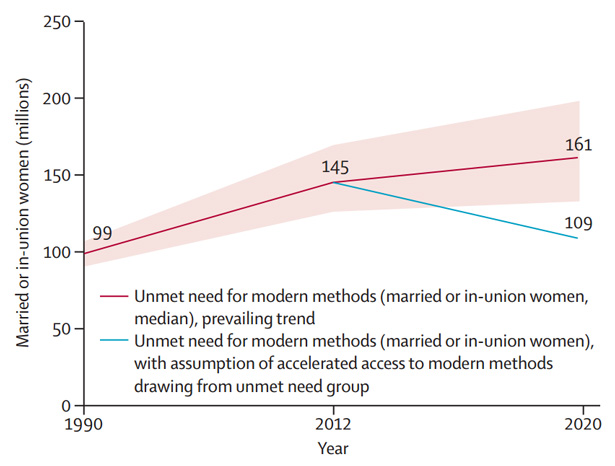
“What we should be aiming to do is to ensure that every individual on the planet can come to enjoy the same high quality of life whilst living within the Earth’s natural limits,” said Sulston. People are happier, healthier, and wealthier than ever before, according to human development indexes. But, Sulston said, 200 million women worldwide have an unmet need for family planning, ecosystems are degraded, biodiversity has decreased, and there are widespread shortages of food and water.
“Many times we tackle different development challenges through single sector programs: health programs, agriculture programs, water programs. Those single sector approaches can make sense,” said ECSP Director Geoff Dabelko on the Wilson Center’s Dialogue television program. “But, of course, poor people are facing all those life and death challenges at once. We have to find ways to help them meet those challenges together in an integrated fashion.”
On the same program, Roger-Mark De Souza, vice president for research and director of the Climate Program for Population Action International, said the drive for integrated development stems from the communities being served, not necessarily from outside aid groups. “We’ve seen that there’s a greater impact because there’s longer sustainability for those efforts that have an integrated approach,” he said. “There’s a greater understanding and a greater appreciation of the value that [PHE] projects bring.”
At an April 7 ECSP event, De Souza said rural communities in developing countries understand that high population growth rates, poor health, and environmental degradation are connected. An integrated approach to development, he said, is a “cost-effective intervention that we can do very easily, that responds to community needs that will have a huge impact that’s felt within a short period of time.”
Proponents of integrated development face significant barriers, but the tide may be turning. To fully harness this momentum, former ECSP Senior Program Associate Gib Clarke argues in his FOCUS brief, “Helping Hands: A Livelihood Approach to Population, Health, and Environment Programs,” that the PHE community must solidify its research base, reach out to new partners, and push for flexible funding and programming. He suggested changing the name PHE to HELP – health, environment, livelihoods, and population. By adding livelihoods, the glue that binds population, health, and the environment, he said, the HELP moniker might broaden its appeal to new donors and practitioners.
Case Study: Madagascar
In Madagascar, a key country for integrated PHE programs, “today’s challenges are even greater than those faced 25 years ago,” said Lisa Gaylord, director of program development at the Wildlife Conservation Society, at a March 28 Wilson Center event. As the country’s political situation has deteriorated since 2009, the United States and other donors pulled most funding, and some PHE programs were forced to discontinue environmental efforts.
But other PHE programs are expanding: Based in southwestern Madagascar, the Blue Ventures program began as an ecotourism outfit, said Program Coordinator Matt Erdman, but has since grown to incorporate marine conservation, family planning, and alternative livelihoods. A major challenge is its rapidly growing population, which threatens the residents’ health and food security, as well as the natural resources on which they depend. More than half the island’s population is younger than 15, and the infant and maternal mortality rates are high, Erdman said.
In response, Blue Ventures set up a family planning program. The program uses a combination of clinics, peer educators, theater presentations, and sporting events, such as soccer tournaments, to spread information about health and family planning. The HELPS project will soon publish a Focus brief on Blue Ventures’ family planning efforts, titled: “To Live with the Sea.”
Erdman said, “If you have good health, and family size is based on quality, families can be smaller and [there will be] less demand for natural resources, leading to a healthier environment.”
Demographic Security
A country’s age structure can pose a challenge, said Jennifer Dabbs Sciubba, the Mellon Environmental Fellow with the Department of International Studies at Rhodes College, at a March 14 Wilson Center event. Countries with a large percentage of people younger than 30 “are [much] more likely to experience civil conflict than states with more mature age structures.”
Tunisia’s recent revolution, Sciubba said, could be understood as a “story about demography.” Countries with transitional age structures, such as India, Brazil, and South Africa, face different security challenges. With a majority of their populations between 15 and 60 years old, more people are contributing to the economy than are taking away, which could bolster these countries economically and politically. Global institutions will have to reform and include these countries, she advised, “or else become irrelevant.”
“Understanding population is critical to our success in being able to prevent conflict, and also managing conflict and crises once we’re involved,” said Kathleen Hicks, Deputy Undersecretary at the Department of Defense (DOD). However, the DOD does not “treat demographics as destiny,” she said, but instead as “one of several key trends, the complex interplay of which may spark or exacerbate future conflicts.”
Demography can also help predict political trends. In 2008, demographer Richard Cincotta predicted that between 2010 and 2020 the states along the northern rim of Africa – Morocco, Algeria, Tunisia, Libya, and Egypt – would each reach a demographically measurable point where the presence of at least one liberal democracy among the five would be probable. Recent months have brought possible first steps to validate that prediction.
Mathew Burrows, counselor at the National Intelligence Council, said Cincotta’s work demonstrates that “the demographic tool is essential” to analysts and policymakers. “There is a real appetite among policymakers” for understanding demography, he said, because it gives them more structure than political science narratives.
Yemen is another example of this trend. In March, tens of thousands of youth-led demonstrators demanded that their president resign. While numerous factors have sparked the “Arab Spring,” one driving force is Yemen’s dire demographic and environmental situation. Some experts say Yemen may be the first country to run out of groundwater. The average Yemeni woman has more than five children, and 45 percent of its population is below age 15. On May 18, Yemeni and international experts discussed these issues at the Wilson Center. Upcoming HELPS events include daylong conferences on Afghanistan and Nigeria.
There are solutions that can break the links between “youth bulges” and insecurity. In a recent video interview discussing the connection between demography and civil conflict, Elizabeth Leahy Madsen, a senior research associate at Population Action International, said, “Policies that have a major impact over time are ensuring education, especially for girls, and providing employment opportunities to the large and growing numbers of young people today.”
Dana Steinberg is the editor of the Wilson Center’s Centerpoint.
Photo Credit: Blue Ventures in Madagascar, courtesy of Garth Cripps. -
Watch: Younger Generation Will Prioritize Health, Education, Human Rights, Says Frederick Burkle
›June 7, 2011 // By Schuyler Null“Unfortunately, in the last two decades, when globalization became the mantra, it was primarily an economic mantra,” said Frederick Burkle, a senior fellow with the Harvard Humanitarian Initiative, visiting scientist at the Harvard School of Public Health, and senior public policy scholar at the Wilson Center. “The mantra was, ‘if you can improve the economy,” he said, “health, education, everything will follow.’”
“With the financial crisis, that proved not to be true,” Burkle said, and as a result, net expenditures in health and education have declined and the private sector, unfortunately, has not filled the gap.
“We really need to redefine globalization,” Burkle said. “And certainly economics will be there…but health, education, and human rights need to be just as dominant as the economics.”
Burke said he expects a gradual realignment of global priorities to come as younger generations come into decision-making roles. “They don’t have political clout right now,” he said, “but when they do…I think we’re going to see all these aspects that I mentioned – even the humanitarian profession becoming a career – accelerated.” -
Measuring Ecosystem Vitality and Public Health With the Environmental Performance Index
›The Environmental Performance Index (EPI) is a comparative analytic tool for policymakers created jointly by Yale and Columbia Universities in collaboration with the World Economic Forum and Joint Research Centre of the European Commission. The EPI was created in 2006 and is updated biannually. Data is drawn from 25 performance indicators that fall under 10 well-established policy categories, including the environmental burden of disease, the effects of water on human health, and agriculture. The indicators serve as a “gauge at a national government scale of how close countries are to established environmental [and health] policy goals,” write the authors.
The EPI draws data from a diverse array of sources, such as the World Health Organization, Food and Agriculture Organization, University of New Hampshire, and World Resources Institute. Users can view visualizations of the compiled data via an interactive map and the data is also available in the form of rankings charts, individual country profiles, and country group comparisons. The interactive map also allows users to isolate performance indicators or policy categories in order to compare an individual country’s performance with global trends. Furthermore, indicators may be scaled to visually reflect a country’s performance in relation to drivers of environmental performance, like gross domestic product, level of corruption, and government effectiveness.
This tool is particularly useful because users can effectively leverage points for policy change by identifying linkages between environmental policy and other issue areas, such as public health or sanitation. The EPI enables policymakers to visually conceptualize problematic regions, optimize investments in environmental protection, and identify best practices.
The index’s greatest weakness is its inability to track changes in performance over time. A pilot project was launched last year that tracks whether a country has progressed or deteriorated in an area of environmental performance, but the authors note that the project has “raised more questions than answers,” particularly concerning data availability and interpretation. Additionally, there are gaps in the data. Although these gaps signify a data quality weakness, they also support the continued calls for increased data collection by governments and other organizations to better inform environmental decision-making.