• woodrow wilson center
  • ecsp

New Security Beat

Subscribe:
  • rss
  • mail-to
  • Who We Are
  • Topics
    • Population
    • Environment
    • Security
    • Health
    • Development
  • Columns
    • China Environment Forum
    • Choke Point
    • Dot-Mom
    • Friday Podcasts
    • Navigating the Poles
    • Reading Radar
  • Multimedia
    • Water Stories (Podcast Series)
    • Backdraft (Podcast Series)
    • Tracking the Energy Titans (Interactive)
  • Films
    • Water, Conflict, and Peacebuilding (Animated Short)
    • Paving the Way (Ethiopia)
    • Broken Landscape (India)
    • Scaling the Mountain (Nepal)
    • Healthy People, Healthy Environment (Tanzania)
  • Publications
  • Events
  • Contact Us

NewSecurityBeat

The blog of the Wilson Center's Environmental Change and Security Program
Showing posts from category global health.
  • How Do We Bounce Back Better? 2015 a Critical Year for Global Resilience, Climate Efforts

    ›
    From the Wilson Center  //  June 3, 2014  //  By Donald Borenstein
    Haiyan_destruction

    According to NASA and a team of scientists from the University of California, significant portions of the West Antarctic ice sheet have begun an unstoppable slide towards oblivion, slowly melting in warmer-than-usual ocean currents that have been eating away at their bases. [Video Below]

    MORE
  • What Can Governments Do About Falling Birth Rates?

    ›
    From the Wilson Center  //  June 2, 2014  //  By Paris Achenbach & Moses Jackson
    aging

    “We have a fairly unique moment in the history of the world,” said Steven Philip Kramer, a professor at National Defense University, at the Wilson Center on April 17. “There’s never been a time when people have voluntarily produced fewer children than is necessary for sustaining the population.” [Video Below]

    MORE
  • Heidi Worley, Population Reference Bureau

    New Kenyan Population Policy

    ›
    May 29, 2014  //  By Wilson Center Staff

    The original version of this article, by Heidi Worley, appeared on the Population Reference Bureau.

    In 2012, the government of Kenya passed a landmark policy to manage its rapid population growth. The new population policy aims to reduce the number of children a woman has over her lifetime from five in 2009 to 3 by 2030. The policy also includes targets for child mortality, maternal mortality, life expectancy, and other reproductive health measures.

    MORE
  • Steven Philip Kramer on ‘The Other Population Crisis’

    ›
    Friday Podcasts  //  May 23, 2014  //  By Moses Jackson
    kramer_post

    Ever since Thomas Malthus’ 18th-century treatise linked overpopulation with conflict and poverty, population growth has been a subject of concern and controversy. But does population decline warrant similar attention? According to Steven Philip Kramer, the subject of this week’s podcast and author of The Other Population Crisis: What Governments Can Do About Falling Birth Rates, it does.

    MORE
  • China’s Coal-to-Gas Plants Trade Urban Air Quality for Higher Carbon Emissions

    ›
    China Environment Forum  //  Guest Contributor  //  May 21, 2014  //  By Hal Bernton

    Last September, facing a growing public outcry to ease smog, China’s State Council called for the accelerated development of a new energy industry that turns coal into methane gas. Piped to Beijing and other cities, this gas could help cut down on smog by replacing dirtier fuels now used to cook meals, heat homes, and produce electricity. But embracing it involves a major environmental trade-off in overall carbon emissions.

    MORE
  • The Red Cross’s Peter Maurer on New Challenges for Humanitarian Aid

    ›
    From the Wilson Center  //  May 20, 2014  //  By Paris Achenbach

    11892623585_558285318f_o

    Last year, the International Committee of the Red Cross (ICRC) celebrated 150 years of their mission to “protect the lives and dignity of victims of war and internal violence.” Though this mission hasn’t changed in the past century-and-a-half, the nature of conflict and crisis response has. [Video Below]

    MORE
  • To Build Resilience Through Development, Learn From Population, Health, and Environment Programs

    ›
    May 19, 2014  //  By Laurie Mazur
    Scaling-Mountain_girl

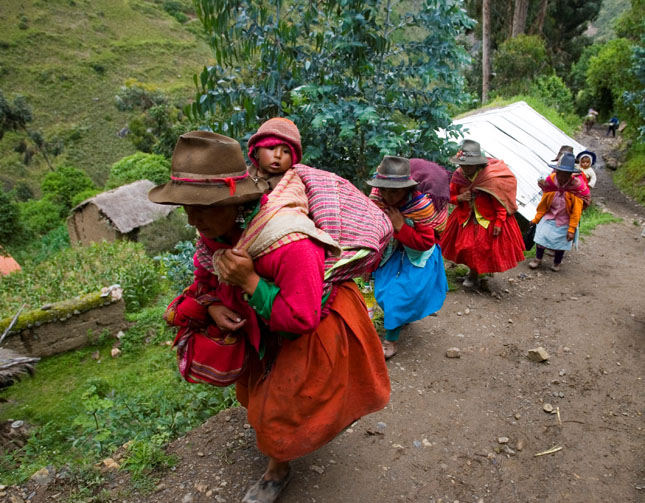
    In an era defined by climate change and other disruptions, “resilience” – the capacity to survive and thrive in times of crisis and change – is increasingly essential.

    MORE
  • The Future of Population Funding in the U.S.: Mixed Prospects for Foundation Support

    ›
    May 12, 2014  //  By Laurie Mazur
    Funding_small

    World population continues its steady climb, surpassing 7 billion in 2011 and heading to somewhere between 8 and 11 billion by midcentury. But funding to address population-related issues is moving in the opposite direction.

    MORE
Newer Posts   Older Posts
View full site

Join the Conversation

  • RSS
  • subscribe
  • facebook
  • G+
  • twitter
  • iTunes
  • podomatic
  • youtube
Tweets by NewSecurityBeat

Trending Stories

  • unfccclogo1
  • Pop at COP: Population and Family Planning at the UN Climate Negotiations

Featured Media

Backdraft Podcast

play Backdraft
Podcasts

More »

What You're Saying

  • Volunteers,At,The,Lagos,Food,Bank,Initiative,Outreach,To,Ikotun, Pan-African Response to COVID-19: New Forms of Environmental Peacebuilding Emerge
    Rashida Salifu: Great piece 👍🏾 Africa as a continent has suffered this unfortunate pandemic.But it has also...
  • A desert road near Kuqa An Unholy Trinity: Xinjiang’s Unhealthy Relationship With Coal, Water, and the Quest for Development
    Ismail: It is more historically accurate to refer to Xinjiang as East Turkistan.
  • shutterstock_1779654803 Leverage COVID-19 Data Collection Networks for Environmental Peacebuilding
    Carsten Pran: Thanks for reading! It will be interesting to see how society adapts to droves of new information in...

What We’re Reading

  • Rising rates of food instability in Latin America threaten women and Venezuelan migrants
  • Treetop sensors help Indonesia eavesdrop on forests to cut logging
  • 'Seat at the table': Women's land rights seen as key to climate fight
  • A Surprise in Africa: Air Pollution Falls as Economies Rise
  • Himalayan glacier disaster highlights climate change risks
More »
  • woodrow
  • ecsp
  • RSS Feed
  • YouTube
  • Twitter
  • Facebook
  • Home
  • Who We Are
  • Publications
  • Events
  • Wilson Center
  • Contact Us
  • Print Friendly Page

© Copyright 2007-2021. Environmental Change and Security Program.

Woodrow Wilson International Center for Scholars. All rights reserved.

Developed by Vico Rock Media

Environmental Change and Security Program

Woodrow Wilson International Center for Scholars

Ronald Reagan Building and International Trade Center

  • One Woodrow Wilson Plaza
  • 1300 Pennsylvania Ave., NW
  • Washington, DC 20004-3027

T 202-691-4000