• woodrow wilson center
  • ecsp

New Security Beat

Subscribe:
  • rss
  • mail-to
  • Who We Are
  • Topics
    • Population
    • Environment
    • Security
    • Health
    • Development
  • Columns
    • China Environment Forum
    • Choke Point
    • Dot-Mom
    • Friday Podcasts
    • Navigating the Poles
    • Reading Radar
  • Multimedia
    • Water Stories (Podcast Series)
    • Backdraft (Podcast Series)
    • Tracking the Energy Titans (Interactive)
  • Films
    • Water, Conflict, and Peacebuilding (Animated Short)
    • Paving the Way (Ethiopia)
    • Broken Landscape (India)
    • Scaling the Mountain (Nepal)
    • Healthy People, Healthy Environment (Tanzania)
  • Publications
  • Events
  • Contact Us

NewSecurityBeat

The blog of the Wilson Center's Environmental Change and Security Program
Showing posts from category global health.
  • Stephanie Hanson Reports on PHE in Agricultural Development and Rwanda’s ‘One Acre Fund’

    ›
    Beat on the Ground  //  July 26, 2010  //  By Stephanie Hanson
    Driving from Kigali into rural Rwanda, the hills that flank either side of the paved road are covered with bananas, maize, coffee, and beans under cultivation. Most Rwandans are farmers, using any bit of available land to feed their families and generate income. In this country—the most densely populated in Africa—little arable land is left untended.

    My organization, One Acre Fund, offers loans and education to smallholder farmers in Kenya and Rwanda. We work with 18,000 farmers in three districts in the southwestern and western part of Rwanda, where we are know as Tubura, which means “multiply” in Kinyarwanda.

    Though One Acre Fund is not a traditional population, health, and environment (PHE) project, agricultural development work inherently is PHE work, particularly in Rwanda, which faces significant population and environment challenges.

    Our farmers have small plots of land because Rwanda’s population density is so high—375 people per square kilometer, higher than Japan—leaving only .13 hectares of arable land per person. They struggle to grow enough food because it’s difficult to support a big family on a small piece of land, especially without access to high-quality seed and fertilizer.

    When farmers don’t grow enough to ensure basic food security for their families, their children are malnourished, which makes them more susceptible to illness.

    Finally, agriculture both depends on and affects the environment. Farmers need favorable growing conditions—good soil and adequate rainfall—for a good harvest. Sustainable agriculture practices, such as composting and preventing soil erosion, ensure the environment remains healthy to support future farming.One Acre Fund is acutely aware of the challenges that our farmers face due to high population density, food insecurity, and environmental degradation. We offer a service model that addresses all the needs of a smallholder farmer: financing, farm inputs, education, and market access.

    When a farmer enrolls with One Acre Fund in Rwanda, she joins as part of a group of 6-15 farmers. She receives an in-kind loan of seed and fertilizer, which is guaranteed by her group members. One Acre Fund delivers this seed and fertilizer to a market point within two kilometers of where she lives. A field officer provides in-field training on composting, techniques to prevent soil erosion, land preparation, planting, fertilizer application, and weeding.

    Over the course of the season, the field officer monitors the farmer’s fields. At the end of the season, he trains her on how to harvest and store her crop. One Acre Fund also offers a harvest buyback program that farmers can choose to participate in.

    On average, One Acre Fund farmers double their farm income per acre in one growing season. Ninety-eight percent of our farmers repay their loans, which are due several weeks after harvest.

    With their increased harvests, One Acre Fund farmers are able to feed their children, which reduces malnutrition. Anecdotally, we also know that One Acre Fund children experience less illness; this year, we are working to incorporate health indicators into our monitoring and evaluation work.

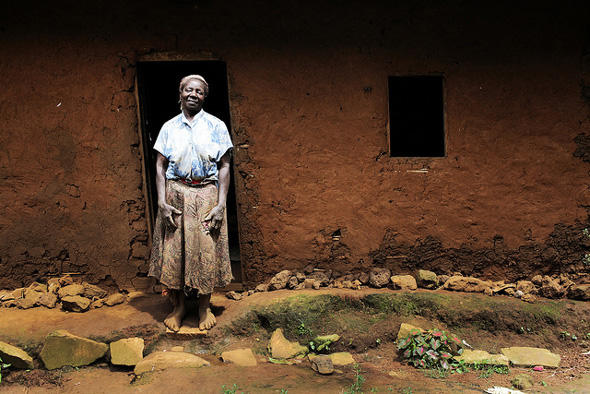
    At a harvest buyback last month, I met many farmers who had benefited from One Acre Fund’s services. One woman, Tamar, had sold 400 kilograms (880 pounds) of beans at the previous season’s buyback, which earned her roughly 132,000 Rwandan francs ($235 USD). She told me that she was using the money to build a bigger home for the six of her ten children who lived at home.

    However, Tamar really wanted to buy a cow, but she knew that she would not earn enough money this year to afford one. With so many children, she struggled to earn enough money to invest in something that might generate additional income for her and her family.

    Another woman, Medeatrice, had also made $235 USD from the sale of her beans. With that income, she had opened a small shop with her husband in a nearby market. Unusually for Rwanda, where the average woman has 5.5 children, Medeatrice only had one, a three-year old boy named Prince. I asked her if she planned to have more children.

    “I only want one more child,” she told me. “If I only have two children, it is easy to educate and to take care of them.”

    The Rwandan government has invested in educating its population on family planning, but it will take time for birth rates to drop. For now, families with five, six, or nine children are not uncommon.
    However, research shows that when women have increased access to economic opportunities, birth rates drop. One Acre Fund is focused on helping Rwanda’s families increase their harvests so that they not only have enough to eat, but they can start investing in their futures.

    Guest Contributor Stephanie Hanson is the director of policy and outreach at One Acre Fund.

    Photo Credit: Rwanda’s hills and Medeatrice, courtesy of Stephanie Hanson.
    MORE
  • In Pakistan, Clinton Calls for Human Security; USAID’s Shah Commends Birth Spacing

    ›
    July 20, 2010  //  By Russell Sticklor
    In Islamabad yesterday, Secretary of State Hillary Clinton acknowledged longstanding Pakistani concerns that the U.S.’s ongoing mission in the country is solely military in nature. However, Clinton asserted at the opening of the second U.S.-Pakistan Strategic Dialogue that the “future demands a comprehensive human security, a security based on the day-to-day essentials like jobs, schools, clinics, food, water, fuel, equal access to justice, [and] strong, accountable public institutions.” To that end, she announced a $500 million assistance package earmarked largely for new agricultural and hydroelectric infrastructure development, as well as the construction of new hospitals and other health infrastructure.

    Family planning was another key element in this week’s U.S-Pakistani talks. A U.S. delegation headed by USAID Administrator Rajiv Shah met with top Pakistani health officials to discuss the strategic importance of birth spacing. Both sides agreed that encouraging women to extend the interval between bearing children would not only improve maternal and child health, but also start to bring Pakistani’s population growth rate down to a more sustainable level—a goal fully explored at a recent Wilson Center conference on Pakistan’s population challenge.

    As Pakistani demographer Zeba Sathar told New Security Beat in an interview at the conference, educating young women and empowering them to control their own reproductive health will allow them to “take care of their fertility and their family size themselves”—a development that could ease Pakistan’s resource crunch and reduce traditional gender inequities in the years to come.

    Sources: Daily Times (Pakistan), International Business Times (U.K.), Los Angeles Times, Times of India, U.S. Agency for International Development.

    Photo Credit: “Secretary Clinton Travels to Pakistan,” courtesy of the State Department.
    MORE
  • In Kampala, African Leaders Discuss Maternal Health While Attacks Renew Concern over Somalia

    ›
    July 19, 2010  //  By Schuyler Null
    Leaders from 49 African countries are meeting today in Kampala, Uganda, at the start of a scheduled week-long African Union (AU) summit on maternal and child health. Uganda is a fitting location, as it faces some of the toughest health and demographic challenges in Africa, including a very young and rapidly growing population and poor maternal health services. However, with the memory of last week’s twin bomb blasts still fresh, peace and security issues will surely be on the agenda as well.

    Somalia’s lead insurgency group, Al Shabab, took responsibility for the attacks in Kampala, which killed more than 70 people. Al Shabab’s first prominent cross-border attack is only the latest sign that Somalia’s issues – which also include a very young and rapidly growing population – are starting to spill over its borders. For more on Somalia’s deepening crisis and its effects on the East African region, see New Security Beat’s recent analysis: “As Somalia Sinks, Neighbors Face a Fight to Stay Afloat.”

    Sources: AP, Washington Post.

    Photo Credit: Adapted from “Ugandan African Union contingent in Mogadishu, Nov. 25, 2007” courtesy of flickr user david axe.
    MORE
  • An “Aye” for an “Aye”: Everyone Has a Right to Be Counted

    ›
    July 12, 2010  //  By Kayly Ober
    Around the world, countries from Afghanistan to Papua New Guinea to the United States are taking part in their decadal census, leading the UN Population Fund (UNFPA) to select the theme “Everyone Counts” for World Population Day 2010, which was celebrated on July 11.

    Everyone has the right to be counted, because “censuses and population data play a critical role in development and humanitarian response and recovery,” said UNFPA Executive Director Thoraya Ahmed Obaid in her World Population Day message. Obaid added that “with quality data we can better track and make greater progress to achieve the Millennium Development Goals, and promote and protect the dignity and human rights of all people,” especially among vulnerable populations like women, girls, the poor, and the marginalized.

    USAID similarly supports quality data collection, which it says plays a critical role in advancing voluntary family planning in the developing world. For the last 25 years, USAID has funded the Demographic and Health Surveys (DHS) program, which collaborates with national health ministries to collect data on family planning, child and maternal health, disease prevalence, and other health indicators.

    This invaluable data is made freely available for public use, which can foster new research in the field and stimulate innovative approaches to addressing public health issues. Praising the DHS program, Gapminder Foundation Director Hans Rosling told a Wilson Center audience last year that “statistics should be the intellectual sidewalks of a society, and people should be able to build businesses and operate on the side of them.”

    Accurate census counts are also important elements of “good governance, transparency and accountability,” said UN Secretary-General Ban Ki Moon in his World Population Day message. “Population data helps leaders and policy-makers to make informed decisions about policies and programmes to reduce poverty and hunger, and advance education, health and gender equality,” he said.

    But no one is suggesting that coming up with reliable population data is an easy task. As Sean Peoples and Elizabeth Leahy point out in the May/June 2009 issue of World Watch magazine, issuing population projections can be a risky business:
    In the 2008 Revision of World Population Prospects, the UN Population Division projects that our planet will grow to 9.15 billion people by 2050. Yet this medium-variant projection is just one of several possible scenarios released in this latest round of number crunching. The low- and high-variant projections—7.96 billion and 10.5 billion, respectively—could instead become reality, given uncertainties in the developing world due to factors such as inconsistent data collection, weak health system infrastructure, and low government capacity.
    The goal, then, is to make sure everyone counts.
    MORE
  • New Film Looks at Sub-Saharan Africa’s Unmet Need for Family Planning

    ›
    Eye On  //  July 9, 2010  //  By Russell Sticklor
    A new documentary film released recently by Population Action International brings attention to the plight of women across sub-Saharan Africa who lack access to basic reproductive health supplies, such as condoms and contraceptives. Funded with the support of the Reproductive Health Supplies Coalition, “Empty Handed” documents the unmet need for family planning services in the region, which has some of the world’s highest fertility rates.

    PAI filmmaker Nathan Golon shot the film in Uganda earlier this year. The film’s focus on Ugandan women’s struggles in particular is with good reason, as the country has a well-documented history of providing insufficient family planning services. According to the CIA’s World Factbook, Uganda has the world’s second highest total fertility rate at 6.73 children per woman.

    “Empty Handed” examines how a lack of family planning tools and services can lead to a slippery slope of unintended consequences, from unplanned pregnancies to the rampant spread of sexually transmitted diseases. The film revolves around interviews conducted with women who share common hardships as they try to access family planning from under-resourced local healthcare clinics, often traveling long distances only to find upon arrival that no contraceptives or condoms are available.

    In addition to identifying past and current issues with reproductive healthcare access in sub-Saharan Africa, “Empty Handed” also puts forward some ideas for better meeting family planning needs of the more than 200 million women throughout the world without access to even basic contraception.

    To watch the full film online, visit the “Empty Handed” website.

    Sources: C.I.A., FHI, Population Action International, Reproductive Health Supplies Coalition
    MORE
  • USAID Head Calls for Integrating Health Services in New Global Health Initiative

    ›
    July 2, 2010  //  By Russell Sticklor
    This Tuesday, Dr. Rajiv Shah, administrator for U.S. Agency for International Development gave a major speech at the Center for Strategic & International Studies on USAID’s Global Health Initiative. With $63 billion earmarked for GHI over the next six years, there are high expectations for the program.

    Shah laid out some details of GHI’s main priorities, which include improving family planning services, enhancing nutrition initiatives, and building stronger and broader-based healthcare systems across the developing world, with special attention paid to the health needs of mothers and their young children. He offered a number of examples of the benefits of integrating family planning with other health services for women and children, including maternal health and nutrition.

    Shah did not, however, mention integrating family planning with environmental programs, the benefits of which USAID-funded programs have amply demonstrated. He also did not delve into the emerging nexus of family planning, population growth, and climate change, a subject of much discussion at last month’s Women Deliver conference in Washington, D.C.

    On the other hand, Shah did say that GHI’s emphasis on improving nutrition for the world’s poor will complement another major Obama administration outreach effort, the Feed the Future initiative—repeating a point he made at the recent launch of the food security effort.

    Shah also highlighted the need for establishing benchmarks for measuring success that revolve around people, not diseases. He suggested one way of achieving this would be to ensure that clinics—particularly in rural areas—broaden their mandate to offer a variety of health-prevention services, rather than providing resources that treat primarily one type of illness.

    For a full transcript of Shah’s speech, click here.

    More analysis of Shah’s speech and USAID’s Global Health Initiative to come in the weeks ahead.

    Photo Credit: “Statesman Forum: Dr. Rajiv Shah, USAID Administrator,” courtesy of flickr user CSIS: Center for Strategic & International Studies.
    MORE
  • Defusing the Bomb: Overcoming Pakistan’s Population Challenge

    ›
    From the Wilson Center  //  June 16, 2010  //  By Michael Kugelman
    According to the UN’s latest mid-range demographic projections for Pakistan, the country’s population–currently about 185 million–will rise to 335 million by 2050. This explosive increase, however, represents the best-case scenario: Should fertility rates remain constant, the UN estimates this figure could approach 460 million. Such soaring population growth, coupled with youthful demographics, a dismal education system, high unemployment, and a troubled economy, pose great risks for Pakistan. Predictably, many observers depict Pakistan’s population situation as a ticking time bomb.

    At the same time, some demographers contend that the country’s population profile can potentially bring great benefits to the country. If young Pakistanis can be properly educated and successfully absorbed into the labor force, such experts explain, then the country could experience a “demographic dividend” that boosts social well-being and sparks economic growth. On June 9, the Wilson Center’s Asia Program, Environmental Change and Security Program, and Comparative Urban Studies Project, along with the Karachi-based Fellowship Fund for Pakistan, hosted a day-long conference to examine both the challenges and opportunities of Pakistan’s demographics, and to discuss how best to tackle the former and maximize the latter.

    Pakistan at a Crossroads

    In her opening address, Zeba A. Sathar of the Population Council declared that Pakistan is “at a crossroads.” Demography will play a key role in determining the country’s future trajectory, she said, yet there is presently little discussion about demographics in Pakistan. Sathar’s presentation traced Pakistan’s recent demographic trends. Despite its high population growth, Pakistan’s fertility rates have actually been in decline since the early 1990s–a fact that Sathar attributed to progressively higher ages at marriage (for both men and women), but also to the “reality” of abortion. However, Pakistan’s pace of fertility decline has slowed in the last few years–a consequence, Sathar argued, of Islamabad’s failure to promote social development (particularly education) and of the international donor community’s prioritizing of HIV/AIDS funding over that of family planning since 2000. Sathar concluded that achieving Pakistan’s “demographic dreams” will require more educational and employment opportunities (particularly for women) and better access to family planning in rural areas.

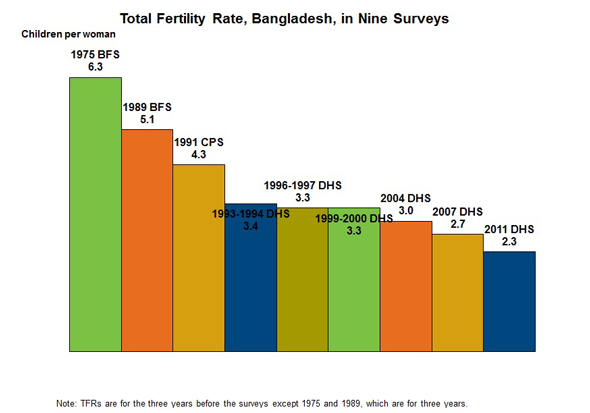
    In the following panel, Wilson Center Senior Scholar Shahid Javed Burki noted the long-standing failure of demographers and economists in Pakistan to work together on the country’s population issues. This failure, Burki asserted, has resulted in poor choices and bad policy. He also criticized officials and scholars for being reactive in their population proposals, rather than proactive. Burki emphasized that good policy choices can produce favorable results. If, for instance, the population policies launched in Pakistan’s early decades had been sustained to the present, the country today would have 30 million fewer people. Similarly, had Pakistan followed the Bangladeshi approach and concentrated on the economic empowerment of women, today there would be more than 40 million fewer Pakistanis. Good policies matter, Burki repeatedly asserted, and Pakistan’s large and growing population, if dealt with wisely, can be an asset rather than a burden.

    Development Through the Bangladeshi Model and Education

    Like Burki, Yasmeen Sabeeh Qazi of the Packard Foundation pointed to Bangladesh as a relative success story. She highlighted Bangladesh’s reproductive health services system, which has served to increase the health of Bangladeshis and reduce their poverty. Indonesia and Iran, whose fertility rates are one-half Pakistan’s, provide other examples in the Muslim world where official policy has made a significant difference. Qazi’s presentation emphasized the linkages between family planning, reproductive health, and development. Noting that one-third of pregnancies in Pakistan are unplanned, she underscored the correlation between smaller family size and higher gross national income. She urged the government to fashion a population policy that expands access to reproductive health services, strengthens the health system generally, promotes education (especially for girls), and creates more jobs.

    Moeed Yusuf of the U.S. Institute of Peace examined the prospects for radicalization of Pakistan’s youth. Pakistan’s stratified education system, Yusuf cautioned, is not training productive, employable members of society. Only graduates of elite private schools or of foreign schools are prepared for the economy of the 21st century. Meanwhile, the economy is not producing the quality jobs the young expect, leading to an “expectation-reality disconnect” that fosters not only un- or underemployment, but also anger and alienation. Moreover, the state, by deliberately cultivating the ultra-right elements in Pakistani society who most want to radicalize the country’s youth, is part of the problem. Still, Yusuf added, echoing the hopefulness of other speakers, it is not too late. These disturbing trends can be reversed, with help from outside friends like the United States, which, Yusuf counseled, should focus on assisting Pakistan’s education system, support rural private schools, and allow more Pakistani students to study in the United States.

    Plugging Public Sector Holes with Private Initiatives

    Saba Gul Khattak focused her luncheon address on the work of the Pakistan government’s Planning Commission, of which she is a member. In recent years, Pakistan’s population programs have been devolved from the federal to the provincial and sub-provincial levels. This decentralization, she averred, has opened the way for a genuine reform agenda. But it has also contributed to a situation where no one at the federal level feels any “ownership” over the country’s population programs. Implementation has always been the most vulnerable point in the policy process–and the lack of “ownership” only accentuates this problem today. Khattak emphasized the linkages between population, health, education, and development. Today, she asserted, children are seen by their parents as a source of old age security. Only when the government fills this void through the establishment of an effective social security structure will Pakistan be able to reduce its fertility rates. Development must accompany a truly effective population program.

    In the afternoon panel, Sohail Agha of Population Services International discussed the role of the private sector in family planning in Pakistan. He argued that this sector has made a “substantial contribution” to Pakistan’s increased use of condoms: In 2006-07, a period when condom use spiked by nearly 8 percent, about 80 percent of this increase was covered by contraceptives provided by the private sector. Additionally, he noted that a 2009 survey found that urban Pakistanis exposed to social marketing campaigns about condom utilization increased their use of the contraceptive by 10 percent. Furthermore, he described private-sector-led health financing plans for women’s fertilization–a method of contraception that, like condoms, has increased over the last 30 years in Pakistan.

    Engaging Youth and Political and Religious Leaders

    Shazia Khawar of the British Council discussed the “Next Generation” report, a 2009 Council study about Pakistan’s youth. The report, based on a survey of 1,500 young people across both rural and urban Pakistan, concludes that young Pakistanis are deeply disillusioned about their country and its institutions, with three-quarters of those surveyed saying they regard themselves as “primarily” Muslims, not Pakistanis. The report’s “critical point,” said Khawar, is that Pakistani youth participation in policy development is nonexistent. To this end, the British Council has spearheaded several initiatives to engage the country’s youth in Pakistani politics and to spark dialogue between young Pakistanis and policymakers. Khawar concluded, however, that success is possible only if Pakistan’s top political leaders “pledge themselves to this agenda.”

    Mehtab S. Karim of the Pew Research Center offered a comparative perspective, discussing demographics in the broader Muslim world, with particular emphasis on Bangladesh and Iran. Why, he asked, has Pakistan experienced less fertility decline than most of its fellow Muslim-majority nations? He suggested that the answer lies in the failure of Pakistan’s political and religious leaders to make early and sustained commitments to family planning. In Bangladesh, he explained, the country’s very first government made lower population growth rates a “prime goal.” And in Iran, spiritual leader Ayatollah Khomeini issued a fatwa in support of contraceptive use soon after the Islamic Revolution. Yet in Pakistan, according to Karim, religious figures have consistently opposed Islamabad’s family planning efforts, and the government has proven unwilling or unable to combat this resistance.

    Scott Radloff of USAID discussed his agency’s family planning and reproductive health (FP/RH) projects in Pakistan. FP/RH aid to Pakistan was largely cut off during much of the 1990s due to the Pressler Amendment–a 1985 modification to the U.S. Foreign Assistance Act that banned most U.S. military and economic assistance to Pakistan unless the U.S. president certified that Pakistan had no nuclear weapons. President George W. Bush waived this prohibition in 2001, and since then USAID FP/RH assistance has risen to nearly $45 million. Current interventions focus on strengthening services within Pakistan’s Ministry of Health and Ministry of Population Welfare; improving contraceptive supplies and logistics; expanding community-based services; and increasing awareness and commitment, including among religious leaders.

    Participants concurred that Pakistan’s demographic situation is fraught with risk. Yet they also highlighted a series of hopeful signs. Yusuf noted the absence of an “imminent” danger of youth radicalization; Khawar pointed to the testimonies of “many young leaders determined to do their part” that flow from the “Next Generation” report; and both Karim and Qazi cited Bangladesh and Iran as proof that successful family planning programs are possible even in countries marked by deep poverty or conservative Islam. The presenters were also in accord about the necessary policies moving forward: more extensive family planning and reproductive health services, better education, and more job opportunities (particularly for women). At the same time, speakers repeatedly underscored the profound challenges facing the implementation of such policies. Still, for all the talk about major obstacles and challenges, there was recognition that more modest and simple steps can be taken as well–such as promoting more discussion about demographics within Pakistan, and especially among experts from different disciplines.

    Michael Kugelman is program associate and Robert M. Hathaway is director of the Wilson Center’s Asia Program.

    Photo credit: Traffic in downtown Karachi, courtesy Flickr user Ali Adnan Qazalbash.
    MORE
  • Women Deliver: Real Solutions for Reproductive Health and Maternal Mortality

    ›
    Dot-Mom  //  June 16, 2010  //  By Calyn Ostrowski
    The landmark Women Deliver conference, which concluded last week, reinvigorated the global health community’s commitment to improve reproductive health at both the grassroots and global levels. Providing a major boost was the Gates Foundation’s announcement that it will commit an additional $1.5 billion over the next five years to support maternal and child health, family planning, and nutrition programs in developing countries.

    “We haven’t tried hard enough,” said Gates Foundation co-founder Melinda Gates. “Most maternal and newborn deaths can be prevented with existing, low-cost solutions.” Examples of these efficient and effective solutions were presented at the three-day conference’s dozens of panels on a wide range of issues, including climate change, contraceptive commodities, fistula, gender inequities, adolescent family planning, communications and technology, and much more.

    Empowering Young Girls to Access Family Planning

    “When we speak about adolescents we typically think of prevention. However, we must also think about providing access to safe abortions and supporting young women who want to be mothers and empower young women to make choices,” said Katie Chau, a consultant at International Planned Parenthood Federation.

    In Nigeria, “there is not much attention on adolescent sexual and reproductive health, even though a majority of rapes occur before the age of 13, and the rate of teenage pregnancy and abortions is high,” said Bene Madunagu, chair of the Girls’ Power Initiative (GPI) in Nigeria. GPI teaches girls about their rights to make decisions, including those regarding sex and reproductive health, as well as improving their critical thinking skills, self-esteem, and body image. “Girls develop critical consciousness and question discriminatory practices, while also learning about the legal instruments to take up their concerns,” he said.

    Sadaf Nasim of Rahnuma Family Planning said child marriages are common in his country, Pakistan. “Marriage is an easy solution for poor families. Once a girl is married she is no longer the responsibility of the family,” he explained.

    While laws in Pakistan and other parts of the developing world condemn child marriage, the prevalence of child marriage remains high: 49 percent of girls are married by age 18 in South Asia, and 44 percent in West and Central Africa. Nasim said birth registration at the local and national levels should be improved to prevent parents from manipulating their daughter’s age.

    In Kyrgyzstan, “community-based efforts worked to galvanize media attention and disseminate information to demonstrate the need for improved adolescent family planning,” said Tatiana Popovitskaya, a project coordinator with Reproductive Health Alliance of Kyrgyzstan. Such community-based approaches use grassroots education to mobilize community leaders, which is a critical step in overcoming child marriage and other harmful traditions.

    Cell Phones and Maternal Health

    “There is a lot of information being collected, but it is not necessarily going where it needs to because of fragmentation,” said Alison Bloch, program director at mHealth Alliance. In developing countries, the people most in need are often the most isolated, but mobile technology is emerging as a way to bridge the gaps.

    According to a recent report by mHealth Alliance, 64 percent of mobile phone users live in developing countries and more than half of people living in remote areas will have mobile phones by 2012. The potential for improving global health with cell phones and PDAs is significant, and can address a wide range of health issues, such as human resource shortages and information sharing problems between clinics and hospitals.

    “Mobile technology provides benefits to individuals, institutions, caregivers, and the community. It reduces travel time and costs for the individual, improves efficiency of health service delivery, and streamlines information to health workers to reduce maternal mortality,” said Elaine Weidman, vice president of sustainability and corporate responsibility at Ericsson.

    “Mobile technology is the most rapidly adopted technology in history and represents an existing opportunity to reach the un-reached,” said Fabiano Teixeira da Cruz, a program manager for the Inter-American Development Bank, speaking of the benefits of using mobile technology to train field-based healthcare workers in Latin America.

    While mobile phones are indeed reaching parts of the world not currently equipped with quality healthcare, the lack of systematic coordination and infrastructure at the district and regional levels must also be addressed, as highlighted during a recent Wilson Center event, Improving Transportation and Referral for Maternal Health.

    Read about our first impressions of Women Deliver 2010 here.

    Calyn Ostrowski is program associate with the Wilson Center’s Global Health Initiative

    Photo credit: Woman and child in South African AIDS clinic, courtesy Flickr user tcd123usa.
    MORE
Newer Posts   Older Posts
View full site

Join the Conversation

  • RSS
  • subscribe
  • facebook
  • G+
  • twitter
  • iTunes
  • podomatic
  • youtube
Tweets by NewSecurityBeat

Trending Stories

  • unfccclogo1
  • Pop at COP: Population and Family Planning at the UN Climate Negotiations

Featured Media

Backdraft Podcast

play Backdraft
Podcasts

More »

What You're Saying

  • Volunteers,At,The,Lagos,Food,Bank,Initiative,Outreach,To,Ikotun, Pan-African Response to COVID-19: New Forms of Environmental Peacebuilding Emerge
    Rashida Salifu: Great piece 👍🏾 Africa as a continent has suffered this unfortunate pandemic.But it has also...
  • A desert road near Kuqa An Unholy Trinity: Xinjiang’s Unhealthy Relationship With Coal, Water, and the Quest for Development
    Ismail: It is more historically accurate to refer to Xinjiang as East Turkistan.
  • shutterstock_1779654803 Leverage COVID-19 Data Collection Networks for Environmental Peacebuilding
    Carsten Pran: Thanks for reading! It will be interesting to see how society adapts to droves of new information in...

What We’re Reading

  • Rising rates of food instability in Latin America threaten women and Venezuelan migrants
  • Treetop sensors help Indonesia eavesdrop on forests to cut logging
  • 'Seat at the table': Women's land rights seen as key to climate fight
  • A Surprise in Africa: Air Pollution Falls as Economies Rise
  • Himalayan glacier disaster highlights climate change risks
More »
  • woodrow
  • ecsp
  • RSS Feed
  • YouTube
  • Twitter
  • Facebook
  • Home
  • Who We Are
  • Publications
  • Events
  • Wilson Center
  • Contact Us
  • Print Friendly Page

© Copyright 2007-2021. Environmental Change and Security Program.

Woodrow Wilson International Center for Scholars. All rights reserved.

Developed by Vico Rock Media

Environmental Change and Security Program

Woodrow Wilson International Center for Scholars

Ronald Reagan Building and International Trade Center

  • One Woodrow Wilson Plaza
  • 1300 Pennsylvania Ave., NW
  • Washington, DC 20004-3027

T 202-691-4000