• woodrow wilson center
  • ecsp

New Security Beat

Subscribe:
  • rss
  • mail-to
  • Who We Are
  • Topics
    • Population
    • Environment
    • Security
    • Health
    • Development
  • Columns
    • China Environment Forum
    • Choke Point
    • Dot-Mom
    • Friday Podcasts
    • Navigating the Poles
    • Reading Radar
  • Multimedia
    • Water Stories (Podcast Series)
    • Backdraft (Podcast Series)
    • Tracking the Energy Titans (Interactive)
  • Films
    • Water, Conflict, and Peacebuilding (Animated Short)
    • Paving the Way (Ethiopia)
    • Broken Landscape (India)
    • Scaling the Mountain (Nepal)
    • Healthy People, Healthy Environment (Tanzania)
  • Publications
  • Events
  • Contact Us

NewSecurityBeat

The blog of the Wilson Center's Environmental Change and Security Program
Showing posts from category gender.
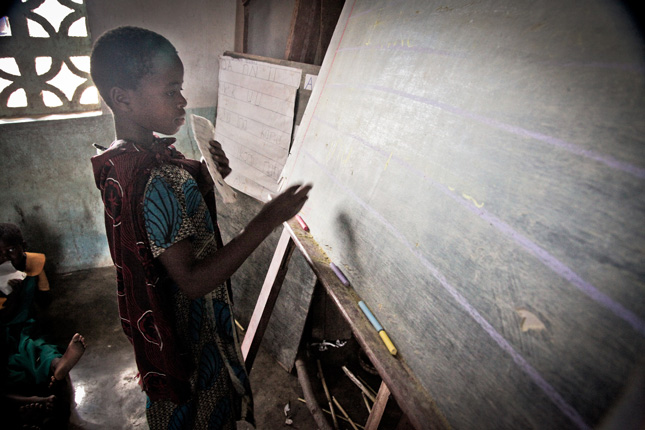
  • Gender Equity Key to Feeding 9 Billion by 2050

    ›
    Eye On  //  September 16, 2014  //  By Heather Randall

    “Valuing women, paying greater attention to women’s rights – that’s the solution to our population growth issues and, I would argue, it’s also the solution to our food security challenges,” said Suzanne Petroni at the Thought for Food Summit in Berlin last year.

    MORE
  • Haleh Esfandiari, The Wall Street Journal

    ISIS’s Cruelty Toward Women Gets Scant Attention

    ›
    September 11, 2014  //  By Wilson Center Staff
    Iraq

    The original version of this article, by Haleh Esfandiari, appeared on The Wall Street Journal.

    Tucked away in a recent New York Times story on military operations against ISIS by Iraqi special forces and the Kurdish Peshmerga was a brief description of what these troops discovered when they entered a village in Iraq that had been occupied by ISIS fighters. A naked woman, tied to a tree, who had been repeatedly raped by ISIS fighters. Another woman was discovered in a second village, similarly naked, tied down and repeatedly raped. The fighters, it appears, are “rewarded” by being allowed to have their way with captured women.

    MORE
  • Underage: Addressing Reproductive Health and HIV Needs in Married Adolescent Girls

    ›
    From the Wilson Center  //  September 9, 2014  //  By Katrina Braxton

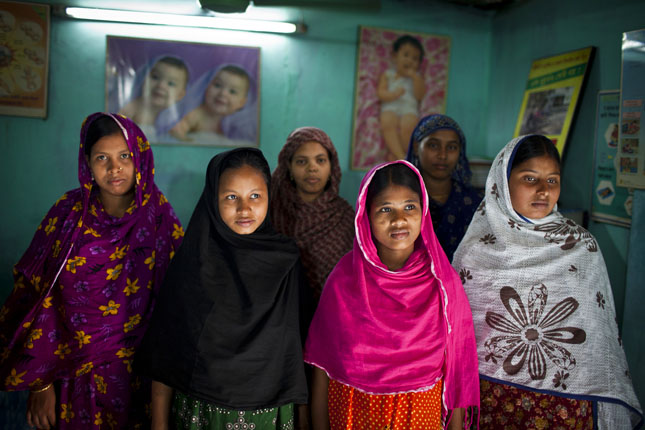
    child-marriage-poster1

    In July, thousands of people attended the 20th International AIDS Conference and the 2014 Girls Summit to work towards an AIDS-free generation and ending child and forced marriage. But such attention is rare; by and large, these girls are invisible to development efforts. [Video Below]

    MORE
  • Overcoming Malnutrition Key to Maternal and Child Health Improvements, Says Dr. Ranu Dhillon

    ›
    Dot-Mom  //  Friday Podcasts  //  August 29, 2014  //  By Sarah Meyerhoff
    Ranu_small

    With less than 500 days until they expire, it’s almost certain that the Millennium Development Goals on child mortality and maternal health will be missed by many countries. Already, work on drafting the MDG successors has begun; but unless policymakers put nutrition at the center of maternal and child health systems, reducing global maternal and child mortality ratios by an appreciable amount will be difficult, says Dr. Ranu Dhillon in this week’s podcast.

    MORE
  • Accelerating a Cycle of Violence: Tallying the Damage to Gaza’s Youth

    ›
    August 25, 2014  //  By Sarah Meyerhoff
    Palestinian Searches Through Rubble in Towers Al-andaa, Gaza

    Amid stop-and-start ceasefires, the tally of death and destruction from the recent conflict in the Gaza Strip has begun. Whatever the final losses incurred – casualties and damage are considerable with estimates varying significantly depending on the source – Gaza’s youngest residents are likely to be most profoundly affected.

    MORE
  • Jacob Glass, PassBlue

    New Investment Law in Peru Undermines Rights of Indigenous Women

    ›
    August 22, 2014  //  By Wilson Center Staff
    peruvian-woman

    The original version of this article, by Jacob Glass, appeared on PassBlue.

    A new law in Peru encouraging investment in the country’s extractive industries has reignited debate on the lack of power indigenous women have in the mostly rural societies where they often live. The International Indigenous Women’s Forum, which drew more than 60 native women from across the world to Peru last month, highlighted this important issue.

    MORE
  • Sexual Violence Beyond the Warzone, and the Relationship Between Child Marriage and Fragile States

    ›
    Reading Radar  //  August 20, 2014  //  By Sarah Meyerhoff
    Addressing Sexual Violence in and Beyond the Warzone

    Two recent reports reaffirm the particular vulnerability of women and children in disasters, conflicts, and fragile states, but also highlight gaps in common perceptions of their experiences.

    MORE
  • Somali Refugees Show How Conflict, Gender, Environmental Scarcity Become Entwined

    ›
    Guest Contributor  //  August 19, 2014  //  By Luisa Veronis
    somali_woman2

    Under international law, someone who flees their country because of conflict or persecution is a refugee, but someone who flees because of inability to meet their basic household needs is not. In the case of Somalia, it is increasingly difficult to make any meaningful distinction between the two.

    MORE
Newer Posts   Older Posts
View full site

Join the Conversation

  • RSS
  • subscribe
  • facebook
  • G+
  • twitter
  • iTunes
  • podomatic
  • youtube
Tweets by NewSecurityBeat

Trending Stories

  • unfccclogo1
  • Pop at COP: Population and Family Planning at the UN Climate Negotiations

Featured Media

Backdraft Podcast

play Backdraft
Podcasts

More »

What You're Saying

  • Volunteers,At,The,Lagos,Food,Bank,Initiative,Outreach,To,Ikotun, Pan-African Response to COVID-19: New Forms of Environmental Peacebuilding Emerge
    Rashida Salifu: Great piece 👍🏾 Africa as a continent has suffered this unfortunate pandemic.But it has also...
  • A desert road near Kuqa An Unholy Trinity: Xinjiang’s Unhealthy Relationship With Coal, Water, and the Quest for Development
    Ismail: It is more historically accurate to refer to Xinjiang as East Turkistan.
  • shutterstock_1779654803 Leverage COVID-19 Data Collection Networks for Environmental Peacebuilding
    Carsten Pran: Thanks for reading! It will be interesting to see how society adapts to droves of new information in...

What We’re Reading

  • Rising rates of food instability in Latin America threaten women and Venezuelan migrants
  • Treetop sensors help Indonesia eavesdrop on forests to cut logging
  • 'Seat at the table': Women's land rights seen as key to climate fight
  • A Surprise in Africa: Air Pollution Falls as Economies Rise
  • Himalayan glacier disaster highlights climate change risks
More »
  • woodrow
  • ecsp
  • RSS Feed
  • YouTube
  • Twitter
  • Facebook
  • Home
  • Who We Are
  • Publications
  • Events
  • Wilson Center
  • Contact Us
  • Print Friendly Page

© Copyright 2007-2021. Environmental Change and Security Program.

Woodrow Wilson International Center for Scholars. All rights reserved.

Developed by Vico Rock Media

Environmental Change and Security Program

Woodrow Wilson International Center for Scholars

Ronald Reagan Building and International Trade Center

  • One Woodrow Wilson Plaza
  • 1300 Pennsylvania Ave., NW
  • Washington, DC 20004-3027

T 202-691-4000