-
Planetary Security Conference Convenes Amidst “Unsettling New Normal”
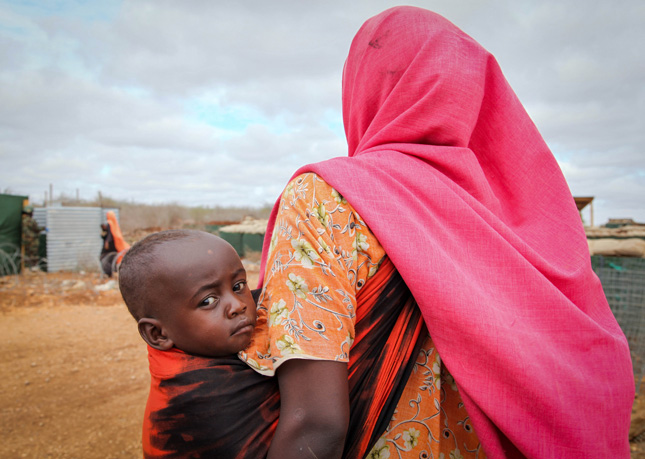
›December 14, 2016 // By Schuyler NullEnvironmental security? Climate security? How about planetary security. Last week at the venerable Peace Palace in The Hague, nearly 300 experts from around the world met for the somewhat dramatically named Planetary Security Conference, a new initiative aimed at bringing together people working on all things related to the environment, climate change, and their security implications.
-
Masculinity Under the Microscope: Better Accounting for Men in Climate Adaptation
›December 13, 2016 // By Anam Ahmed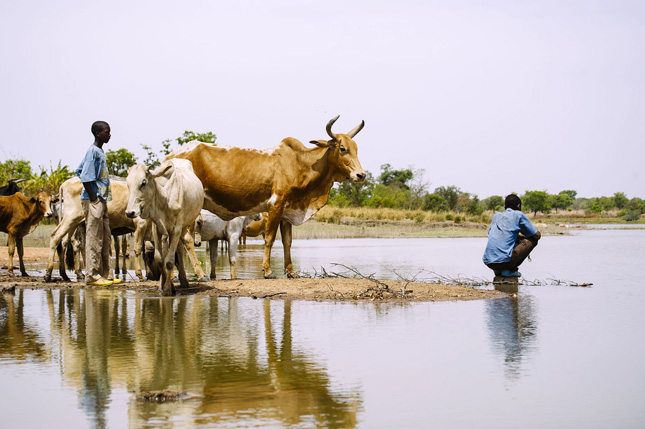
“Before the famine my life was better. I was a man in my own country,” Abdi Abdullahi Hussein, a Somali refugee living in Kenya, tells The Climate Reality Project. “When you have livestock and a farm and it all disappears, it feels like falling off a cliff.”
-
Planet at the Crossroads: Insights From IUCN’s World Conservation Congress
›
At this year’s International Union for Conservation of Nature (IUCN) World Conservation Congress, more than 10,000 scientists, activists, and leaders from around the world committed to finding “nature-based solutions” to reversing environmental declines and securing a healthy, livable planet.
-
Elena Ateva on Putting the Individual at the Center of Maternal Care
›Exactly one year after the adoption of the Sustainable Development Goals in September 2015, The Lancet published a special series on achieving maternal health priorities in the SDG era, with a focus on quality, equity, strengthening entire health systems, sustainable financing, and collecting better evidence. -
‘The Lancet’ on Achieving Maternal Health Goals in the SDG Era: Tackling Diversity and Divergence
›Between 1990 and 2015, there was an incredible 44 percent decrease in global maternal mortality rates. But these impressive gains still fell short of the Millennium Development Goal of reducing the global maternal mortality ratio by three quarters.
-
To Be Young, Libyan, and Female: Alaa Murabit on Building Civil Society After Gaddafi
›In the turbulent days following the 2011 fall of Colonel Muammar Gaddafi’s government, Dr. Alaa Murabit found herself in Libya’s fragile capital, Tripoli, observing exchanges between parliamentarians and civil society over the future of the country. For over 40 years, this kind of discussion was unthinkable – not the least, for a young woman. -
The Global Refugee Crisis Has Coarsened Our Politics, Says Wilson Fellow Joseph Cassidy
›Chaotic flows of refugees and migrants – the most since World War II – have challenged leaders in Western Europe and North America. “The reactions to those big flows are undermining our institutions in important ways and degrading our politics,” says Wilson Center Fellow Joseph Cassidy in this week’s podcast. -
No Mother Left Behind: How Conflict Exacerbates the Global Maternal Health Challenge
›Since the end of World War II, the number of wars between states has declined significantly, but the number of intrastate civil conflicts – as seen in Syria and Afghanistan – has increased.
Showing posts from category gender.

 Exactly one year after the adoption of the Sustainable Development Goals in September 2015,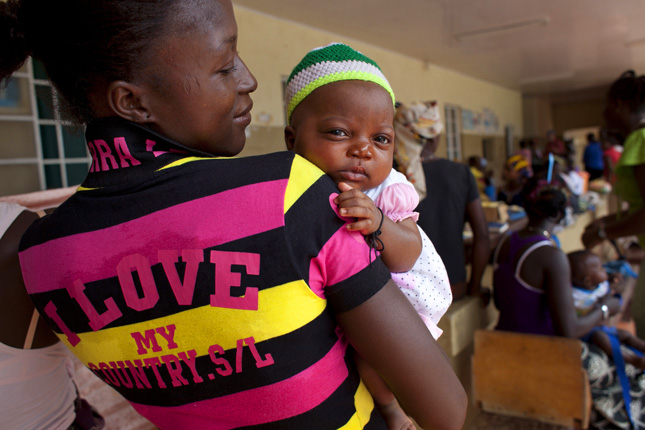
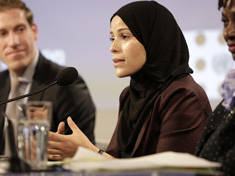 In the turbulent days following the 2011 fall of Colonel Muammar Gaddafi’s government, Dr. Alaa Murabit found herself in Libya’s fragile capital, Tripoli, observing exchanges between parliamentarians and civil society over the future of the country. For over 40 years, this kind of discussion was unthinkable – not the least, for a young woman.
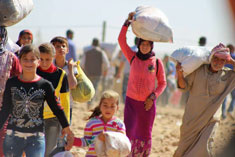 Chaotic flows of refugees and migrants – the most since World War II – have challenged leaders in Western Europe and North America. “The reactions to those big flows are undermining our institutions in important ways and degrading our politics,” says Wilson Center Fellow