-
Unsung Sheroes, Climate Action, and the Global Peace and Security Agendas
›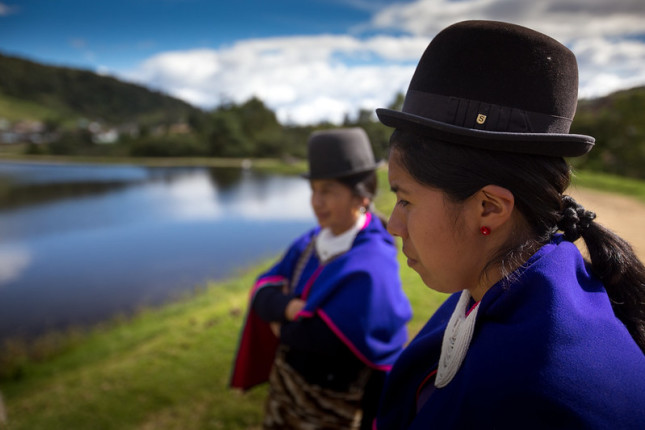
“We’re fighting for our lands, for our water, for our lives,” said an indigenous woman from Colombia, describing her work as an environmental defender. She spoke at a December 2019 workshop on Gender, Peace and the Environment held in Bogotá, Colombia, that brought together social, environmental, and legal scholars and practitioners—including indigenous women—to discuss women, peace, and security issues.
-
CODE BLUE: Addressing NCDs in Maternal Health Starts with Increasing Access and Reducing Disparity
›
We’ve got a crisis impacting our mothers and a crisis impacting our babies, said Dr. Lisa Waddell, Senior Vice President of Maternal Child Health and NICU Innovation and Impact Deputy Medical Director at the March of Dimes, at a recent Wilson Center event launching the Maternal Health Initiative’s CODE BLUE series, developed in partnership with EMD Serono, a business of Merck KGaA, Darmstadt, Germany. She was referring to non-communicable diseases (NCDs), which impact maternal health in the United States and globally. NCDs kill 18 million women of reproductive age each year, accounting for two in every three deaths among women.
-
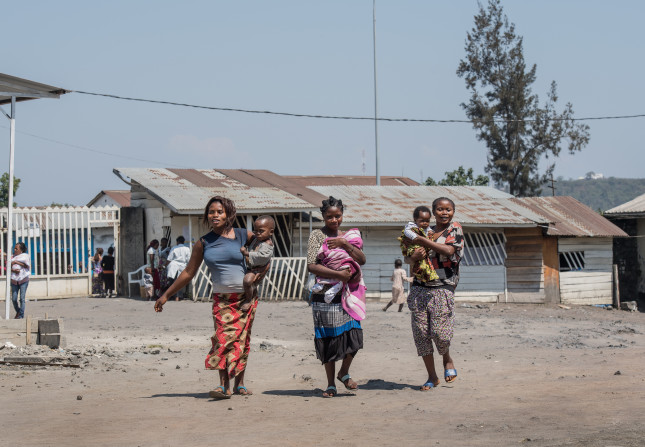
Safe from the Start: Addressing Gender-Based Violence in Times of Conflict and Crises
›“As a leader in providing global humanitarian aid, the United States must be a leader in protecting all aid recipients,” said Congresswoman Chrissy Houlahan (D-PA-6) at a recent event on Capitol Hill about gender-based violence in humanitarian settings. A violation against human rights, gender-based violence (GBV) is deeply rooted in gender inequality. It’s a global phenomenon that involves sexual, physical, and/or psychological violence, including child marriage, female genital mutilation, and other harmful practices.
-
To Address Security in Africa, Focus on the Citizen: Ambassador Phillip Carter III on the Connections between Development and Security
›To address the security challenges facing Sub-Saharan Africa we need to shift the focus from a concept of state security to one of citizen security, says Ambassador Phillip Carter III (ret.), former Ambassador to the Ivory Coast and the Republic of Guinea, in this week’s Friday Podcast. “Our current strategy of a military response to terrorist organizations or criminal networks is inadequate at best, and probably unsustainable at worst,” says Carter. “To me, the greatest security threat in Africa is poor or bad governance.” -
ICPD25: I March for Gender Equality
› The Nairobi Summit on ICPD25 came a quarter century after the landmark International Conference on Population and Development (ICPD) was held in Cairo in 1994. Pledges made 25 years ago by 179 countries recognized that human rights, including reproductive rights, were fundamental to development and population concerns. A rigorous Programme of Action was created to reduce maternal deaths, ensure access to family planning, and protect women and girls from gender-based violence, including female genital mutilation and child marriage. -
Investing in Women’s Empowerment Essential to Achieving Peace, Security in Africa
›Africa in Transition // From the Wilson Center // November 14, 2019 // By Brigitte Hugh & Deekshita RamanarayananA country can achieve sustainable peace and security only if women are included, said Monde Muyangwa, Director of the Wilson Center’s Africa Program at a recent Wilson Center event on the role of women in promoting peace and security in Africa. “And I would argue that part of the challenges that we face on the African continent, the insecurity that we face in parts of the African continent,” she said, “is precisely because not all segments of society are included.”
-
What Changes When We See Women
›To commemorate the 25th anniversary of the Wilson Center’s Environmental Change and Security Program, I have a prediction: by ECSP’s 50th anniversary, the idea that one could discuss national and international security without examining the situation, status, and security of women will be seen as laughably naïve. Over the next twenty-five years, I predict that every “Intro to International Relations” and “Intro to National Security” class (and every QDR and QDDR) will begin by examining the critical linkage between what is going on with women and what is going on with nation-states. -
Family Planning in Humanitarian Settings is Achievable and Effective
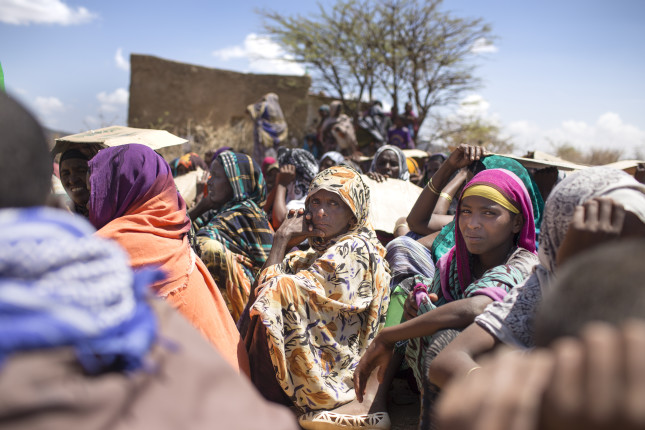
›“Family planning saves lives, even in times of crisis,” said Gwen K. Young, Managing Director at the Global Emergency Response Coalition at a Wilson Center event on October 8 on the importance of providing family planning and reproductive health services in humanitarian settings. Speakers from Save the Children, CARE, the International Rescue Committee, and FP2020 spoke to programmatic successes, innovative solutions, and local partnerships in fragile settings. Young highlighted that 1 in 70 people worldwide need humanitarian assistance and a quarter of these are women and girls of reproductive age. All told, more than 30 million women and girls in 42 countries.
Showing posts from category gender.
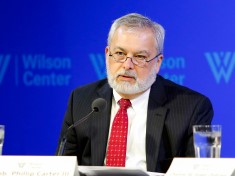 To address the security challenges facing Sub-Saharan Africa we need to shift the focus from a concept of state security to one of citizen security, says Ambassador Phillip Carter III (ret.), former Ambassador to the Ivory Coast and the Republic of Guinea, in this week’s Friday Podcast. “Our current strategy of a military response to terrorist organizations or criminal networks is inadequate at best, and probably unsustainable at worst,” says Carter. “To me, the greatest security threat in Africa is poor or bad governance.”
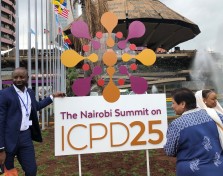 The Nairobi Summit on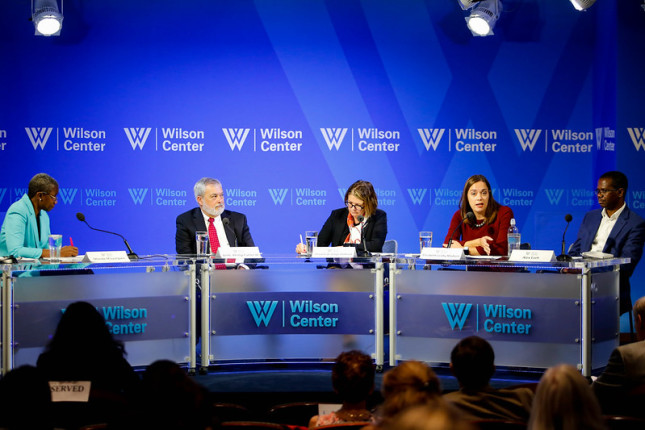
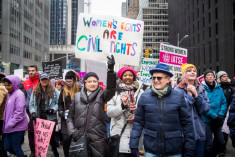 To commemorate the 25th anniversary of the Wilson Center’s Environmental Change and Security Program, I have a prediction: by ECSP’s 50th anniversary, the idea that one could discuss national and international security without examining the situation, status, and security of women will be seen as laughably naïve. Over the next twenty-five years, I predict that every “Intro to International Relations” and “Intro to National Security” class (and every QDR and QDDR) will begin by examining the critical linkage between what is going on with women and what is going on with nation-states.