

-
We Must Address Exotic Wildlife Consumption to Avoid the Next Global Pandemic
›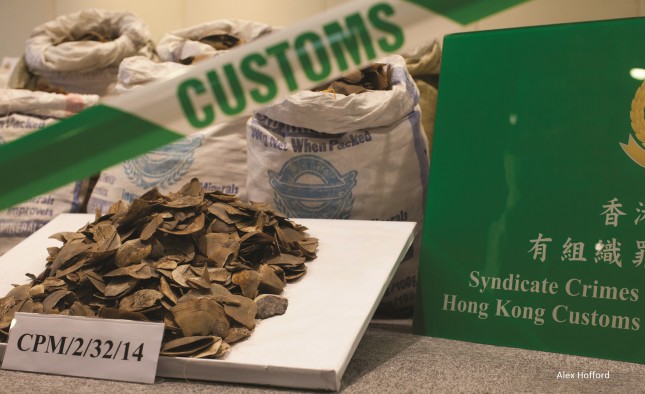
A suspect in the transmission of Covid-19 to humans, pangolins are the most trafficked animal in the world despite the ban on trade by the Convention on International Trade in Endangered Species of Wild Flora and Fauna (CITES). Currently on the Red List of the International Union for Conservation of Nature (IUCN), pangolins are armadillo-looking mammals found in Asia and Africa but are more closely related to cats and dogs. Humans hunt them for their scales used in traditional medicine and the fashion industry and for their meat, which is considered a delicacy. Asian pangolins have become critically endangered, and poachers have turned to trafficking African species, most destined for China and Vietnam. According to TRAFFIC, a leading non-governmental organization working on wildlife trade, twenty tons of pangolins are trafficked each year, putting them on the fast track to extinction.
-
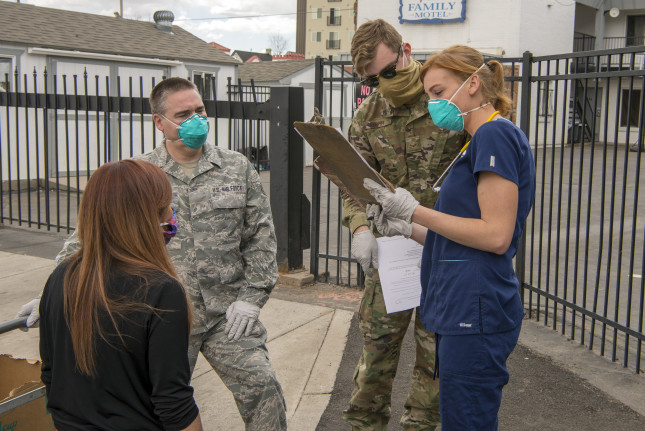
Gender and the “War” on Covid-19
›
The rhetoric of war is all around us during the Covid-19 pandemic, from the World Health Organization to historical takes. More critical assessments note that this war, like others, will hurt the most vulnerable. In a recent essay, feminist political scientist Cynthia Enloe takes issue with this rhetoric, pointing to the historic ways in which wars have led to “racist, homophobic, and anti-Semitic practices.” Whether or not war rhetoric is helpful at this crucial moment, the current pandemic should be a wake-up call to expand what investments we consider essential to our national security, how we value work, and who gets called a hero.
-
How Women with Multiple Sclerosis Can Navigate Pregnancy
›Multiple sclerosis (MS) is a non-communicable disease that affects maternal health. MS is an unpredictable chronic disease of the central nervous system that disrupts the flow of information within the brain, and between the brain and body. The progress of this disease, its severity, and specific symptoms cannot yet be predicted and varies by individual. Symptoms may disappear or diminish completely, or they may persist and worsen over time. Typical symptoms include fatigue, numbness and tingling, blurred vision, imbalance, pain, and problems with memory and concentration.
-
To Reduce U.S. Maternal Mortality, Take Aim at Non-Communicable Diseases
›Every day there are more than 800 maternal deaths worldwide. Who are these women? They are reproductive women across the globe. They are our sisters, aunts, friends, and co-workers. They are leaders in our community, family members, and caregivers. When assessing the state of maternal morbidity and mortality in the United States, one must consider not only what we know, but also what must change.
-
Listen to Midwives to Achieve Universal Health Coverage by 2030
›What is inherent in the word “universal,” is that it is for all women, said Anneka Knutsson, Chief of the Sexual and Reproductive Health Branch at the United Nations Population Fund (UNFPA), at a recent Wilson Center event on the importance of midwives in achieving universal health coverage. -
Chitra Nagarajan on What’s Changed for Women in Lake Chad Region
›“Women and men face very different risks and challenges,” said Chitra Nagarajan, a writer and journalist who covers climate change, conflict, and gender. She spoke in this week’s podcast about what’s changed in the Lake Chad region. In the last few years the combination of profound climate change and high levels of insecurity have made life harder for the local population. To get a sense of how recent changes have affected Lake Chad’s residents, Nagarajan interviewed more than 250 people. These are some of her findings. -
Sexuality Education Begins to Take Root in Africa
›In Kenya, primary and secondary school students take courses called Life Skills Education. So do students in Malawi, Mozambique, Namibia, and Swaziland. South Sudan adds “peace-building” to the subject title. Lesotho, Madagascar, Rwanda, Tanzania, Uganda, and Zambia are more direct. These countries add the word “sexuality” to the course name.
-
Dr. Mishkat Al-Moumin on the Importance of Women & the Environment to Sustainable Peace
›“I believe if you acknowledge women as primary users of environmental resources, if you draft the policy with women [at] the table, offering you their unique perspective and unique feedback, you’re going to have a more stable policy. A policy that gets implemented,” says Mishkat Al-Moumin, scholar in residence at the Environmental Law Institute, in this week’s Friday Podcast, and second in a series of interviews recorded at the First International Conference on Environmental Peacebuilding.
Showing posts from category gender.
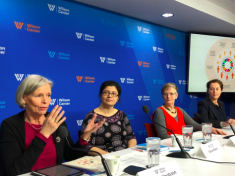 What is inherent in the word “universal,” is that it is for all women, said Anneka Knutsson, Chief of the Sexual and Reproductive Health Branch at the
 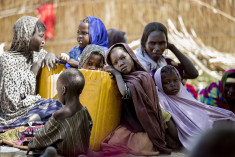 “Women and men face very different risks and challenges,” said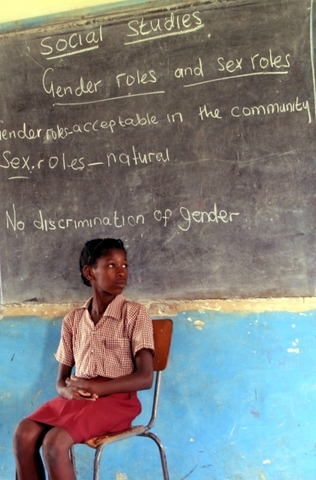
 “I believe if you acknowledge women as primary users of environmental resources, if you draft the policy with women [at] the table, offering you their unique perspective and unique feedback, you’re going to have a more stable policy. A policy that gets implemented,” says Mishkat Al-Moumin, scholar in residence at the Environmental Law Institute, in this week’s Friday Podcast, and second in a series of interviews recorded at the First International Conference on Environmental Peacebuilding.

