-
Environmental Dimensions of Sustainable Recovery: Learning From Post-Conflict and Disaster Response
›
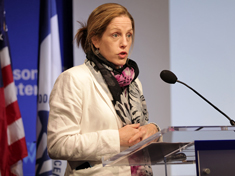
“Environmental specialists need to change,” said Anita van Breda at the Wilson Center on June 25. “In the new normal, our work has to have a different relevancy.” [Video Below]
-
Alice Thomas: For Refugees, Environmental Recovery Critical for Return to Normalcy
›
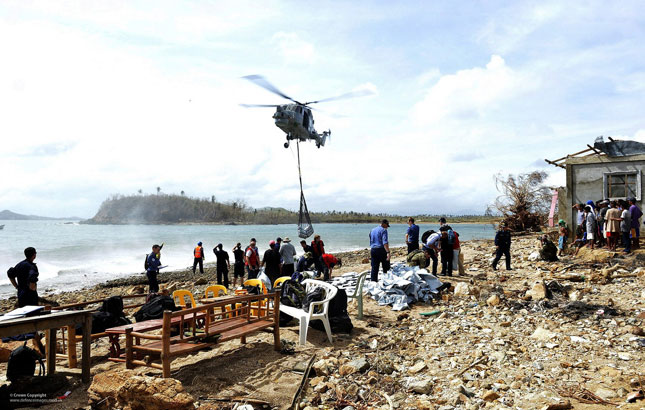
There are now well over 16 million refugees worldwide and 65 million people internally displaced by conflict and disasters, according to recent estimates. As more and more people are uprooted from their homes, mounting environmental pressures threaten to reinforce cycles of poverty and displacement if left unaddressed, says Alice Thomas in this week’s podcast.
-
From the PHE Conference in Addis Ababa, a Progress Report on Integrated Development
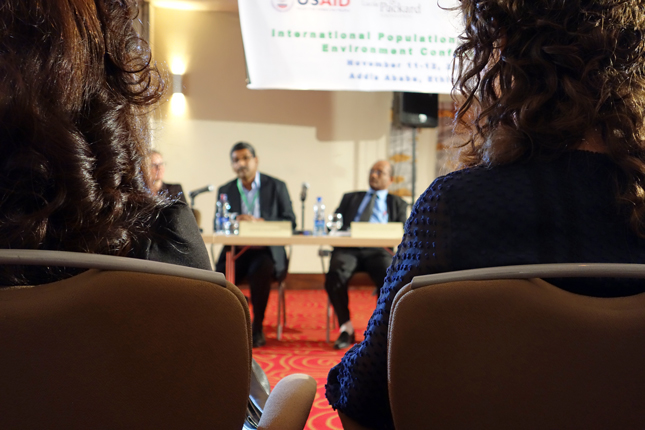
›My grandmother was pleased when I told her I was heading to Ethiopia last November for an international conference focused on population, health, and the environment.
-
The Future of Population Funding in the U.S.: Mixed Prospects for Foundation Support
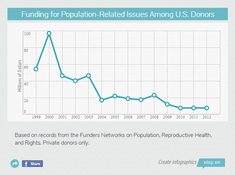
›May 12, 2014 // By Laurie MazurWorld population continues its steady climb, surpassing 7 billion in 2011 and heading to somewhere between 8 and 11 billion by midcentury. But funding to address population-related issues is moving in the opposite direction.
-
Make It Count: Evaluating Population, Health, and Environment Development Programs
›Evaluation is the lifeblood of any development effort – it’s how implementers know if they’re making a difference, determine what to do more or less of, and enables funders to evaluate cost-effectiveness. But it’s also an inexact science, no more so than when it comes to complex interventions that cut across sectors. [Video Below]
-
Roger-Mark De Souza: Integrated Development Shows Health, Population Dynamics Crucial for Resilience
›
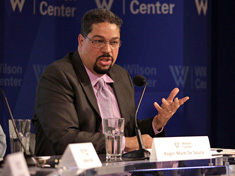
Resilience means different things to different people. For many in the international development and humanitarian communities, building resilience means responding to growing climate risks through disaster mitigation and planning. But for people like Birhani Fakadi, a 39-year old mother of 11 in rural Ethiopia, it also means access to reproductive health and family planning services, says ECSP’s Roger-Mark De Souza in this week’s podcast.
-
A New Model of Development? The Role of Public-Private Partnerships in International Aid
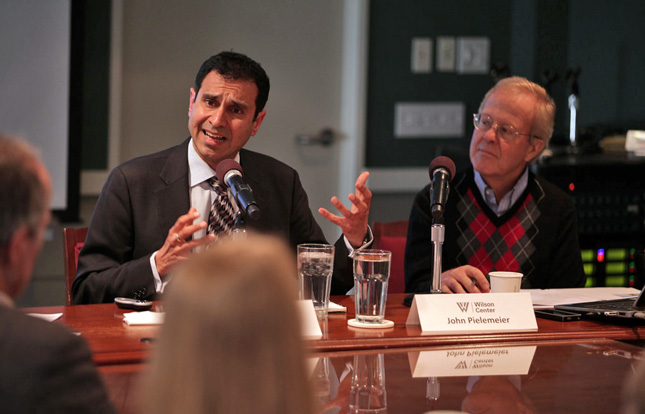
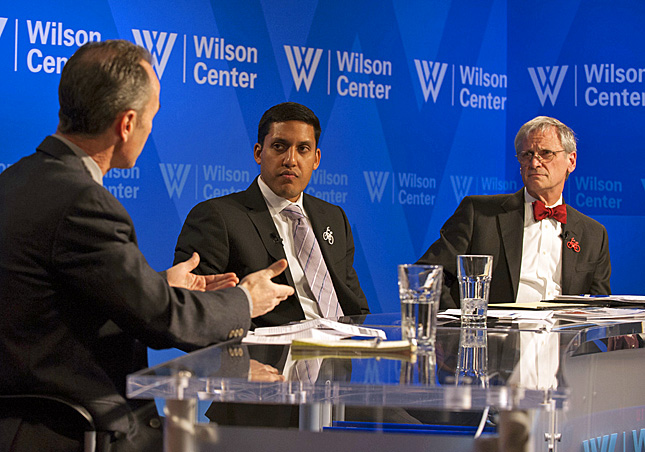
›USAID funding is “far outstripped” by private investment and business relationships in “nearly every country” in which it works – and that’s a good thing, according to USAID Administrator Rajiv Shah. [Video Below]
-
Environmental Impacts of Household Size, Bringing Family Planning Outside the Health Sector
›What are the environmental implications of changing household sizes? A recent article by Mason Bradbury, M. Nils Peterson, and Jianguo Liu, published in Population and Environment, analyzes data from 213 countries over 400 years and finds the average number of occupants per home tends to decline as population grows. This dynamic, they write, indicates that accommodating housing could prove to be one of “the greatest environmental challenges of the twenty-first century.” As countries develop and urbanize, “according to convergence theory, household size decreases (often from greater than five to less than three).” Other cultural shifts, like increasing divorce rates, urban sprawl driven by rising affluence, decreasing numbers of multigenerational households, and larger houses (in the United States, homes more than doubled in size between 1950 and 2002, according to the article) compound the issue. As population growth continues in parts of the world, these trends pose critical questions for conservation and environmental sustainability, since “households are the end consumers of most natural resources and ecosystem services.”
Showing posts from category funding.