• woodrow wilson center
  • ecsp

New Security Beat

Subscribe:
  • rss
  • mail-to
  • Who We Are
  • Topics
    • Population
    • Environment
    • Security
    • Health
    • Development
  • Columns
    • China Environment Forum
    • Choke Point
    • Dot-Mom
    • Friday Podcasts
    • Navigating the Poles
    • Reading Radar
  • Multimedia
    • Water Stories (Podcast Series)
    • Backdraft (Podcast Series)
    • Tracking the Energy Titans (Interactive)
  • Films
    • Water, Conflict, and Peacebuilding (Animated Short)
    • Paving the Way (Ethiopia)
    • Broken Landscape (India)
    • Scaling the Mountain (Nepal)
    • Healthy People, Healthy Environment (Tanzania)
  • Publications
  • Events
  • Contact Us

NewSecurityBeat

The blog of the Wilson Center's Environmental Change and Security Program
Showing posts from category forests.
  • Forests on Film: New Stories From Nepal and the Congo Basin

    ›
    From the Wilson Center  //  April 14, 2014  //  By Donald Borenstein

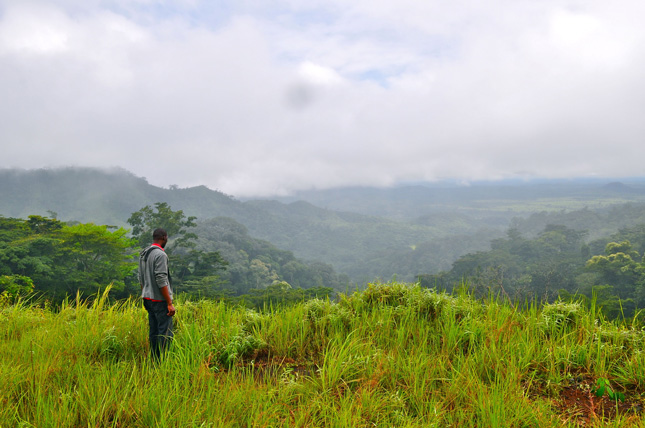
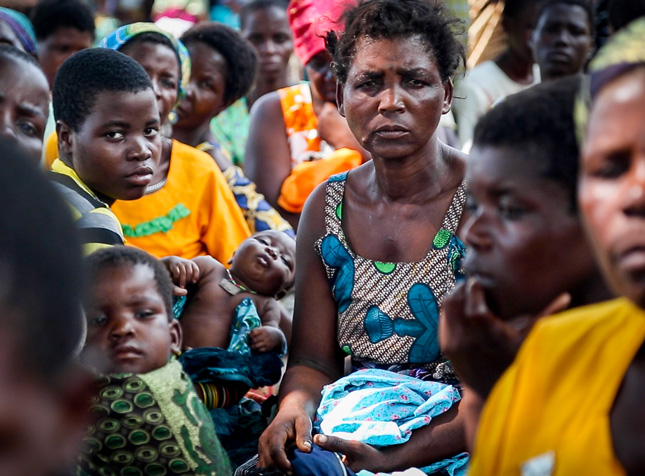
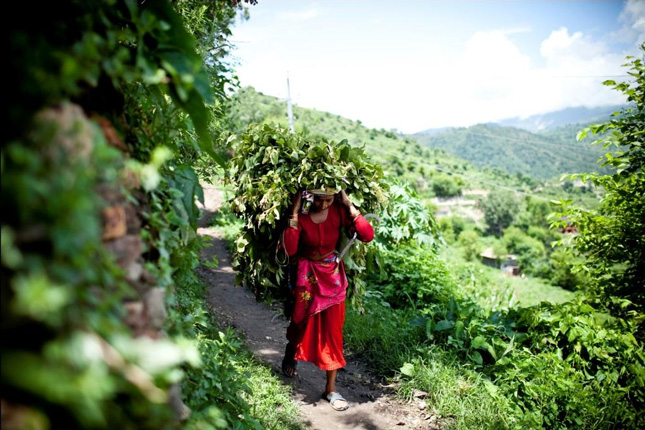
    Given growing awareness about environmental change and how it affects human life, it is perhaps not surprising there is also a growing audience for environmental filmmaking. At the 2014 Environmental Film Festival in the Nation’s Capital on March 25, the Wilson Center premiered ECSP’s latest documentary, Scaling the Mountain: Protecting Forests for Families in Nepal. Together with Heart of Iron, a recent film on mining in the Congo Basin, the event took viewers into some of the world’s most remote forests to see how their inhabitants are adapting to rapid changes in the natural resources on which they depend.

    MORE
  • A New Dimension to Geopolitics: Geoff Dabelko on the Latest IPCC Report

    ›
    Eye On  //  From the Wilson Center  //  March 31, 2014  //  By Schuyler Null

    “The Intergovernmental Panel on Climate Change is an attempt to get an international group of scientists together to assess what we know about climate change,” says Geoff Dabelko in an interview with the Wilson Center’s Context program. “That is not a quick process.”

    MORE
  • Nick Snow, Oil and Gas Journal

    Analyst Urges Broader Look at Amazon Oil’s Local Impacts

    ›
    March 27, 2014  //  By Wilson Center Staff
    Amazon-oil-pipe

    The original version of this article, by Nick Snow, appeared in the Oil and Gas Journal.

    Increasingly disruptive protests are likely if oil, gas, and mining companies and national governments don’t pay closer attention to indigenous populations’ needs as Western Amazon basin resources are developed, an expert warned.

    MORE
  • In Nepal, Integrating Forest and Family Health Is Improving Lives

    ›
    March 24, 2014  //  By Sean Peoples
    ScalingtheMountain1

    For years, the Chepang people have lived off the land in Nepal’s forested central foothills. Communities cleared trees to start small subsistence farms, harvested the surrounding area for firewood, and eventually moved on after the wood, soil, and water were depleted.

    MORE
  • After Chance Meeting, New Population, Health, and Environment Program Is Born in Madagascar

    ›
    Guest Contributor  //  February 25, 2014  //  By Vik Mohan
    Marojejy-View-from-Camp-3_I

    Against the stunning backdrop of Marojejy National Park, I recently crossed paths with a conservationist from a very different background, working on the opposite side of Madagascar. But, it turns out, the communities we work with face many of the same challenges, and our meeting spawned a new population, health, and environment (PHE) program.

    MORE
  • Geoff Dabelko, Ensia

    The Periphery Isn’t Peripheral: Barriers to Cross-Sectoral Collaboration in Development

    ›
    February 14, 2014  //  By Wilson Center Staff
    himalayan-ridge

    The original version of this article, by Geoff Dabelko, appeared on Ensia.

    What do melting Himalayan glaciers have to do with food security in Cambodia? Not much, thought an aid practitioner trying to boost food security along the lower reaches of the Mekong River – until she heard a colleague working on the Tibetan Plateau describe the downstream implications of climate change in the Himalayas. Everything she was working on, she suddenly realized, could be literally washed away.

    MORE
  • Better Mapping for Better Journalism: InfoAmazonia and the Growth of GeoJournalism

    ›
    Eye On  //  Guest Contributor  //  On the Beat  //  February 12, 2014  //  By William Shubert
    Indonesia's Borneo palm oil plantations and logging concessions

    Nearly every local story has a global context. This is especially true when it comes to the environment, and there may be no better way to show that context than through visualization. But in developing countries, where so many important changes are happening, journalists often lack the resources or skills to make data visualization a part of their repertoire.

    MORE
  • Susannah Fisher, International Institute for Environment and Development

    In Nepal, Measuring Climate Change Resilience From the Community Up

    ›
    February 11, 2014  //  By Wilson Center Staff
    landslide-area-nepal

    The original version of this article, by Susannah Fisher, appeared on the International Institute for Environment and Development.

    Nepal’s vulnerability to a warming climate became clear in May 2012 when the Seti River burst its banks during flash floods and landslides that killed more than 60 people. Scientists say such events are likely to become more common as the world warms, so communities need to adapt.

    MORE
Newer Posts   Older Posts
View full site

Join the Conversation

  • RSS
  • subscribe
  • facebook
  • G+
  • twitter
  • iTunes
  • podomatic
  • youtube
Tweets by NewSecurityBeat

Trending Stories

  • unfccclogo1
  • Pop at COP: Population and Family Planning at the UN Climate Negotiations

Featured Media

Backdraft Podcast

play Backdraft
Podcasts

More »

What You're Saying

  • Volunteers,At,The,Lagos,Food,Bank,Initiative,Outreach,To,Ikotun, Pan-African Response to COVID-19: New Forms of Environmental Peacebuilding Emerge
    Rashida Salifu: Great piece 👍🏾 Africa as a continent has suffered this unfortunate pandemic.But it has also...
  • A desert road near Kuqa An Unholy Trinity: Xinjiang’s Unhealthy Relationship With Coal, Water, and the Quest for Development
    Ismail: It is more historically accurate to refer to Xinjiang as East Turkistan.
  • shutterstock_1779654803 Leverage COVID-19 Data Collection Networks for Environmental Peacebuilding
    Carsten Pran: Thanks for reading! It will be interesting to see how society adapts to droves of new information in...

What We’re Reading

  • Rising rates of food instability in Latin America threaten women and Venezuelan migrants
  • Treetop sensors help Indonesia eavesdrop on forests to cut logging
  • 'Seat at the table': Women's land rights seen as key to climate fight
  • A Surprise in Africa: Air Pollution Falls as Economies Rise
  • Himalayan glacier disaster highlights climate change risks
More »
  • woodrow
  • ecsp
  • RSS Feed
  • YouTube
  • Twitter
  • Facebook
  • Home
  • Who We Are
  • Publications
  • Events
  • Wilson Center
  • Contact Us
  • Print Friendly Page

© Copyright 2007-2021. Environmental Change and Security Program.

Woodrow Wilson International Center for Scholars. All rights reserved.

Developed by Vico Rock Media

Environmental Change and Security Program

Woodrow Wilson International Center for Scholars

Ronald Reagan Building and International Trade Center

  • One Woodrow Wilson Plaza
  • 1300 Pennsylvania Ave., NW
  • Washington, DC 20004-3027

T 202-691-4000