• woodrow wilson center
  • ecsp

New Security Beat

Subscribe:
  • rss
  • mail-to
  • Who We Are
  • Topics
    • Population
    • Environment
    • Security
    • Health
    • Development
  • Columns
    • China Environment Forum
    • Choke Point
    • Dot-Mom
    • Friday Podcasts
    • Navigating the Poles
    • Reading Radar
  • Multimedia
    • Water Stories (Podcast Series)
    • Backdraft (Podcast Series)
    • Tracking the Energy Titans (Interactive)
  • Films
    • Water, Conflict, and Peacebuilding (Animated Short)
    • Paving the Way (Ethiopia)
    • Broken Landscape (India)
    • Scaling the Mountain (Nepal)
    • Healthy People, Healthy Environment (Tanzania)
  • Publications
  • Events
  • Contact Us

NewSecurityBeat

The blog of the Wilson Center's Environmental Change and Security Program
Showing posts from category flooding.
  • Observing Earth: Using Satellite Data for International Development

    ›
    From the Wilson Center  //  August 2, 2017  //  By Graham Norwood
    Artist_concept_of_the_GPM_C

    “Interest in earth observation—and in particular, the value to what we do in development internationally—has never been higher,” said Jenny Frankel-Reed, adaptation team lead at the U.S. Agency for International Development (USAID). Frankel-Reed spoke at the Wilson Center’s recent panel discussion of the earth observation data program known as SERVIR, which included insights from USAID’s soon-to-be-released evaluation of the program.

    MORE
  • To Fight Global Water Stress, U.S. Foreign Policy Will Need New Strategic Tools

    ›
    From the Wilson Center  //  July 25, 2017  //  By Anuj Krishnamurthy
    Children-Pump

    Capable of upending rural livelihoods, compromising institutions of governance, and inducing new patterns of migration and crime, global water stress has emerged as one of the principal threats to U.S. national security, said David Reed, senior policy advisor at the World Wildlife Fund (WWF) and editor of WWF’s new book, Water, Security and U.S. Foreign Policy, on June 27 at the Wilson Center. Four defense and development leaders – retired U.S. Marine Corps General James L. Jones; Paula Dobrianksy, vice chairwoman of the National Executive Committee of the U.S. Water Partnership; retired U.S. Navy Admiral Lee Gunn, vice chairman of the CNA Military Advisory Board; and Kristalina Georgieva, chief executive of the World Bank – joined Reed for a panel discussion of water’s central role in global stability and prosperity.

    MORE
  • People not Polar Bears: National Security and the Changing Climate

    ›
    On the Beat  //  July 19, 2017  //  By Arundhati Ponnapa
    B-1_Bombers_on_Diego_Garcia

    “If we really cared about the polar bears, we would have done something,” quipped retired U.S. Navy Rear Admiral David Titley, who gave an Environmental Research and Education Distinguished Lecture at the National Science Foundation on June 27, 2017. Titley framed climate change in terms of U.S. national security interests, focusing on infrastructure, the changing Arctic, and how environmental factors can exacerbate conflict.

    MORE
  • Sponge City: Solutions for China’s Thirsty and Flooded Cities

    ›
    China Environment Forum  //  July 13, 2017  //  By Lauren Sidner
    China-Flooding

    On Wednesday, June 21, 2017, authorities in Beijing, Tianjin, and Hebei warned residents to prepare for a storm that could trigger flooding and possibly landslides. Flood warnings have become all too common in China: In 2013, more than 230 Chinese cities experienced floods. But Mother Nature is not entirely to blame; the cities’ outdated drainage systems are quickly overwhelmed and sprawling concrete gives stormwater runoff no place to go.

    MORE
  • Water Security and U.S. Foreign Policy in India, Pakistan, and the Philippines

    ›
    From the Wilson Center  //  June 16, 2017  //  By Namita Rao
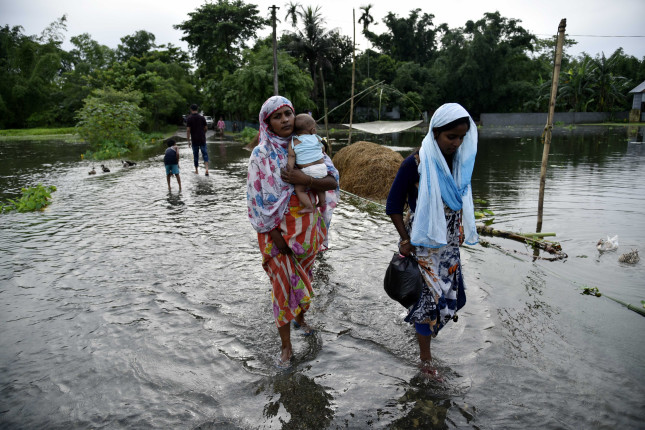
    Pakistan-floods

    In 2012, the U.S. National Intelligence Council judged that within the next 10 years, water problems would be a major contributor to instability in “many” countries that are of interest to the United States. South and Southeast Asia, with its many transboundary river basins, large populations, and geopolitical flashpoints, is one among a number of hotspots where such instability could occur.

    MORE
  • Top 5 Posts for May 2017

    ›
    What You Are Reading  //  June 8, 2017  //  By Benjamin Dills
    May Top 5 Image

    Our nine-part “Choke Point: Tamil Nadu” series with Circle of Blue has been a must-read on the conflicting demands for water, food, and energy in the South Indian state. In May’s most popular post, S. Gopikrishna Warrier introduces us to Chennai’s tech-savvy social entrepreneurs, who are providing the city’s residents with real-time information on the risk of flooding. (The ninth and final post in the series was published yesterday; catch up on all of them at “Choke Point: Tamil Nadu”).

    MORE
  • Michael Kugelman on Pakistan’s “Nightmare” Water Scenario

    ›
    Friday Podcasts  //  May 26, 2017  //  By Benjamin Dills

    Kugelman-small“Water scarcity is a nightmare scenario that is all too real and all but inevitable in Pakistan,” says Michael Kugelman, deputy director of the Wilson Center’s Asia Program, in this week’s podcast.

    MORE
  • Facing Floods, Social Entrepreneurs Push Chennai to Consider New Growth Strategy

    ›
    Choke Point  //  May 1, 2017  //  By S. Gopikrishna Warrier
    John

    The fourth in a series of reports by Circle of Blue and the Wilson Center on the global implications of water, energy, and food challenges in the south Indian state of Tamil Nadu.

    Before the 2015 floods that drowned Chennai, Pradeep John spent several years posting thorough and dutifully accurate updates and alerts on Twitter and Facebook as the Tamil Nadu Weatherman. An amateur meteorologist who developed considerable expertise in weather data and satellite imagery, John’s online followers relied on his crisp forecasts and advice.

    MORE
Newer Posts   Older Posts
View full site

Join the Conversation

  • RSS
  • subscribe
  • facebook
  • G+
  • twitter
  • iTunes
  • podomatic
  • youtube
Tweets by NewSecurityBeat

Trending Stories

  • unfccclogo1
  • Pop at COP: Population and Family Planning at the UN Climate Negotiations

Featured Media

Backdraft Podcast

play Backdraft
Podcasts

More »

What You're Saying

  • Volunteers,At,The,Lagos,Food,Bank,Initiative,Outreach,To,Ikotun, Pan-African Response to COVID-19: New Forms of Environmental Peacebuilding Emerge
    Rashida Salifu: Great piece 👍🏾 Africa as a continent has suffered this unfortunate pandemic.But it has also...
  • A desert road near Kuqa An Unholy Trinity: Xinjiang’s Unhealthy Relationship With Coal, Water, and the Quest for Development
    Ismail: It is more historically accurate to refer to Xinjiang as East Turkistan.
  • shutterstock_1779654803 Leverage COVID-19 Data Collection Networks for Environmental Peacebuilding
    Carsten Pran: Thanks for reading! It will be interesting to see how society adapts to droves of new information in...

What We’re Reading

  • Rising rates of food instability in Latin America threaten women and Venezuelan migrants
  • Treetop sensors help Indonesia eavesdrop on forests to cut logging
  • 'Seat at the table': Women's land rights seen as key to climate fight
  • A Surprise in Africa: Air Pollution Falls as Economies Rise
  • Himalayan glacier disaster highlights climate change risks
More »
  • woodrow
  • ecsp
  • RSS Feed
  • YouTube
  • Twitter
  • Facebook
  • Home
  • Who We Are
  • Publications
  • Events
  • Wilson Center
  • Contact Us
  • Print Friendly Page

© Copyright 2007-2021. Environmental Change and Security Program.

Woodrow Wilson International Center for Scholars. All rights reserved.

Developed by Vico Rock Media

Environmental Change and Security Program

Woodrow Wilson International Center for Scholars

Ronald Reagan Building and International Trade Center

  • One Woodrow Wilson Plaza
  • 1300 Pennsylvania Ave., NW
  • Washington, DC 20004-3027

T 202-691-4000