

Showing posts from category family planning.
-
Population, Health, and Environment
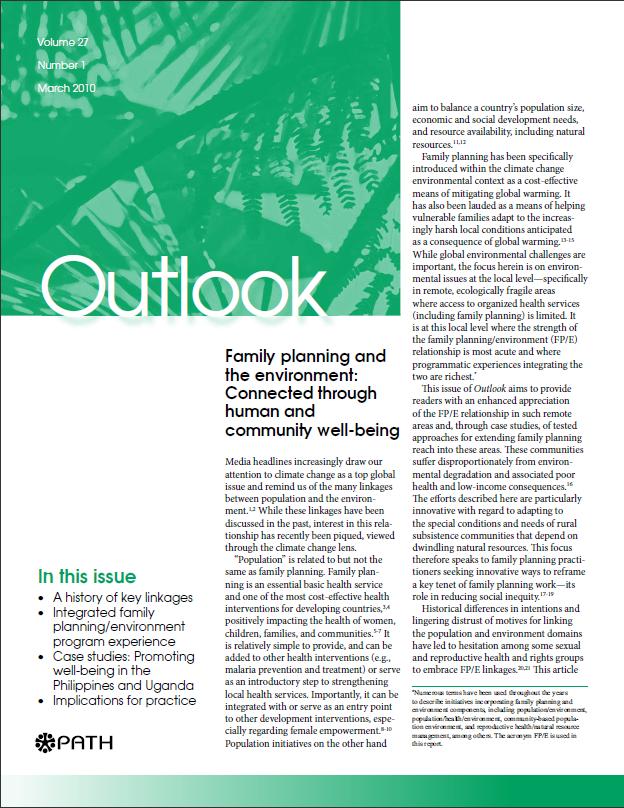
›The WWF and Equilibrium Research released a report on the interplay between the environment and human health. Vital Sites: The Contribution of Protected Areas to Human Health documents the environmental-human health connection, provides case studies from both the developed and developing worlds, and offers recommendations to enhance the health outcomes that can be gained from environmental good governance. “[P]rotected areas are not a luxury but are key sites to protect not only biodiversity, but also ecosystem services and our wider well-being,” the World Bank’s Kathy MacKinnon writes in the foreword. “Family Planning and the Environment: Connected Through Human and Community Well-Being,” part of PATH‘s Outlook series, details the importance of family planning-environmental projects to communities living in remote and ecologically vulnerable areas. Designed for practitioners, the article aims to promote cross-discipline dialogue and offers case studies from the Philippines and Uganda. The article concludes that “more collaborative family planning and environmental efforts aimed at reducing inequities would better ensure sustainable community development as well as the right of individuals to achieve what they value.”
 -
To Invest in a Sustainable Future, Fund Voluntary Family Planning
›President Obama’s proposed federal budget for FY2011 includes $715.7 million for international family planning and reproductive health assistance—10 percent ($67 million) more than what was included in the FY2010 budget that Congress approved last December. If approved, the FY2011 allocation would be 54 percent more than the FY2008 budget, which was equivalent to the amount allotted in 1974 when adjusted for inflation. The recent increases mark the end of more than 30 years of stagnation in U.S. funding for voluntary family planning—and herald a new investment in a sustainable future.
Over the last 20 years, the number of women of reproductive age in the developing world has increased by 465 million. Today, the Guttmacher Institute estimates that 201 million women in developing countries want but lack access to modern contraceptives. “Satisfying the unmet need for contraceptive services in developing countries would avert 52 million unintended pregnancies annually, which, in turn, would save more than 1.5 million lives and prevent 505,000 children from losing their mothers,” the Institute reports.
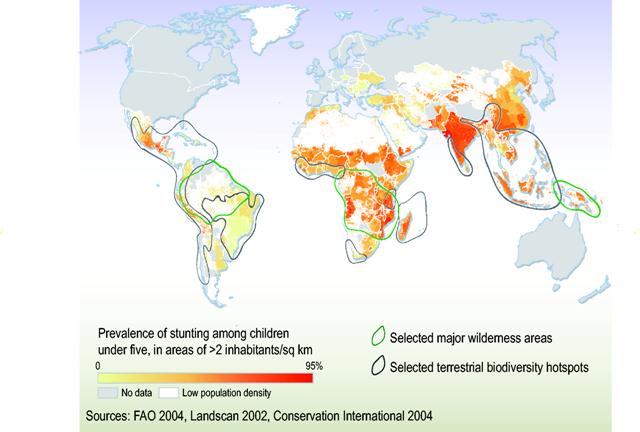
Rapid population growth in some of the world’s most economically disadvantaged countries poses a significant threat to their natural resources and the environment. Currently, more than 1 billion people live in ecological hotspots—areas that are both rich in plant and animal diversity and highly threatened by human activity. Although these areas comprise just 12 percent of the Earth’s land surface, they hold nearly 20 percent of the global population and possess a population growth rate nearly 40 percent greater than the world average. The cumulative impact of a growing global population, which demands more natural resources and exacerbates already unsustainable patterns of consumption, degrades the most basic foundations of life—air, water, croplands, forests, and fisheries—and contributes to climate change.
Improving access to voluntary family planning not only contributes to smaller, healthier families, but also eases the strain on natural resources. By giving couples the information and supplies to plan the number and timing of their children, U.S.-funded population and reproductive health programs have helped countries slow population growth and reduce population pressures on finite natural resources, including local habitats and wildlife. In addition, the success of USAID’s population, health, and environment programs also offers important lessons for climate change adaptation and building resilience in local communities.
In our interconnected environment, the impacts of natural resources use, management, and protection around the world are felt here in the United States. Despite the difficult budgetary and economic environment our country faces, the president’s request for approximately $716 million in international family planning and reproductive health assistance funding is a wise long-term investment. These resources are an important step toward the broader goal of investing $1 billion in these critical programs to create a healthier, more sustainable future for our world.
Rebecca Wadler Lase is the program associate for the Sustainability Education Program at the Izaak Walton League of America.
Map: “Poverty-Biodiversity Mapping Applications.” Courtesy UNEP/Grid Arendal. -
Canada Flip-Flops on Family Planning, Will the G-8 Follow?
›April 5, 2010 // By Laura Pedro“The Canadian government should refrain from advancing the failed right-wing ideologies previously imposed by the George W. Bush administration in the United States, which made humanitarian assistance conditional upon a ‘global gag rule’ that required all non-governmental organizations receiving federal funding to refrain from promoting medically-sound family planning,” said the Canadian Liberal Party about the country’s Conservative government in a Parliamentary motion last week.
Though Prime Minister Stephen Harper had pledged to include a voluntary family planning initiative in Canada’s foreign aid plan at last year’s G8 meeting in Italy, the Conservative government recently said that the initiative will not be part of its G8 plan at the upcoming meeting in Canada this June.
This move has surprised both Canadians and Americans. U.S. President Obama overturned the Mexico City policy last year, and has fully supported the inclusion of family planning methods as part of foreign aid.
Harper’s government has maintained that maternal and child health services, such as vaccinations and nutrition, will be a priority, but various components of family planning, including birth control and abortion, will not be included in the Canadian initiative.
The Tories, as along with three Liberal MPs, voted down the Liberal motion 138-144, which requested clarification of Harper’s maternal health initiative and pushed for the inclusion of the full range of family planning options. The Tories focused solely on what they called “anti-American rhetoric” in the motion, which drew attention away from the divisive issue of abortion.
The issue has got caught up in domestic Canadian politics, with opposition Liberals trying to equate the Conservatives with the George W. Bush administration and the Conservatives trying to avoid discussion of intra-party debates on the contentious issue of abortion.
Now it seems likely like that Harper will go to the G8 summit in Ontario with a foreign aid plan for maternal health that makes no reference to issues of contraception. According to Canada’s International Co-operation Minister Bev Oda, “saving lives” of women and children is a higher priority than family planning.
But most international maternal health advocates don’t agree. “Maternal mortality rates are high among women who do not have access to family planning services. Contraception can reduce the number of unplanned pregnancies,” said Calyn Ostrowski, program associate for the Wilson Center’s Global Health Initiative. “For example, at a recent event on our Maternal Health series, Harriet Birugni of the Population Council in Kenya described how integrating reproductive health services such as family planning can reduce maternal mortality rates, particularly for poor young women who have the least access to contraception.”
In response to Canada’s announcement, U.S. Secretary of State Hilary Clinton said that the United States will be promoting global health funding, including access to contraception and abortion, at the G8. “You cannot have maternal health without reproductive health,” she said during a news conference with other G8 ministers. Britain has also agreed with this position, which has led Canadian Liberal Party Leader Michael Ignatieff to say that Canada’s G8 position goes against the international consensus.
Laura Pedro is the program assistant for the Canada Institute, and a graduate of the University of Vermont.
Photo.: Prime Minister Stephen Harper, courtesy Flickr user Kashmera -
On the Air With Arab Demographics
›A recent radio interview on the “Demographics of the Arab World” should be a must listen for those in the World Bank, where discussions of the Arab youth bulge are largely off the table.
The interview with Magda Abu-Fadil of the American University of Beirut and Bernard Haykel of Princeton University suggests that scholars of the Arab world are not so timid, as also evidenced by UNDP’s 2009 Arab Human Development Report.
However, during the interview with Abu-Fadil and Haykel, Worldfocus’ Martin Savidge falls victim to two significant misconceptions that are worth mentioning for their pervasiveness among political science and economics communities:- Savidge believes that countries tend to risk political violence when their percentage of young adults is above 35 percent. This is close, but not quite correct. It’s the proportion of young adults in the adult population – i.e., the working-age population, as opposed to the population in general – that indicates a risk of fractious politics. Children (those below the age of 14) should not be counted in this indicator, yet in much of the literature they mistakenly are.
- Savidge believes that large numbers of youth are an economic “good deal.” Here, Abu-Fadil and Haykel set him straight, noting that a bulge among the young adult population produces a demographic bonus only when fertility has significantly declined; the childhood cohorts are small and the subject of increased investment; and the youth moving into adulthood are educated.
Big changes could occur along the edges of the Arab world in the coming decade. Fertility decline, more recently, has made its way to the Gulf Cooperation Council (GCC) states, although they still need a champion for women’s rights. Turkey had Ataturk, Iran had Reza Shah, and Tunisia had Habib Bourguiba. It’s no accident that these countries were the first to experience fertility decline and age structural changes—their leaders laid the groundwork decades ago.
Can a leader, however, with that amount of political guts and conviction emerge from the Saudi royal family? I’m doubtful.
Richard Cincotta is demographer-in-residence at the H.L. Stimson Center in Washington, DC.
Photo: Yemeni children courtesy Flickr user kebnekaise. -
Maintaining the Momentum: Highlights From the Uganda International Conference on Family Planning
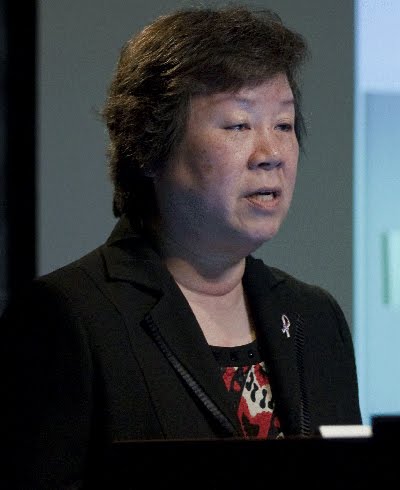
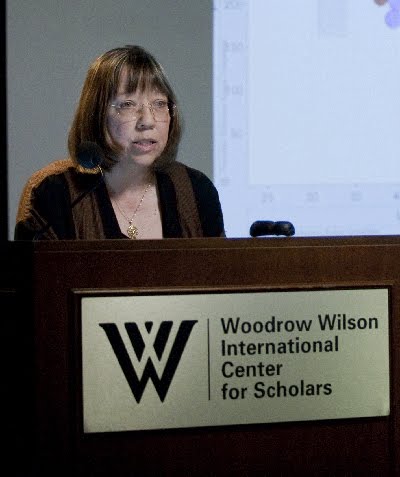
›“Family planning is to maternal survival what a vaccination is to child survival,” said Johns Hopkins professor Amy Tsui, quoting Khama Rogo of the World Bank, at the Woodrow Wilson Center event Maintaining the Momentum: Highlights From the Uganda International Conference on Family Planning on March 16. Rogo made the strong statement during the landmark November 2009 conference in Kampala, which has renewed interest in family planning and reproductive health among African leaders and development partners. Rhonda Smith of the Population Reference Bureau and Sahlu Haile of the David and Lucile Packard Foundation joined Tsui, the director of The Bill & Melinda Gates Institute of Population & Reproductive Health, to discuss their impressions of the Kampala conference and what it means for the future of family planning in Africa.
“An event that happened at the right time”
“Kampala was the work of a community,” said Tsui. More than 50 organizations—the U.S. Agency for International Development, the UN Population Fund, the World Bank, the World Health Organization, and the Gates and Packard Foundations—convened in Uganda, which was chosen not only for its central location, but also to highlight the country’s soaring unmet need for contraception—41 per cent—and rapid 3.1 percent population growth rate.Panels focused on key issues in family planning, including:- Integrating family planning into HIV/AIDS care
- Integrating family planning in post-abortion, postpartum, child, and other primary health care
- Expanding contraception delivery services by community health workers
- Increasing outreach to youth and men
- Capitalizing on private and public innovations in service delivery and financing
- The United States announced its foreign assistance budget will increase support for family planning from $450 million to $715 million for the next fiscal year.
- The Global Health Initiative identified maternal/child health and family planning as one of its main priority themes.
- Secretary of State Clinton positively discussed girls’ education, family planning, and reproductive health at the ICPD + 15 anniversary.
- The Women Deliver 2010 Conference, to be held in June, has identified family planning as a third pillar of maternal health.
Uganda on the MoveRhonda Smith’s presentation “Uganda on the Move”—which she also presented in Uganda—is a prototype of the Population Reference Bureau’s new ENGAGE (Eliminating National Gaps—Advancing Global Equity) project, which is designed to “engage policy audiences and promote policy dialogue around issues of high fertility and high unmet need for family planning and their costs, consequences, and solutions,” she said. By using stunning, innovative graphics and avoiding confounding technical terms, ENGAGE’s products are designed to reach non-technical policy audiences and influential decision-makers.
As one of the Uganda conference’s most talked about presentations, “Uganda on the Move” wows audiences with visuals created using Hans Rosling’s Trendalyzer software. The presentation shows that although Ugandans are increasingly healthier, have a higher life expectancy, and are more educated, maternal health remains in jeopardy. Tellingly, 46 percent of pregnancies in the country are unplanned, 6,000 women die each year from complications related to pregnancy, and 1,200 women die each year from undergoing unsafe abortions.
Maternal deaths, however, do not tell the whole story: For every one woman dying, Smith said, 20-30 women suffer from short-term disability, which places a major strain on economic growth. From 2004 to 2013, maternal death will cost Uganda US$350 million in lost productivity; and disability will cost and additional US$750 million.
What Next? The African Perspective“After 10 years of virtual clandestine work, [family planning] is just coming out of the closet,” said Sahlu Haile. Over the last few decades, family planning advocates have been struggling to: 1) keep family planning alive—without it being affected by political considerations 2) make family planning a health priority, without any associations with rights violations; and 3) be in solidarity with pioneering organizations of the family planning movement, like the International Planned Parenthood Federation, that were victims of discriminatory funding decisions.
The Uganda conference changed all that, said Haile. In Uganda, conference attendees were “talking about family planning…not reproductive health, not maternal/child health.” This, he said, was “probably the single most important lesson…that I took from the Kampala conference.”
Following the conference, Haile said that African government officials stressed family planning as a priority at meetings in Ethiopia and Nigeria—the first time he had witnessed such high-level attention to family planning from those countries in his 30-year career.
In Ethiopia, African leaders pledged to:- Prioritize family planning, since family planning is one of the most cost-effective development investments;
- Ensure access to contraception, as 40 percent of maternal deaths are associated with unwanted pregnancies; and
- Integrate MDG 5b, universal access to reproductive health, into their international development plans and budgets.
Haile credited the Kampala conference for spurring these efforts. In December, he joined a task force of 14 Ethiopian organizations to plan the next steps. They will jointly develop research capacities, generate evidence, and strengthen monitoring and evaluation practices, especially with regard to integrating population, health, and environment efforts. In addition, they will engage with wider audiences via new tools such as the blog RH RealityCheck and Gapminder Foundation’s Trendalyzer program.
Haile believes we need to “work together to encourage national-level efforts…to make sure family planning stays where it is now and make sure it is not abandoned.”
To be a part of the new online family planning community, join the Kampala Conversation.
Photo 1: A women and her children in Jinja, Uganda. Courtesy Flickr user cyclopsr. Photos of Amy Tsui, Rhonda Smith, and Sahlu Haile courtesy of Dave Hawxhurst, Woodrow Wilson Center. -
Family Planning and Reproductive Health
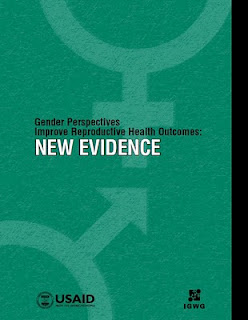
›Adding it Up: The Costs and Benefits of Investing in Family Planning and Maternal and Newborn Health, a report by the Guttmacher Institute, asserts that “sustained and increased investment in sexual and reproductive health services in developing countries” would “contribute to economic growth, societal and gender equity, and democratic governance.” The report presents cost-benefit analyses of family planning and maternal and newborn health strategies in an effort to “guide decision makers, at the global, regional and country levels, in making investments that would reap the greatest returns for individuals and societies.”The Interagency Gender Working Group recently released Gender Perspectives Improve Reproductive Health Outcomes: New Evidence, argues for the importance of taking gender into consideration when developing interventions related to unintended pregnancies, maternal health, STIs, harmful practices (e.g. early marriage, genital cutting, and gender-based violence), and youth. The report, a follow-up to 2004’s The “So What?” Report: A Look at Whether Integrating a Gender Focus into Programs Makes a Difference to Outcomes, includes 40 specific examples of programs successfully integrating gender to improve reproductive health. -
Point of View: Investing in Maternal Health
›Every minute, a woman dies in pregnancy or childbirth. But the overwhelming majority of these more than 500,000 deaths a year are avoidable.
“We know how to save women’s lives, we don’t need a cure…this is a political problem and political will is essential,” said Theresa Shaver, the director of White Ribbon Alliance.
Addressing longstanding issues like political will could jumpstart progress toward Millennium Development Goal 5, which seeks to reduce maternal deaths by 75 percent by 2015. We face daunting challenges, but there are some clear steps we can take to meet this critical goal. We must strengthen health systems in the developing world.Increasing women’s access to quality health services during pregnancy, and ensuring they are attended by skilled providers during childbirth, can help to reduce preventable causes of death, such as hemorrhage, pre-eclampsia, and obstructed labor—which together account for 80 percent of maternal deaths.
Scaling-up family planning services are a cost-effective way of preventing unwanted pregnancies, delaying the age of first pregnancy, increasing the time between pregnancies, and facilitating important relationships between women and health care providers. However, many societal and cultural factors dissuade women and girls from seeking contraception. Culturally sensitive education programs can help overcome this barrier, especially if they include men and local leaders, in addition to women and girls.
We should recognize that improving the well-being of mothers is inseparable from the health of newborns. Efforts to reach Millennium Development Goal 4, reducing under-5 mortality by two-thirds, are integral to improving maternal health. Skilled birth attendants could decrease both maternal and child mortality.
In the United States and abroad, momentum is growing to make the investment necessary to scale up these interventions. In January, Secretary of State Hillary Clinton renewed a commitment of $63 billion for the Obama Administration’s Global Health Initiative, which will include significant resources for maternal and child health.
According to the U.S. Agency for International Development, maternal and newborn deaths cost the world $15 billion a year in lost productivity. Researchers conclude that maternal health services would cost only a $1 per day per woman. That’s a small price to pay for such a high return—saving not only dollars, but also women’s lives.
For more information about maternal health and the Global Health Initiative’s Advancing Policy Dialogue on Maternal Health Series please see this month’s issue of Centerpoint. -
Gates: More Money for Global Health Is Good for the Environment
›January 28, 2010 // By Gib ClarkeBill Gates gave the PHE community a much-needed upgrade in his foundation’s 2nd Annual Letter, released this week. Unfortunately it still has a few bugs.
“In the long run, not spending on health is a bad deal for the environment because improvements in health, including voluntary family planning, lead people to have smaller families, which in turn reduces the strain on the environment,” concludes Gates.
This statement could dramatically raise awareness of and funding for population-environment programs. Any time Bill Gates talks, the world listens, as evidenced by the barrage of coverage from Reuters, AFP, and top IT newswires. For the public, it offers a rare glimpse into development strategy, so Gates’ thoughts (and financial commitments) could be seen as representative of the foundation community’s approach to global health problems.
Although it may seem obvious that fewer people place less strain on the environment, this connection has been largely absent from the environmental agenda, including the efforts to combat climate change. Some environmental leaders and organizations have dismissed population as an unimportant distraction from the real business at hand. Others have noted that population growth’s impact on climate change is far greater in the rich world than in poor countries, whose per capita emissions are a fraction of developed countries’.
Gates’ comment may cause those in the first camp to re-evaluate the importance of family planning, and it is likely to energize the converted. But it will have less impact on those focused on consumption. But if it encourages the environmental community to put population and family planning issues back on the table, it will have gone a long way.
However, Gates could have gone further, by explaining that family planning is a relatively inexpensive way to mitigate climate change, compared to complex and emerging technological solutions. He also could have pointed out that climate change is expected to increase the prevalence of vector-borne diseases such as malaria, or that sick or malnourished individuals may be forced to mismanage natural resources.
Because Gates didn’t make these explicit connections, many in the media missed his point. The wire headlines pit health against environment, when Gates was in fact pointing out how interdependent they are. This distortion is symptomatic of the media’s tendency to highlight the horserace. But maybe they would pay closer attention if the Gates Foundation put its money where its mouth is—and funded programs that integrate family planning and the environment.
Perhaps several years from now, we will look back and say that this letter marks the start of the Gates Foundation’s integrated approach to development. But we may need to wait for Letter 3.0 for a complete install.
Photo: Courtesy Flickr User World Economic Forum




 The
The  Every minute, a woman dies in pregnancy or childbirth. But the overwhelming majority of these more than
  Bill Gates gave the


