-
Watch: Harriet Birungi: Challenges Facing HIV-Positive Adolescents in Kenya
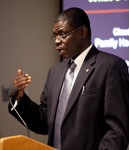
›“Services are not necessarily very adolescent-friendly, so when you get children who are HIV-positive they are likely to face discrimination,” says Harriet Birungi, an associate in the Reproductive Health Program with the Population Council in Kenya, in this interview with ECSP’s Gib Clarke following the Global Health Initiative’s Integrating HIV/AIDS and Maternal Health Services panel.
According to Birungi, medical service censoring and targeted exclusion from schools are among the top challenges facing Kenyan adolescents living with HIV/AIDS. She hopes better support systems and intervention strategies, especially for pregnant individuals, will help medical personnel more quickly identify HIV-positive young adults needing critical medical services. -
Welcome Back, Family Planning
›January 8, 2010 // By Gib Clarke “When women and girls have the tools to stay healthy and the opportunity to contribute to their families’ well-being, they flourish and so do the people around them,” Secretary of State Hillary Clinton declared today in a speech renewing U.S. support for universal access to reproductive health services and supplies around the world. “Investing in the health of women, adolescents, and girls is not only the right thing to do; it is also the smart thing to do.”
Introduced by Melanne Verveer, the first ever ambassador-at-large for global women’s issues, Clinton’s much anticipated statement marked the 15th anniversary of the International Conference on Population and Development (ICPD) and reconfirmed a U.S. commitment to meeting Millennium Development Goals 4 (reducing child mortality) and 5 (reducing maternal mortality and increasing the proportion of births attended by skilled health personnel). Reproductive health and development luminaries Nafis Sadik, UN Foundation President and former Senator Tim Wirth, and newly installed USAID Administrator Rajiv Shah were also in attendance.
Clinton began with a look back to the ICPD—which she called the “first ever global forum that recognized the connection between women’s health, the quality of women’s lives, and human progress on a broader scale”—and the progress since. Declaring that “we have made measurable progress since 1994 in improving the health and the lives of women and children, especially girls,” she cited a number of improvements, including higher child survival rates, use of modern contraceptives, and female education enrollment.
Switching from the past to the present, Clinton described how women and girls continue to bear the brunt of a variety of social ills: they have higher rates of poverty, illiteracy, and malnutrition, and are the most adversely affected by conflict, “from the Congo to Bosnia to Burma.”
After reciting the data on unsafe abortions, STDs and HIV/AIDS, fistulas, and female genital cutting, she declared that “these numbers are not only grim…they are intolerable.” She added, “We can not accept it morally, politically, socially, economically.”
But Clinton’s remarks were not solely focused on health and family planning issues. Echoing arguments made by Nicholas Kristof and others, Clinton described how women’s health and women’s rights directly and significantly impact most major problems in the world, including economics, natural resource conflicts, and national security.
These challenges will require sustained effort and funding, said Clinton, adding that the Obama Administration’s $63 billion Global Health Initiative would address the health challenges of HIV/AIDS and maternal and reproductive health in an integrated manner. All of the administration’s programs would seek to help countries strengthen their own health systems to meet their unique needs—both of their women and girls, but also their populations in general. In all of these efforts, she said including men and boys as “advocates and allies” remains important.
Praise for the speech has been swift—a letter of commendation from a number of foundations was sent to the secretary immediately afterwards.
Maternal and reproductive health have experienced elevated and perhaps unprecedented funding and attention in recent years, especially over the last few months. Secretary Clinton’s impassioned speech is almost certain to keep this momentum alive.
Photo: Courtesy SEIU International -
Making the Connections: An Integration Wish List for Research, Policy, and Practice
›January 3, 2010 // By Geoffrey D. DabelkoNew York Times columnist Nick Kristof is likely a well-known voice to New Security Beat readers. His ground-level development stories from around the world expose a range of neglected issues that usually struggle for mainstream media coverage: maternal health, microcredit, human trafficking, family planning, sanitation, micronutrients, and poverty, among others.
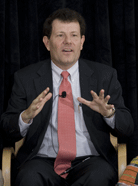
Kristof brought many of these threads together Half the Sky, a book he coauthored with his wife Sheryl WuDunn. I asked about the challenges of addressing these connected problems when I interviewed the couple and two frontline White Ribbon Alliance maternal health practitioners this fall at the Wilson Center.
Now Kristof is asking readers to suggest topics for him to cover in 2010. My suggestions to him are actually a wish list for the wider development community. In short, how can scholars, policymakers, practitioners, and communities better research and analyze these connected topics and then fashion integrated responses? I posted my comment on Kristof’s blog, On the Ground (and I ask your indulgence for the less than polished writing):I’d love for you [Kristof] to explore the challenge of integration from both problem and response perspectives. People in poverty lead integrated lives (just like we wealthier folks do), face connected challenges, and need integrated or multiple responses. Single-sector programs may deliver quicker, more obvious, and/or more countable impacts (or parallel advantages for single-discipline research endeavors). Yet time and time again we see such approaches only partially meeting needs or not meeting them sustainably. There is also a persist danger of undercutting others’ efforts and/or creating high opportunity costs.
These questions topped my wish list to Kristof last night while procrastinating on other writing. What would be on your wish list for Kristof, the development community, or even just New Security Beat? We at the Environmental Change and Security Program (ECSP) would love to hear from NSB readers so we can keep covering the questions that interest you.
So which integrated research, policy analysis, or field-based programs explicitly recognize that trends that appear to be on the periphery are hardly peripheral? At the same time, if programs try to be all things to all people, they can become bloated, unrealistic, and/or unsustainable.
For example, are the Millennium Villages examples of the former or the latter? How about the much smaller programs under the population-health-environment grouping? What went wrong with Campfire programs to cause so many to abandon the approach? Have the loosened restrictions on what constitutes an appropriate PEPFAR intervention addressed this integration problem, or will politics (exclusion of family planning in PEPFAR, for example) mean we cannot capture the full benefits of integration?
And the big Kahuna: how is the rhetoric and analytical argument around the 3Ds (defense, development, and diplomacy) made real and practicable in the field (as in the United States we anticipated early this year the results of the Quadrennial Defense Review (QDR), Quadrennial Diplomacy and Development Review (QDDR), and Presidential Study Directive on Global Development Policy (PSD))?
And finally, does our (read donors’) penchant for measuring impact and quantifying results force us to narrow interventions to the point of missing key connections in cause and effect of the problems we are trying to address? Is there a better mix of defining and measuring success that captures the challenges and benefits of integration? -
‘DotPop:’ Copenhagen’s Collapse: An Opportunity for Population?
›December 22, 2009 // By Gib ClarkeWhile the negotiators failed to reach a comprehensive agreement in Copenhagen, the population and reproductive health community might find a silver lining in the stormclouds that derailed COP-15.
Developing countries’ strong protests of their lack of culpability for the climate problem, on one hand, and the dramatic examples of their vulnerability on the other, have focused the world on the problems of poor people—and on potential solutions, including family planning.
The Case of the Missing “P”
The New York Times’ Andrew Revkin complained that population was the “The Missing ‘P’ Word in Climate Talks,” but PAI’s Kathleen Mogelgaard argues in New Security Beat that “there is encouraging evidence that voices of those advocating for increased attention to the role of population and reproductive health and rights in climate change responses are being heard” in Copenhagen, including new funding from the Danish government for family planning.
At a breakfast last week, luminaries including Gro Harlem Brundtland and IPCC Chairman Rajendra K. Pachauri discussed UNFPA’s latest report, Facing a Changing World: Women, Population and Climate in Copenhagen.
According to lead author Robert Engelman, the report is “helping many more people to see population and climate in a more hopeful light, linked as they are through the right of women to equal standing with men and access to reproductive health care for all.”
Women, Population, and Climate
“Climate change is ultimately about people,” declared Congresswoman Carolyn Maloney at the recent Washington, DC, launch of the report. Though the issues are complex and multi-faceted, Engelman said that the report’s message is “stark and optimistic”: that “women in charge of their own lives” can have positive impacts on change climate mitigation and adaptation.
“Women are more sustainable consumers,” said UNFPA’s José Manuel Guzmán at the launch, noting that in many cases women make buying decisions for their families, so empowering them with information and tools is a wise approach to combating climate change.
Inequitable Impacts
Women – especially poor women – contribute fewer greenhouse gas emissions than men, yet are more vulnerable to the impacts of climate change. Unfortunately, this fundamental inequality is difficult to quantify, since most data sources are not disaggregated by gender. The report recommends improving data quality to better informing policy decisions.
Tim Wirth, president of the UN Foundation and the Better World Fund, noted that women face a “double whammy”: they are already less likely to go to school and to have access to paying livelihoods, and more likely to have HIV. Climate change will only increase the inequity.
People Power
PAI’s Karen Hardee called on the population community to focus their efforts on the next phase of negotiations – adaptation. A recent PAI report found that while 37 of 41 National Adaptation Plans of Action say that population pressures exacerbate the effects of climate change, only six include slowing population growth or addressing reproductive health and family planning as a key priority.
“The focus has been on where and what the impacts of climate change will be,” said Guzman, but the conversation needs to shift to who will be affected, and an analysis of their vulnerabilities and their capacities to adapt.
For real progress to occur, said Engelman, “climate needs to be seen through a more human lens.” -
Amid Blizzards, Protests, and Lock-downs, Population Gets Stunning Moments in the Sun in Copenhagen
›The second week of negotiations here in Copenhagen has been marked by dramatic events, as the deadline for a new global agreement to address climate change approaches.
Blocs of negotiators from developing countries have walked out, and returned. Thousands of NGO representatives who have been denied access to the proceedings are shivering in the cold. Observers inside the Bella Center have staged sit-ins. And yet slivers of hope remain for some form of a global deal that is fair, ambitious, and binding as negotiators prepare for the arrival of more than 100 heads of state on Friday.
-
Integrating HIV/AIDS and Maternal Health Services
›Integrating maternal health and HIV/AIDS services “includes organizing and providing services that meet several needs simultaneously…focusing not only on the condition, but also the individual,” argued Dr. Claudes Kamenga, Senior Director of Technical Support and Research Utilization at Family Health International, during the first event of the Advancing Policy Dialogue on Maternal Health series co-convened by the Wilson Center’s Global Health Initiative, Maternal Health Task Force (MHTF), United Nations Population Fund (UNFPA), and technical support from U.S. Agency for International Development (USAID). Joined by Michele Moloney-Kitts, assistant coordinator at the Office of the U.S. Global AIDS Coordinator, and Harriet Birungi, a program associate with the Population Council in Kenya, the panelists discussed how integration of HIV/AIDS and maternal health services not only improves health outcomes, but also increases program efficiencies, strengthens health systems, and saves money.
-
Tackling the Biggest Maternal Killer: How the Prevention of Postpartum Hemorrhage Initiative Strengthened Efforts Around the World
›On Friday, November 20th, 120 representatives from the maternal health community, the U.S. and around the world, gathered for an all day meeting at the Woodrow Wilson International Center for Scholars to discuss the report, Tackling the Biggest Maternal Killer: How the Prevention of Postpartum Hemorrhage Initiative Strengthened Efforts Around the World. This report describes the challenges and successes of the U.S. Agency for International Development (USAID) funded Prevention of Postpartum Hemorrhage Initiative (POPPHI).
The five-year POPPHI project was executed through the support of many partners whose main goal was to catalyze the expansion of active management of the third stage of labor (AMTSL) worldwide. The conference convened experts and advocates in the field of maternal health, to share best practices, new innovations, and future challenges for tackling maternal health’s leading killer: postpartum hemorrhage (PPH). Panelists included POPPHI field partners such as International Federation of Gynecology and Obstetrics, The International Confederation of Midwives, the World Health Organization, and international researchers.
Preventing Postpartum Hemorrhage: AMTSL
“We need to work on women postpartum–after birth we leave them,” argued Deborah Armbruster, POPPHI Project Director. Due to the fact that many women in the developing world give birth at home or in local clinics that lack the sufficient resources to prevent postpartum hemorrhaging, approximately 132,000 women die annually. Fortunately, effective and feasible interventions such as those established by POPPHI have been proven to save lives.
Active management of the third stage of labor (AMTSL) includes three factors that, when used together, can avert postpartum hemorrhage, including:1. Administration of uterotonic drugs (including oxytocin – the most preferred drug)
POPPHI’s “BOLD” Approach
2. Controlled cord contraction
3. Uterine massage after the delivery of the placenta
In collaboration with its partners, POPPHI implemented country-level and global programs to scale up AMTSL. Driven by the “BOLD” approach, Armbruster described how the initiative provided overall frameworks and approaches for strengthening PPH interventions by Building on evidence, Obtaining consensus, Linking partners, and Demonstrating to policymakers AMTSL’s feasibility.
Additionally, POPPHI provided learning materials such as toolkits, fact sheets, posters, and guides that were used to train providers and increase their use of AMTSL. A pilot project on Uniject (a single use needle pre-prepared with oxytocin) was also executed in Mali. Uniject was shown to be acceptable and successful with birth attendants there, and the study is now being replicated in Honduras.
Voices from the Field
Representatives from Argentina, Bangladesh, Ghana, Guatemala, Peru, and Mali presented their country results with the POPPHI project–concluding that the initiative served as a catalyst for upscaling AMTSL. Dr. Abu Jamil Faisel, Project Director and Country Representative of EngenderHealth in Bangladesh, discussed how the project helped to break through misperceptions that often prevented women from wanting to use misoprostol. In Ghana, policymakers worked with program managers and drug suppliers to register misoprostol in the country’s essential medicine list and updated guidelines to reflect best practices. While each country’s experiences were unique, the importance of partnerships was common to successfully upscaling AMTSL in all locations.
Partnerships: Critical to Success
Integrating maternal health indicators directly into program design is imperative to upscaling AMTSL, argued Niamh Darcy, Director of POPPHI Monitor and Evaluation. Additionally, Darcy argued that the success of POPPHI is due to the project’s emphasis in working with all levels of partners, particularly facility providers. Working with the supportive supervisors at facilities is necessary according to Darcy because this group is ultimately responsible for executing active management and recording project outcomes.
Identifying African experts who have taken leadership and ownership of the project has been instrumental in POPPHI successfully disseminating results at the regional, national and international levels argued Doyin Oluwole, Director, Africa’s Health in 2010. Partnering with local champions as well as policymakers has enabled many of the country projects to build capacity and upscale AMTSL.
Building on Lessons Learned
“A key lesson we have learned is that, when there is political commitment, AMTSL is rapidly scalable,” stated Lily Kak, Senior Maternal and Newborn Health Advisor, USAID. Changing behaviors and practices takes significant amount of resources and time commitment, however, POPPHI demonstrates that partnerships and research can be used to upscale AMTSL and change policies more efficiently.
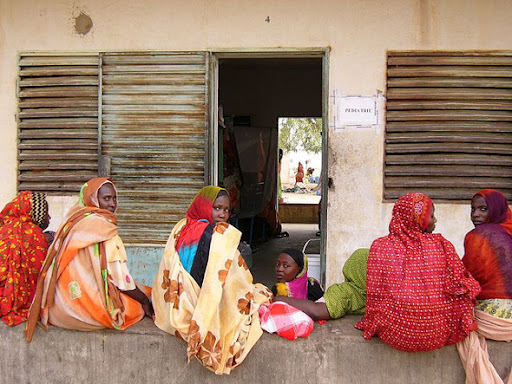
Photo: Women wait outside a maternity ward in Chad. Courtesy of Flickr user mknobil. -
VIDEO – Integrating Population, Health, and Environment (PHE) in Ethiopia
›December 4, 2009 // By Sean Peoples“Incorporating environment, population, and health is a timely issue. Unless we focus on integrated approaches, our Ethiopian Millennium Development Goals cannot be achieved,” says Negash Teklu, executive director of the Consortium for Integration of Population, Health, and Environment (CIPHE), in this short video.
I interviewed Teklu and three other members of CIPHE in Yirgalem, Ethiopia, where they spoke of the importance of PHE integration; why it is vital to involve the community in development projects; and practical steps for implementing integration at the grassroots level.
Everyone agrees that Ethiopia faces serious challenges. Much of the economy is based on agriculture, but drought is all too common, and the land is exacerbated by continual overuse. High rates of population growth coupled with limited resources and uncertain crop yields leaves many people vulnerable to hunger and malnutrition. In addition, the country’s health system struggles to provide comprehensive care.
To combat these interconnected problems, the members of CIPHE truly believe that an integrated PHE approach that uses multi-sectoral interventions will best serve the needs of their fellow Ethiopians.
“If we follow the integrated PHE approach, economically we can be beneficial,” Mogues Worku of LEM Ethiopia told me. “We can share a lot of resources among the different sectoral organizations. At the same time with limited resources we can attain our goal by integrating the different sectoral offices and organizations, even at the grassroots level.”
This video will be the first of many on population, health, and environment problems and solutions in Ethiopia. Subscribe to our ECSP YouTube channel or the New Security Beat blog to see the latest videos.
Showing posts from category family planning.
 “When women and girls have the tools to stay healthy and the opportunity to contribute to their families’ well-being, they flourish and so do the people around them,” Secretary of State