-
Philippines’ Bohol Province: Elin Torell Reports on Integrating Population, Health, and Environment
›For 10 years, I have been working on marine conservation in Tanzania with the University of Rhode Island’s Coastal Resources Center. As part of that effort, I’ve helped forge links between HIV/AIDS prevention in vulnerable fishing communities and marine conservation. However, family planning and reproductive health (FP/RH) were relatively new to me. But a recent study tour of an integrated Population, Health, and Environment (PHE) program in the Philippines helped me understand that combining family planning services and marine conservation can help reduce overfishing and improve food security.
Together with developing country representatives from seven African and Asian countries, I spent two weeks in February visiting three PHE learning sites and a marine protected area in Bohol province in the central Philippines, as part of a South-to-South study tour sponsored by the USAID-funded BALANCED Project, for which I work. The tour focused on the activities of the 10-year-old Integrated Population and Coastal Resource Management Initiative (IPOPCORM) project, which is run by PATH Foundation Philippines, Inc. (PFPI).
IPOPCORM has garnered a wealth of lessons learned and best practices to share with PHE newbies like me. Its integrated programs train people to be community-based distributers (CBDs) of contraceptives and PHE peer educators, as well as work with local and regional government officials to build support for family planning as a means to improve food security.
I was most impressed with the ways in which PFPI identifies and cultivates dynamic and motivated local leaders–men, women, and especially youth–to reach out to the members of their community who are highly dependent on marine resources for their survival. My Tanzanian colleagues and I would like to foster the volunteer spirit and “can do” attitudes we experienced through our work in East Africa. (Similar PHE peer educators are successfully working in Ethiopia’s Bale Mountains, as reported by Cassie Gardener in a previous edition of the “Beat on the Ground.”
My favorite part of the tour was a trip to the Verde Island Passage to see PFPI’s efforts in this fragile hotspot. The insights my Tanzanian colleagues and I gained from talking to the field practitioners in the Verde Islands helped us refine our ideas for translating some of the PHE techniques used in the Philippines to the Tanzanian cultural context, including an action plan for strengthening our existing PHE efforts with CBDs and peer educators.
Thanks to the study tour, I now have a better understanding of how to address population pressures in the context of conservation. Overall, my Tanzanian colleagues and I were inspired by the successes we saw firsthand and hope to emulate them to some degree in our own projects.
Elin Torell is a research associate at the Coastal Resources Center at the University of Rhode Island. She is the manager of CRC’s Tanzania Program and coordinates monitoring, evaluation, and learning within the BALANCED project. -
Family Planning in Fragile States
›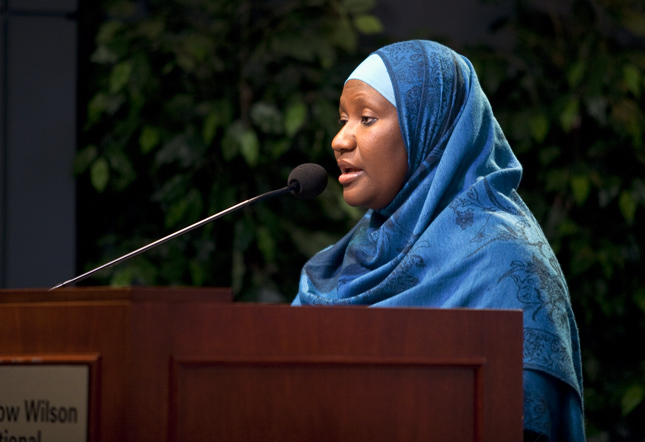
“Conflict-affected countries have some of the worst reproductive health indicators,” said Saundra Krause of the Women’s Refugee Commission at a recent Wilson Center event. “Pregnant women may deliver on the roadside or in makeshift shelters, no longer able to access whatever delivery plans they had. People fleeing their homes may have forgotten or left behind condoms and birth control methods.”
-
Thinking Outside the (Lunch) Box: Meat and Family Planning
›May 3, 2010 // By Dan AsinJoel Cohen, a renowned population expert and professor at Columbia and Rockefeller universities, recently gave a lecture simply titled “Meat.” As it was co-sponsored by the International Food Policy Research Institute and the Population Reference Bureau, I was hoping for an insightful discussion of meat eating and its implications for feeding a world of nine billion. While I think Cohen avoided the question of whether meat eating is ultimately sustainable, I was pleased that he included two key insights: the potential for family planning services to contribute to food security, and the importance of using multidisciplinary approaches to solve today’s global problems.
Family Planning for Food Security
In working to improve food security, Cohen said policymakers and practitioners need to focus on those who are most vulnerable. To this end, he identified five groups and suggested targeted policies for each:While the healthy eating policies will not surprise food security experts, his recommendations on family planning might. He highlighted what should be–but is not always–apparent: that tackling food security without thought for family planning is like attempting to fill an empty bucket without first plugging the holes.
Feeding the one billion hungry people in the world today is an enormous challenge that cannot be met by any single policy. Instead, it will take an array of partial solutions, and offering family planning services to women and young people is an important part of the package. Such projects can help reduce the number of children being born into hunger by allowing women and couples to assess their economic and food situations and plan according to their needs and wishes. Voluntary family planning services and materials will not solve the food security challenge on their own, but they can make it more manageable, especially in the long run.
Family planning’s potential contribution to food security is just one part of Cohen’s larger take-home message: population, economics, environment, and culture all interact. To meet today’s multidisciplinary challenges, single-sector approaches are not up to task.
The Many Faces of Meat
Cohen offered two competing perspectives on meat eating. On the one hand, average global meat production generates a fraction of the calories and protein, per unit of land, that could be derived from plant sources. It is likely the “largest sectoral source of water pollution,” said Cohen, and is at least partly responsible for the spread of over a dozen zoonotic diseases. It contributes to only 1.4 percent of world GDP while comprising 8 percent of world water consumption.
These hidden “virtual water” costs made headlines in Britain the other week, when a study on global water security published by the Royal Academy of Engineering popularized the Water Footprint Network’s earlier findings that that an average kilogram of beef requires 15,500 liters of water–over eight times the volume needed to produce the equivalent weight in soybeans and greater than 10 times that needed for the equivalent amount of wheat.
On the other hand, Cohen pointed out that meat production provides livelihoods for an estimated 987 million of the world’s rural poor, and has important cultural significance in many societies. And it can provide many essential nutrients, even in small doses.
In one study he cited, children living in Kenya who were provided 1 ounce of meat a day received 50 percent of their daily protein requirements and showed greater increases in physical activity and development, verbal and arithmetic test scores, and initiative and leadership behaviors as opposed to students who received the calorie-equivalent in milk or fat.
The Four Factors: Population, Economics, Environment, and Culture
Clearly, Cohen’s four factors all come in to play when evaluating meat’s role in food security. An analysis of any global health issue that looks at only one factor would miss indispensable parts of the problem.
“Population interacts with economics, environment, and culture,” Cohen concluded. “If you use that checklist when somebody gives you a simple-minded solution to a problem, you can save yourself a lot of simple-minded thinking.”
Photo: Pigs on a farm, courtesy Flickr user visionshare. -
Food Security Comes to Capitol Hill, Part Two: Women’s Edition
›April 30, 2010 // By Schuyler NullThe focus on food security on Capitol Hill continued with Wednesday’s House Hunger Caucus panel, “Feeding a Community, Country and Continent: The Role of Women in Food Security.” According to panel organizers Women Thrive Worldwide, “over half the food in developing countries – and up to 80 percent in sub-Saharan Africa – is grown by women farmers, who also account for seven in ten of the world’s hungry.”
The panel illuminated some of the inequities routinely faced by female farmers that often prevent them from using the same inputs as men (tools, fertilizer, etc.), bar their access to credit, and force them onto less productive land.
“Women around the world face unique economic and social barriers in farming and food production,” said Nora O’Connell of Women Thrive Worldwide. “But they are key to increasing food security and ending hunger, and all international programs must take their needs into account.”
Panelist David Kauck of the International Center for Research on Women (ICRW) cited the State Department’s Consultation Document on the Global Hunger and Food Security Initiative: “Economic output could be increased by 15-40 percent and under-nutrition reduced by 15 million children simply by providing women with assets equal to those of men.”
According to the 2008 ICRW report, A Significant Shift: Women, Food Security, and Agriculture in a Global Marketplace:Women also are more likely than men to spend their income on the well-being of their families, including more nutritious foods, school fees for children and health care. Yet agricultural investments do not reflect these facts. Women in forestry, fishing and agriculture received just 7 percent of total aid for all sectors.
One of the most fundamental problems faced by women in developing countries is a lack of basic education leading to illiteracy and innumeracy, making it difficult for women to understand agricultural policy or the fair market values of their products. Therefore, men are much more likely to control valuable markets.
In addition, women are less likely to learn about and adopt new agricultural technologies and best practices. Lydia Sasu, director of the Development Action Association, said that when she attended agricultural school in Ghana she was one of only three women, compared to more than 40 men, in her class.
Women in developing countries rarely own the land they farm, which can make it difficult to apply for credit and extension services without collateral. According to the ICRW report:In Uganda, women account for approximately three out of four agricultural laborers and nine out of 10 food-producing laborers, yet they own only a fraction of the land. Women in Cameroon provide more than 75 percent of agricultural labor yet own just 10 percent of land. A 1990 study of credit schemes in Kenya, Malawi, Sierra Leone, Zambia and Zimbabwe found that women received less than 10 percent of the credit for smallholders and only 1 percent of total credit to agriculture. Women receive only 5 percent of extension services worldwide, and women in Africa access only 1 percent of available credit in the agricultural sector.
“The fundamental barrier to women in agriculture,” said USAID’s Kristy Cook, “is access to assets.” Cheryl Morden of the International Fund for Agricultural Development (IFAD) said we have reached the “tipping point,” where action on this issue seems inevitable on the international policy level. However, she questions how quickly that momentum can translate to change on the ground.
The State Department has made improving women’s lives an important part of both their Global Hunger and Food Security Initiative and the Global Health Initiative. ”Investing in the health of women, adolescents, and girls is not only the right thing to do; it is also the smart thing to do,” said Secretary of State Hillary Clinton in January.
Reproductive health and family planning services will be key to both initiatives. A policy brief by ICRW’s Margaret Greene argues that poor reproductive health can have negative effects on women’s educational and economic opportunities. As Secretary Clinton said, “When women and girls have the tools to stay healthy and the opportunity to contribute to their families’ well-being, they flourish and so do the people around them.”
Photo Credit: “Transplanting at rainfed lowland rice in Madagascar,” courtesy of flickr user IRRI Images. -
Maternal Health Solutions in Peru
›Media reports on the neglected discussion of maternal and child health often focus on the problems and projects in sub-Saharan Africa or South Asia, which is understandable, as a disproportionate 90 percent of global maternal deaths occur in these two regions. Last month, however, PBS correspondent Ray Suarez reminded us that maternal and child mortality affects countries all over the world, including Peru, where “maternal death rates has historically been unusually high,” he noted in a report for NewsHour.
“Few people in the highlands of central Peru own automobiles and it’s hard to know exactly when the next bus is going to rumble by,” said Suarez. “Villagers are a long way from the nearest health clinic, even further from a fully equipped clinic.” Unfortunately, this scene could describe most developing countries struggling to reach the Millennium Development Goal (MDG) 5 target of reducing maternal deaths by 75 percent by 2015. Maternal health advocates argue that MDG 5 does not require a cure, but rather increased political willpower.
“Health officials, obstetricians, nurses, and community activists looked for ways to make better use of existing resources and connect expecting mothers with them,” said Suarez, reporting from the remote town of Vilcashuaman. At the Casa Materna, or “mother’s house,” nurses plot on a felt, bulls-eye map the names, due dates, geographical proximity, and travel times of pregnant women in nearby villages. Utilizing two-way radio communication, Casa Materna stays in contact with these remote villages and can signal the regional hospital, hours away in Ayacucho, for ambulance assistance for women needing emergency obstetric care.
Delivery teams at the Ayacucho hospital are familiar with indigenous languages and cultures, and welcome traditional practices, such as displaying herbs and giving figurines to new mothers. “The medical professionals in the area know bringing delivering mothers to the hospital can mean the difference between life and death and are prepared to be as accommodating as possible to lure women from home delivery,” reports Suarez. In the Ayacucho district, maternal mortality rates have decreased by 50 percent in five years.
While Suarez said “cultural competence, a welcoming atmosphere, and low-cost, high-result treatment strategies” may seem “pretty smart and straightforward,” it is important to evaluate the regional health system at a larger level, and consider additional factors, such as access to family planning, that may have contributed to Ayacucho’s success in reducing maternal mortality.
Another part of the solution is improving transportation and referral strategies, but increased research is needed to evaluate best practices and scalability of programs such as the one in Ayacucho. On May 19-20, as part of the Maternal Health Dialogue Series, the Wilson Center’s Global Health Initiative will host a two-day conference on “Improving Transportation and Referral for Maternal Health.” Speakers working on transportation and referral strategies in Bolivia, Ghana, and India will share their experiences and best practices.
Calyn Ostrowski is the program associate for the Wilson Center’s Global Health Initiative.
Photo Credits: Mothers in Peru learn to identify risk factors during pregnancy. Courtesy of Flickr user International Women’s Health Coalition -
Cassie Gardener
Integrating Population, Health, and Environment in Ethiopia’s Bale Mountains
›Ethiopia suffers from vast deforestation, rapid population growth, and high rates of maternal mortality. But development programs that address these issues in an integrated fashion may help end that suffering. As part of my two-month internship with the PHE-Ethiopia Consortium, I recently visited the Movement for Ecological and Community Action (MELCA) Project in the rural Bale Zone of southeastern Ethiopia to witness these programs in action.
Ethiopia’s Spectacular Bale Mountains
The little-known Bale Mountains are national and global treasures of biodiversity, teeming with dozens of endemic mammal, bird, and plant species. Ethiopia’s most important region for migrating birds, the rivers and streams in the Bale watershed flow to more than 12 million people in southern Ethiopia and western Somalia. Bale Mountains National Park hosts half of the world’s population of its rarest canid, the Ethiopian wolf, which has dwindled to a mere 250 individuals due to human interaction. When I toured the park, I was lucky enough to spot bushbucks, mountain nyalas, molerats, and several Ethiopian wolves.
As in many parts of the country, rural communities around the park face grave livelihood and health challenges, and their unsustainable use of land to eke out a living is threatening its conservation efforts. Due to diminishing agricultural land and an average total fertility rate of 6.2 children per mother in the region, people are increasingly forced to cut trees for fuel and timber in order to feed and house their families.
If Bale’s resources continue to be exploited in an unsustainable way, more mammal species would become extinct here than in any other area of equivalent size in the world. Even worse, MELCA Project Manager Tesfaye Teshome told me that if deforestation and impending climate change dry up Bale’s precious watershed, drought and famine could lead to the displacement or death of millions of Ethiopian citizens.
Raising PHE Awareness in the Community
Since 2005, MELCA, a member organization of the PHE-Ethiopia Consortium, has been working to protect biodiversity and culture in the Bale region through research, advocacy, and their award-winning youth environmental education program called SEGNI, or “Social Empowerment through Group and Nature Interaction.” In March 2008, with funding from Engender Health and the Packard Foundation, MELCA launched an integrated population, health and environment (PHE) project that provides culturally sensitive training at the community, school, and government levels.I was impressed that after just seven months of raising awareness, I met dozens of community members and key stakeholders who strongly believe in both the conceptual and operational benefits of PHE integration. For example, the Health Extension Workers and beneficiaries explained to me that community members in the Bale region, most of whom are conservative Muslims, held negative perception of family planning, which contributed to the area’s large family sizes and maternal mortality. But by involving Islamic community leaders in the project’s discussions, MELCA helped convince religious leaders that family planning is an important part of improving the health and livelihoods of the community.
“After the PHE training, we have improved awareness of population, family planning, health and environmental issues, and we understand that child spacing is better. Even my wife is now using family planning services, and as a result our lives are improved,” said Shihase, a religious leader in the community.
Join the Club: PHE Goes to School
Inspired by training sessions at schools, the SEGNI nature clubs, women’s clubs, and anti-AIDS clubs joined together to form new “PHE Clubs.” With the support of MELCA, PHE Club students plant indigenous tree seedlings in school nurseries for distribution to the community. They also create dramas, songs, poems, and illustrated storyboards about population, health, and environment issues, and use modest “mini-media” equipment such as a stereos and microphones to share these stories with their peers and other community members.
When I arrived at Finchaa Banoo Elementary School, hundreds of students greeted me with a PHE song, wearing traditional costumes with PHE banners strewn across their chests. They led me to their nursery site where they had planted 60,000 indigenous tree seedlings. A beautifully decorated cultural hut was filled with 10 PHE storyboard panels, painted by a local PHE-trained artist.
Fatiye, a 21-year old PHE club leader in 8th grade, proudly told me, “Before the coming of PHE, I’d been working only on SEGNI and knew only about biodiversity and culture. But now, I clearly understand health and population issues, including HIV/AIDS, taught to me by my peers. By having the integration of clubs, we’ve strengthened our power to accomplish more.”
Working Together to Save Time and Improve Health
MELCA’s PHE trainings also helped government officials and development workers who had previously operated in isolated sectors to integrate their work at the planning and implementation levels. Health Extension Workers and experts from the Agricultural and Rural Development Office said that collaboration is beneficial to them and the community, because it saves time and accomplishes greater results. Shankore, one of the Health Extension Workers, told me that integrating efforts across sectors allows them to help more households adopt both family planning and better sanitation, by more consistently and efficiently delivering services at the same time.
And their efforts are paying off: “Previously, we were giving birth just like chickens, our forest coverage was diminishing, and we were damaging our resources. We had cattle in our homes, and our children had health problems. Now, we understand how to improve these issues,” Khasim Sheka, a male member of the community, told me. “Health Extension Workers are teaching us about cleaning our home gardens and homes, and we separate our house from our cattle, liquid, and solid waste. My wife wasn’t using any family planning before, and now she’s using five-year Norplant.”
Although MELCA’s PHE project is still in its early stages, it appears capable of being scaled up with a little investment in additional training and by building the capacity of its staff and community members. In particular, the reproductive health component of the project needs to be strengthened, since Health Extension Workers are not trained on simple long-term family planning methods like IUDs, and are afraid they will lose clients if they continue to have to refer them to the distant health clinic.
With these improvements, MELCA could more successfully implement the integrated PHE approach, which will not only reduce the impact of population growth and deforestation on Bale Mountain Natural Park, but will improve the health and livelihoods of its neighbors, and ultimately protect its biodiversity for Ethiopia and the global community.
For more information about PHE-Ethiopia, please contact phe-ethiopia@gmail.com or visit their website at http://www.phe-ethiopia.org. For more information about MELCA, please contact melca@ethionet.et or visit their website at http://www.melca-ethiopia.org.
Cassie Gardener was the National Campus Organizer for the Sierra Club’s Global Population and Environment Program from 2006-2010, and is currently traveling around the world and volunteering for integrated health and development programs like PHE-Ethiopia and GoJoven prior to beginning her Masters in Public Health Program at UCLA in the fall.
Photo Credits: Morgennenbel034_31a, courtesy of flickr user Agoetzke Practitioners, courtesy of Cassie Gardener. -
Shape of Things to Come: Uganda’s Demographic Barriers to Democracy
›In March, Uganda’s cultural landmark, the Kasubi Tombs, were destroyed in a suspicious fire. Tensions spilled over when Ugandan President Yoweri Museveni paid a visit to the Bugandan site and found his entrance blocked by an angry crowd. According to an independent newspaper, soldiers accompanying the president opened fire, killing three civilians.
With ethnic-tinged unrest and student protests in Kampala, as well as cross-border conflicts in the north and east, Museveni, who has led Uganda since 1986, is facing a potentially serious test as elections approach early next year. The country’s demographic profile, and in particular the lack of opportunities for growing numbers of young people, will add to the country’s challenges, as I argue in a new case study of Uganda’s demography.
Uganda has the youngest population in the world, with 77 percent of its people younger than age 30. Women in Uganda have an average of 6.7 children each and 41 percent of married women have an unmet need for family planning. The population of Uganda is currently growing by about one million people per year, and given the force of its demographic momentum, Uganda’s population is likely to almost double by 2025 even if fertility declines.
Population Action International has found that countries with age structures like Uganda’s are the most likely to experience internal strife and autocratic governance. Between 1970 and 2007, 80 percent of outbreaks of civil conflict occurred in countries in which 60 percent or more of the population was younger than age 30.During that same period, 90 percent of countries with an age structure like Uganda’s had autocratic or only partially democratic governments.
Demography alone does not cause conflict. Most governments, even those with youthful populations, do not become entrenched in internal violence and upheaval. But age structure affects a country’s vulnerability to conflict, due to the demands a government faces in providing for its growing numbers.
In Uganda, young people face diminishing prospects in agriculture, the primary industry, as plot sizes shrink with each successive generation. At projected population growth rates, land density may increase 350 percent by 2050, from 122 inhabitants per km2 to a possible 551 inhabitants per km.
Only one-quarter of students who enroll in primary school reach the final grade, and even those with university degrees find few jobs. A reported youth unemployment rate of 22 percent is even higher in urban areas.
After 25 years in power, President Museveni will stand for a fourth official term in 2011. Despite growing dissent among his constituents, he appears confident of keeping his seat. Regardless of what happens next year,Uganda’s leaders must firmly commit to addressing their country’s demographic issues.
Age structure can become a window of opportunity if youth are engaged in society and couples can choose the number of children they can support. But in Uganda, that window remains far out of reach.
Three new case studies from Population Action International on Haiti, Yemen and Uganda examine the challenges specific to countries with very young age structures and recommend policy solutions.
Elizabeth Leahy Madsen is a senior research associate at Population Action International (PAI). She is the primary author of the 2007 PAI report The Shape of Things to Come: Why Age Structure Matters to a Safer, More Equitable World.
Photo Credits: “Atanga.pater.uganda,” courtesy of flickr user Kcarls. -
‘The Shape of Things to Come:’ Yemen
Why Women Matter for Demographic Security›April 12, 2010 // By Elizabeth Leahy MadsenYemen’s struggles with terrorism and political instability appeared on American radar screens with the bombing of the Navy destroyer USS Cole in 2000. The small country’s notoriety increased in 2008, following attacks against the U.S. Embassy, and again last Christmas, when a would-be terrorist trained in Yemen attempted to bomb a Northwest Airlines flight. Since then, Yemen has again slipped out of the headlines. But the deeply embedded problems the country faces deserve more sustained attention, as I argue in a new case study of Yemen’s demography.
Youth represent three-quarters of Yemen’s population, which has the youngest age structure outside sub-Saharan Africa. Population Action International has found that countries with age structures like Yemen’s are the most likely to experience internal strife and autocratic governance. Between 1970 and 2007, 80 percent of outbreaks of civil conflict occurred in countries in which 60 percent or more of the population was younger than age 30. During that time, an average of more than 75 percent of these countries had undemocratic governments.
While students of security, stability, and foreign policy may focus on the role of male-dominated terrorist and rebel groups, demographic dynamics in Yemen and the status of women may be a better indicator of broader challenges. A country’s demographic picture is driven primarily by its fertility trends. Women in Yemen average six children each, a rate that would lead the population to double in fewer than 25 years.
Unfortunately, many women in Yemen lack access to the health care that would allow them to determine their own family size. A 2003 survey found that 51 percent of married Yemeni women would like to prevent or delay their next pregnancy but are not using contraception, the highest measured rate of unmet need for family planning in the world.
Yemen has also received the lowest rating in the world in a survey of gender equity, based on women’s professional, political, and educational achievements relative to men. Unfortunately, this inequality is not surprising, given many of the structural barriers in place in Yemeni society. Only 41 percent of women are literate, compared to 77 percent of men, and there is a strong link between girls’ education and fertility later in life. Girls can legally be married at age 15, and pregnancies that occur too soon and too frequently are in part responsible for the country’s maternal mortality ratio, which is 39 times greater than that of the United States.
The key to a country’s future–at the political, economic and the social levels–is the young people who comprise the next generation. Youth in Yemen continue to face barriers to economic opportunity and democratic political engagement. With the size of the labor force growing faster than the number of jobs each year, youth unemployment could reach 40 percent in a decade. The demographic foundation to such economic pressures can combine with political marginalization to create an environment conducive to instability.
Yet at the social level, there is perhaps more promise. Literacy rates among young people 15 to 29 exceeded 90 percent in a recent survey, and youth also display more flexible and equitable attitudes in gender issues. Nearly three-quarters of young people report unconditional approval of contraception, a major determinant in whether Yemen’s high unmet need for family planning, and thus its very young age structure, are likely to change.
Although these issues may be rarely addressed in the political dialogue, it is critical that the efforts of Yemen’s government and its partners to promote peace and stability also incorporate policies that promote the legal rights and economic opportunities for women, together with access to reproductive health services.
Three new case studies from Population Action International on Haiti, Yemen, and Uganda examine the challenges specific to countries with very young age structures and recommend policy solutions.
Elizabeth Leahy Madsen is a senior research associate at Population Action International (PAI). She is the primary author of the 2007 PAI report The Shape of Things to Come: Why Age Structure Matters to a Safer, More Equitable World.
Photo: Yemeni youth. Courtesy Flickr user kebnekaise.
Showing posts from category family planning.