-
Turning Power on its Head: A Meaningful Shift Toward Localization
›
Of COVID-19’s many lessons, one is most critical to our collective next steps:
Business as usual in global health is no longer possible.
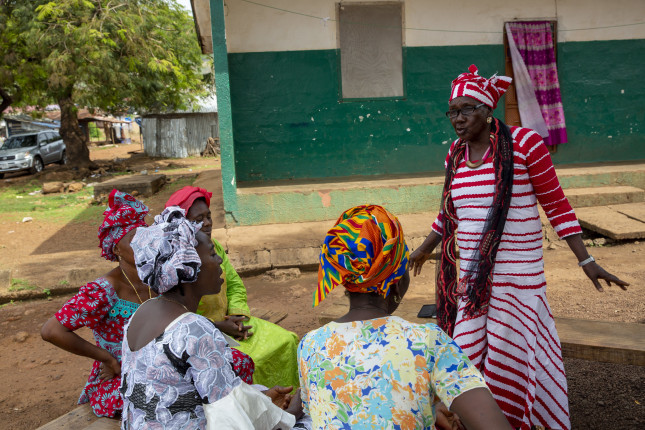
The pandemic exposed weaknesses in health systems across the world, and particularly in the delivery of equitable, high-quality reproductive, maternal, newborn, adolescent, and child health (RMNCAH) services. It also reinforced that effectively addressing these challenges requires rapid, responsive approaches driven and owned by countries and local institutions.
-
New Global Health & Gender Policy Brief: Global Fertility Rates and the Role of Infertility
›
While the world’s population now approaches 8 billion people, global fertility rates have been declining for decades. The overall drivers of this decline include increased access to contraception and reproductive health care, an increase in women seeking higher education, women’s empowerment in the workforce, lower rates of child mortality globally, increased cost of raising children, and overall greater gender equality.
-
How Gender Inequality Drives the Global Crisis of Unintended Pregnancy
›“Half. This is the proportion of all pregnancies that are unintended. That is 121 million pregnancies every year,” said Sarah Craven, Director of the Washington D.C. Office at UNFPA during a recent U.S. launch event for the 2022 UNFPA State of World Population (SWOP) report. “For these women, the most life altering reproductive choice, whether to become pregnant or not, is no choice at all. This is an unseen crisis unfolding right before our eyes.”
-
World Population Day Shines a Spotlight on Inequities
›July 11 is World Population Day—a day designated annually by the United Nations that should prompt us, in the words of the International Institute for Sustainable Development, to “focus attention on the urgency and importance of population issues.”
Examining population trends helps describe where we’ve been and suggests where we’re headed. Yet these facts about human existence on our planet also offer insights into how we got here—including a window into places where inequities exist and rights have been denied.
-
Sustainable Partnerships: A Future for Maternal, Child Health, and Family Planning
›“Building strong and inclusive partnerships for maternal, newborn, child health, and family planning programs is not future work,” said Dr. Koki Agarwal, Director of USAID’s MOMENTUM Country and Global Leadership at a recent Wilson Center event. “It’s urgent and it’s ‘right now’ work.”
This exploration of country perspectives and expertise on improving maternal, newborn, child, and adolescent health and family planning programs was the third event in a series that placed regional experiences and voices in the foreground.
-
Chaos Continues: The Impact of the Revocation of the Global Gag Rule
›Many researchers have documented the impact of the Global Gag Rule (GGR) around the world—and what happens when the policy is in place. “But we don’t know enough about what happens when the policy is revoked,” said Bergen Cooper, Director of Policy Research at Fòs Feminista at the launch of the organization’s new report, Chaos Continues: The 2021 Revocation of the Global Gag Rule and The Need for Permanent Repeal.
-
Top 5 Posts for April 2022
›As the world reels from the Russian invasion of Ukraine, the pandemic, climate shocks, and other crises, strategic future planning is more important than ever. In April’s most-read article, Steven Gale points to a source of hope in the suite of inclusive, “future-forward” initiatives that are unfolding under UN leadership, from risk reporting to impact assessments and youth engagement. These activities, encompassed by the UN’s Our Common Agenda, represent a global collaborative effort to map future risks and identify policy options in service of long-term well-being for people and the planet. -
Addressing the Global Stigma of Being Childfree
›Women around the world are choosing to forego motherhood. Yet more often than not stigma remains the global response, despite a decades-long global trend of women making this decision.
Varied social perceptions greet the choice to not bear children, depending on the culture and economic status of the country. Yet regardless of income level, globally recognized female stereotypes often place a high value on a woman’s fertility and her potential role as a mother, making it harder for women to exercise their agency to embrace other alternatives.
Showing posts from category family planning.




 As the world reels from the Russian invasion of Ukraine, the pandemic, climate shocks, and other crises, strategic future planning is more important than ever. In April’s most-read article, Steven Gale points to a source of hope in the suite of inclusive,